
Hong Kong Mahjong vs. Mahjong Competition Rules
Last updated: Nov 23, 2026
Hong Kong mahjong and American competition mahjong are entirely separate games with different tile sets, hand-building rules, and scoring systems. Hong Kong uses 144 tiles (no jokers), allows chows (sequences of three consecutive tiles) and pungs (three identical tiles) to be called and exposed mid-play, and wins when a hand contains all melds plus a pair—no preset hand card required. American mahjong, by contrast, uses 152 tiles plus 8 jokers, forbids chows and sequences, requires hands to match patterns on the current year's National Mah Jongg League card, and awards points based on hand complexity. A Hong Kong game takes roughly 1–2 hours; American typically 2–3 hours per session. Players often prefer one over the other based on pace, pattern memory, and social style. If you're transitioning between variants, you'll need to retrain your tile recognition and hand-reading instincts entirely.
What tiles and equipment does each game use?
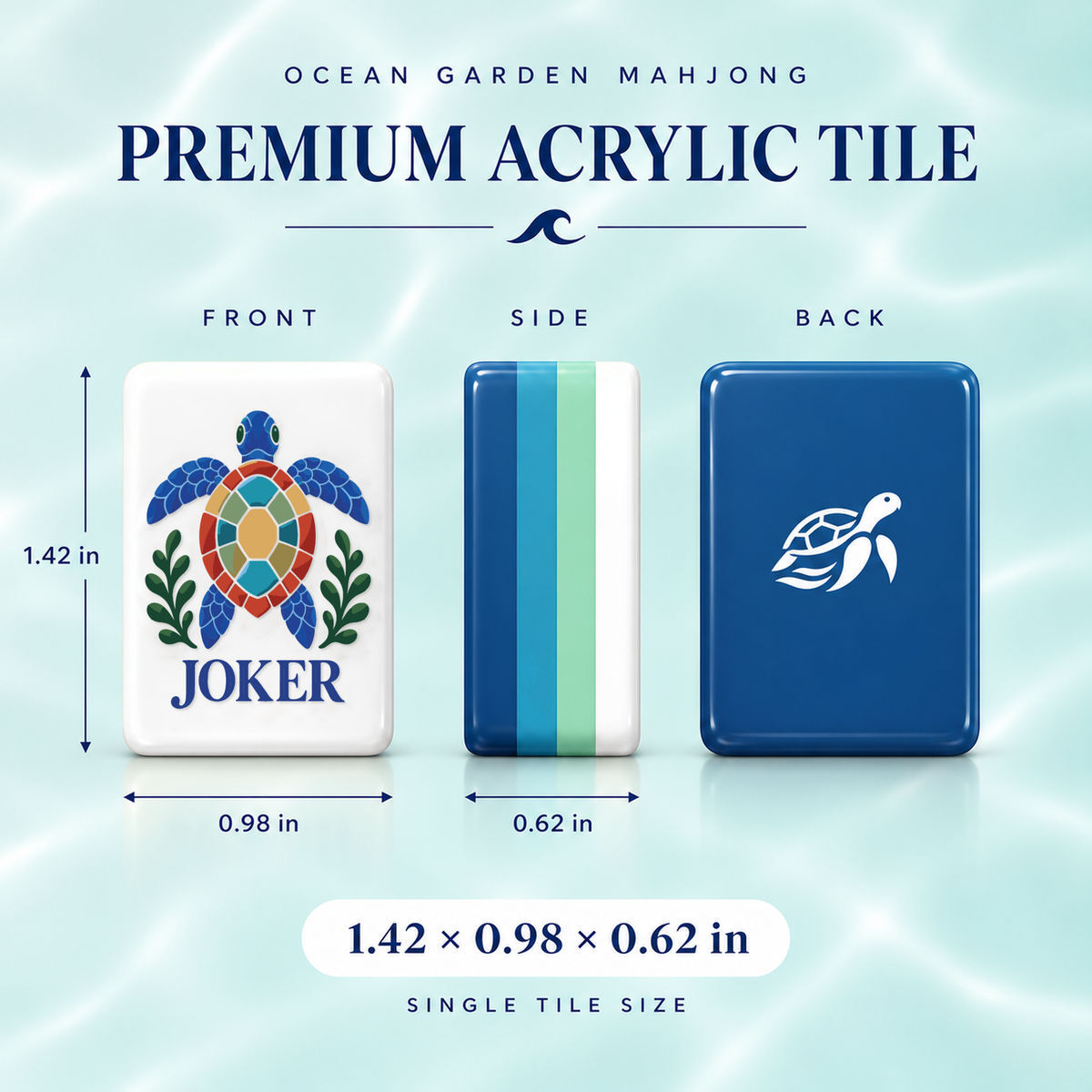
Hong Kong mahjong is played with a single set of 144 tiles: three suits (Bamboo, Character, Dot) numbered 1–9, four copies each (108 tiles); four winds; three dragons (Red, Green, White); and sometimes eight flowers and eight seasons, depending on house rules. No jokers. American competition mahjong uses a 160-tile set containing 152 playing tiles plus spares. Those 152 consist of three suits (Bam, Crak, Dot) with four copies each (108 tiles), 16 winds (four of each: North, East, West, South), 12 dragons (four each), eight flowers, and eight jokers. Jokers are central to American play; they can substitute for any tile in an exposed pung, kong, or quint, but never appear alone in a hand or as a pair. The tile faces differ too: American tiles are typically larger and more vivid for easier reading across a mat during play.
🀄 Shop best-selling mahjong sets →

Can you call and expose tiles during play?
This is where the games diverge most. In Hong Kong mahjong, you can call and expose melds mid-game: when someone discards a tile, you may claim it to complete a chow (three consecutive numbers in the same suit—e.g., 3, 4, 5 Bamboo), a pung (three identical tiles), or a kong (four identical tiles). Once exposed, these melds sit in front of you and remain visible for the rest of the hand. Calling breaks turn order and accelerates play. In American mahjong, you cannot call any meld or sequence. You draw and discard silently, working only with your own rack; exposed melds are illegal. Pungs, kongs, quints (five tiles), and sextets (six tiles) are exposed only when you've melded them and then declare your hand—after you've already won by matching a hand on the card. No one can interrupt your draw or discard; the flow is strictly turn-based. This fundamental difference makes Hong Kong play feel interactive and fast; American play feels methodical and introspective.
How do you win a hand?
Hong Kong mahjong: win when your hand contains four melds (each either a pung, kong, or chow) plus a pair, and you draw or are dealt the winning tile yourself or call the winning tile from someone's discard. The hand doesn't need to match a preset pattern—any valid combination counts. Winning is immediate and often involves shouting to claim discards. American mahjong: win only when your complete 13-tile hand matches one of the hand patterns printed on the current year's National Mah Jongg League card. You cannot win by calling a discard; you must draw the final tile yourself to complete a hand on the card. Before play starts, you and your table study the card during the Charleston (a tile-passing ritual) to mentally plan your strategy. Winning requires both pattern memory and luck.
What's the scoring difference?
Hong Kong mahjong scoring depends on hand composition (simple pung wins few points; all-sequence hands or "limit hands" score maximum points) and whether you won by drawing or calling. Bonuses apply for completing kongs, for self-drawn wins, for having all tiles from one suit, or for other combinations tied to house rules. A typical session has players track points by round. American mahjong scoring is far more rigid: points are printed directly on the card next to each hand pattern. A hand might be worth 30, 40, 50, or 60 points depending on its complexity and tile requirements (e.g., a hand with rare tiles or all flowers scores higher). The first player to accumulate a target score (often 500 or 1000 points) wins the session. Scoring is deterministic; there's no judgment or house-rule variance once the card is in use.
🎁 See our most-loved mahjong sets & accessories →

Which variant is easier to learn?
Hong Kong mahjong has simpler rules overall: learn four meld types, understand the pair, and play. But play speed and the constant pressure of calling and reading discards create a social intensity that beginners find intimidating. American mahjong rules are more rigid and written down (the card is your law), but memorizing hands from the card and planning a draw strategy require sustained focus. Most beginning players find American easier to understand but harder to play well; Hong Kong easier to play intuitively but harder to master. If you're solo-learning, Hong Kong is quicker to a playable game (one week of casual practice). If you're joining a club or group, American dominance in North America means more available teaching and consistent house rules. Your table's choice matters more than inherent difficulty.
Comparison table: Head-to-head breakdown
Attribute | Hong Kong | American Competition |
Tile count | 144 (no jokers) | 152 + 8 jokers |
Suits | 3 (Bamboo, Character, Dot) | 3 (Bam, Crak, Dot) |
Sequences allowed? | Yes (chows can be called) | No (never allowed) |
Pungs/kongs callable? | Yes, mid-hand | No, only exposed after win |
Win condition | 4 melds + pair (any pattern) | Hand must match card pattern |
Hand card required? | No | Yes (current year NMJL card) |
Turn structure | Interrupted by calls | Strict rotation, no interruption |
Typical game length | 1–2 hours | 2–3 hours |
Scoring | Pattern-based + house rules | Card-based, deterministic |
Dominant region | East Asia, Southeast Asia | North America |
How do beginners choose which variant to play?
If your social circle already plays one, play that one—consistency beats solo practice. If you're starting fresh, consider your personality: Hong Kong suits players who like speed, social energy, and real-time decisions; American suits players who like pattern puzzles, quiet strategy, and a level playing field defined by the card. Hong Kong teaches you tile recognition fast; American teaches you patience and long-term planning. Many players eventually learn both. A few tips: start with one variant for at least a month before jumping between them; changing muscle memory mid-session is exhausting. Play with the same table size (Hong Kong is typically 4-player; American usually 4-player but has solid 2- and 3-player variants). And build your own tiles and mat collection only after you've settled on a variant—the games use different equipment ergonomics, and buying the wrong set wastes money.
✨ Find your Mahstead set — free US shipping →
What to check before you buy a set
If you're buying for Hong Kong mahjong: confirm your set is exactly 144 tiles with no jokers. Verify the suit symbols and numbering match Hong Kong convention (often Bamboo, Character, Dot; some sets use alternate faces). Check that the tile size is comfortable for your hand size and that the material (wood, bamboo, acrylic, or plastic) suits your table environment. Plastic sets are durable and portable; wood sets are heavier and more traditional.
If you're buying for American mahjong: ensure your set is 160 tiles (152 playing tiles plus spares) and includes all four jokers required by play. Confirm the suits are labeled Bam, Crak, and Dot (spelling matters for card-reading). Verify the set includes all 16 winds, 12 dragons (four each color), and eight flowers. Check that the tile weight and finish work with your mahjong mat and racks with pushers if you use them. American sets from Mahstead come fully engraved or with clear, legible printing.
For both: buy from a source that stands behind the tile count. If a set arrives with missing or damaged tiles, you can't play competitively, and replacement is your only remedy. Store your tiles in a case or bag (not a loose box) to prevent loss and preserve the finish.

FAQ
Can I play Hong Kong mahjong with an American mahjong set?
No. An American set has jokers, extra dragons, and 152 tiles total—it won't work with Hong Kong rules, which require exactly 144 tiles and no wild cards. You need the correct set.
Is American mahjong harder because of the card?
Not harder, different. You don't memorize all 40-odd hands; you learn the ones your table plays most. After a few sessions, pattern recognition clicks. The card is your safety net, not your burden.
How long does it take to switch from Hong Kong to American or vice versa?
2–4 weeks of weekly play. The tile names and suit symbols retrains first; the rule logic takes longer because calling and exposed melds work so differently. Don't bounce between variants mid-week.
Which variant scores faster?
Hong Kong typically scores one hand every 10–15 minutes; American one hand every 20–25 minutes. Hong Kong games are shorter overall because the win condition is simpler and calling accelerates play.
Do the tiles cost differently, Hong Kong vs. American?
Price depends on material and craftsmanship, not the variant. A wood Hong Kong set and a wood American set of similar quality are comparable price. Acrylic or plastic sets (common for travel) cost less than bone or bamboo.
Can my American mahjong group play on a standard card table, or do I need a mat?
You can play without a mat (tiles can sit flat on the table), but a mahjong mat protects the table, defines zones, and slows tile slide, making play more comfortable for everyone.


View More
View More
View More
