
Hong Kong Mahjong Scoring Strategy: Hands, Points & Winning Tips
Last updated: Nov 23, 2026
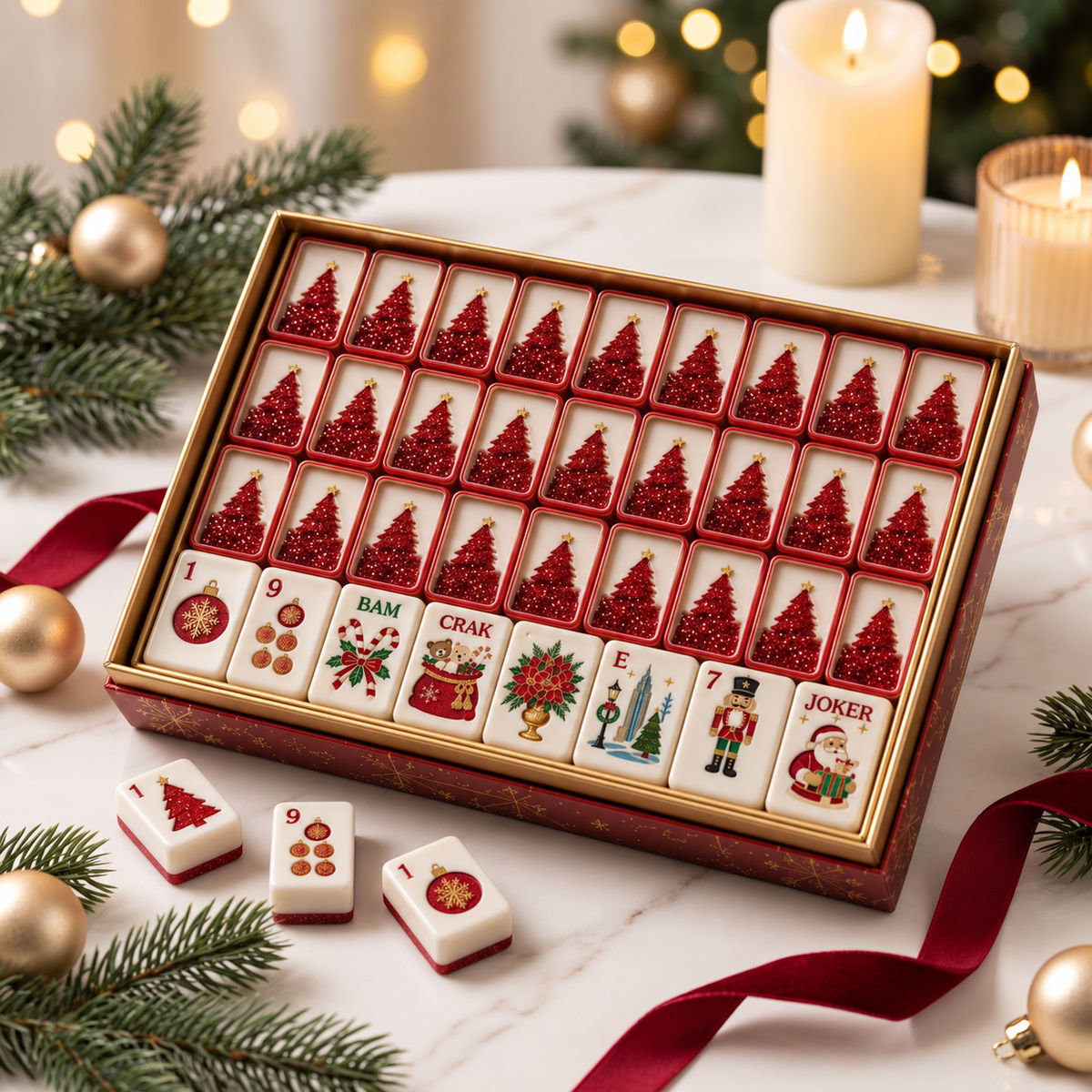
Hong Kong mahjong scoring prioritizes fan (pattern complexity) and xiao (base points), creating a dynamic point value that shifts with each hand. Unlike American mahjong, which locks hands to the current year's card, Hong Kong mahjong uses traditional Chinese patterns recognized across centuries of play. A winning hand must contain melds (pungs, kongs, chows) and a pair; basic hands score 1–2 fan (worth roughly 2–8 times the base bet), while rare patterns like "all pungs" or "all terminals" reach 5+ fan and multiply winnings dramatically. Jokers function as wild tiles, substituting within melds but never forming pairs or standing alone. Speed matters—players often call "mahjong" within minutes of game start if they've built the right pattern. Settlement varies by table: some play "payment by all," others "payment by winning player only." Understanding fan classification and reading your opponents' building patterns determines whether you spot winning opportunities or block dangerous ones. Most casual Hong Kong games use 136 tiles (standard Chinese set) plus jokers, though some regions play with 144. The scoring system rewards aggressive play and rapid decision-making, making it faster and more combative than American variants.
Hong Kong mahjong scoring rewards speed and tactical hand-building over the fixed card-based system of American mahjong. Unlike American mahjong, which locks hands to the current year's card, Hong Kong mahjong uses traditional Chinese patterns recognized across centuries of play. A winning hand must contain melds (pungs, kongs, chows) and a pair; basic hands score 1–2 fan (worth roughly 2–8 times the base bet), while rare patterns like "all pungs" or "all terminals" reach 5+ fan and multiply winnings dramatically. Jokers function as wild tiles, substituting within melds but never forming pairs or standing alone. Speed matters—players often call "mahjong" within minutes of game start if they've built the right pattern. Settlement varies by table: some play "payment by all," others "payment by winning player only." Understanding fan classification and reading your opponents' building patterns determines whether you spot winning opportunities or block dangerous ones. Most casual Hong Kong games use 136 tiles (standard Chinese set) plus jokers, though some regions play with 144. The scoring system rewards aggressive play and rapid decision-making, making it faster and more combative than American variants.
What is "fan" and how does it drive scoring?
Fan (翻) means "double" or "pattern multiplier"—it's the engine of Hong Kong mahjong scoring. Each hand pattern has an assigned fan value (1 to 13+), which multiplies a base point total. For example, a hand worth 2 fan at a 1-point base pays 2 × 1 = 2 points per winner; at 3 fan, the same base becomes 2 × 3 = 6 points. The difference is enormous over an evening. Common 1-fan patterns include "pung of dragons," "melded hand," or "no terminals in melds." Rare 5+ fan patterns—"all pungs," "all terminals," "all honors"—occur once or twice in a long session and shift game momentum. Your scoring strategy hinges on recognizing which fan tier your emerging hand belongs to and whether blocking an opponent's high-fan hand is worth sacrificing your own progress.

How do pungs, kongs and chows score differently?
Pungs (three identical tiles) and kongs (four identical tiles) are always legal melds in Hong Kong mahjong, whether melded openly (exposed to the table) or drawn in hand. Chows (sequences: 1-2-3, 4-5-6, etc.) are equally valid and often cheaper to complete—you need only one tile to convert a 1-2 or 5-6 pair into a full chow. An "all pungs" hand (five melds, all three-tile sets) scores bonus fan because pungs are harder to complete than chows. Conversely, a hand with four chows and one pung scores standard fan. Kongs add complexity: a melded kong (four tiles open on the table) typically draws a replacement tile from the wall, letting you build a sixth meld before declaring. A concealed kong (four tiles drawn in hand) scores higher fan than a melded kong because opponents had no visibility into your strategy. This visibility-rewards-secrecy dynamic is absent in American mahjong and defines Hong Kong play—you must balance exposing melds (signaling your hand direction) against hiding strength until you draw the winning tile.
When should you pivot your hand strategy mid-game?
The first 10–15 draws are exploration time in Hong Kong mahjong. You might begin building "all chows" (low fan, high probability) but notice the discard pile teems with terminals and honors—dragons, winds, 1s and 9s—suggesting "all terminals" is ripening. Switching mid-hand is free; you simply stop completing one pattern and redirect discards and draws toward the new one. Experienced players track the discards obsessively: if three 1 Craks have hit the pile and you hold the fourth, pivoting to a "pung of 1 Craks" becomes viable. However, pivoting costs tempo—every redirected hand is a delayed hand. The sweet spot is pivoting once, within the first seven draws, based on what the discards reveal about table saturation. A second pivot signals desperation and usually fails. Reading whether your pivot hand will close before an opponent declares is pure probability and memory: How many 5 Dots remain unseen? Is East player (who discarded two already) unlikely to throw another? This forward-modeling separates strategic players from gamblers.
🀄 Shop best-selling mahjong sets →
How do you calculate points after someone wins?
Point settlement begins once a player declares "mahjong" (having drawn the winning tile or claimed a discard). The winning hand's fan value is announced—for example, "3 fan, pung of dragons, no terminals." The table quickly validates the hand against agreed rules. Base points are then multiplied: if the base is 2 points per 1 fan, a 3-fan hand = 2 × 2^3 = 16 points to each loser (in a "payment by all" table). Some tables use a simpler system: 1 fan = base, 2 fan = double, 3 fan = quadruple, etc. Variant rules include doubling for special conditions (winning on your first turn, winning on a kong replacement) or penalties (punishing the tile you discarded if it ended another player's hand). The most critical number to establish at game start is the base point value—whether 1 point means 1 cent, 1 yuan, or 1 chip. Without this clarity, scoring disputes erupt. Mahstead sets provide a clean table and racks with pushers that keep tile orientation crisp during the meld-checking process, reducing disputes.
What blocking strategies minimize opponent winning chances?
Aggressive blocking is the defining counter-strategy in Hong Kong mahjong. When you notice an opponent has exposed two pungs (say, two pung of winds) and is fishing for melds, you have three options: (1) hold onto matching tiles they might need and discard from safer suits; (2) discard "guest tiles" (low-probability tiles for their hand based on their exposed melds) to bait them into calling; or (3) declare a half-formed hand yourself to rotate turns and interrupt their draw sequence. The third option is radical but effective if your hand is viable and you need to force pace. More commonly, you discard tiles the exposed melds signal are irrelevant—if they've shown all four winds in melds, throw dragons and numbers freely; they likely cannot use them. Reading the discard sequence of other players also reveals their blocking strategy: if Player B always discards terminals when Player A is fishing for terminals, Player B is suppressing Player A. Join this unspoken coalition by doing the same. The moment Player A forces a pivot, the coalition weakens. This social dynamic—silent alliances that form and dissolve—is unique to Hong Kong mahjong and absent from American variants.
Strategy | Best Used Against | Risk | Why It Works |
Hold matching tiles | Exposed high-fan hand | Ties up hand progress | Denies critical meld completion |
Discard guests | Early-stage hand (1–2 melds) | May backfire if hand shifts | Leads opponent astray early |
Declare half-formed hand | Opponent nearing finish | Wastes your turn if blocked | Forces turn rotation, resets draw sequence |
Mirror blocking | Mid-game competitive hand | Slows your own pace | Table cooperation accelerates your win instead |
🎁 See our most-loved mahjong sets & accessories →

How does Hong Kong mahjong differ from American scoring?
American mahjong locks hands to the published card for that year—you win only if your exposed melds and pair match a listed hand from a copyright-protected card. Scoring is flat: a winning hand is worth a fixed point amount, regardless of meld composition or pattern rarity. Hong Kong mahjong, by contrast, rewards pattern sophistication through fan tiers; a hand worth 5 fan pays four times what a 1-fan hand pays for the same base bet. American mahjong emphasizes card mastery—knowing hand sequences by memory—while Hong Kong mahjong emphasizes tactical flexibility and real-time pattern recognition. American mahjong's Charleston (pre-game tile pass) and fixed hand library create a puzzle-game feel; Hong Kong mahjong's open discards and evolving patterns feel more like bridge or poker. Neither is "harder," but they train different skills. If you're moving between the two, expect a 3–5 game adjustment period; American players often over-declare in Hong Kong (chasing high fan before the hand is stable), while Hong Kong players under-call in American (hesitating to expose melds due to the Hong Kong habit of aggressive blocking). Both are best played on a quality mahjong mat with clear tile visibility so melds, discards and drawing sequence remain legible under pressure.
When do you call a winning tile versus hold for concealment?
This decision separates casual and advanced Hong Kong players. If you draw the final tile needed and immediately call "mahjong," you claim the win but lose bonus fan for concealment. Some tables award 1+ extra fan if you declared a concealed hand (all melds and pair unexamined by the table until winning). Conversely, if you've already exposed three melds, concealment bonus is worthless; claim your win. If your hand is 1–2 fan and a concealed declaration would bump it to 3–4 fan, holding for concealment is often correct—the payout jump justifies the risk that an opponent declares first. This calculus shifts if you're nearing table leadership; even a 1-fan win closes the deficit. Psychology also intrudes: if you hold a concealed hand and repeatedly pass (don't claim winning discards that others throw), observant opponents infer you're fishing for high fan and will block more aggressively. The bluff—declaring a modest hand immediately to reset the table's threat assessment—is a weapon. After one or two "surprise" 1-fan wins, the table relaxes and you revert to holding for high-fan concealed hands.
What tiles should you track to predict opponent hands?
Every discarded tile narrows the possibility space. If Players A, B and C discard the 5 Crak, 5 Bam and 5 Dot (one each), and you're holding a 5 Crak, the odds of drawing another have just dropped—three out of four are accounted for. Conversely, if no one has discarded a 7 Dot in 12 draws, one of the remaining three is still in the wall or in an opponent's hand. Advanced players mentally track dead tiles (discarded, hence unavailable) and live tiles (still in play). A simple memory trick: focus on high-fan tiles (terminals 1 and 9, all honors—winds and dragons) because these form rare, high-value hands. If you see two 1 Bams and two 9 Dots early, an opponent may be fishing for "all terminals"—throw your remaining 1s and 9s slowly to bait them, then pivot to blocking if they start calling. For chow-heavy hands (standard play), tracking the 4s, 5s and 6s is less critical because they're fungible; opponents won't fixate on them. Focus instead on the anchor points: 1, 5 and 9 of each suit. These positions define terminal sequences and honor clusters. By draw 15, if you've seen at least one of every anchor tile, the wall is evenly distributed. If certain anchors are absent, suspect they're in an opponent's hidden hand or melds.
✨ Find your Mahstead set — free US shipping →
What to check before you buy a Hong Kong mahjong set
Tile count and composition: Standard Hong Kong mahjong uses 136 tiles (1–9 in three suits, winds, dragons, flowers). Confirm your set includes all four copies of each number, four winds, three dragons (red, green, white), and eight flowers. If buying a best-selling set, verify the tile breakdown matches traditional Chinese play—American sets are structured differently (152 tiles, different dragon/flower assignments).
Joker quantity: Hong Kong casual play typically uses 0–2 jokers; tournament play uses none. Confirm the set specifies joker count. Excess jokers muddy games for purists.
Tile size and readability: Tiles must fit comfortably in your hand and display numbers/symbols clearly from across the table. Acrylic tiles with large, crisp numerals reduce disputes over identity.
Case and mat: A durable travel bag preserves tiles during transport, and a mahjong mat prevents scuffing and makes meld exposure instant—no searching for tiles mid-game.
Regional rule variants: If joining an established group, ask whether they play Cantonese rules (most common in Hong Kong and diaspora), Sichuan variant (faster, fewer pungs), or house rules. Sets are compatible, but payout and fan structures vary.

FAQ
How many fan is a winning hand worth on average in Hong Kong mahjong?
Most hands score 1–3 fan in casual play; 2 fan is modal. Rarer patterns (all pungs, all terminals) reach 5+ fan once per 20–30 hands. Tables with experienced players see higher averages because everyone holds for high-fan hands longer, slowing pace.
Can I use American mahjong tiles to play Hong Kong mahjong?
Yes, technically. American sets contain all necessary tiles (numbers, winds, dragons, flowers). However, American sets are 152 tiles with different dragon/flower assignments (white serves as zero), and the extra tiles create confusion. Buy a traditional 136-tile set for clarity.
What does "pung of dragons" mean, and why is it 1 fan?
A pung is three identical tiles; "pung of dragons" means three of the same dragon (three reds, three greens, or three whites). It scores 1 fan because it's common—every player can attempt it. Rare pungs (all fives, all terminals) score bonus fan.
If I win by claiming a discard, is my hand still "concealed"?
No. If you claim another player's discard to complete your winning hand, you lose concealment bonus fan. Concealed hands require your own draw from the wall—no claimed discards.
How do you decide the base point value before the game starts?
Agree verbally before the first hand: "1 point = 1 cent" or "= 1 chip" or "= $0.25." Write it down if playing for money. Some tables use "1 fan = base bet," others "1 fan = double previous." Clarity prevents disputes after someone declares.
Can you discard a joker like a normal tile?
Jokers function as wildcards in melds only; most tables forbid discarding them outright. If your house rules permit joker discard, clarify the consequences (does it reset the round, or is it treated as a dead tile?).
Why do Hong Kong players block more aggressively than American players?
Hong Kong mahjong has open discard visibility and fan-based scoring (high variance payouts), making blocking an opponent's high-fan hand worth the tempo cost. American mahjong's fixed payout and card-driven hands create less incentive for defensive play.


View More
View More
View More
