
History of Three-Player Mahjong: Origins, Rules & Variants
Last updated: Nov 23, 2026
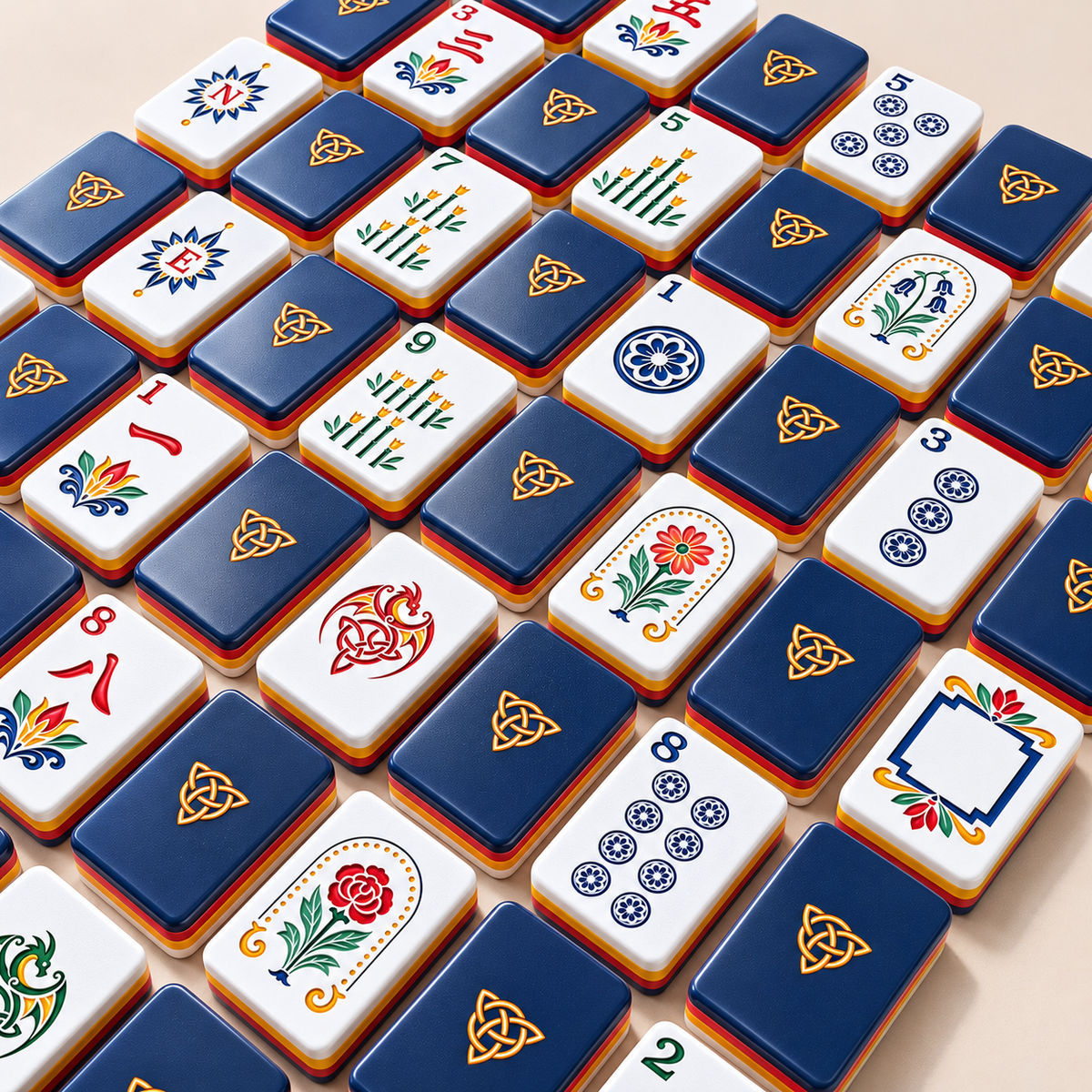
Three-player mahjong arose in early 20th-century China as an adaptation when four players weren't available, and it remains popular across Asia and among Western hobbyists today. The game removes one player's position (usually South) and typically reduces the tile count by removing one suit or specific tiles. Chinese three-player uses 108 tiles (two suits plus honors), while Japanese Mahjong (Riichi) employs a 136-tile set with modified hand values. American three-player, less common than four-player, still draws from the current National Mah Jongg League card but requires house rules for positions and the deal sequence. The core appeal: flexibility—you can host a game with just three friends instead of waiting for a fourth. Mahstead's best-selling mahjong sets work for three-player when you adapt seating and follow variant-specific tile rules.
Three-player mahjong emerged when fewer than four players gathered to play. Rather than abandon the game, Chinese communities simplified it by removing tiles and redistributing positions. This pragmatic solution became tradition, spawning distinct regional and modern variants. Today, three-player offers a genuine alternative to the four-player standard—not a shortcut, but a separate game with its own logic and social rhythm.
Where did three-player mahjong originate?
Three-player mahjong likely arose in early 20th-century China during the game's rapid evolution. Mahjong itself was codified around 1920, and variant adaptations followed quickly. When a regular four-player circle lost a participant, players experimented with tile removal and position reassignment rather than postponing games. Guangdong province, already a mahjong hub, saw regional three-player styles develop and spread through family networks. By mid-century, three-player was established enough in Hong Kong and Taiwan to support house-rule standardization and friendly competition.
The Japanese adopted and formalized three-player into Riichi Mahjong during the post-war era. Rather than simply cutting four-player tiles, Japanese designers built a coherent three-player system with new hand patterns, tile distributions, and scoring adjustments. This deliberate engineering—similar to how they created Riichi's modern scoring table—reflected Japan's preference for documented rule sets. Western players encountered three-player mainly through Japanese competitive Riichi circles, not through Chinese regional play, which shaped how Westerners understand the variant today.
American mahjong communities rarely adopted three-player as a standard, though it appears in house-rule collections. The four-player National Mah Jongg League card dominates, and American players usually prefer four-handed games. However, some clubs and home groups maintain three-player rulebooks for flexibility, drawing either from Chinese or Japanese foundations. The rarity of published American three-player rules reflects both the game's institutional structure and players' cultural preference for the large, predictable four-player format.

How does Chinese three-player mahjong work?
Chinese three-player (sanma, 三麻) removes one suit entirely, leaving Bams and Craks (or Dots and Bams), plus all honors and flowers. This yields 108 tiles: 6 per number per suit (6 × 9 × 2 = 108), plus 16 winds and 12 dragons, minus flowers or with flowers intact depending on house rules. One player occupies North (eliminated from the four cardinal positions), and the other three take East, South, and West. The deal and turn order follow the four-player compass logic, but with a three-seat rhythm.
Hand completion requires 14 tiles (winning hand of 4 groups + 1 pair, or triplets/quints and pairs depending on local rules). Pung, kong, and chow calls work much like four-player Chinese, but the absence of one suit dramatically changes statistical hand likelihood—certain melds become rarer, others more frequent. Discards move faster (fewer tiles in circulation), and the risk of "eating" discards shifts because fewer players compete for each tile.
Winning hands follow regional scoring tables, often less standardized than Riichi or four-player Chinese official rules. Some circles use simpler point systems (all wins pay equally); others employ intricate multipliers. Seasons and flowers may be active or dormant, and joker/wild tile use varies widely. Because no international body codifies Chinese three-player, you'll encounter house variants even within a single city—always clarify rules before play.
What is Japanese Riichi three-player mahjong?
Japanese three-player Riichi (sanma) is a fully engineered variant with published rules, tile counts, and scoring. It uses 108 tiles: both Honors (winds and dragons, 28 tiles) and two suits at full 1–9 (36 per suit). The traditional "East three" configuration seats players at East, South, and West, with North's position absent. Deal and turn order rotate around this triangular seating.
Winning hands in Riichi three-player follow the standard four-player yaku list but with adjustments: some hand patterns gain or lose value because tile availability changed. For instance, a pattern that was moderate in four-player may become more common (and thus lower-valued) in three-player. Official Riichi tournament rules define exact point adjustments; casual play often uses simplified versions.
One major rule shift: the dealer (East) may play multiple turns in a row if they win (called "renso" or dealer continuation). Because three players generate fewer discards, the dealer's seat advantage compounds—they win more often and keep the deal longer. This differs from four-player, where dealer advantages are real but diluted by more competition. Serious Riichi players embrace this dynamic; casual groups sometimes modify it to reduce runaway scoring.
How does American three-player mahjong work?
American three-player is rare but playable under house rules adapted from the four-player National Mah Jongg League card. Most adaptations seat players at East, South, and West (eliminating North). The deal sequence shortens to three players, and the Charleston—the pre-game tile-passing ritual—adjusts accordingly. Some groups skip the Charleston entirely for three-player to simplify setup.
The core problem: the League card is designed for four-player only. Three-player hands must come from modified subsets of the card or from separate three-player rulings published by individual clubs (not the League itself). This lack of an official League standard means every American three-player group negotiates its own hand list. Some players photocopy and manually highlight valid three-player patterns; others reference house-rule documents passed through their circle for years.
Joker rules stay identical: jokers substitute for any single tile in a pung, kong, quint, or sextet, but never form a pair and never form a "single" tile. The 152-tile game mechanics remain consistent. However, with only three players, wall depletion and hand completion odds shift noticeably. Discard pools shrink faster, creating tighter hand windows and more defensive play. Many American players find three-player feels rushed compared to the leisurely four-player pace; others enjoy the tighter decision-making.
When should you choose three-player over four-player?
Choose three-player when exactly three players show up and you want to play the game rather than wait for a fourth. Three-player also works if one player rotates out mid-session (sitting "dead" for one or more rounds while the other three play). Some home groups deliberately rotate three-player games to give everyone periodic breaks, then return to four-player.
Three-player suits players who prefer faster rounds and denser decision-making. Fewer discard options mean fewer speculative plays; you must adapt your hand strategy mid-game more often. The reduced tile pool rewards hand reading and memory—you know what's been thrown, and fewer options remain.
Geographic and cultural factors matter. Japanese players or Riichi enthusiasts may embrace three-player as a legitimate format with published rules. Chinese regional players might maintain three-player traditions tied to home-province customs. American players, bound to the League card and four-player culture, rarely seek three-player unless flexibility demands it. If your group is mixed (some Japanese, some American, some casual), clarifying which variant you'll play before the first tile lands prevents mid-game rule conflicts.
Aspect | Chinese Three-Player | Japanese Riichi Three-Player | American Three-Player |
Tile Count | 108 (two suits + honors) | 108 (two suits + honors) | 152 (all three suits + honors, reduced by house rule) |
Hand Size | 14 tiles | 14 tiles | 14 tiles |
Official Standard | Regional house rules | Published Riichi rules | None (house rules per group) |
Scoring | Varies by locale | Standardized tables | Adapts four-player card |
Dealer Advantage | Moderate | High (renso rule) | Moderate |
Best For | Flexible casual groups | Tournament or serious casual play | Unexpected three-player situations |
🀄 Shop best-selling mahjong sets →

What tiles and set do you need for three-player?
If you're playing Chinese three-player, you need a 108-tile set or a standard 152-tile set with one suit removed before play. Most players own a full American 160-tile set and simply set aside one suit's tiles in the rack or bag. This requires discipline—accidentally mixing in Dot tiles during play ruins the hand.
Japanese Riichi three-player also uses a 108-tile subset; Japanese sets are sold specifically in 108 or 136-tile counts. If you own only a 144-tile Japanese set, remove one suit again. American three-player typically uses the full 152-tile count from a standard best-selling American mahjong set, but follow your group's published hand list to know which patterns are legal.
A practical checklist before you buy or play:
Verify your group's exact tile requirement. Do not assume three-player uses 108—Chinese, Japanese, and American rules differ.
Confirm the hand list or scoring table your group uses. Write it down or screenshot it.
Set up tiles in a separate space if removing one suit. Use a rack or small container to keep removed tiles out of reach.
Practice the dealer/position rotation for three players before your first real game.
Have engraved American mahjong sets or mats labeled by player name if hosting, so roles stay clear across multiple rounds.
🎁 See our most-loved mahjong sets & accessories →
What house rules should you establish before playing three-player?
Before the first game, agree in writing on these points:
Variant: Chinese, Japanese Riichi, or American three-player? Which published rulebook or house document?
Tile count and tile removal: 108 or 152? Which suit or tiles go out?
Seating/positions: Which three compass directions (East/South/West) and which player starts as dealer?
Deal sequence: Does dealer always go first in turn rotation, or does the North-absent position affect play order?
Charleston: Is the pre-game tile-passing ritual used, modified, or skipped?
Winning hands: From the League card, a subset, or a separate document? Are all four-player hands legal or only those geometrically compatible with three seats?
Joker rules: Identical to four-player (substitute for single tile in pung/kong/quint/sextet; never pair; never single)?
Scoring: Does each win pay equally, or do multipliers apply? Who scores what for a win from the wall vs. a discard claim?
Wall depletion: What happens if the wall runs dry before anyone wins? Dead hand, or specific tie rules?
Rotation: After each round, do all three players move position, or does the dealer stay and the others swap?
Document these and email or photograph them for reference. Clarifying once saves debate every round.
What equipment makes three-player hosting easier?
Mahjong mats with labeled player zones keep seating and tile organization clear, especially helpful if players rotate. A mat sized for three players, or a standard four-player mat with one zone marked "inactive," prevents confusion.
Mahjong racks with pushers let each player organize tiles cleanly without the fourth rack sitting empty—less visual clutter and faster hand reads. If you have racks, use three; pack the fourth in your mahjong bag or case for future four-player games.
Dice remain standard: two dice (one for wall depletion, one for player number). Wind markers or direction cards help rotate positions consistently. A printed copy of your group's three-player rules, laminated or in a clear sleeve, sits on the table during play for quick reference.
✨ Find your Mahstead set — free US shipping →
What to check before you buy
Your group's chosen variant: Confirm whether you need 108 or 152 tiles before purchase. Do not assume.
Tile removal logistics: If buying a 160-tile American set for three-player Chinese, ensure you have a storage container or bag to safely remove and isolate one suit.
Rules documentation: Request or create a written three-player ruleset from your group before the first game. Avoid playing "by memory."
Set durability: Acrylic tiles in a best-selling collection withstand frequent removal and replacement if you regularly swap between three- and four-player. Verify tile quality before committing.
Future flexibility: If your group might return to four-player, ensure you own a complete four-player set—not a cut-down three-player set—so you're never stuck.

FAQ
Can you play American mahjong three-player using the current League card?
Yes, but no official three-player version exists. Your group must identify which hands on the four-player card remain geometrically valid for three players, or adopt a published house-rule list. Most American clubs rarely standardize this, so you'll negotiate rules with your specific group.
Is Japanese Riichi three-player harder than four-player?
It's different, not inherently harder. Fewer discards mean tighter decisions and more hand-reading. The dealer advantage (renso rule) is stronger, so competitive play shifts strategically. Casuals find it faster-paced; serious players find it more dynamic.
What happens if one player in a four-player group misses a session—do you switch to three-player rules?
Most groups either wait for the fourth or rotate that player out, letting three others play under three-player rules for one or more rounds while the fourth sits dead. Once the fourth returns, you revert to four-player. No tile removal is usually necessary; you just adapt seating and position rotation.
Do you need special three-player tiles, or can you use a standard set?
A standard 152-tile American set works for three-player if you remove one suit and set it aside. Chinese and Japanese three-player can use a dedicated 108-tile set or a cut-down subset of a full set. No special tiles are required; it's purely a matter of which tiles are in play.
How do you handle the Charleston (tile-passing ritual) with three players?
Some groups modify the Charleston to fit three seats (three passes instead of four), while others skip it entirely for three-player to save time. Clarify with your group—there's no universal rule.
If I'm new to three-player, which variant should I learn first?
If you know four-player American mahjong already, American three-player (adapted from your group's card) is easiest. If you want a fully standardized, published format, Japanese Riichi three-player has the clearest rulebook. Chinese three-player is most flexible and least formal—ideal for casual, experimental groups.


View More
View More
View More
