
History of Hong Kong Mahjong: Rules, Tiles & Evolution
Last updated: Nov 23, 2026
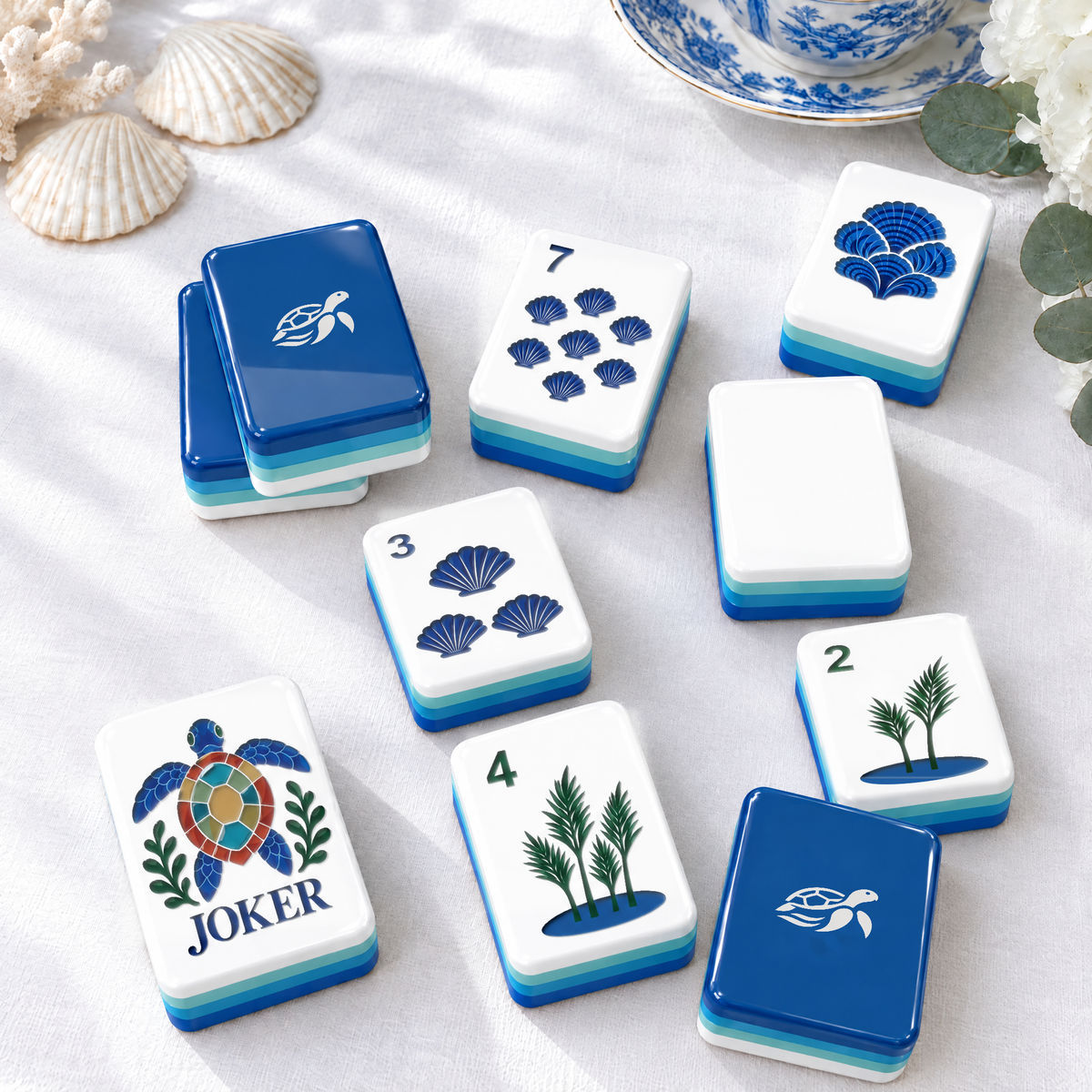
Hong Kong mahjong emerged in the early 20th century as regional house rules solidified around Cantonese gambling culture, emphasizing hand-building speed and flexible winning patterns over rigid card systems. Unlike American mahjong, which restricts hands to a published annual card and requires exact tile patterns, Hong Kong mahjong allows players to form standard melds (chows as 1-2-3 sequences, pungs as three identical tiles, and kongs as four) and win with any complete 13-tile plus 1 hand that includes two pairs, three sets, and an eye. The game uses 144 tiles across four suits, winds, dragons, and flowers; play is faster, scoring is point-based, and hands are discovered live during play rather than pre-validated. Today, three main Hong Kong variants dominate: fast-paced competition play, traditional leisure play with flexible melds, and solitaire versions. Whether you're learning classic Hong Kong rules or exploring American variants, understanding this history deepens your appreciation for how regional innovation shaped every modern game—and helps you choose the right tile set for your play style from our best-selling collection.
What made Hong Kong mahjong different from Classical Chinese play?
Between 1910 and 1930, Cantonese players in Hong Kong developed their own rule variant by simplifying complex regional versions and adapting melds for speed and accessibility. They standardized the 144-tile deck (the version most of Asia still uses), clarified chow rules so any player could form 1-2-3 sequences openly, and removed the rigid hand validation system that earlier Chinese variants required. The result was a game where strategy emerged from live play and reading opponents' discards, not from consulting a reference card—making it faster, more social, and easier to teach. This core innovation became the template for modern play across Southeast Asia, Taiwan, and eventually Japan's riichi mahjong. Hong Kong players also pioneered the "limit" scoring system (where certain hands pay a fixed maximum) that reduced pressure on casual players and made the game sustainable for long social sessions.

How do Hong Kong hand patterns differ from American mahjong?
Hong Kong mahjong allows three core meld types: chows (sequences like 4-5-6 Bamboo), pungs (three identical tiles such as 3-3-3 Dot), and kongs (four of the same tile). In contrast, American mahjong forbids chows entirely and limits exposed sets to pungs, kongs, quints (five), and sextets (six), all from a fixed annual card. A winning Hong Kong hand is always 14 tiles: one pair plus four melds of three tiles each. An American winning hand must match one specific pattern from the current year's National Mah Jongg League card—there's no universal "any complete set" rule. This means Hong Kong players develop pattern recognition for 10 or 15 classic hand shapes (like "pung of flowers, three chows, one pung, one pair"), while American players must reference the published card during play. For a beginner choosing where to start, Hong Kong rules feel more intuitive if you've played poker or rummy; American rules require memorizing the card but reward deep strategic planning within that constraint.
Aspect | Hong Kong | American |
Tile count | 144 | 152 |
Chows allowed | Yes, openly exposed | No; forbidden |
Hand pattern | Any valid 14-tile combination | Specific card pattern only |
Meld types | Chows, pungs, kongs | Pungs, kongs, quints, sextets |
Reference tool | Player memory | Current-year card required |
Winning speed | Fast (10–20 minutes typical) | Medium (15–30 minutes) |
Scoring | Point-based limits | Complex per-hand values |
Joker use | Restricted, not in pairs | Never in pairs or singles |
Why did Hong Kong rules spread faster than other variants?
Hong Kong mahjong's simplicity and speed made it ideal for export. Cantonese traders, sailors, and immigrants carried the game to Singapore, Malaysia, and Macau in the 1920s–40s; by the 1960s, it had become the de facto standard across overseas Chinese communities. The rule set's reliance on memory and classic hand shapes (rather than annual cards or complex scoring tables) meant that players could teach the game in 30 minutes, adapt it to local house rules easily, and play consistently across venues. In contrast, Japanese players in the 1920s adapted Hong Kong rules into riichi mahjong—adding the drawn tile reveal system and concealed hand melds—which became the national standard and now dominates East Asia. American mahjong, developed later and marketed to non-Chinese women in the 1920s–30s, took the opposite path: it layered the card system and complex scoring to appeal to puzzle-solving players and create a standardized, tournament-ready format. Today, Hong Kong rules are used by an estimated 100+ million casual and competitive players, while American mahjong remains concentrated in North America and Australia, reflecting both the game's cultural roots and how differently East Asian and Western players approached rule formalization.

What are the main Hong Kong variants played today?
Fast competition play (tournament standard) emphasizes rapid hand recognition and quick calls, with strict rules on concealment and tile exposure; hands are scored by repeating pairs (or "winning tile") and require declaring your hand type before play. Leisure or casual play allows more flexible melds, negotiable betting limits, and house rules tailored to local groups—this is the version played in most family gatherings and community centers. Solitaire or puzzle play removes the competitive element entirely; a single player arranges all 144 tiles face-up and solves match-pair puzzles, often available as digital apps or physical tile sets used for meditation and brain exercise. A fourth variant, mixed play, blends Hong Kong and other regional rules (such as Taiwanese or Fujian variants), which is common in diaspora communities where older generations hold multiple rule sets in memory. If you're hosting regular games with friends from different backgrounds, starting with leisure rules and keeping house rules written down helps everyone stay aligned—and having a matching mahjong mat with clear tile sections makes calling and tracking discards smooth for newer players learning the speed differences between variants.
How do Hong Kong scoring and limits compare to American play?
Hong Kong scoring is cumulative and based on hand type and winning circumstance: a player earns points from other players based on whether they won from the discard, drew from the wall, or achieved a special pattern. Limits cap payouts (e.g., a basic win pays one unit, a limit hand pays a fixed maximum), making the game sustainable over long hours without bankrupting casual players. American mahjong scoring uses a per-hand value system based on the card: each hand has a point count, and the player holding that exact pattern wins the full point value if that hand is "closed" (no exposed melds), or reduced points if melds were shown. Scoring in American play is typically tracked on paper across several rounds, while Hong Kong scoring is settled tile-by-tile at the end of each hand. This means Hong Kong games feel continuous and social—payouts happen immediately, and everyone calculates in real-time—while American games require careful scoring notation and post-hand review. For casual home players, Hong Kong's limit system is more forgiving; for tournament or puzzle players seeking exact point calculation, American methods reward deeper number work.
What should you check before learning Hong Kong mahjong?
Confirm the variant your group uses – ask whether you're learning fast tournament rules, casual leisure play, or a house-specific mix. Don't assume all Hong Kong rules are identical; regional tweaks exist in every city.
Memorize 8–12 common winning patterns first – focus on "all pungs," "all chows," "mixed chows and pungs," and "one pair with limit" rather than trying to recall every possible combination. Muscle memory builds faster than exhaustive study.
Start as a non-dealing player – the dealing player (East, or 莊) bears heavier scoring risk in many variants; sitting as South, West, or North lets you observe calling rhythm before managing pressure.
Confirm tile count and special rules – ask whether the group plays with 144 or 152 tiles, whether flowers are mandatory or optional, and whether bonus tiles (如 extra jokers) are in the set.
Watch one full hand before calling – silent observation of one complete round teaches you the pace, discard patterns, and moment-to-moment decision logic better than any explanation.
Have a scorekeeper or use a running tally app – Hong Kong games with casual players often end in confusion if scores aren't tracked live; assign one person or use a phone calculator to prevent disputes.
🀄 Shop best-selling mahjong sets →
For players exploring multiple variants, a durable mahjong set with clearly marked tiles and a protective case ensures that whether you're playing Hong Kong leisure rules with family or learning American tournament formats, your tiles stay legible and organized through years of play.
🎁 See our most-loved mahjong sets & accessories →
Understanding Hong Kong mahjong's history—its emergence from Cantonese gambling culture, its spread through diaspora networks, and its refusal to codify into a single "official" card the way American mahjong did—reveals why it remains the world's most adaptable variant. Its strength lies in human memory, local custom, and social flexibility rather than centralized rules. If you're drawn to that freedom and want to host games where friends from different backgrounds can join seamlessly, focus on learning the core patterns, clarifying house rules upfront, and investing in high-quality tiles and mats that make tile reading and discard tracking effortless. The history of Hong Kong mahjong isn't just about the past—it's alive every time your group gathers, negotiates house rules, and rediscovery why this game has survived a century of innovation.
✨ Find your Mahstead set — free US shipping →

FAQ
Is Hong Kong mahjong harder to learn than American mahjong?
Not necessarily harder, but different. Hong Kong rewards pattern memory and fast recognition; American rewards card-reading and exact pattern matching. Beginners often find Hong Kong more intuitive because you're not constantly consulting a reference, but casuals prefer American's "fixed rules" predictability. Start with whichever your local group plays.
Can I use the same tile set for both Hong Kong and American mahjong?
Yes. Both games use identical tile designs and symbols. The only difference is how many tiles are in play (Hong Kong uses 144, American uses 152 with 8 jokers), so an American set works fine for Hong Kong—you just don't use the extra jokers. A standard 160-tile set gives you flexibility for both.
How long does a typical Hong Kong mahjong game take?
10–30 minutes per hand, depending on skill level and house rules. Casual leisure play runs slower; fast tournament play finishes in 10–15 minutes. A full session of 4–8 hands typically takes 1–2 hours, much shorter than American rounds which average 20–40 minutes per hand.
What do the four winds and dragons represent in Hong Kong mahjong?
Winds (North, East, South, West) and dragons (Red, Green, White) are honor tiles used in melds just like numbered tiles. They often appear in high-scoring hands and special patterns. In Hong Kong, the White dragon (not typically used as a wild joker like American play) is a regular meld tile.
Where can I find a group playing Hong Kong mahjong near me?
Check community centers, libraries, synagogues, country clubs, and online meetup boards in your area—search "mahjong Hong Kong rules" or "Cantonese mahjong club." Many diaspora neighborhoods have casual groups meeting weekly; local Asian cultural centers often post schedules or can refer you to established players.


View More
View More
View More
