
Mahjong Case Made in USA: Durable Travel Options for Your Set
Last updated: Nov 23, 2026
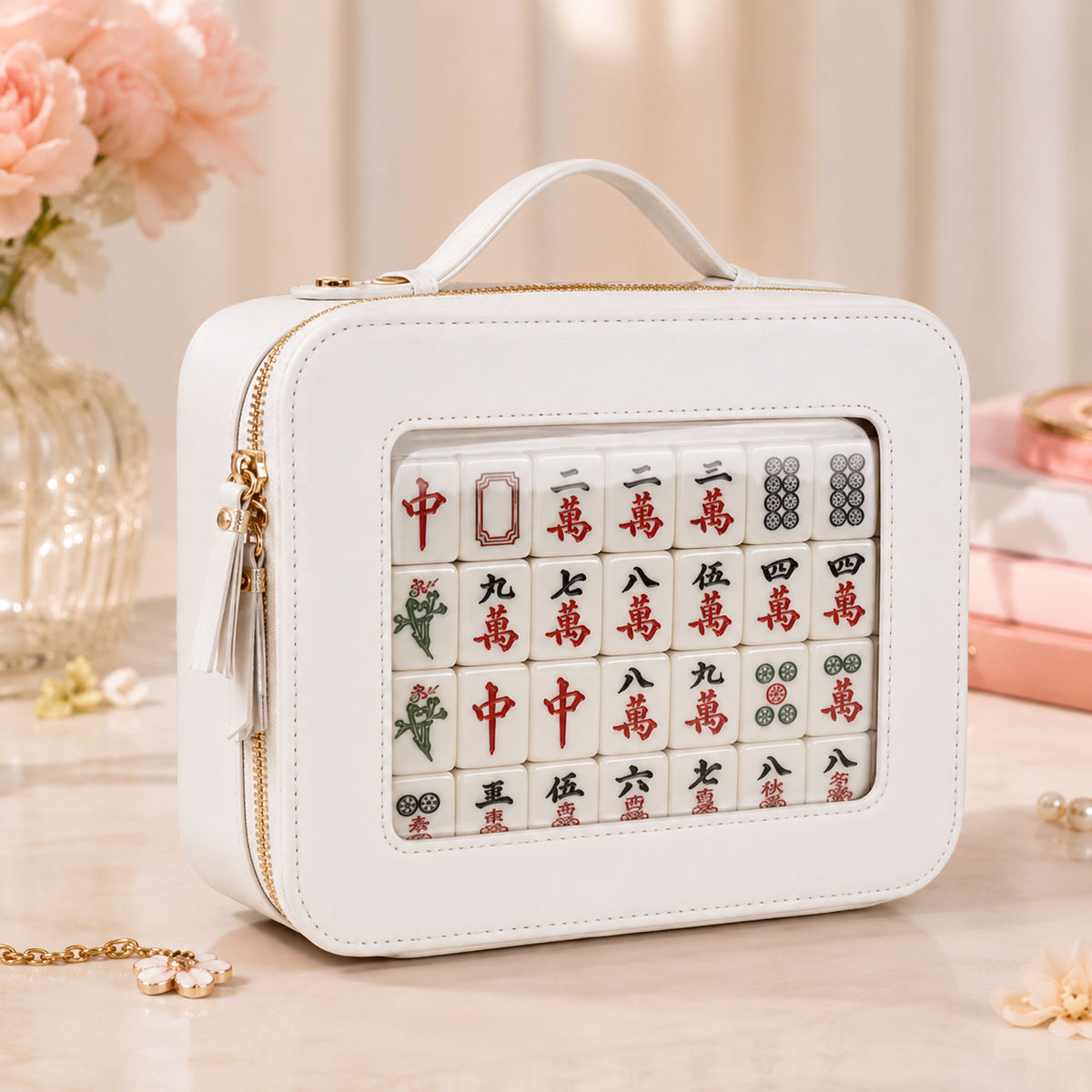
A mahjong case made in the USA protects your tiles, rack, mat, and dice during travel and storage. Our acrylic cases are individually cut and assembled in Dallas, Texas, with careful attention to tile fit and closure. Cases range from soft padded bags to rigid acrylic boxes; most ship free across the US. Costs vary by material, size, and customization (engraving, tile compartments). Choose based on how often you transport your set: weekly players benefit from reinforced cases with handles; casual hosts prefer softer bags. Before ordering, verify case dimensions match your 160-tile set, check whether the case holds your mat and racks, and confirm whether you want interior compartments or open storage.
American mahjong players need reliable cases because a 160-tile acrylic set represents a significant investment. Whether you host weekly games, travel to tournaments, or store your set long-term, the right case protects tiles from cracks, jokers from loss, and keeps your mat and racks organized. We've watched countless players replace cracked tiles or hunt for missing jokers—a solid case prevents both.
What makes a USA-made mahjong case worth the choice?
Manufacturing locally means cases are built to fit American mahjong sets precisely. Our Dallas-made cases account for the exact dimensions of 160-tile acrylic sets, the thickness of tournament-grade mats, and the length of racks with pushers. Domestic production also eliminates guesswork about durability standards and allows us to inspect each case before it ships. Cases made abroad often arrive with loose closures or compartments that shift during transport; we control that risk here.
🀄 Shop best-selling mahjong sets →

Hard acrylic cases vs. soft padded bags—which do you actually need?
Hard acrylic cases offer maximum protection for frequent travelers and tournament players. They resist compression, stack neatly in closets, and keep tiles aligned during car or plane travel. Soft padded bags work best for players who transport sets by car weekly to the same venue—lighter weight, easier to carry, and adequate cushioning for short distances. A practical rule: if your set travels more than twice a month by plane, or if you want your set displayed during storage, choose hard acrylic. For casual transport and backup storage, soft bags suffice. Hard cases cost more upfront but extend tile life; soft bags are gentler on your budget and sufficient for local play.
How do you check if a case fits your entire mahjong setup?
Before ordering, measure three dimensions: the footprint of your 160-tile set (length × width), the height when tiles are stacked in their racks, and the thickness of your mat rolled or folded. Most standard American mahjong sets are roughly 12–14 inches long; mats add 0.5–1 inch when rolled. Check whether the case lists interior compartments for racks, pushers, dice, and jokers separately, or if it's one open space. If you own a mahjong mat and racks with pushers, verify the case holds them together without forcing. Many online listings don't specify interior layout clearly—ask whether the case has a dedicated dice pocket, joker section, or mat slot before checkout. Measure your mat separately; some cases hold tiles and racks but not a full mat.
✨ Find your Mahstead set — free US shipping →
What interior features protect tiles and reduce lost jokers?
Cases with removable or fixed tile racks keep your acrylic set upright and prevent tiles from sliding. Joker pockets (small pouches sewn or molded into the lid or sides) save you from hunting for that eighth joker before game night. Dividers for dice, scoring chips, or spare blanks keep small pieces from rattling loose. However, more compartments add weight and cost; if you keep dice and jokers in a best-selling acrylic set, a simple tile holder plus a zippered pocket may be all you need. Consider how you currently store spare jokers and dice—if they're loose in a drawer, a dedicated case pocket prevents loss during transport.

Engraved cases and custom mahjong sets—do they go together?
An engraved mahjong set pairs beautifully with a matching case, especially for gifts or club sets. Some players engrave both the tiles and the case with a title (e.g., "Beth's Mahjong Crew – 2026") to mark ownership and create a cohesive look. If you're ordering an engraved set, ask whether a case can be customized with the same design or a complementary text. Custom engraving on cases typically adds lead time; plan 2–4 weeks if you want both set and case personalized. For tournament or club play, an engraved case also discourages accidental mix-ups when multiple sets sit side by side.
Comparison Table: Case Types for American Mahjong
Type | Best For | Durability | Fits Mat? | Cost Range |
Hard acrylic | Frequent travelers, tournaments | Excellent—resists compression | Usually no; ask first | Higher |
Soft padded bag | Weekly local transport | Good for short trips | Often yes, if mat fits rolled | Moderate |
Hybrid (semi-rigid) | Balanced protection | Very good—lighter than full acrylic | Sometimes; check specs | Moderate–Higher |
Open cloth bag | Casual home storage | Fair; protects from dust | Yes, if mat folds small | Lower |
What to check before you buy a mahjong case
Dimensions and fit: Confirm the case interior dimensions accommodate your specific set. Acrylic sets vary slightly by maker; measure your set length and rack height, then compare against the case specs listed.
Material quality: Ask whether the case is solid acrylic, thermoformed plastic, or a hybrid. Solid acrylic is heavier but lasts decades; cheaper plastics crack if dropped. Check if handles are reinforced and whether closures (clasps, zippers, velcro) are rated for frequent use.
Compartment layout: If you use mahjong racks with pushers, verify the case holds them without forcing or crushing. Ask whether dice, jokers, and scoring pads have dedicated pockets or if everything goes in one tray.
Shipping and returns: Even though cases ship free across the US, confirm the return window. If the case doesn't fit your set, you should be able to exchange it within 30 days.
Customization lead time: If you want engraving or a custom design, factor in extra production weeks. Plan purchases for tournaments or gifts with a 4–6 week buffer.
Why USA manufacturing matters for your mahjong case
We make cases in Dallas because we know American mahjong sets inside out. We host weekly games ourselves, so we've tested how cases perform when racks shift, when dice roll loose, and when a mat is shoved into a too-small compartment. A case that works in theory but fails in practice wastes money and risks your tiles. Our USA-made cases address real player pain points: reinforced corners where tiles most often crack, ventilation to prevent moisture buildup on acrylic, and closures that stay secure after 100 uses.
🎁 See our most-loved mahjong sets & accessories →
Many new players underestimate how much they'll move their set. If you're serious about weekly games, investing in a quality travel bag saves you hundreds in tile replacement over the next five years. Start with an honest assessment: Do you transport your set to one venue, or multiple locations? Do you store it on a shelf or in a closet where dust accumulates? Will you eventually add a mat and racks? Once you answer those questions, a USA-made case becomes practical rather than luxury.

FAQ
Can a mahjong case hold both the tile set and a folded mat?
Most hard acrylic cases hold just the 160-tile set and racks. Soft padded bags often accommodate a rolled or folded mat in a separate compartment or pocket. Always check the interior dimensions and contact us before ordering if you need mat storage.
How do I know if my acrylic set will fit inside a case?
Measure your set length and width, then the height when tiles are in racks. Compare those three measurements to the case interior specs listed on the product page. If specs aren't clear, ask for interior dimensions before purchase.
Do USA-made cases cost significantly more than imported ones?
USA manufacturing costs more per unit, but cases last longer and require fewer replacements. See current pricing on the product page to compare. Many players find the durability justifies the upfront cost.
What should I do if a case arrives with a defective closure or crack?
Contact us within 30 days with photos. We replace or refund defective cases. Free return shipping may apply depending on the fault—ask when you report the issue.
Can I get a case engraved with my name or club name?
Yes. Engraved cases typically require additional production time (2–4 weeks). Customization is available on select case styles; ask which designs support engraving when you're ready to order.
How should I store my mahjong set inside the case long-term?
Keep the case in a cool, dry space away from direct sunlight. Acrylic can become brittle in extreme heat or cold. Store away from pets and children. Do not stack other items on top of a hard case; weight can warp the lid over time.


View More
View More
View More
