
Halloween Mahjong Party Ideas: Themes, Rules & Setup
Last updated: Nov 23, 2026
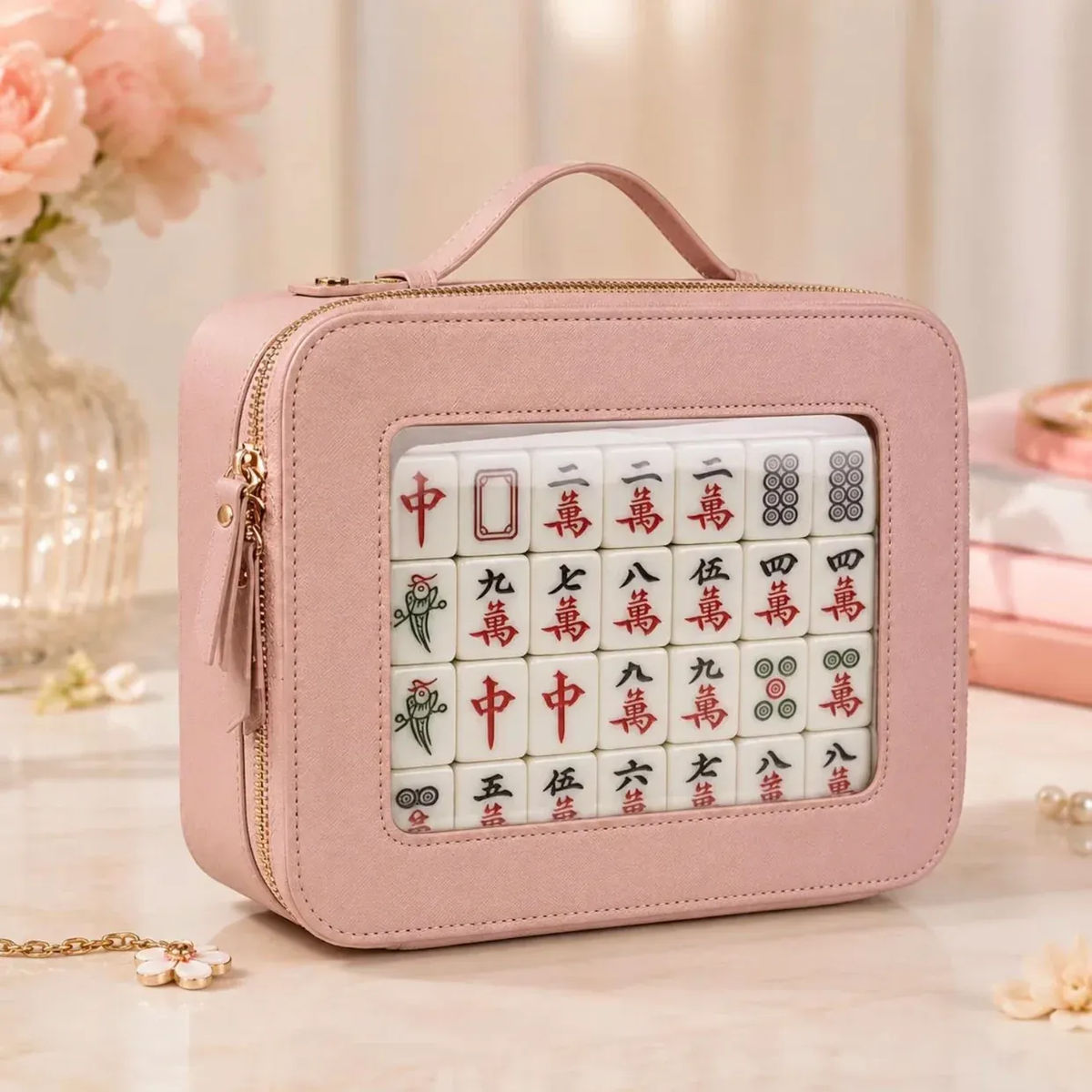
A Halloween mahjong party works best with four players, a themed American mahjong set, and a mat for clear tile visibility. Host one evening in your home or gathering space—plan 2–3 hours for casual play with newcomers, 90 minutes for experienced players. You'll need a 160-tile acrylic set (never 144 or 152 for comfort), the current year's National Mah Jongg League card, dice, and racks if players prefer not to hold tiles. Themed sets from Mahstead's best-selling collection include holiday and novelty designs; pair yours with a mat for a polished table. Avoid playing with worn or mismatched tiles—acrylic sets last decades and read clearly under any lighting. Invite four people, brief anyone new on the Charleston (tile-passing ritual) and how jokers work before the first hand. No real money needed; play for fun, snacks, or bragging rights.
A Halloween mahjong party blends game night tradition with seasonal fun. We host weekly games year-round, and fall themes draw newcomers who love both the ritual and the festive twist. The beauty of mahjong at Halloween is that the rules don't change—only the table vibe does. A themed set, a pumpkin mat, and a small shift in how you announce winners can turn a regular Tuesday into a memorable night.
What makes a Halloween mahjong theme work?
A strong theme gives your guests permission to have fun without overthinking strategy. The game itself is already rich with ritual: the Charleston shuffle, the wall break, the quiet focus of tile draw. Layer in a visual theme—skeleton tiles, autumn colors, witchy humor—and your guests relax into the social side faster. We've found that themed sets create natural conversation starters during the shuffle phase, when newcomers are still nervous about the rules.
Choose between three theme lanes: spooky classic (black, white, orange, skulls), autumn coziness (burnt orange, gold, deep reds), or playful kitsch (pumpkins, bats, witches). None of these change how the game plays. Your set's visual identity just signals to guests: "This is a fun night, not a tournament." From our experience, the moment someone notices a pumpkin on a tile or a orange rack, shoulders drop and chatter picks up.

How do you pick a theme that works with tile colors?
Your set's primary color and design should fit your table décor, not fight it. Most acrylic tiles come in classic ivory and black or in themed color families. If your set features orange or gold highlights, lean into an autumn palette: burnt-orange mat, black dinner napkins, gold candles. If your set is black and white, you can go either spooky-elegant (add purple lighting, silver accents) or gothic-formal (candlelight, dark linens).
Check the set's design before ordering—photos on the product page show tile face detail and backing color. Themed sets from engraved collections often feature coordinated designs that look cohesive on a mat. Mismatched sets (tiles from different eras or makers) read as chaotic, even if the room is decorated beautifully. An acrylic set with uniform color and clear engraving looks intentional and professional, which sets a respectful tone for the game itself—even in a costume.
🀄 Shop best-selling mahjong sets →
How many players should you invite, and what's the ideal setup?
American mahjong is always played four-handed. Three or two-handed variants exist but require different rules and scorecard layouts; they're not beginner-friendly for a casual party. Invite exactly four core players, then add one or two alternates who can sit out and watch—they learn the game, chat, and rotate in for the next round if someone needs a break.
Seat players North, East, South, West around your table (the card specifies hand patterns for each position, and positions rotate every hand). If your table is rectangular, North and South sit opposite; East and West sit left-right. If you're using mahjong racks with pushers, each player has their own upright organizer—this keeps tiles visible and prevents accidental reveals during the shuffle.
For a Halloween vibe, assign players "roles" if you like: East might be "The Pumpkin Dealer," South "The Skeleton," etc. It's playful fluff, but it makes newcomers feel included and gives the night a story. The actual game mechanic doesn't change. Plan 12–16 hands per session (30–45 minutes of active play), then a snack break. Most guests enjoy 2–3 sessions in an evening.

What equipment makes the table look intentional?
A dedicated mat elevates the whole experience. Acrylic sets sit loose on a table and scatter; a mat with tile zones keeps everything organized and makes the game readable. Mahjong mats come in various sizes and can be themed (autumn colors, Halloween patterns). The mat defines the play area, makes tile placement visible to all four players, and protects your table surface.
Add dice (one or two pairs per house rules), racks for players who prefer them, and a travel bag to store your set between parties. If you're hosting the same group monthly, a dedicated bag keeps tiles safe and shows guests you take the game seriously. We store our sets in protective cases so tiles don't scratch or absorb odors from kitchen spills—crucial if you're playing near snacks.
Equipment | Why it matters | For a Halloween party |
Acrylic 160-tile set | Clear tile visibility under any lighting; no dust | Use a themed design or orange/black coloring |
Dedicated mat | Organizes tiles, defines play zones, protects table | Choose autumn colors or seasonal pattern |
Racks with pushers | Helps players organize hand; reduces tile drop | Optional but reduces anxiety for newcomers |
Dice (2 pairs) | Determines wall-break position per rules | Store near the set; check they're not worn |
Snacks & drinks | Keeps energy up during 2–3 hour session | Avoid sticky-fingered foods near tiles |
How do you explain American mahjong to Halloween-party newcomers?
New players often confuse American mahjong with Chinese or Riichi variants. Clarify upfront: "This is the American game—we use a card, we have eight jokers, and hands come from one deck per year." Then walk through the Charleston (the pre-game shuffle where players pass tiles to one another) and how jokers work before anyone panics.
Spend 5–10 minutes on these core rules: (1) All four players draw 13 tiles during setup; the dealer draws 14. (2) Each hand must match a pattern on the current year's card—no improvising. (3) You can expose pungs (three identical tiles), kongs (four identical), quints (five), or sextets (six). (4) Jokers can fill gaps in exposed sets but never form a pair or stand alone. (5) When you complete a hand, call "mahjong," and scoring is tallied by hand pattern and who paid.
Hand out the League card so everyone can browse patterns during the first hand. Reassure them: "You don't memorize the card—you just glance when you need a match." Many newcomers worry the game is too complex; show them one complete hand played through, and anxiety drops fast. Then deal in.
🎁 See our most-loved mahjong sets & accessories →
What goes wrong at a Halloween mahjong party, and how do you prevent it?
Worn or mismatched tiles: If your set is 10+ years old or tiles don't match visually, players struggle to read faces and trust the game. Acrylic sets don't wear out if stored in a case; if tiles are chipped or discolored, replace the set. A new best-selling set is clearer and faster to learn on.
No mat: Tiles scatter. Players bump them while gesturing. Newcomers lose track of who's waiting for what. A mat costs less than a themed dinner and pays dividends in clarity and professionalism.
Wrong player count: Two or three players need entirely different rules. Four players is the only "standard" American game. If someone can't make it, hold off the party or play a non-mahjong game while you wait for a fourth.
Unclear hand (no clear set formation): A player forgets they need to declare all their melds as they appear on the card, or tries to call a partial hand. Before each round, say: "The card is here. Check it. If your tiles match a pattern, call mahjong loud—don't mutter."
Distracted dealer: The player in the East position opens the wall and deals. If they're chatting, the deal slows. Assign one consistent dealer for the first few hands until everyone settles in.
No snacks or drinks plan: Players get thirsty and cranky after 45 minutes of focus. Have water, tea, or cider and light bites within arm's reach. Salty snacks beat chocolate near the tiles.
What to check before you buy
Set condition: Open the box. Tiles should feel smooth, not rough. Backs should all match color. Engraving should be sharp and readable in normal room light.
Tile count: American mahjong uses 152 tiles plus 8 jokers. A 160-tile set includes spares; never add extra jokers to the game itself—use only 152 tiles + 8 jokers in play.
Mat size: Measure your table. A mat should fit comfortably with racks on each side and room for the wall break and discard area.
Racks & pushers: Racks are optional but helpful for newcomers. Pushers let players neatly organize their hand. Buy a set with both or add them separately.
Storage: If you're hosting monthly, invest in a protective bag or case. Tiles last decades in a case; they degrade quickly in a closet exposed to humidity or heat.
✨ Find your Mahstead set — free US shipping →

FAQ
Can you play American mahjong with fewer than four players?
Yes, but the rules change significantly. Two-handed and three-handed games use modified scorecard patterns and tile draws. We recommend sticking to four players for your first party; once your group is comfortable, explore variant rules—but don't mix them in the same session.
Do you need real money to keep score?
No. Many groups play for bragging rights, snacks, or points only. If your group wants to bet, set a tiny stake before the first hand (e.g., $0.10 per point) so everyone knows the terms. Mahjong is fun either way.
What's the National Mah Jongg League card, and why do you need it?
The card lists legal hand patterns for that year—changed every spring. Only hands on the card count as mahjong. You can buy the card from the League or use digital versions. Every player needs access to one copy at the table.
How long does one hand take?
Typically 5–15 minutes, depending on player speed and experience. Experienced players move faster; newcomers take longer to spot a matching pattern. Plan 45 minutes for 4–5 hands and a break.
Is a mat required, or can you play on a bare table?
A mat is optional but highly recommended. It keeps tiles organized, reduces scatter, and makes the game visible to all four players. A bare table works, but you'll chase tiles and lose track of the wall position.
Can you use Halloween-themed mahjong tiles if you're not comfortable with the rules yet?
Absolutely. Themed tiles don't change how the game plays—only the visual fun. Start with clear, simple rules, and let the set's aesthetic do the work of making the night feel special.


View More
View More
View More
