
Guangdong Mahjong Strategy: Tile Reading, Discard Patterns & Hand Flow
Last updated: Nov 23, 2026
Guangdong mahjong strategy revolves around three core skills: tile reading (tracking discards to infer opponents' hands), hand management (knowing which melds to pursue vs. abandon), and defensive play (recognizing when to stop chasing and protect your safety tiles). Unlike American mahjong, which uses a fixed annual card, Guangdong is pure hand-building with no predetermined patterns—you form pungs, kongs, chows (sequences of three consecutive numbers in one suit), and eyes (a pair) freely. Winning hands require 13 melds plus one eye, or a special hand like a flush (all one suit). Speed is higher, the pace of discard reading is constant, and players must balance aggression (winning fast) against caution (staying safe). Our community finds that players new to the variant often chase too many half-built hands at once; the discipline to fold early—to discard your dangerous tiles before they cost you—separates consistent winners from chase-prone players. #
Guangdong mahjong strategy centers on tile reading, hand shape awareness, and defensive timing. Where American mahjong follows a printed card, Guangdong demands real-time judgment: you decide which melds to build, when to call, and when to give up and defend. We've hosted Guangdong nights for years and noticed that newcomers from American play often struggle with the speed and the absence of a safety net (a pre-set hand list). The good news: the three fundamentals below will transform your game in weeks.
How do I read the discards like a real Guangdong player?
Every tile on the discard rack tells a story. If East discards a 5 Crak in turn two, she likely doesn't have a 4-5-6 Crak run brewing; if she later chows a 5 Bam, she's signaling she's working a Bam hand. Track which numbers each opponent has thrown and repeated. A tile thrown twice usually means they don't have a use for it. A tile thrown once but not again might still be wanted. The players around you are doing the same to you—never think your discards are private. Keep a mental map: "North has thrown three Craks and two Winds; East discards mostly Dots." This mental inventory becomes your defense plan. When you're one tile from going out and East is visibly closer, you must stop chasing and discard only tiles East cannot use. Reading the rack turns you from a random hand-builder into a strategic player.

What is the difference between aggressive and defensive hand shapes?
A hand shape describes the ready state—how close you are to winning and how flexible your winning conditions are. An aggressive hand has one wait: you need one specific tile to win, and you call immediately. A defensive hand has a wider wait: you can win off several tiles, which sounds good but means you're also far away. Here's the table:
Hand State | Waits | Risk Level | Action |
One-tile wait, one suit | 1 specific number | Very high (all-in) | Call only if you're leading; fold if behind. |
Wide wait (5+ tiles possible) | Multiple numbers & suits | Medium | Push if hand is safe; pivot if threatened. |
Half-built (3+ empty seats) | Unclear | High | Fold early; discard honor tiles and edge numbers. |
Pure (one suit only) | Fewer but more frequent | Medium-high | Favor pungs over chows; call at 10 or fewer tiles. |
The trap: chasing a "wide wait" to stay flexible. You end up with a hand that wins off many tiles but is also far from winning. Guangdong experts prune early. They ask: "Is this hand in the top two? If not, can I discard it and start fresh?"
When should I call versus fold and defend?
Calling means you're one tile away and will draw or take the first discard that fits. Folding means you stop chasing and discard only safe tiles—usually honors and extreme numbers (1s and 9s). The decision hinges on relative position and tile visibility.
You're East (dealer), the hand is fast, and you're two tiles away with a 50-50 wait: call. You have draw advantage and can pivot if your tiles appear.
You're West, South is clearly close, and you need two more melds: fold. Discard your edges (1 Bam, 9 Dot, Winds). If South wins off you, at least they paid for it.
You're tied with North at the same distance and have a pure hand (all Bams): keep pushing. Pure hands draw faster and reduce the tile pool's randomness.
You have six tiles left to win, and three players are already waiting: fold hard. Discard your Winds and corners immediately.
The mistake: seeing a good hand and refusing to fold. Guangdong punishes stubbornness. If you're not top-two and tiles are flying, your hand will be picked clean.
How do I manage my waiting pattern without telegraphing it?
Your wait is which tiles you need. If you've kept two 5 Bams and thrown all other Bams, everyone knows you're waiting for a Bam pung. You've telegraphed yourself. Defensive players never hold your discard tiles. To confuse opponents while playing safely:
Build across suits early. Don't collect all your Bam melds first; sketch at least one Crak and one Dot meld too, so your discards look random.
Discard from your ready melds last. If you're close on a Bam run, keep the Crak and Dot tiles alive as long as possible so opponents think you need Craks and Dots.
Hold one edge tile (1 or 9) longer than normal. Throw it on turn eight instead of turn four. You buy time and it's usually safe.
Call with a mixed hand, not a pure one. A pure hand's waits are narrower (all in one suit); a mixed hand has multiple suits to pull from, so your call feels less desperate.
The deeper principle: appear less coordinated than you are. Chaos is your camouflage.
What tiles should I always keep safe versus throw first?
Safety tiers exist. Honors (Winds and Dragons) are the safest by far—no one builds runs with them. Among number tiles, middle numbers (4, 5, 6) are riskier than edges (1, 9) because middle numbers fit into chows. Here's the ranked discard order when you're folding:
Any Wind not belonging to your hand shape. (Throw North if you see North discarded twice already.)
Honors you've held for three or more turns. (If you still don't need it, opponents don't either.)
9 Bam, 9 Crak, 9 Dot (in that order if all three are live).
1 Bam, 1 Crak, 1 Dot (same reasoning; rarely called).
Middle numbers only after all edges are gone. (4, 5, 6 are live; throw them strategically by suit.)
Never discard a tile that you just drew, unless it's a dead honor. It looks like you didn't want it and makes other players confident it's safe—then they call it and you've handed them the win. Wait one turn, then throw safely.
🀄 Shop best-selling mahjong sets →

How do I know when my hand is unwinnable and I should reset?
Some hands are sunk before you realize it. If you've taken three turns and haven't completed a single meld, or if every tile you draw clashes with what you're holding, fold and reset. The reset is mental: discard your most dangerous tiles in the next three turns and signal that you're out. Don't drag it. A dead hand costs you money and table respect.
Signs your hand is stuck:
You're waiting for one suit (say, Bams) but Bams are already 40% discarded.
You have two half-built melds (three 5s here, three 6s there) but no eyes yet, and it's turn six.
Your hand has mixed Winds and Dragons with no numeric suits started.
When stuck, discard your highest-value lost melds first. If you've kept three 3 Craks hoping for a 3-3-3 pung, and both other 3 Craks are dead, throw the third 3 Crak immediately, not turn ten. You'll feel less pain if you kill the hope fast.
What's the role of position (East, South, West, North) in strategy?
East (dealer) draws first and sets the game's tempo. If East is aggressive and fast, the game feels urgent; if East is cautious, it slows. As East, you have a slight advantage in speed—you draw first, call first if tied—so you can afford to chase slightly longer than others. South, West, and North are behind; they should fold earlier because they see more of your tiles before deciding.
Position also affects risk math:
As East: Pursue a two-tile wait more freely; your draw advantage is real.
As South (next to discard East): Be stricter; you see East's choices first and must react.
As West and North: Fold harder; you're farthest from the action and can't pivot as fast.
When you rotate to East next hand, your strategy resets. Don't carry a West mindset to the East seat; adjust.
🎁 See our most-loved mahjong sets & accessories →
What should I check before you buy a Guangdong-focused mahjong set?
Guangdong play is fast and brutal on tiles. You need a set that can handle rapid discard and constant shuffling. Look for:
Tile thickness: 0.3+ inches. Thin tiles chip easily when called and shuffled at speed.
Tile face legibility: Large, clear suit symbols and numbers. In Guangdong's pace, you can't squint.
Rack capacity: If you're tracking discards and managing six melds plus eyes, you need racks that hold 14+ tiles comfortably without crowding.
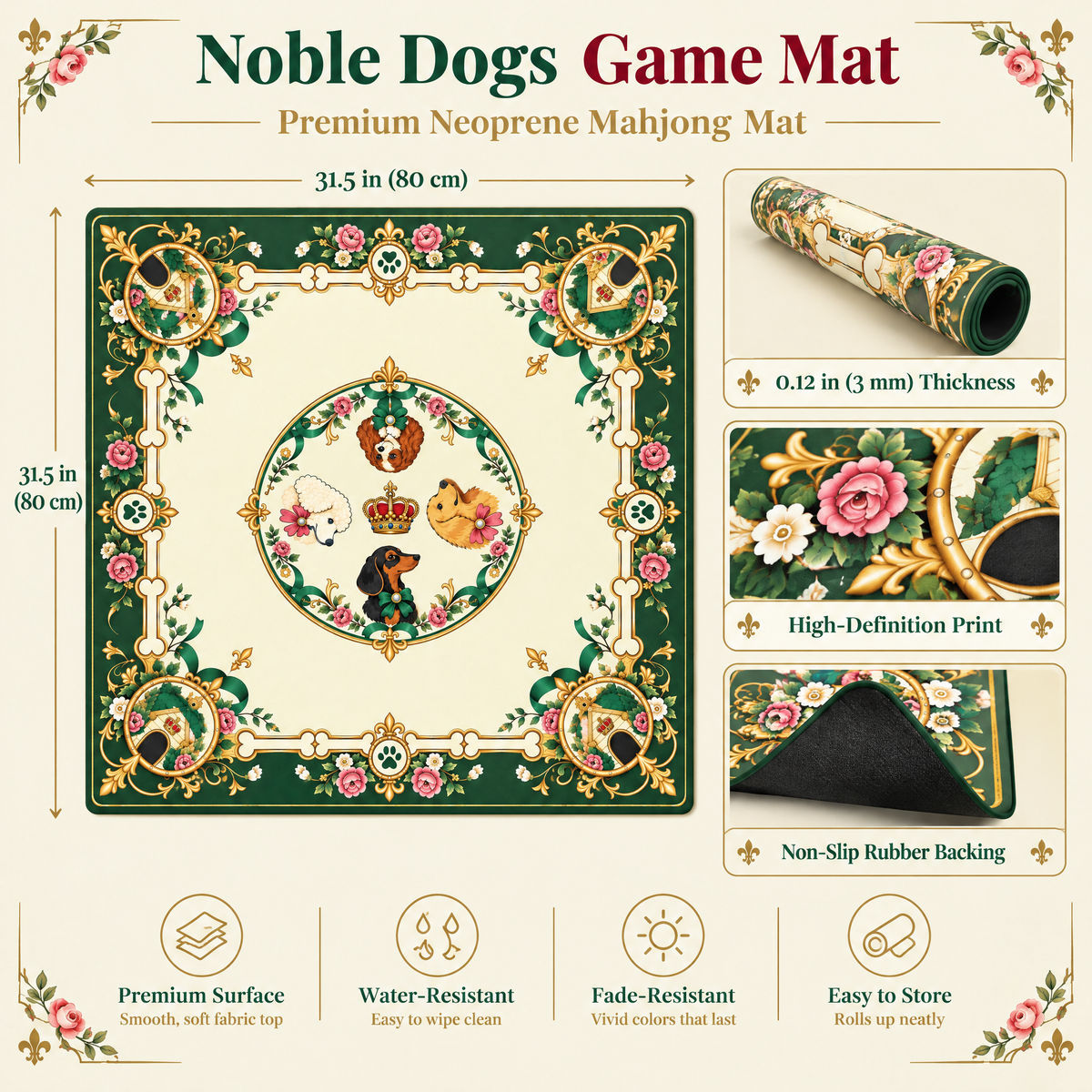
Mat grip: A mahjong mat with soft backing prevents tiles sliding during the quick calls and pushes.
Spare jokers: Guangdong players call and expose tiles constantly; jokers wear out. A set with extra jokers is insurance.
Our best-selling collection includes durable American mahjong sets with thick acrylic tiles, sturdy racks, and quality mats—all built for the pace and wear of serious play. These same sets work beautifully for Guangdong games if you're mixing variants. Check the tile thickness and rack depth before ordering.
What to check before you buy
Tile thickness & weight. Hold samples if possible; Guangdong speed rewards heavier, thicker tiles.
Rack slope & pushers. Your racks should tilt slightly so tiles don't slide when you call.
Joker count. Do you have at least 4 extra jokers beyond the 8 in play?
Mat material. Rubber or cloth backing, not bare plastic—your tiles will slide off otherwise.
Discard area space. Can your table fit 13 discards per player plus a live tile? If not, you'll collide during calls.
✨ Find your Mahstead set — free US shipping →
#

FAQ
Does Guangdong mahjong use chows like Chinese mahjong?
Yes. Chows (three consecutive numbers in one suit, like 4-5-6 Bam) are a core meld in Guangdong play. Unlike American mahjong, which forbids chows entirely, Guangdong requires them. You form chows, pungs (three identical), kongs (four identical), and a pair to win.
How many tiles do you draw per turn in Guangdong?
You draw one tile per turn after the initial 13-tile draw. You then discard one tile to keep your hand at 13. On your winning turn, you draw to 14 and declare (no discard). It's faster than American play because there's no Charleston or hand-fixing.
If someone discards a tile I need, can I call it from any player or only the most recent discard?
In Guangdong, you can call a discard from any player, not just the player who threw it. This is called a "loose tile" rule in some variants. You interrupt turn order to claim it, then discard. This keeps the game fluid and unpredictable.
What's the scoring difference between Guangdong and American mahjong?
Guangdong uses a point-based system tied to hand complexity: a simple hand (one suit, mostly chows) pays less; a complex hand (mixed suits, multiple pungs, rare melds) pays more. American mahjong scoring is fixed per year's card. Guangdong games usually run as cash rounds with points converted to money, while American play is often turn-based (East pays all, etc.).
Should I learn American mahjong first, or can I start with Guangdong?
You can start with Guangdong, but American mahjong first is easier because the hands are pre-designed and you only build exposed melds. Guangdong demands constant real-time decisions and faster hand assessment. Many players learn American first, then graduate to Guangdong for the mental challenge.
If I'm not ready to go out, can I refuse a discard and let it stay in the pool?
No. Once a tile is discarded, it's live. If you're waiting for that tile and don't call it, the next player can, or the discarder is stuck with it in the rack. You must decide: call now, fold, or stay hidden until your real wait arrives.


View More
View More
View More
