
Guangdong Mahjong for Beginners: Rules, Tiles & How to Start
Last updated: Nov 23, 2026
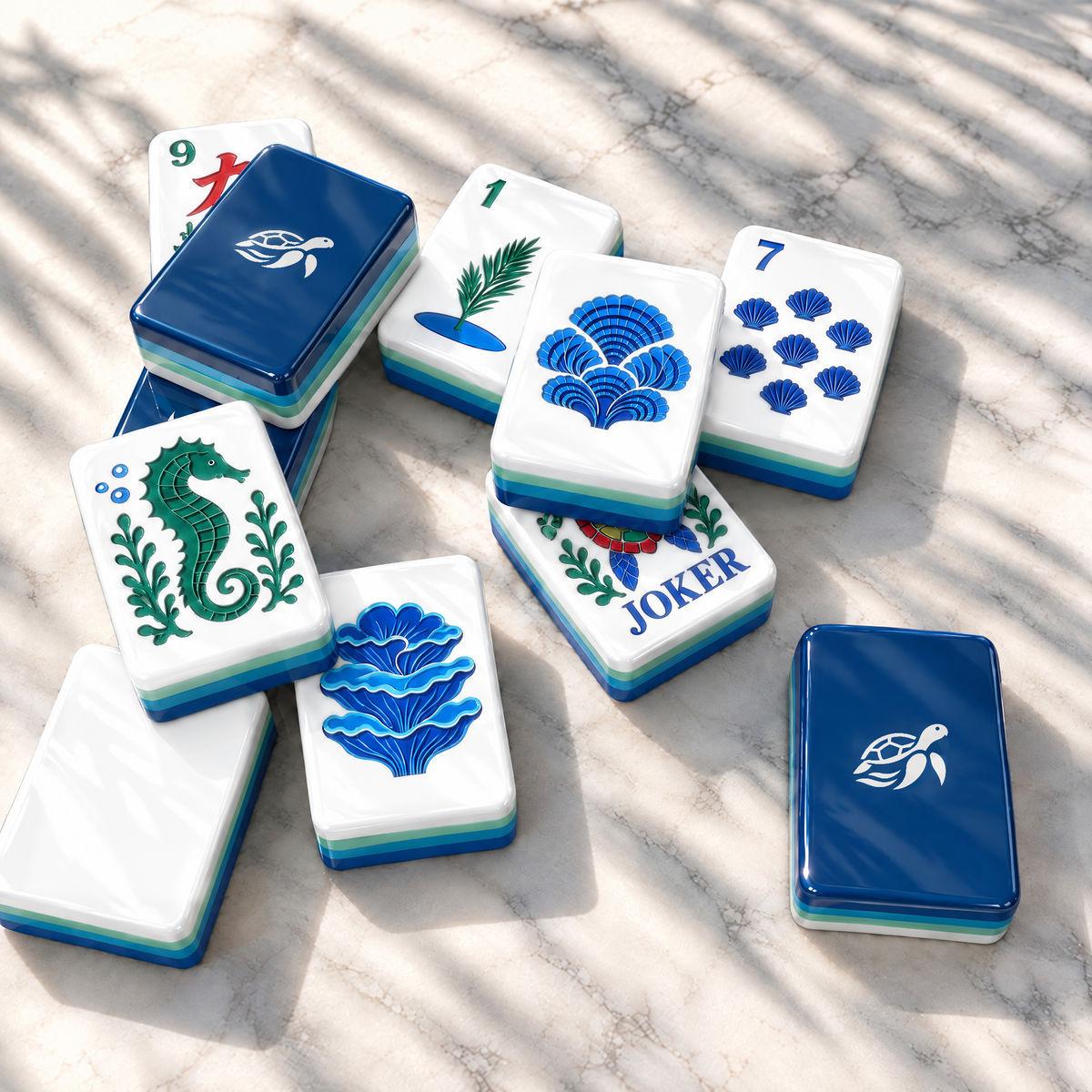
Guangdong mahjong uses 144 tiles (three suits: Bamboo, Character, Dot, numbered 1–9 in each suit, four copies of each = 108 tiles, plus 34 honor tiles: 4 winds, 12 dragons, and 8 flowers). Unlike American mahjong, Guangdong has no jokers, no fixed hand library, and no Charleston; instead, players draw and discard one tile per turn, building melds (3 identical tiles, 3 consecutive tiles, or 4 identical) openly on the table until someone completes all melds and a pair. A winning hand is a "tenpai" state—one tile away from victory. Winning happens by drawing that tile (self-drawn, "zimo") or claiming a discard ("hu"). Hands resolve faster than American games (typically 15–30 minutes), and scoring is simpler: basic win = 1 point, with multipliers for certain hand combinations. Games are played best-of-series to a target score. If you've played American mahjong, expect no National League card, no complex rank scoring, and constant active play rather than strategic dead turns—Guangdong rewards speed and tile reading over memorized patterns.
Guangdong mahjong feels like a different language compared to American play, yet both use the same tile traditions and core meld logic. If you're transitioning from American rules, or starting fresh with Guangdong, the gap is real but bridgeable in a single session. We've hosted enough players moving between variants to map the key shifts and help you avoid the traps.
What's the actual tile set for Guangdong mahjong?
Guangdong uses exactly 144 tiles, with no jokers or blanks. The composition is: 108 suit tiles (Bamboo, Character, Dot, each 1–9 × 4 copies), 16 wind tiles (N, E, W, S × 4 each), 12 dragon tiles (Red, Green, White × 4 each), and 8 flower tiles (Spring, Summer, Autumn, Winter, Plum, Orchid, Bamboo, Chrysanthemum × 1 each). Because flowers appear once, they're drawn early and replaced from the back of the wall, creating a special mechanic unknown in American play. The tile count of 144 is non-negotiable—Guangdong math and wall-drawing algorithms depend on it. You cannot play Guangdong on a 160-tile American set; the wall breaks and hand-winning odds collapse.

How does play flow from the opening draw to a win?
One player (the dealer, chosen by lottery or rotation) draws 14 tiles; the other three draw 13 each. Dealer discards one tile face-up into the center, then play moves counterclockwise (North, East, South, West in traditional orientation). Each turn, the next player draws one tile from the wall, adds it to their hand, and discards one. When a discard appears, any player can claim it immediately to complete a meld (Pung, Kong, Chow) and expose it; or let it pass and continue. The first player to complete all melds plus a pair shouts "Hu" and wins that round. A round typically lasts 15–25 minutes. Unlike American mahjong, there is no dead time: every player is always active, watching discards and building their hand at the same moment. This intensity is Guangdong's signature.
What hands actually win in Guangdong?
Guangdong does not use a printed League card. Any hand with four melds (Pung, Kong, or Chow) and one pair wins. A Pung is three identical tiles (e.g., three 5 Bamboo). A Kong is four identical tiles. A Chow is three consecutive tiles in the same suit (e.g., 4-5-6 Character). A pair is two identical tiles. So a minimal winning hand looks like: Pung (3 tiles) + Pung + Chow + Chow + Pair = 14 tiles. The freedom to make any legal combination is Guangdong's defining difference from American play, where hands are locked to a seasonal card. This openness makes Guangdong faster and more intuitive for newcomers, but requires stronger tile reading because you're not following a pre-set script.
American Mahjong | Guangdong Mahjong | Difference |
152 tiles + 8 jokers (160 total) | 144 tiles, no jokers | Jokers = no; tile count = critical |
Hand library from seasonal card | Any four melds + pair wins | Freedom vs. memorization |
No sequences unless called/exposed | Any chow is valid anytime | Faster hand-building |
Charleston pre-game ritual | Immediate draw-and-discard | Simpler opening |
~45–60 min per game | ~15–30 min per round | Guangdong = rapid fire |
One win per hand ends turn | Continued play until one player hu's | Solo winner per round |
What mistakes do Western players make on their first Guangdong table?
Over-holding tiles. American players often save tiles speculatively ("I might need that"). Guangdong punishes hesitation: discards cycle fast, and your hand becomes locked. Discard aggressively and early. Misreading the wall count. With 144 tiles and four players drawing continuously, the wall exhausts in exactly 18 turns (including the dealer's opening draw of 14). Learn to count draws, because winning in the final three turns requires reading the dead wall. Claiming every meld. Visible melds expose your strategy to opponents. In Guangdong, claiming a chow or pung early signals your direction; savvy players react and block. Delay exposure if you're far from winning. Forgetting flowers are replaced. When you draw a flower, you set it aside and draw again from the back wall immediately. New players hang onto flowers as regular tiles and jam their hand. Not watching discards. Unlike American play, where the discard pile is often a reference, Guangdong discards are your live strategy book. Every tile thrown is a clue to opponents' hands.

What's the scoring, and does it matter for beginners?
Basic scoring in Guangdong is 1 point per win. Winning by self-draw ("zimo") often grants 2 points or a bonus; winning by taking a discard ("hu") is 1 point. Some circles add "limit" hands (certain patterns like all one suit, all terminals, all dragons) that reset to a fixed score (e.g., 5 or 8 points). For your first game, agree on a simple rule: zimo = 2 points, hu = 1 point, play to 100. Scoring variants differ by region and house rules, so always confirm before sitting. The good news: Guangdong scoring is transparent and quick. There is no complex multiplier chain like American play; the game stays social and fast-moving. Once you've played five rounds, scoring feels automatic.
🀄 Shop best-selling mahjong sets →
What do you actually need to play Guangdong mahjong?
You need a 144-tile Guangdong set—not an American 160-tile set. The tile count is not flexible. Guangdong sets are less common in the US market than American sets, but they are available from specialist vendors. You also benefit from a mahjong mat to organize your hand and wall, and racks with pushers to hold and display tiles neatly. A mat reduces table wear and keeps tiles from sliding during rapid play. Racks with pushers are not mandatory but highly recommended if you're playing more than once a week; they speed up your tile management and reduce fumbles. If you're hosting Guangdong players at home, check that your table is steady and level—bouncy surfaces encourage tiles to shift, which slows play and spoils the rhythm.
Our best-selling mahjong sets collection includes both American 160-tile designs and specialist regional variants. If you're serious about Guangdong play, we recommend confirming tile count with your vendor before purchasing; it's the most common beginner mistake.
How do you start learning Guangdong in practice?
Join a local Guangdong group first. Community centers, cultural associations, and libraries in areas with Chinese populations often host casual weekly games; these are the fastest teacher. Ask to sit in as an observer for one round, then play a "learning" round where a veteran walks you through decisions. The live rhythm of Guangdong is hard to replicate from rules text alone. If no local group exists, watch a YouTube tutorial focused on Guangdong ("广东麻将 规则"), then ask friends to learn alongside you. You'll need 3–4 people for a proper game. Most beginners are confident after 10 rounds, though tile reading—predicting what opponents hold based on discards—takes weeks to sharpen. A mat and racks reduce your mental load and let you focus on strategy rather than tile logistics.
🎁 See our most-loved mahjong sets & accessories →
What to check before you buy a Guangdong mahjong set
Tile count: 144 exactly. American 160-tile sets will not work.
Suit names: Bamboo, Character, Dot (not Bam, Crak, Dot, which are American abbreviations).
Flowers included: 8 flowers present. Some budget sets omit them; confirm with the vendor.
Jokers absent. Guangdong sets have zero jokers. If the listing mentions jokers, it's an American set.
Tile weight and feel. Guangdong tiles are often slightly heavier and smoother than American; this affects shuffle speed. If possible, handle a sample before committing.
Durability and paint. Tiles are hand-played constantly; confirm paint is engraved or ceramic-fired, not printed, so it won't fade in three months.
✨ Find your Mahstead set — free US shipping →

FAQ
Can I play Guangdong mahjong with an American 160-tile set?
No. American sets have 160 tiles (152 game + 8 jokers), extra honor tiles, and no flowers in the traditional pattern. Guangdong requires exactly 144 tiles and uses flowers mechanically in play. The wall-drawing math and hand-winning odds collapse if tile count is wrong.
How long does one Guangdong game take?
Typically 15–30 minutes per round. A full session of best-of-five or best-of-seven rounds takes 90–180 minutes. Guangdong is much faster than American mahjong (45–60 min per game) because there's no Charleston ritual, no hand memorization, and discard cycles are rapid.
What's the difference between a Chow in Guangdong and a Chow in American mahjong?
In Guangdong, a Chow (三连 sān lián) is any three consecutive tiles in the same suit (e.g., 4-5-6 Bamboo) and can be formed or claimed openly at any time. In American mahjong, sequences cannot be called or exposed; only Pungs (three identical) and Kongs (four identical) are exposed. This is the biggest rule shift.
Do you need a mat and racks to play Guangdong?
No, they're optional. A mat protects the table and organizes the wall. Racks with pushers organize your hand and speed play, especially in rapid rounds. Beginners benefit from both; casual home players may skip them and play on a clear table.
What's "zimo" and how does it score differently?
"Zimo" means self-drawn—you complete your winning hand by drawing a tile from the wall yourself, not by taking a discard. Zimo often scores 2 points instead of 1. The exact multiplier depends on house rules; agree before play starts.
Can I learn Guangdong from a YouTube video without playing live?
Videos teach rules effectively, but Guangdong's real skill is live tile-reading and hand-building intuition, which only comes from playing. Watch a tutorial, then find a live game within a week or two. Ten live rounds teach more than fifty videos.


View More
View More
View More
