
Fujian Mahjong with 3 Players: Rules, Setup & Strategy
Last updated: Nov 23, 2026
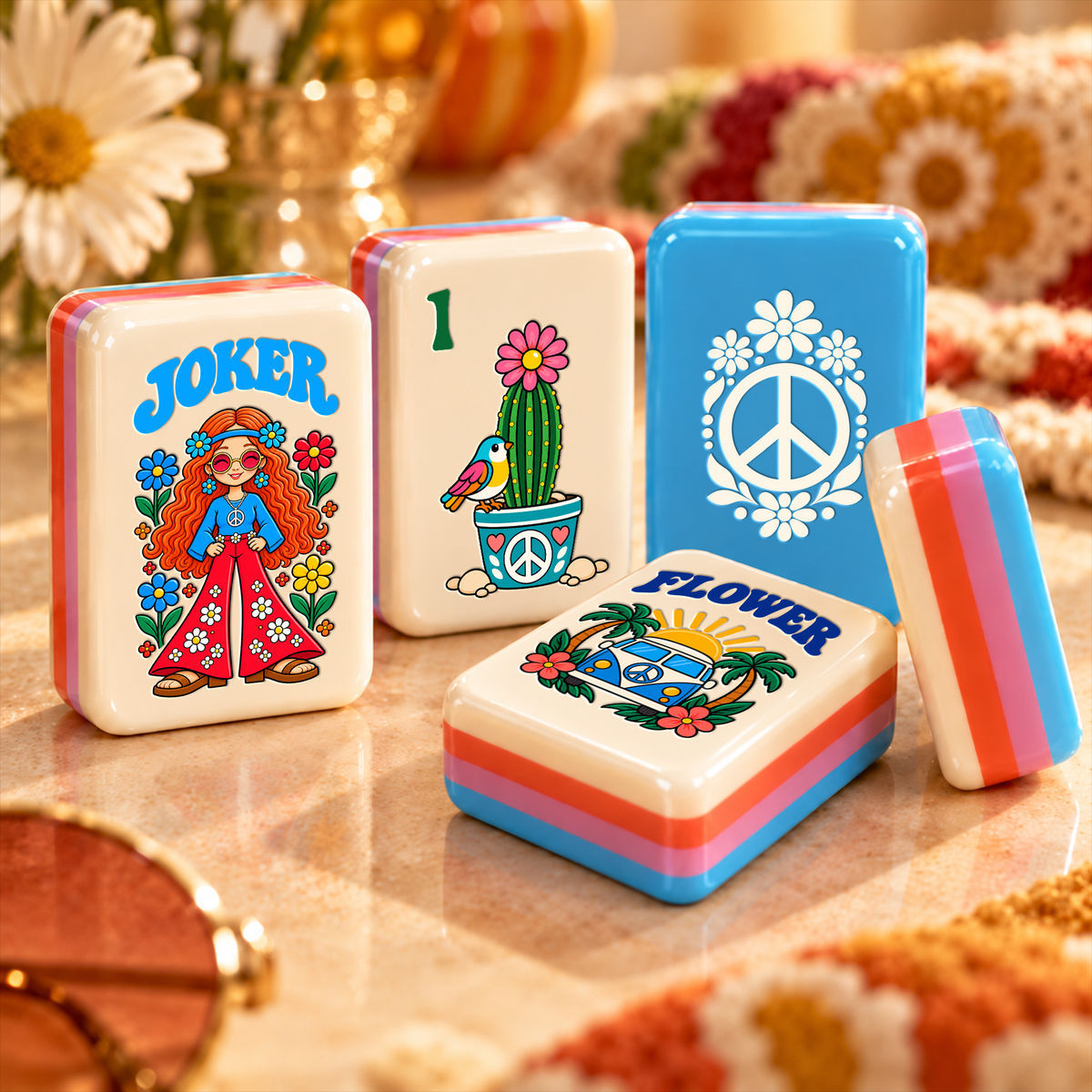
Fujian mahjong (閩南麻將) is a three-player variant played in Fujian Province and southern China with 84 or 100 tiles (depending on local custom), compared to the 152-tile American game. Each player draws 14 tiles at game start and draws one more each turn, discarding one to reach 17 tiles in hand (a "winning hand" or "hu"). Melds include pungs (three identical), kongs (four identical), chows (three consecutive numbers in one suit: 1-2-3, 5-6-7, etc.—unlike American mahjong, chows can be called and exposed), and eyes (a pair). The game plays faster than four-player variants because fewer players mean shorter cycles and quicker tile depletion. Victory goes to the first player to complete a legal hand matching one of the region's recognized winning patterns. Because Fujian is a regional game with no official yearly card like American mahjong, hand types vary by local ruleset; players must agree on the winning list before starting. Mahstead's best-selling mahjong sets are built for American four-player mahjong, though experienced players often adapt them for regional variants by using a subset of tiles or removing specific suits. 🀄 Shop best-selling mahjong sets →
Why is Fujian mahjong played with exactly three players?
Three players balance speed, complexity, and engagement. With four players in American mahjong, each player waits longer between turns; three players compress the cycle—fewer passes mean faster rounds. The reduced tile set (84–100 tiles vs. 152) ensures tiles empty sooner, forcing decisions faster and raising the tension. Fewer opponents also mean simpler probability math at the table: you track three discard piles instead of four, making hand-reading more practical for casual players. Fujian's three-player format evolved in crowded households and shops where a fourth seat wasn't always available, making it a pragmatic adaptation that stuck because the game plays tighter.

What tile set size does Fujian mahjong use, and how does it differ from American?
Fujian mahjong typically uses 84 tiles: three suits (Bams, Craks, Dots) numbered 1–9, with two or three copies of each (depending on the ruleset), plus winds (N, E, W, S) and dragons (Red, Green, White). Some regional rules add a second copy of dragons or a third copy of winds, pushing the count to 100. American mahjong, by contrast, uses exactly 152 tiles: four copies of every number (108 tiles across suits) plus 16 winds, 12 dragons, 8 flowers, and 8 jokers. The key difference: Fujian has no flowers or jokers, no pung/kong/quint/sextet-only rule (chows are playable and callable), and no yearly card. The smaller tile pool makes Fujian endgames more predictable and speeds the game for afternoon or workplace sessions.
How do melds and winning hands work in Fujian mahjong?
In Fujian mahjong, you build a winning hand of 17 tiles using four melds (each three or four tiles) plus a pair (two identical tiles). Melds are:
Pung: three identical tiles (e.g., 5 Dot, 5 Dot, 5 Dot).
Kong: four identical tiles.
Chow: three consecutive tiles in one suit (e.g., 3 Crak, 4 Crak, 5 Crak). Unlike American mahjong, chows can be called from discards and exposed on the table.
Eyes: a pair of identical tiles.
A legal winning hand might be: Pung (5 Bams), Chow (2–3–4 Dots), Kong (East winds), Pung (Red dragons), Eyes (White dragons). Chows make the game flow differently from American mahjong—a discard you throw becomes useful to opponents immediately, creating a real-time tactical decision. Winning patterns vary by region; common patterns include "all pungs" (no chows), "mixed suits," and "all terminals and honors," but always check your table's ruleset first.
What strategy changes when you move from four-player to three-player mahjong?
The most immediate shift: tile scarcity becomes more aggressive. In four-player American mahjong, each player holds 13 tiles, and the wall holds 104; in three-player Fujian with 84 tiles, players hold 14, and only 42 tiles remain in the wall. This means:
Discards matter faster. A single discard cycle discards three tiles instead of four, so the pool of "safe" tiles shrinks quicker.
Kong penalties loom larger. In American mahjong, a kong replaces the discard; in Fujian, an extra draw accelerates the endgame.
Reading opponents is simpler. Three discard piles are easier to track; you remember which winds East discarded, which Craks South kept, more clearly than in a four-player game.
The dealer's advantage grows. Fewer competitors for each tile mean the dealer (first player each round) has more control over the pace.
Blocking becomes crucial. If you see North is building Chow 2–3–4 Dots, and you hold the 5 Dot, you must decide: discard it to block North, or keep it for your own hand? Three players = three relationships; four players = six relationships to track.
Strategy tip: In Fujian three-player, never discard a tile that completes a chow for an opponent without a reason (e.g., you're one tile from winning). In American four-player, you can afford to leak a tile because the fourth player might claim it first.

How do you set up a Fujian mahjong game, and what rules should you agree on first?
Setup steps:
Choose a tile set. Use a standard mahjong set (such as those from our best-selling collection) and remove tiles to match your regional ruleset (84 or 100 tiles). Most players remove flowers and jokers entirely, keeping only suits, winds, and dragons.
Seat three players. Traditionally, seats are East (dealer), South, and West; North's seat sits empty or holds the spare tiles and wall replacements.
Agree on winning patterns. Fujian has no official yearly card. Before the first hand, decide: Do you play "all pungs"? Are mixed-suit melds allowed? Can you win on a self-drawn tile or only on a claim from a discard? Write it down or state it aloud so all three players hear the same rule.
Build the wall. Shuffle the 84 (or 100) tiles face-down. Each player arranges 14 tiles in front of them (face-down stacks of two); remaining tiles form the center wall.
East (dealer) draws first and discards one tile face-up into the center.
South draws next, then West, repeating until someone wins or the wall is empty.
Common house-rule pitfalls to avoid:
Unclear winning patterns. "We always play [something]" is not enough; state it before tiles are drawn.
Inconsistent chow rules. Can you claim a chow from any discard, or only in turn order? Agree on this.
Joker confusion. Some Fujian players use a joker or blank as a wild; others forbid it entirely. Decide upfront.
Kong replacement draws. After a kong, does the next player draw from the wall, or do you draw an extra tile? Check your local ruleset.
What to check before you buy:
Tile legibility. If you're using a standard mahjong set from Mahstead, ensure the Bams, Craks, Dots, and winds are clearly printed; Fujian's smaller tile pool means every tile matters more.
Tile durability. In fast three-player rounds, tiles move quickly—acrylic sets from our best-selling mahjong sets hold up well to repeated shuffles and claims over years of play.
Set completeness. Confirm you have at least 84 tiles before starting (most standard sets have 152 or 160, so you'll have plenty to choose from).
🎁 See our most-loved mahjong sets & accessories →
How does Fujian mahjong scoring differ, and do you play multiple hands?
Fujian mahjong scoring is point-based and variable by region, unlike American mahjong's fixed NMJL card. Common scoring approaches:
Base points + multipliers: A winning hand scores a base (e.g., 2 or 4 points), then you multiply by melds (all pung = 2×, mixed = 1×, all chow = sometimes penalized). Winners collect points from all three players; losers pay the winner.
Round play: You play a fixed number of rounds (often 16, changing dealer every 4 hands) and tally total points at the end. The highest score wins.
Settlement: Some tables play chip-based (each point = one chip, 1–2 cent units); others play for pride only.
Since Fujian has no official scoring body, your table's rules are final. Common mistake: assuming Fujian scoring matches American. It doesn't. Clarify scoring before money changes hands or points are recorded.
Typical session structure:
8–16 hands per session (30–90 minutes).
Each player takes a turn as dealer (East); the round rotates after a set of hands.
After a winner is declared, tiles are reshuffled, seats may rotate, and the next hand begins.
Aspect | American Mahjong | Fujian 3-Player Mahjong |
Tile count | 152 (+ 8 jokers) | 84–100 (no jokers/flowers) |
Players | 4 | 3 |
Hand size | 13 tiles + discard = 14 | 14 tiles in hand, 17 to win |
Melds | Pung, Kong, Quint, Sextet only (no chows) | Pung, Kong, Chow (chows called/exposed) |
Winning card | Fixed yearly National card | Local/house ruleset (no official card) |
Scoring | NMJL card-based (fixed points per hand) | Variable by region (base + multipliers or chip-based) |
Joker use | Yes (wild tile, never alone or in pair) | No (rarely used; some variants allow one) |
Pace | Slower (4 players, longer waits) | Faster (3 players, compressed cycles) |
What equipment do you need to play Fujian mahjong at home?
Beyond a tile set, a few tools make play smoother:
A mahjong mat (see our mahjong mats collection): Reduces noise, defines play zones clearly, and protects your table from tile marks. A 27"×27" or 30"×30" mat is ideal for three players, who sit closer together than a four-player group.
Racks with pushers (from our mahjong racks guide): Keeps each player's hand organized and hidden. Three shorter racks (compared to four in American mahjong) speed tile selection and reduce fumbling.
Dice (included in most full sets): You need two to determine East player and wall position before the first hand.
A carry bag or case (see our bags and cases collection): If you rotate between homes, a durable travel bag protects tiles and keeps mats, racks, and dice together.
For casual, in-home play, a quality tile set and a mat suffice. For weekly or monthly meetups among friends, add racks and a travel bag to protect your investment.
✨ Find your Mahstead set — free US shipping →

FAQ
Can I use an American mahjong set to play Fujian three-player mahjong?
Yes. American sets have 152 tiles, including flowers and jokers. For Fujian, simply remove the flowers and jokers, leaving 144 tiles, then remove some duplicates to reach 84–100 depending on your ruleset. Your full tile set gives you flexibility to experiment.
What's the biggest rule difference between Fujian and American mahjong?
Chows. Fujian allows and encourages chows (three consecutive tiles like 2–3–4 Dots), which can be claimed from discards and exposed on the table. American mahjong forbids chows entirely; you can only expose pungs, kongs, quints, and sextets. This single rule makes Fujian feel like a live, reactive game.
Is there an "official" Fujian mahjong rulebook?
No. Fujian mahjong is a regional folk game with no governing body (unlike American mahjong, which has the National Mah Jongg League). Rules vary by province, city, and even household. Always agree on winning patterns, scoring, and chow claims before the first hand.
How long does a typical three-player Fujian mahjong session last?
One hand (one player's turn as dealer) takes 5–15 minutes, depending on player speed and luck. A full session of 8–16 hands runs 30–90 minutes. Three players mean fewer waits, so the pace is brisk compared to four-player games.
Do I need special tiles for Fujian mahjong, or can I use a standard set?
A standard set works fine. Mahstead's best-selling sets are designed for American mahjong but contain all the Bams, Craks, Dots, winds, and dragons you need for Fujian. Simply set aside flowers, jokers, and extra duplicates to match your regional tile count.
What happens if someone wins on the same turn as another player claims a discard?
The player who wins takes priority. If multiple players could claim a single discard, the one closest to winning status (or by turn order, depending on house rules) gets it. Agree on this before play to avoid disputes.


View More
View More
View More
