
Fujian Mahjong Winning Hands: Rules, Patterns & Strategy
Last updated: Nov 23, 2026
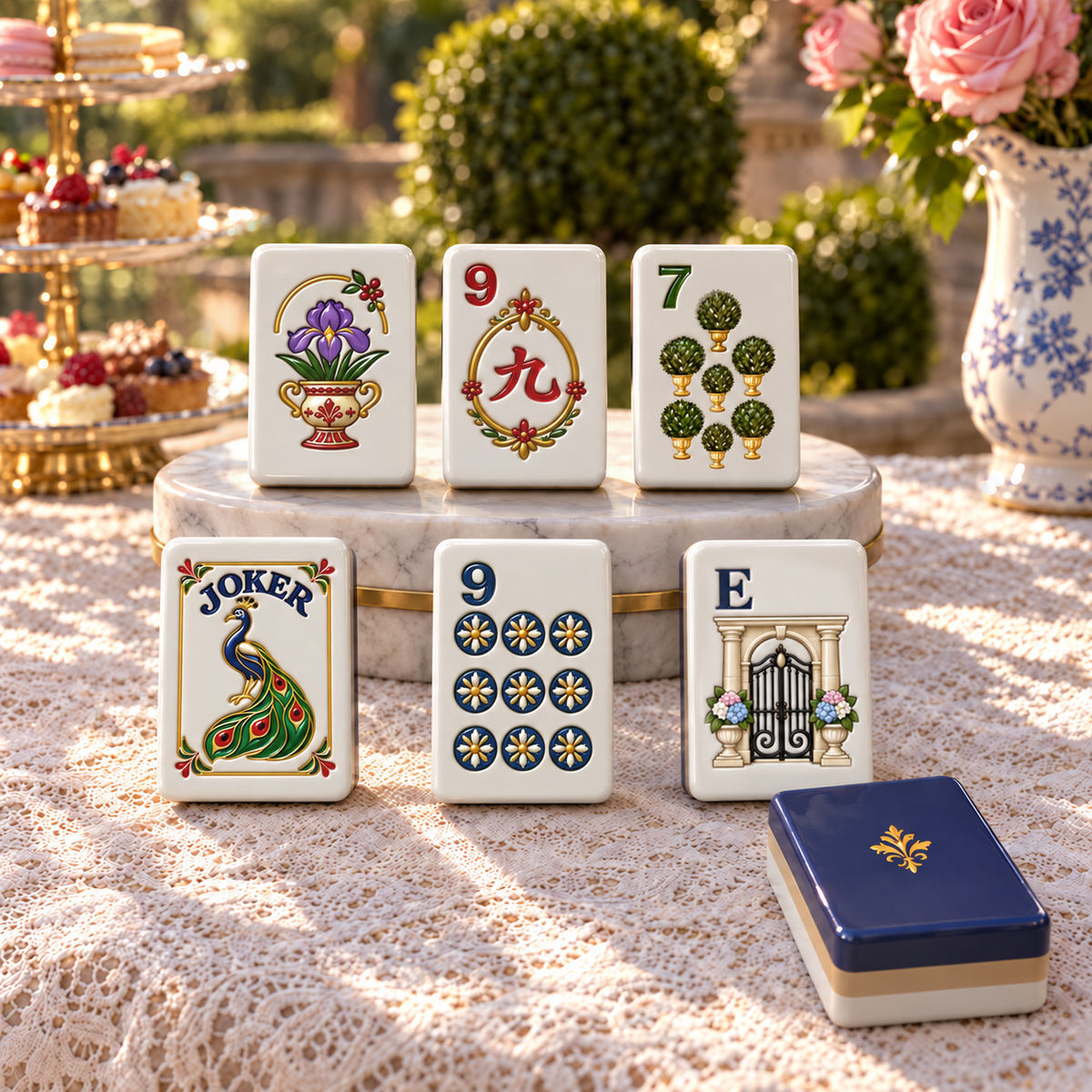
Fujian mahjong winning hands rely on tile sequences (chows: 1-2-3), pungs (three identical), and kongs (four identical), combined in sets of four melds plus a pair—unlike American mahjong, which uses only the current year's card and bans chows. A standard winning hand in Fujian contains four melds (sequences, triplets, or quads) and one pair, often supplemented by bonus tiles (flowers, winds). Scoring depends on the specific hand composition, bonus multipliers, and "faan" (fan) or "points" systems that vary by region within Fujian province. Jokers typically substitute for any tile in a meld but count against the hand's value; some localities ban jokers entirely. Unlike American play, Fujian mahjong allows flexible hand patterns across most game sessions, meaning players aren't bound to a published annual card, though "limit hands" (fixed maximum scores) exist in formal play.
How do Fujian mahjong hands differ from American mahjong?
The core difference is structure and freedom. American mahjong restricts winners to patterns on the National Mah Jongg League's annual card; Fujian mahjong allows most hand compositions as long as they contain four melds plus a pair. Fujian permits chows (1-2-3 sequences), which American mahjong bans outright. Jokers in Fujian devalue hands (fewer points for joker-heavy builds), whereas American mahjong counts jokers as legitimate wild tiles that don't reduce score—and American jokers cannot appear in a single tile or pair position. For players moving between variants, the most jarring shift is losing the card constraint and gaining sequential combinations.

What are the core winning hand structures?
Every Fujian mahjong winner needs four melds and one pair, following this breakdown:
Chow (sequence): three consecutive numbers in the same suit—e.g., 1-2-3 Bamboo, 5-6-7 Character, 8-9-1 Dot (sequences wrap around in some regions).
Pung (triplet): three identical tiles—e.g., three 5 Characters or three North Winds.
Kong (quad): four identical tiles; counts as one meld.
Pair (eye): two identical tiles—required in every winning hand.
A complete winning hand = four melds + one pair. Bonus tiles (flowers, seasons, winds in some sets) earn extra points but do not count as melds. Example: 1-2-3 Bamboo + three 5 Characters + four 7 Dots + two Red Dragons + East Wind + Plum Blossom = winning hand with four melds and pair, plus bonus wind and flower.
How does the "faan" or points system work?
Fujian mahjong scoring varies significantly by sub-region, but the principle is accumulating multipliers (faan/fan) on a base score. Common faan categories include:
All Chows (no honors or terminals): 2 faan
All Pungs (no sequences): 2 faan
All Honors or Terminals (no number tiles 2–8): 3 faan
Winning from the wall vs. claiming a discard: 1–2 point adjustment
Self-drawn win (tsumo): 1 faan bonus in many Fujian games
Final hand composition (Dragon pung, Wind pung, etc.): 1 faan each
Final score often = base points × 2^(total faan count). A hand with 3 faan might score base × 8; 4 faan = base × 16. Limits exist in formal play to cap runaway scores. Each table group and venue may apply house rules, so confirm scoring before starting play.
What mistakes do new Fujian players make?
The most common errors:
Assuming jokers are free points. In Fujian, jokers reduce hand value—use them strategically or avoid when building high-scoring hands. (In American mahjong, jokers don't penalize.)
Forgetting the pair. A four-meld hand without a pair is not a win, even if all melds are valid.
Misunderstanding chow logic. New players from American games forget that 1-2-3 Bamboo is a legal meld—they may discard safely when that tile completes someone else's chow.
Ignoring regional faan differences. Fujian has many sub-variants (Fuzhou, Xiamen, Putian styles). The same hand may be worth 2 faan in one city and 3 in another. Always ask table mates for the faan list.
Melding too early. Exposing pungs and chows signals hand direction; concealing tiles until your winning throw often improves scoring bonuses.

What strategy helps win more hands?
Strong Fujian play balances early chow hunting with terminal/honor pungs:
Strategy Element | Why It Works | When to Use |
Build chows early | Sequences lock in tile flow; easier to pivot | Opening hands with 2–3 consecutive tiles drawn |
Hold terminals + honors | They're rarer; pungs are high-value | If you draw two North Winds + a Red Dragon early |
Discard chow "bricks" first | Opponents less likely to have them; safer | When you have two chows and one is optional |
Watch discards | Infer opponents' needed tiles; block risky melds | Mid-game when 3–4 players have exposed tiles |
Balance faan and safety | High-faan hands draw more greed; low-faan hands close faster | Trailing players should chase 5+ faan; leading players lock 2–3 faan hands |
A worked example: You hold East Wind, East Wind, Red Dragon, Red Dragon, 1 Bamboo, 2 Bamboo, 3 Bamboo, 4 Bamboo, 5 Bamboo, 6 Character, 7 Character, 8 Character, 9 Character. You've already exposed a pung of East Winds. You need one meld and a pair. If you draw a second Red Dragon, you complete the Red Dragon pung and win with East pung + Red pung + 1-2-3 Bamboo + 6-7-8 Character + pair (say, a 9 Character drawn later). This hand scores at minimum 2 faan for having one honor pung and one mixed chow.
🀄 Shop best-selling mahjong sets →
How does Fujian mahjong compare to other Chinese regional variants?
Variant | Winning Structure | Chows Allowed? | Joker Role | Typical Faan Base |
Fujian | 4 melds + pair | Yes | Substitute; reduces value | 2–5 faan common |
Guangdong (Cantonese) | 4 melds + pair | Yes | Wildcard; less penalty | 1–8 faan range |
Shanghai | 4 melds + pair + bonus | Yes | Rare; some rules ban | 2–6 faan |
American | Card-only hands | No | Wildcard; no penalty | N/A (fixed card patterns) |
Riichi (Japanese) | 4 melds + pair | No (only sets) | None | 1–13 han |
Fujian sits between strict rule sets (American, Riichi) and looser variants (Guangdong), with moderate faan multipliers and regional sub-rules. If you play in Fujian province or with Fujian expatriate groups, confirm your local faan list before sitting down.
🎁 See our most-loved mahjong sets & accessories →
What should you check before playing Fujian mahjong?
Before your first Fujian game, clarify these with the table organizer:
Faan system. Which multipliers apply? (All-chow, all-pung, dragon pung, wind pung, self-drawn, etc.)
Joker rules. Are jokers allowed? Do they reduce hand score? Can they appear in pairs or melds?
Limit hands. Does the game cap maximum score? (Most formal play does: e.g., "8 faan limit" = no hand can exceed 8 faan × base points.)
Winning condition. Must you win by draw, claim a discard, or both?
Bonus tiles. Do flowers and seasons count toward melds, or only as bonus multipliers?
Meld exposure. Are concealed melds (kongs or pungs not shown) worth more?
Most casual Fujian games follow the local standard—ask the person who organizes play, or sit in as observer for one hand to learn the table's tempo.
Where do I find Fujian mahjong rules in full?
Comprehensive Fujian mahjong rule PDFs and guides exist through Fujian community centers, overseas Chinese associations, and university mahjong clubs in cities with large Fujian populations (Fuzhou, Xiamen, Singapore, San Francisco Bay Area). Online forums dedicated to Chinese mahjong variants also post faan lists. However, regional variants within Fujian province itself differ, so the most reliable source is always the group hosting the game. If you're learning from scratch, play alongside an experienced Fujian player for your first 3–4 games; rules become intuitive faster than memorizing a rulebook.
If you're setting up a regular Fujian mahjong group at home, you'll want a full, quality set of mahjong tiles from our best-selling collection. Standard sets work for Fujian play (no special American-only card needed), and 160-tile sets give you backup jokers for when one is lost or damaged mid-game.
✨ Find your Mahstead set — free US shipping →

FAQ
Can I use an American mahjong set to play Fujian mahjong?
Yes. Both variants use the same tile counts: three suits (Bams, Craks, Dots) numbered 1–9, four copies each; winds; dragons; and flowers. The difference is how you combine them into winning hands, not the tiles themselves. You'll ignore the American card and instead follow Fujian faan rules and meld structures.
Why does a hand with jokers score fewer points in Fujian mahjong?
Jokers are wildcards that substitute for missing tiles, making hands easier to complete. In Fujian scoring systems, a "complete" hand (all tiles matched without substitution) ranks higher than a "joker-assisted" hand. The joker penalty discourages overreliance on wildcards and rewards careful tile management. Some regional variants don't penalize jokers; always confirm with your table.
What is a "chow" and why can't I use it in American mahjong?
A chow (or "chi") is three consecutive numbers in one suit: 1-2-3 Bamboo, 5-6-7 Crak, etc. American mahjong bans chows entirely; only pungs (three identical), kongs (four identical), quints, and sextets can be exposed. Fujian mahjong embraces chows as core melds. This is the single biggest structural difference between the two games.
How do I know if my Fujian mahjong hand is worth more than my opponent's?
Count the faan (multiplier category) each hand qualifies for using your table's faan list. Multiply the base score by 2^(total faan). For example, a hand worth 3 faan might score base × 8 points; 4 faan = base × 16. Ask the hand's winner or a neutral player to explain the calculation aloud; most groups expect transparency.
If I've learned American mahjong, how long does it take to switch to Fujian mahjong?
Casual players adjust in 2–3 table sessions once they internalize that Fujian allows chows, uses faan multipliers instead of a fixed card, and scores by hand composition rather than pattern matching. The tile mechanics (drawing, discarding, melds) remain identical. Expect to lose initially; competitiveness returns after 5–10 games as faan logic becomes automatic.
Are there any Fujian mahjong variants within Fujian province itself?
Yes. Fuzhou, Xiamen, Putian, and other Fujian cities each have sub-regional faan lists and house rules. A hand worth 3 faan in Fuzhou may be worth 2 or 4 faan in Xiamen. Always ask the table organizer for the specific faan list before play. No single "Fujian standard" exists—respect local convention.


View More
View More
View More
