
Fujian Mahjong for Beginners: Rules, Tiles & How to Start
Last updated: Nov 23, 2026
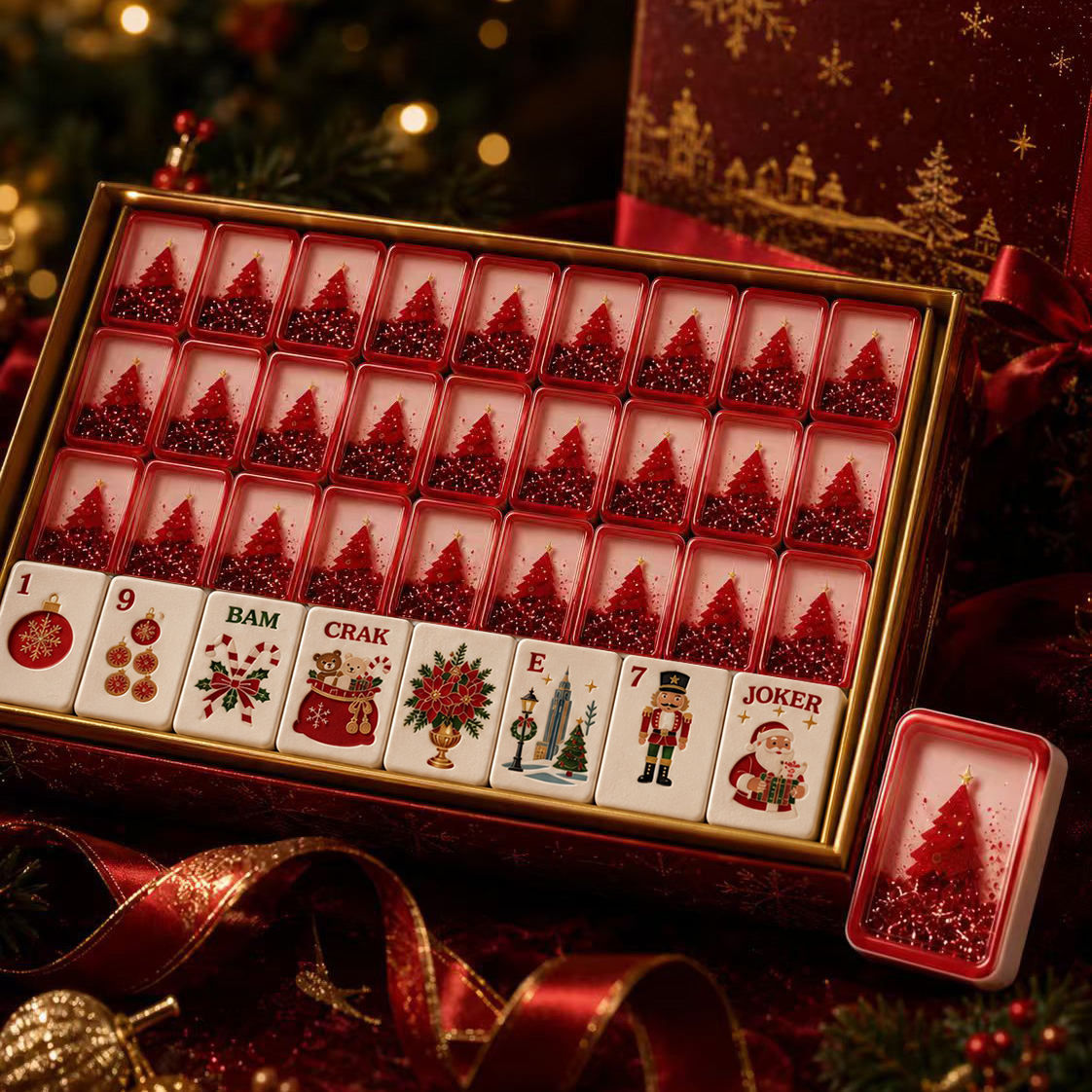
Fujian mahjong uses 144 tiles (108 in four suits—Bams, Craks, Dots, 1–9 each—plus 16 winds, 12 dragons, and 8 flowers). Players draw and discard rapidly, aiming to form a complete hand of melds (pungs, kongs, or chows—sequences unlike American play). Winning means matching a specific pattern, often as simple as "all pungs" or a declared hand type. Games move faster than American mahjong because there's no pre-game Charleston, no official card to consult, and no jokers to manage. Play typically takes 30–60 minutes per round. Fujian favors observation, quick decision-making, and memory; beginners should expect to learn hand rankings and tile patterns through practice rather than reference charts. While American players use our best-selling mahjong sets built for four tiles and American rules, Fujian players need 144-tile sets designed for classical Chinese play—a different product ecosystem.
Fujian mahjong represents one of the most approachable entry points into Chinese mahjong for Western players. It strips away the memorization burden of the American card system and leans instead on visual tile recognition and tactical flow. If you've played American mahjong and want to explore the classical roots, or you're starting fresh and curious about speed play, Fujian is worth your time.
How is Fujian mahjong different from American mahjong?
The core difference: American mahjong requires a printed card issued each spring by the National Mah Jongg League, listing hundreds of valid hand combinations you must match exactly. Fujian mahjong has no card. Instead, you memorize a smaller set of hand types (usually five to ten standard patterns) and play them until muscle memory takes over. American games use 152 tiles plus 8 jokers; Fujian uses exactly 144 tiles with no jokers. American play bans chows (sequences like 1-2-3)—you can only expose pungs (three identical), kongs (four identical), and quints or sextets. Fujian not only allows chows, it often requires them, making hand combinations feel more fluid. Turns move faster: you draw, assess, and discard in seconds rather than consulting a card or negotiating which melds qualify.

What tiles do you need to play Fujian mahjong?
Fujian mahjong requires 144 tiles: 36 Bams (numbered 1–9, four copies each), 36 Craks (same), 36 Dots (same), plus 16 winds (four each: North, East, West, South), 12 dragons (four each: Red, Green, White), and 8 flowers (spring, summer, autumn, winter, each with a paired tile). Each player receives 13 tiles at the start; one is drawn from the wall on your turn. This is fundamentally different from American play's 160-tile set (which contains 152 playing tiles plus spares). Most 144-tile Fujian sets come in bamboo racks, canvas bags, and often nicer tile weight than entry-level American sets. If you're transitioning from American mahjong to Fujian, expect to buy a dedicated 144-tile set; the tile counts and rulebooks don't transfer.
What are the basic hand patterns in Fujian mahjong?
Fujian hand rankings vary by region and house rules, but beginners should master five core patterns: All Pungs (four melds of identical tiles plus a pair—no sequences), All Chows (four sequences of consecutive numbers plus a pair), Mixed (two pungs, two chows, one pair), Pair of Pungs (three pungs plus one chow plus a pair), and Special (such as all honors—winds and dragons only). Winning typically happens when you complete your hand on your turn (drawing the final tile you need) or on someone else's discard (calling a meld). Unlike American play, where hands are often complex and tied to a card, Fujian patterns are intuitive once learned. Many sets and instructional guides use color-coded tiles or printed hand charts to help newcomers. A key advantage for beginners: you can see and remember all valid hands in one sitting, then refine strategy through play rather than reference sheets.
How does the turn structure and discard speed work in Fujian mahjong?
Each player draws one tile, then immediately discards one, keeping a hand of 13 until someone wins. Play flows in wind order (North, East, South, West) and cycles continuously; a full turn from your draw to your discard might take 5–10 seconds once you're comfortable. This rapid pace forces quick decisions: you learn to spot patterns instantly and assess the table's meld frequency. If someone discards a tile you can use (to complete a pung, form a chow, or win), you can call it immediately; the tile is drawn from the discard pile, and you expose your meld or winning hand. The key difference from American mahjong: there's no "joker substitution" negotiation or card-checking pause. Speed and accuracy are rewarded; hesitation is read as weakness, and opponents will adjust their plays accordingly. Beginners often find the pressure exhilarating—it trains attention and intuition fast.

What common mistakes do Fujian beginners make?
Mistake 1: Holding onto honor tiles too long. New players hoard winds and dragons, thinking they're valuable. In many Fujian hands, honors are filler; discard them early unless you're building an all-honors hand. Mistake 2: Not recognizing chows quickly. Beginners spend extra seconds confirming that 4-5-6 is playable. Practice on paper first: write out tiles 1–9 and highlight valid sequences. Mistake 3: Over-committing to a hand. If your pattern is "all chows" and the table's discards show few sequences appearing, pivot. Flexible thinking beats stubbornness. Mistake 4: Ignoring the wall flow. In Fujian, the order in which tiles are drawn matters; observant players track which tiles remain unseen and adjust their discards. Mistake 5: Folding under speed pressure. Don't rush—take a full breath before you discard. A one-second pause is normal; the game tolerates it. Most errors fade after 5–10 games as your brain internalizes tile patterns.
Aspect | American Mahjong | Fujian Mahjong |
Tiles | 152 + 8 jokers (160 total) | 144 (no jokers) |
Sequences (chows) | Forbidden; only pungs, kongs, quints | Allowed and often required |
Hand reference | Official card, issued yearly | Memorized patterns (5–10 common types) |
Game speed | 45–90 min per round | 30–60 min per round |
Winning condition | Exact card match + melds called | Completing a recognized hand pattern |
Player learning curve | Steep (card has 100+ options) | Moderate (patterns repeat immediately) |
Best for | Social, rule-heavy play | Speed, observation, memory |
🀄 Shop best-selling mahjong sets →
What to check before you buy a Fujian mahjong set
If you're ready to start Fujian mahjong, here's your pre-purchase checklist:
Verify the tile count: Confirm the set contains exactly 144 tiles. Do not buy American 160-tile sets for Fujian play.
Check tile thickness & weight. Heavier tiles (usually 2–3mm acrylic or bamboo composite) shuffle better and feel more durable than thin plastic; they're worth the investment if you plan to play weekly.
Examine the racks & bag. Fujian players often prefer bamboo racks (easier to read at a glance) and canvas bags for transport; plastic racks are functional but less traditional.
Confirm dragon markings. Red, Green, and White dragons should be clearly distinct. In some beginner sets, the white dragon's borders blend into the tile background; test contrast before ordering.
Ask about language. Some Fujian sets come with Chinese numerals only; others use Arabic numerals. Beginners usually prefer Arabic for faster pattern recognition.
Size & portability. If you're hosting a weekly game or traveling to a club, measure the bag and racks against your car or closet. Fujian sets are more compact than American sets, but you'll still want storage space.
🎁 See our most-loved mahjong sets & accessories →
Getting your first Fujian game underway
Start with three other players and one set of 144 tiles. Seat everyone at a square table; shuffle tiles face-down and draw randomly to determine positions (North, East, South, West). East deals first. Each player draws 13 tiles; East draws 14. Agree on house rules for hand rankings before you begin—write them on paper if needed. Play five rounds (one per wind position), then tally points or declare a winner. For your first game, set a 60-minute limit and play loose: the goal is pattern recognition, not competitive scoring. After two or three full rounds, you'll start anticipating tile flows and reading discards. After ten games, you'll play at table speed. Keep a hand chart visible for reference; there's no shame in glancing at it mid-game.
Most Fujian clubs in North America meet at community centers, libraries, cultural centers, or private homes. If you're in a city with a Chinese population center, ask community boards or social media groups for weekly games; many welcome beginners and provide loaner sets. Online Fujian mahjong platforms also exist, though live play teaches much faster.
✨ Find your Mahstead set — free US shipping →

FAQ
Can I use an American mahjong set to play Fujian mahjong?
No. American sets contain 152 tiles plus 8 jokers (160 total); Fujian uses exactly 144 tiles with no jokers. The tile counts, dragon designs, and gameplay mechanics don't align. You'll need a dedicated 144-tile set for Fujian play.
How long does it take to learn Fujian mahjong if I know American mahjong?
Typically 3–5 games if you already understand melds and strategic thinking. The main hurdles are memorizing the 5–10 hand patterns and adjusting to chow sequences; these become automatic within one session of focused play.
Is Fujian mahjong faster than American mahjong?
Yes. Games typically run 30–60 minutes per round, compared to 45–90 minutes for American mahjong. The lack of a card reference and simpler hand rules speed up decision-making and discard cycles.
Do I need special racks or a mat to play Fujian mahjong?
No, but they help. Bamboo racks make tile arrangement easier and faster; a mat protects your tiles and table. Many Fujian players prefer traditional racks over American-style plastic ones, though either works functionally.
What's the best way to practice Fujian mahjong patterns as a beginner?
Write out the hand patterns on paper or use online tile simulators; arrange tiles to form each pattern (all chows, all pungs, mixed, etc.) until you can visualize them instantly. Then play live games in low-pressure settings—speed comes from repetition, not study.
Can I play Fujian mahjong with fewer than four players?
Some regional variants allow three-player Fujian, but the classic game is four players only. Rules for three-player Fujian vary widely by region; check local guidelines if you're interested in shorter-handed play.


View More
View More
View More
