
Filipino Mahjong vs Vietnamese Mahjong: Tiles, Rules & Differences
Last updated: Nov 23, 2026
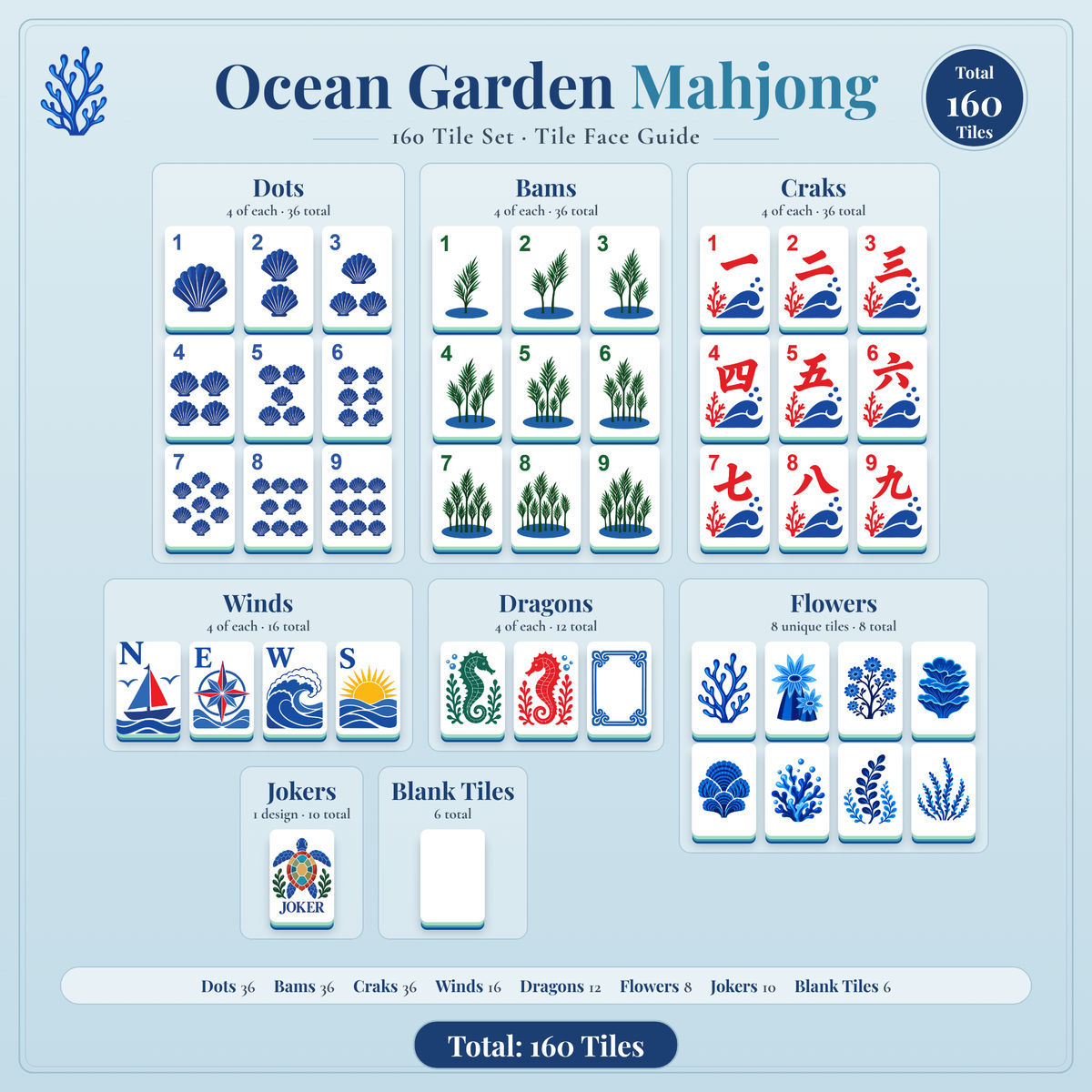
Filipino mahjong uses a 144-tile set (Bams, Craks, Dots numbered 1–9, four winds, three dragons, and eight flowers), played with three or four players using exposed melds and a discard pile called the "wall." Vietnamese mahjong similarly works with 144 tiles but organizes them slightly differently and applies unique melding patterns. Neither variant uses jokers or the Charleston passing ritual. Both allow chows (consecutive sequences like 1–2–3), unlike American mahjong, which forbids them entirely. The hand-winning structure varies: Filipino games often score based on exposed melds and bonuses; Vietnamese hands follow more rigid pattern templates. If you host mixed American and regional games, you'll need separate tile sets because the tile counts and suit compositions differ. Many players in the US learn Filipino mahjong through family traditions or community groups and keep dedicated sets ready alongside their American tiles.
Filipino and Vietnamese mahjong share East Asian roots but diverge in tile construction, hand logic, and scoring—both distinct from the American game that dominates North American tables. Understanding each variant helps you host inclusive games and choose the right equipment for your group.
How many tiles does each game use?
Filipino mahjong plays with 144 tiles: three suits (Bams, Craks, Dots) numbered 1–9 with four copies each (108 tiles), four winds, three dragons, and eight flowers. Vietnamese mahjong also uses 144 tiles but often includes a different dragon count or bonus tile arrangement depending on the regional rule set you follow. American mahjong, by contrast, plays with exactly 152 tiles plus eight jokers—a fundamental incompatibility. If your weekly group includes Filipino players, buying a separate 144-tile set prevents confusion and saves the American set from mixed-tile errors during setup.

Can you make sequences in Filipino and Vietnamese mahjong?
Yes—both Filipino and Vietnamese mahjong allow chows (consecutive sequences of three tiles in the same suit, like 2–3–4 Bams), which you can call and expose during play. American mahjong forbids chows entirely; you may only expose pungs (three identical tiles), kongs (four identical), quints, and sextets. This rule difference fundamentally changes hand strategy: in Filipino and Vietnamese games, you build toward sequences plus melded sets; in American mahjong, all sets must be identical numbers. For new players switching between variants, the chow rule trips up almost everyone first—write it on a card and leave it on the table until it becomes instinctive.
How do winning hands differ across the three variants?
Aspect | American Mahjong | Filipino Mahjong | Vietnamese Mahjong |
Tile count | 152 + 8 jokers | 144 | 144 |
Chows allowed? | No | Yes | Yes |
Jokers used? | Yes, in melds | No | No |
Hand source | Current-year NMJL card | Regional rulebooks | Regional rulebooks |
Exposure required? | Partial (some melds only) | Yes, most melds | Yes, most melds |
Winning call | Mahjong | Hu or Win | Hu or Win |
American mahjong hands come only from the current year's printed card issued by the National Mah Jongg League each spring; you match specific patterns (like "2022 card, Section A, Line 1"). Filipino games use regional hand patterns passed through families or community rule sheets—there is no single "official" card. Vietnamese mahjong similarly follows regional standards that vary by province or family tradition. When hosting a mixed-group game, clarify which rule set applies before the Charleston (if playing American) or tile draw (if playing Filipino or Vietnamese), and keep a reference sheet visible. The best-selling mahjong sets include American tiles; if you need to play Filipino or Vietnamese, seek sets labeled explicitly for those variants.
How does scoring work in each variant?
American mahjong scoring follows the current year's card: each hand lists its point value (usually 30–80 points), and players may "pass" or claim hands they can build. Winners collect from all three opponents. Filipino mahjong scoring often rewards exposed melds heavily (a kong exposed is worth more than a concealed pung); bonus points apply for "all melds of one type" or "all terminals." Vietnamese scoring varies widely by regional ruleset but typically emphasizes pung/kong bonuses and flower/wind multipliers. Because scoring rules differ so much, write down the ruleset before you play, especially if players learned the game in different regions. A casual house rule sheet beats confusion every time.

What equipment do you need to host each variant?
You'll need a dedicated tile set for each variant—mixing them ruins both games. For American mahjong, a 160-tile acrylic set with free US shipping gives you the 152 playing tiles plus spares. For Filipino and Vietnamese mahjong, source 144-tile sets (often bamboo or bone) from specialty retailers who stock those specific variants. Pair any set with a mat to protect tiles and speed cleanup; a mahjong mat sized for your table (typically 30–36 inches square) works for any variant. If your group rotates between games, buy a travel-ready case or bag with dividers so each set stays separate and ready. Racks are optional but helpful: mahjong racks with pushers let players organize tiles quietly, reducing fumbling during fast play.
Which variant should my group learn first?
If everyone in your group is new to mahjong, American mahjong is easier to start with because the no-chow rule simplifies hand logic and the printed card removes guesswork about valid patterns. If your group includes people from Filipino or Vietnamese communities, playing their family variant first builds cultural connection and trust—American mahjong can come later. Many players eventually play both, keeping sets for each. The learning curve for switching between variants is real: the first two games feel jarring because muscle memory works against you (your instinct will call a chow when you shouldn't, or miss scoring bonuses you forgot about). Go slowly through at least three full games before judging which you prefer. Host on a day when no one is rushed, and keep phones down so people can focus on the rules transition.
What to check before you buy
Tile count: Confirm whether the set is 144-tile (Filipino/Vietnamese) or 152-tile + 8 jokers (American). Never mix counts mid-game.
Suit labels: Verify tiles show clear Bam (bird), Crak (crisscross), and Dot symbols, not generic Western markings.
Meld rules: Write down which melds you're allowed to expose (American: pungs/kongs/quints/sextets only; Filipino/Vietnamese: chows, pungs, kongs).
Scoring reference: Keep a one-page house ruleset visible on the table; don't rely on memory.
Storage: Buy a mat and case so sets don't crack or get lost between games; a travel bag with organizers saves setup time.
🀄 Shop best-selling mahjong sets →
How do I transition a group from American mahjong to Filipino or Vietnamese?
Tell players in advance—don't surprise them at the table. Spend 15 minutes before the first hand reviewing chow rules (1–2–3, 5–6–7, etc. in one suit), exposure rules (which melds you must show), and three sample winning hands. Play one throw-away practice hand where mistakes don't count, so people build confidence. Keep a reference sheet on the table all game. Expect the first two sessions to be slow; by session three, muscle memory kicks in and play speeds up naturally. Have fun—the novelty of learning a new ruleset builds camaraderie and gives experienced players a fresh mental challenge.
🎁 See our most-loved mahjong sets & accessories →

FAQ
Can I use American mahjong tiles to play Filipino or Vietnamese mahjong?
No. American sets include jokers and 152 tiles; Filipino and Vietnamese need 144 tiles with no jokers. The tile compositions differ, causing mismatches in hand patterns and scoring. Buy a separate set for each variant to avoid frustration and equipment errors.
Do Filipino and Vietnamese mahjong use the Charleston?
No. Both variants typically begin with a direct tile draw or a simpler pre-game shuffle, not the American Charleston (the formal tile-passing ritual). Some Filipino groups use a brief "tile exchange" for flavor, but it's not standard across all regional rulesets.
Which variant is fastest to play?
American mahjong, because players consult the current year's printed card and don't debate hand validity—the card settles it. Filipino and Vietnamese games sometimes pause while players agree on hand legitimacy and scoring, especially when mixing players from different regions or families.
Can a beginner learn all three variants?
Yes, but expect 3–4 months of casual weekly play to feel fluent in any one variant. Learning two simultaneously is confusing; pick one, master it for 6–8 weeks, then add the second. Many experienced players play all three and switch easily once the core logic clicks.
Where do I find regional rulesheets for Filipino or Vietnamese mahjong?
Ask players from those communities directly—rulesheets often live in family WhatsApp groups or community center libraries, not online. Community centers, libraries, and cultural associations in areas with large Filipino or Vietnamese populations often host games and share rulebooks freely.
What size mat do I need for Filipino or Vietnamese mahjong?
A 30–36 inch square mat works for most four-player games of any variant. Measure your table before buying; a mat that overhangs by a few inches is better than one too small, which cramps tile placement and causes knocking things over during play. ✨ Find your Mahstead set — free US shipping →


View More
View More
View More
