
Filipino Mahjong Tile Set: American Rules & What to Buy
Last updated: Nov 23, 2026
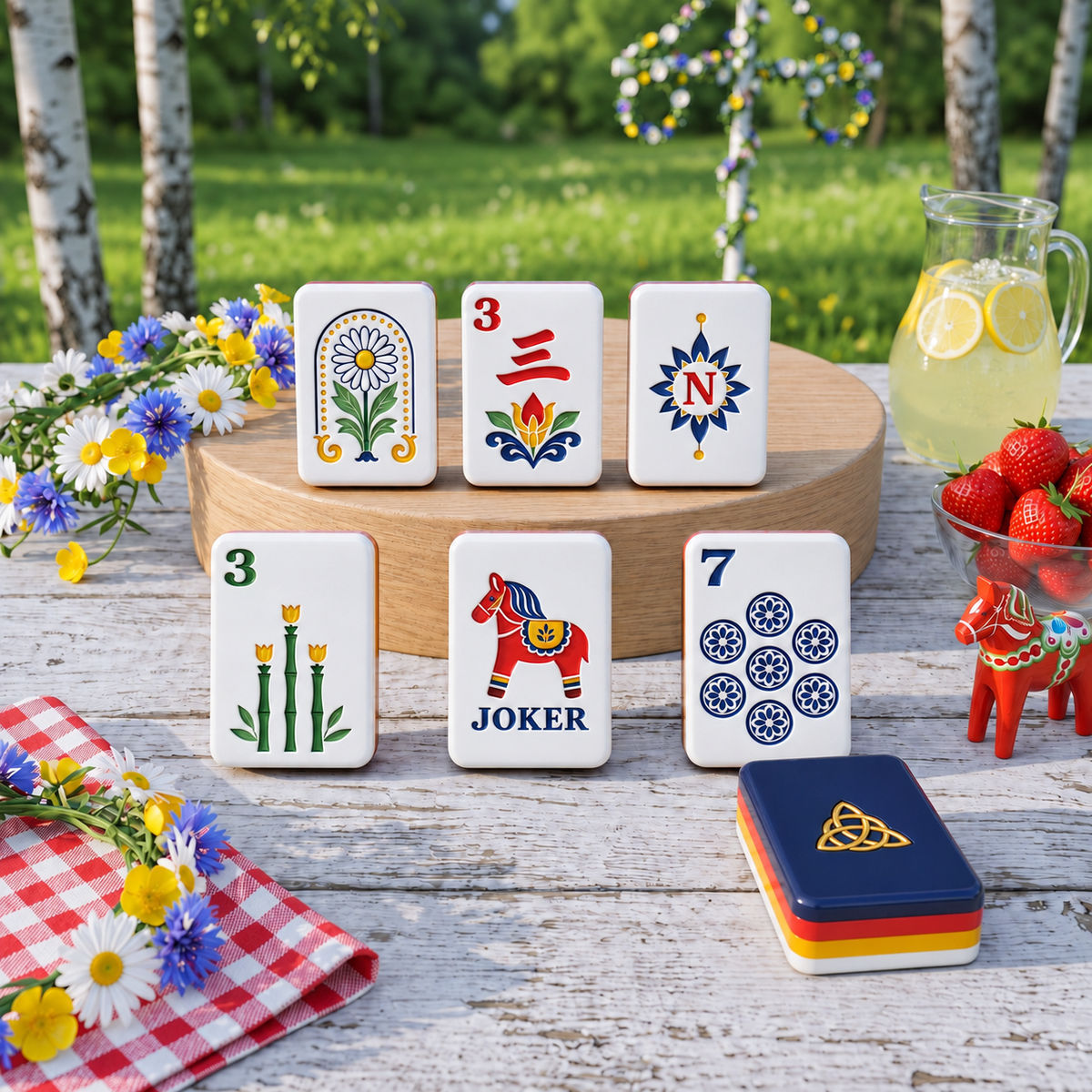
Filipino mahjong players use the American game format: 152 playing tiles (36 per suit—Bams, Craks, Dots—plus 16 winds, 12 dragons, 8 flowers, 8 jokers), scored from the current National Mah Jongg League card issued each spring. A hand consists of 13 tiles plus one drawn on your turn. No sequences (chows) exist in American mahjong; you expose only pungs (three identical), kongs (four), and larger sets. Jokers may never form a single tile or pair. If you're hosting regular games, look for sets with engraved tiles (easier to read), matching racks with pushers, and a quality mat—all standard from our best-selling mahjong sets collection. Expect to spend a modest amount for a durable acrylic set that lasts decades; budget for a mat and case if you travel to other players' homes or host frequently.
What exactly is a Filipino mahjong tile set?
A Filipino mahjong tile set contains exactly 152 tiles used to play the American variant: the same 108 tiles from three numbered suits (1–9 in each), plus 16 winds (four copies each of North, East, West, South), 12 dragons (four Red, four Green, four White), eight flowers, and eight jokers. Filipino players follow American mahjong rules, not Chinese or Hong Kong rules. The game uses the National Mah Jongg League card, revised annually, to determine which hand combinations are valid. Every set we ship includes spares (extra jokers and blanks) for replacement, but play always uses exactly 152 tiles and 8 jokers—never adding extras.

Why do Filipino players choose American mahjong rules?
Filipino mahjong communities adopted the American format in the mid-20th century through cultural exchange and organized league play. American mahjong is standardized: one card per year means no house-rule confusion, and the rule set is simpler to teach newcomers than Chinese or Riichi variants. Pungs and kongs (no sequences) make hands faster to recognize; jokers add flexibility for less-experienced players. Filipino players who travel or play in mixed groups benefit from this standardization—a hand valid in Manila is valid in Dallas. The game also suits social play at weekly tables and multi-generational family gatherings, making it the de facto standard in Filipino American communities.
What size and material should you buy?
Acrylic tile sets are the standard for home and club play among Filipino players. They're durable (lasting 10+ years with normal use), easy to clean, and the engravings (characters and symbols) resist wear far better than painted tiles. Buy a set labeled as 160 tiles (152 playing tiles plus spares); this is the only format we offer at Mahstead. Tile thickness matters: look for acrylic at least 0.2 inches (roughly 5 mm), solid enough that tiles won't crack if dropped on a hard floor. Size varies slightly—some sets use slightly smaller or larger faces—so if you're replacing a worn set or adding a second set for a house game, check the dimensions before ordering a second time. Weight and feel are personal; heavier tiles (acrylic or bone) feel more premium but are no better for gameplay than lightweight acrylic. Our best-selling mahjong sets include sets in multiple finishes (frosted, glossy, engraved) so you can pick by preference.
🀄 Shop best-selling mahjong sets →
How do you compare Filipino mahjong set options?
Feature | Budget Acrylic | Engraved Acrylic | Who It's For |
Tile clarity | Good (painted) | Excellent (engraved) | Regular players; clarity saves time reading tiles |
Durability | 3–5 years | 10+ years | Weekly hosts; long-term investment |
Cost basis | Lower | Mid-range | Beginners vs. serious players |
Maintenance | Wipe painted surface | Wipe engraved surface | Both equally easy to clean |
Best for | Trying the game | Weekly home games | Serious players; resale value |
Choose engraved tiles if you host weekly games or play multiple times per month—the reading speed pays off. Budget acrylic works if you play occasionally (quarterly or less). Look for engraved American mahjong sets if you want tiles that show character and suit marks clearly even after 500+ games. If you're buying for a gift or as a starting set, ask the recipient how often they play; that answer drives the decision more than any other factor.

What else do you need besides the tile set?
A competitive Filipino mahjong table requires a mat, racks with pushers, a case or travel bag, and dice. A mahjong mat (typically 27×27 inches) gives tiles a non-slip surface, keeps score cards visible, and protects your furniture. Racks with pushers let players hold 13 tiles neatly; racks with pushers cost far less than a full table. A travel bag or case protects tiles and mat during transport. Dice (included in most sets) determine the first dealer and player position. If you're a new player, buy a set with racks and a mat bundled together—it's cheaper and ensures parts fit well. Returning players adding a second set for hosting can buy tiles only and use existing equipment.
🎁 See our most-loved mahjong sets & accessories →
What to check before you buy
Tile count: Confirm you're ordering 160 tiles (152 playing + spares), not a smaller set. American mahjong always uses 152; fewer tiles won't work.
Engraving vs. paint: If you play weekly, buy engraved tiles; painted tiles fade over 2–3 years of heavy use.
Set completeness: Verify the listing includes jokers, blank tiles (as spares), and a score card. Most sets include racks and a mat; confirm before ordering.
Tile thickness: Acrylic at 5 mm (0.2 inches) or thicker resists cracking. Thinner acrylic feels cheap and breaks easily if dropped.
Shipping: Free US shipping from Mahstead means no surprise charges—important when buying a heavy acrylic set.
Return option: Check the seller's return window (we allow returns within a reasonable period). Tile sets are a long-term buy; ensure you can exchange if color or finish doesn't match your table.
How do you know if you're getting the right set for Filipino home play?
Filipino home games typically run weekly or biweekly among the same four to eight players. Buy a set that lasts—engraved acrylic is your best value. If you're the host, invest in a mat (improves the game experience) and a travel bag (friends often take turns hosting). If you're joining an existing group, ask what color and finish other sets are; matching aesthetics isn't required but makes the table feel cohesive. Test a borrowed set first if possible; tile size and weight feel different, and personal preference matters more than specs.
✨ Find your Mahstead set — free US shipping →

FAQ
Do Filipino players use a different mahjong card than American players?
No. Filipino mahjong follows American rules and uses the same National Mah Jongg League card (revised annually) as all American players. A valid hand in one region is valid everywhere.
Can you use a standard American mahjong set for Filipino games?
Yes. Any 152-tile American mahjong set works for Filipino play—there's no separate "Filipino" tile design or rules variant. Geography doesn't change the game format.
What happens if your tile set is missing a joker or a tile breaks?
Most quality sets include spare tiles and jokers (packed separately). Swap the spare into the rack. If you're out of spares, sit out that round. Order a replacement set if tiles break repeatedly; it signals cheap acrylic that won't last.
How many people play Filipino mahjong at one table?
Four players per game, always. Each holds 13 tiles; a fifth person scores or sits out and joins the next round.
Should you buy a 160-tile set or a 152-tile set?
Buy a 160-tile set (152 playing tiles + spares). Spares protect you if a tile cracks during play. We offer only 160-tile sets at Mahstead.
Do Filipino players ever use house rules or a different card?
Serious players use the official National Mah Jongg League card. Casual games may bend rules, but organized play is standardized to prevent disputes.


View More
View More
View More
