
Filipino Mahjong Quick Start Guide: Rules, Setup & First Game
Last updated: Nov 23, 2026
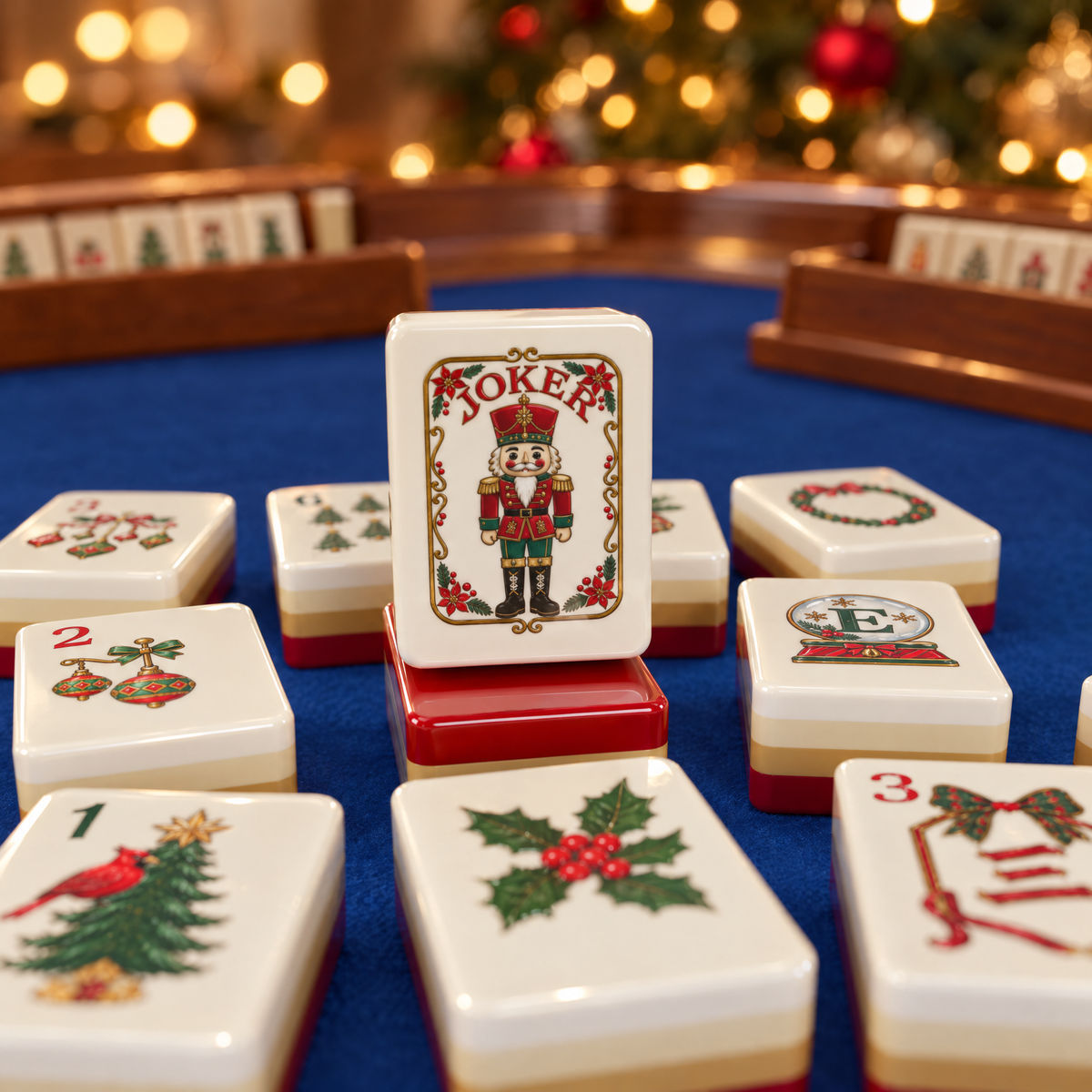
Filipino mahjong uses the same 152-tile American set (three suits, winds, dragons, flowers, jokers) but plays with open melds, sequences (chows), and a simplified hand structure closer to Chinese mahjong than to American League play. Games typically last 30–60 minutes per round and require four players sitting opposite pairs. Unlike American mahjong, which restricts hands to an annual card, Filipino mahjong follows looser pattern recognition: you build combinations as you draw, calling melds aloud and exposing them to the table. The win condition is simpler—complete any valid combination of pungs, chows, or a pair—and jokers substitute freely for any tile. Most games are played for modest stakes (chips or small coin bets) and reset quickly between rounds.
🀄 Shop best-selling mahjong sets →
How does Filipino mahjong differ from American mahjong?
American mahjong binds you to a printed card and forbids chows (sequences)—your hand must match an exact pattern from that year's National Mah Jongg League sheet. Filipino mahjong is freestyle: any combination of pungs, chows, and a pair wins, making it feel closer to Chinese play but faster and more social. American forbids jokers in pairs or single tiles; Filipino allows jokers to substitute anywhere, speeding up wins. American uses an annual card and formal Charleston passing; Filipino skips the Charleston and refreshes the hand stack after each win. American games stretch to 90 minutes; Filipino rounds finish in 30–50 minutes, so you can play multiple rounds in one evening. If you've played American mahjong, expect shorter rounds, looser patterns, and constant table chatter as players call melds and negotiate substitutions.

What tiles do you use, and how do you set up the table?
Filipino mahjong plays with the same 152 tiles as American: three suits (Bams, Craks, Dots) numbered 1–9 with four copies each; 16 winds (four each: North, East, West, South); 12 dragons (four Red, four Green, four White); eight flowers; and eight jokers. You'll arrange all 152 tiles face-down in a long wall, shuffled thoroughly so no player knows the order. Each player draws 13 tiles and sets them on a rack facing inward (hidden from opponents); the dealer draws 14 and begins play. A mahjong mat protects your table and defines each player's wall section, which helps beginners see the wall layout clearly. Unlike American mahjong's formal Charleston, you don't pass tiles before play starts—you simply begin drawing and discarding, calling any melds you can form as you go. The wall is broken randomly (not at a compass position like American), so the dealer or a designated player cuts it with a tile marker or hand gesture. Shuffle thoroughly: uneven mixing leads to clumped suits and unfair draws.
What does a legal winning hand look like?
A Filipino mahjong win requires 14 tiles: four melds (each a pung, kong, chow, or quint) plus one pair. A pung is three identical tiles (e.g., three 5 Dots). A chow is a sequence of three consecutive numbers in one suit—1–2–3 Bams, for example—and this is legal and encouraged in Filipino mahjong (unlike American). A kong is four identical tiles. A quint is five identical tiles (rare but valid). A pair is two identical tiles. Jokers substitute for any missing tile in a meld but cannot form a pair alone. Example: you could win with (1–2–3 Bams + 2–2–2 Dots) + (4–5–6 Craks + White–White–White) + (North–North). That's four melds and a pair. You cannot win with a melded pair; the final pair must complete the hand as you draw or as another player discards. Once you form a legal combination, you expose it face-up on the table so opponents confirm it, then continue playing until your hand is complete. Speed and luck matter equally; chows make wins more common, so games move fast.
How does play work, and when do you call melds?
After the dealer draws 14, play passes to the left. On your turn, you draw one tile, then discard one tile face-up into the center. If your discard completes a meld for another player, they can call it and claim it (a "chow," "pung," or "kong"). If you draw a tile that completes a meld for you, you may "pung" or "chow" a discard or continue drawing. The first player to form 14 tiles (four melds + pair) wins the round. Unlike American mahjong, where you draw secretly and expose only pungs or kongs, Filipino play is noisier: players call melds, show tiles, and negotiate joker placement aloud. If a discard triggers two players' calls simultaneously, the player closest to the discarder (usually clockwise) takes priority, or you follow house rules. Jokers are precious and hotly discussed—they can replace any tile in a meld, but once a joker replaces a tile, that tile cannot be swapped back in later. If you draw a tile that lets you drop a joker from a meld and replace it elsewhere, you cannot do so mid-hand; jokers stay where you put them until the hand resets. Track the wall carefully: when fewer than 14 tiles remain undrawn, the dealer calls "last draw," and if no one wins on the final draw, the hand is void (no payment) and the tiles are reshuffled.
🎁 See our most-loved mahjong sets & accessories →

What are the most common beginner mistakes, and how do you avoid them?
Mistake 1: Forgetting chows are legal. American players instinctively think 1–2–3 is forbidden. In Filipino mahjong, chows (sequences) are standard. Scan your hand often for consecutive tiles—they often lead to faster wins.
Mistake 2: Misusing jokers. Jokers substitute for any tile but cannot form a pair, and once placed in a meld, they're locked (you cannot swap them mid-hand). Before committing a joker, verify it's your best use for that tile. Beginners waste jokers on low-priority melds and then need them later.
Mistake 3: Discarding carelessly. If you throw a tile and another player calls it, you've given away your advantage. Discard tiles that are already exposed in other players' melds (less likely to be called) or dead tiles (no one is building that suit). Avoid high-value dragons and terminals (1s and 9s) early; they're riskier.
Mistake 4: Holding too many options. With 13 tiles before your first discard, choose one direction: build two chows, or one pung and one chow, then commit. Scattered tiles slow you down and increase the chance an opponent wins first.
Mistake 5: Ignoring the wall count. When 14 tiles or fewer remain, the hand ends in a draw if no one wins. Beginners keep hoping for a miracle tile and ignore the countdown. Pay attention: if the draw is near and you're not close to a win, discard strategically to block opponents.
Carry a mahjong scorepad or phone note to track rounds and bets, reducing disputes and keeping the game fun. Always recount the wall aloud: "47 tiles left, last draw in six turns." Transparency builds trust.
How do scoring and betting work?
Filipino mahjong scoring is much simpler than American League scoring. Most informal games use a flat payout: the winner collects a fixed amount (1 peso, 1 dollar, 1 chip) from each of the three other players. Some groups add bonuses: self-drawn wins (you drew the winning tile yourself) earn double, wall draws earn a bonus, or a "clean win" (no chows or dragons) earns more. Record the winner and round number on a scorepad or phone; after 4–8 rounds (one or two games), tally totals and settle up. Many families play for zero money, using chips or points instead—the game itself is the prize. Agree on rules before the first tile is drawn: flat or bonus scoring, self-draw multiplier, whether a discard win pays different from a draw win. Write them down so there's no debate mid-game. For serious or recurring games, a simple written scoresheet prevents arguments and keeps the mood light.
Scenario | Payout | Why It Works |
Win on discard (flat) | 1 unit from each player | Fast, simple, fair for all skill levels |
Self-draw win | 2 units from each player | Rewards luck and timing |
Discard win + chow bonus | 1.5 units from each player | Encourages strategic play |
Multiple melds (no jokers) | 1 unit + bonus chip | Adds flavor without slowing count |
No money, chips only | Tallied at end of session | Family-friendly, zero financial risk |
✨ Find your Mahstead set — free US shipping →
What to check before you buy
Choose a mahjong set with clear, large tile markings—Filipino play is fast, and small numbers cause hesitation and errors. A set of 160 tiles (152 playing + spare jokers) is standard; verify the tiles include all four jokers and all winds, dragons, and flowers. Test a set in person if possible: tiles should feel smooth and balanced, not flimsy or warped. A mahjong mat is optional but invaluable for group play—it defines each player's space and protects the table. Racks with pushers help beginners organize their hand and make calling melds easier. If you play at a coffee shop or friend's house, a travel bag or case ensures tiles survive the trip intact. Acrylic tiles are durable and affordable for casual play; bamboo and bone sets are heavier and traditional but require more care.

FAQ
Can I play Filipino mahjong with fewer than four players?
Yes, but rules change. With three players, each draws 14 instead of 13, and play rotates differently. Two-player Filipino mahjong is rare because the melds lack richness, but some groups use a dummy hand. Consult your house group for their variant; there's no universal rule.
What happens if two players call the same discard?
Priority goes to the player closest to the discarder (usually the next player clockwise). If both claim it simultaneously, many groups apply "closest hand to win"—whoever needs it for a win takes it, or the caller nearest to dealer order wins. Agree before the game starts.
Are flowers and the 1 Bam (bird) required to play Filipino mahjong?
Yes. Flowers are standard melds, though rarely the sole focus of a hand. The 1 Bam (marked with a bird) is a valid Bam tile. All 152 tiles are in play; removing any tile unbalances the game.
Can a joker stand alone as a tile in a meld?
No. A joker substitutes for a missing tile within a pung, chow, kong, or quint. It cannot form a pair by itself or replace a pair. Jokers are wildcards for four-tile or five-tile melds only.
How long does a typical Filipino mahjong game last?
One round (from wall setup to a win or void) takes 15–30 minutes. A game of four to eight rounds lasts 1–3 hours, including breaks and chat. American mahjong rounds often stretch 45–90 minutes, so Filipino play is faster and ideal for social evenings.
If the wall runs out and no one has won, what happens?
The hand is void (no winner, no payment). Shuffle all 152 tiles and begin a new round. This is rarer in Filipino than American mahjong because winning patterns are more flexible and games move faster.


View More
View More
View More
