
6 Bam Mahjong Tile: Symbol, Meaning & Why It Matters
Last updated: Nov 23, 2026
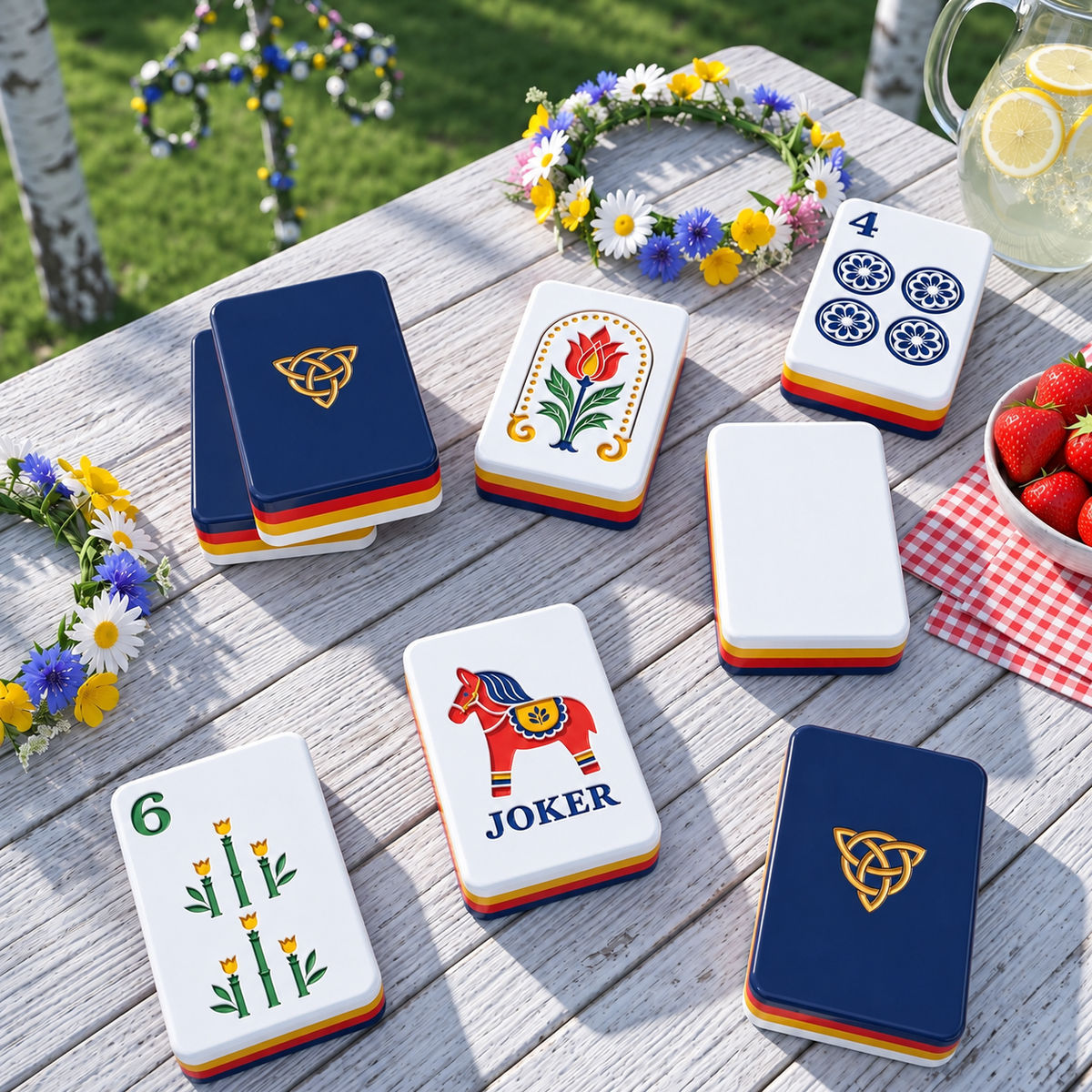
The 6 Bam is a Bamboo suit tile that displays a bird (traditionally a crane or peacock) rather than six repetitions of a symbol. It ranks as tile number 6 within the Bams, which run 1–9 in a standard 160-tile American set. The 1 Bam also shows a bird—a convention dating to Chinese mahjong origins, where birds carried symbolic weight. In play, the 6 Bam functions identically to any other numbered tile: it can form pungs (three identical 6 Bams), kongs (four), quints, or sextets, and appears on the current year's National Mah Jongg League card in specific hand patterns. Because the bird image is distinct and striking, many players find it easier to spot quickly during fast discards. A standard Mahstead set includes four copies of the 6 Bam (one for each player's potential hand).
The 6 Bam stands out instantly when you glance at a mahjong layout. Unlike most other tiles—which repeat numbers or symbols in orderly rows—the 6 Bam features a single bird image. This quirk isn't decoration; it reflects centuries of mahjong design tradition and has practical consequences for how you play today.
What does the 6 Bam bird symbol actually represent?
The bird on a 6 Bam is typically a crane, peacock, or generic stylized bird depending on the set's design. Chinese mahjong traditions attached significance to birds as symbols of auspiciousness and freedom. In American mahjong, the symbol persists primarily for aesthetic and historical continuity—though experienced players often say the bird image burns into memory faster than six parallel bamboo stalks would. The 1 Bam also carries a bird; together, they are the two exceptions to the numeric-repetition rule. Mahstead's engraved American mahjong sets preserve this classic bird design, making the tiles readable at a glance during competitive play.

Why does the 6 Bam matter in American mahjong strategy?
The 6 Bam functions as a regular numbered tile in hand composition, but its visual distinctiveness makes it harder to hide during the discard pile analysis. Seasoned players track discards—especially middle-rank Bams—to estimate which hands opponents are building. Because the 6 Bam's bird is so visually arresting, you will remember whether it has been thrown and by whom. This small advantage accumulates: if you recall that your left player discarded the 6 Bam early, you know she is less likely to be building a pung or kong with Bams. The tile appears frequently on the current year's National Mah Jongg League card in various standard and special hands—meaning most rounds will see it in play. This is why many players describe the bird tiles as "character builders" for the game itself.
How do you identify the 6 Bam among other Bamboo tiles?
The Bamboo suit (Bams) displays either stacked bamboo stalks or, for 1 and 6, a bird. A 2 Bam shows two stalks, 3 Bam shows three, and so on through 9 Bam (nine stalks). The 6 Bam's bird should be centered and clearly distinct from the surrounding tiles in your rack. In side-by-side comparison, you will never confuse it with a 5 Bam (five stalks) or 7 Bam (seven stalks). However, on poorly made or low-contrast tiles, the bird can blur into generic marks. This is why investing in a clear, professionally engraved set matters: crisp edges and high-contrast imagery eliminate confusion under pressure. Our best-selling mahjong sets use acrylic with bold printing, so the 6 Bam bird remains unmistakable even during fast play.
🀄 Shop best-selling mahjong sets →

How often does the 6 Bam appear on the annual League card?
The 6 Bam appears on every year's National Mah Jongg League card in multiple hand patterns—typically across standard hands, special tiles combinations, and occasional "Like Numbers" or "Consecutive Run" sections. Statistically, a 6 Bam will be discarded or drawn in the majority of casual rounds, making it one of the most circulated mid-value tiles. It is rarer to complete a full evening of mahjong without seeing a 6 Bam called or won than to see it feature in at least three hands at your table. New players often notice the 6 Bam first because the bird catches their eye before they develop the skill to read number sequences. Experienced players deliberately monitor the 6 Bam's movements as an indicator of which suits are in play.
How do beginners often misread the 6 Bam?
Newer players sometimes mistake the 6 Bam for a wildcard or special tile because the bird symbol differs from the numeric pattern of other tiles. This confusion dissolves quickly: the 6 Bam has no special power. It cannot substitute for jokers, and it must match exactly to form a pung. Another beginner error is confusing the 6 Bam with the 1 Bam when both sit in a rack at an angle—take a moment to verify you are counting the correct tile before playing. Some players also over-weight the 6 Bam's "luck" or "visibility," thinking it is inherently more valuable than a 6 Crak or 6 Dot. In fact, its value depends entirely on the current year's card patterns. If the card rarely calls for Bams, the 6 Bam is no more useful than any other mid-rank tile.
🎁 See our most-loved mahjong sets & accessories →
What to Check Before You Buy a Set
When choosing an American mahjong set, verify that the Bamboo tiles (Bams) are clearly marked with numerals or symbols, and that the 1 and 6 bird designs are crisp enough to distinguish under normal table lighting. Examine a sample photo or in-person if possible: blurry or embossed birds create frustration during play. Confirm the set includes exactly four copies of each tile, including four 6 Bams. If you play frequently, acrylic tiles with engraved or printed imagery hold up better than lighter plastic. A padded bag or case protects your set during transport—especially if you host rotating games at different homes.
Comparison: Tile Design Clarity Across Set Types
Feature | Why It Matters | What to Look For |
Bird symbol contrast | Speeds tile recognition under pressure | High-contrast print on light background |
Engraved vs. printed imagery | Engraved wears longer but costs more; print fades on heavy use | Printed is fine for casual weekly games |
Tile size (standard ~1 inch) | Larger tiles suit older hands; smaller sets pack easier | Check dimensions against your hand size |
Material (acrylic vs. plastic) | Acrylic is durable and feels premium; plastic is lighter | Choose acrylic for long-term play |
Joker count (typically 8 total) | Extra jokers let you replace worn tiles; spares stay off the board | Verify set includes 160 tiles total |
✨ Find your Mahstead set — free US shipping →

FAQ
Is the 6 Bam the same across all mahjong set brands?
Yes. The 6 Bam always shows a bird and counts as tile number 6 in the Bamboo suit. Design styles (bird pose, outline style) vary by manufacturer, but the tile's function and symbol are universal in American mahjong.
Can the 6 Bam be used as a joker?
No. The 6 Bam is a regular numbered tile. Jokers are separate tiles designed to substitute for any tile you need. The 6 Bam cannot perform that function, even in your hand.
Why is there a bird on the 6 Bam but not on other numbered Bams?
Tradition from Chinese mahjong. Birds carried symbolic meaning centuries ago. Modern American sets preserve the bird on 1 and 6 Bams as a design and historical convention, not for gameplay reasons.
How do I make sure I'm buying a set with high-quality 6 Bams?
Look for clear imagery with good contrast, engraved or sharply printed. Acrylic tiles with bold bird designs last longer than faded plastic. Read product descriptions mentioning tile clarity or ask to see sample photos before buying.
Does the 6 Bam appear in every hand on the annual League card?
No. The 6 Bam appears in multiple hand patterns each year, but not in every single hand. Most players will encounter it many times per evening, but which hands specifically call for it depends on the current year's card.
What happens if my 6 Bam tile cracks or fades?
If your set includes spare tiles (common in 160-tile sets), you may have an extra 6 Bam available. Otherwise, contact the manufacturer. Mahstead sets ship with all playable tiles intact and are made from durable acrylic to resist wear.


View More
View More
View More
