
Do You Need a Mahjong Travel Bag? When & What to Buy
Last updated: Nov 23, 2026
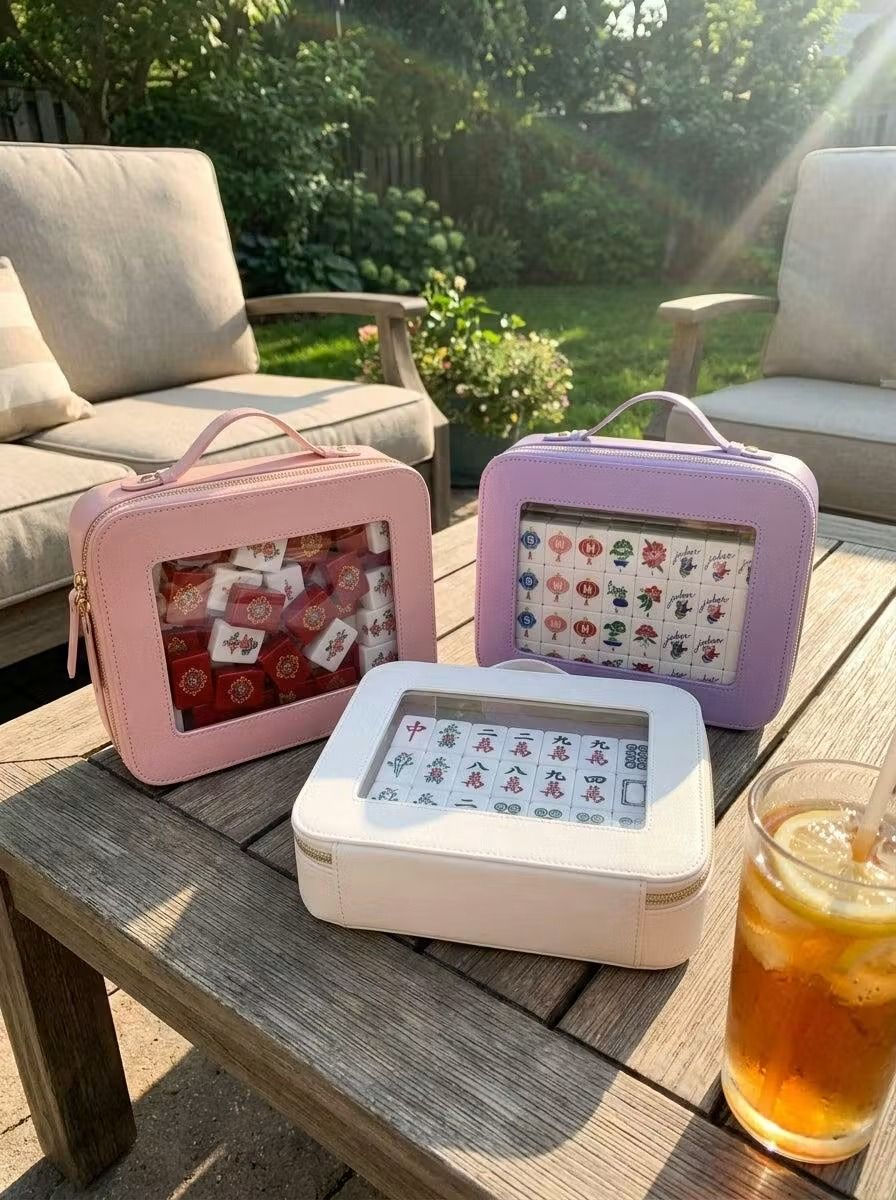
You don't need a travel bag if you play at home every week with tiles that stay on the same table. You do need one if you carry your set between locations, host at different houses, travel with mahjong friends, or want to keep tiles clean and organized between games. A good bag holds a 160-tile set with racks, pushers, a mat, and accessories in one secure space, prevents tiles from shifting during transport, and saves setup time. Bags range from basic drawstring pouches to multi-compartment cases. We recommend measuring your set's footprint first, checking whether your bag fits your mat (not all bags do), and testing the zippers before buying. Most players discover they need a bag within their first season of games outside home base.
🎁 See our most-loved mahjong sets & accessories →
What exactly goes inside a mahjong travel bag?
A standard American mahjong set has 160 tiles, 8 jokers (already counted in that), one mat, four racks with pushers, one card holder or clip, and dice. If you're carrying it all to another player's house or a game venue, your bag needs to hold the tiles (either loose or in their original rack storage), the mat folded or rolled, the four individual racks, and any extras like dice or a scoreboard. That's roughly 4–8 pounds of solid weight. Most bags add a zippered pocket for the card (the current year's National Mah Jongg League hand list), pen, and personal items. A few include a separate coin pouch for tiles you mark as "wind of the round."
Do I really need a bag, or can I use something else?
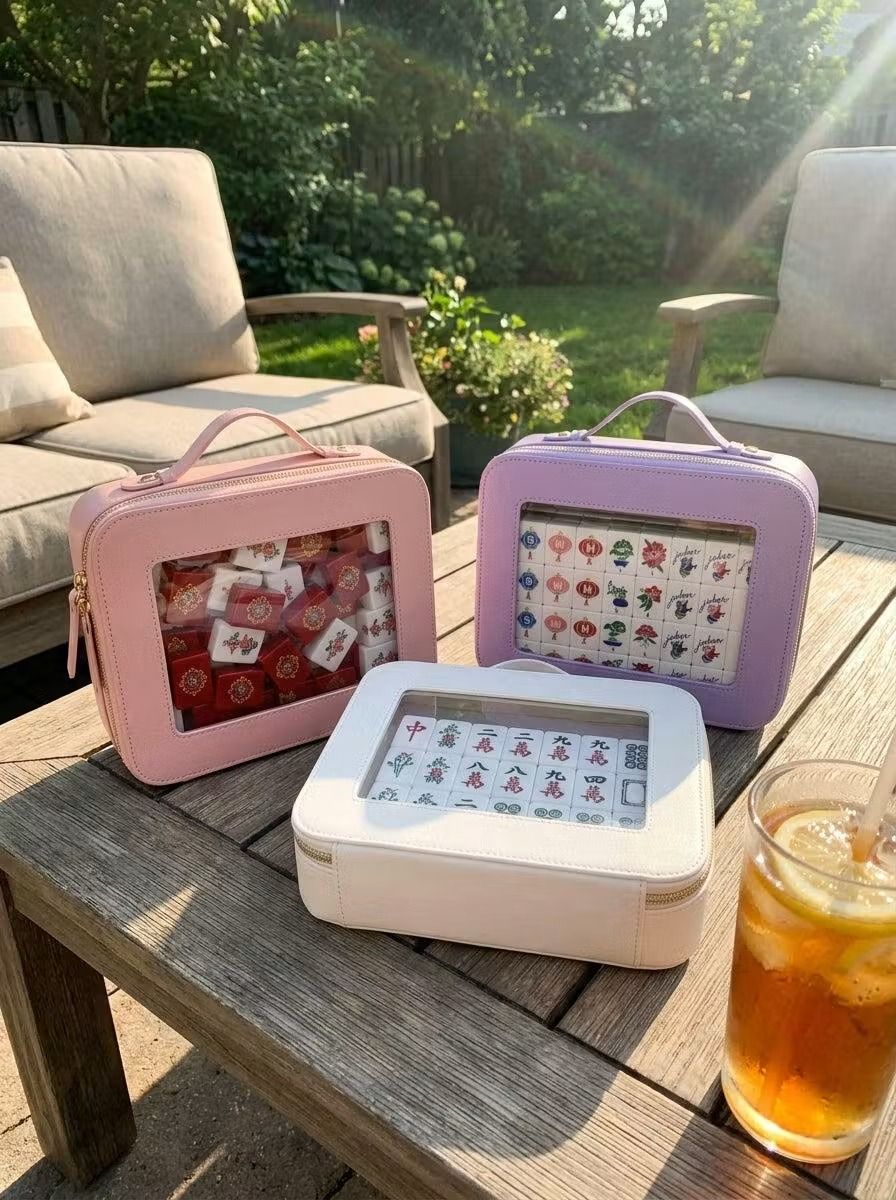
Many weekend players use a plastic storage tote or a padded lunch bag and do just fine. If you own mahjong racks with pushers, they already stack and protect tiles well; a large tote with a cloth divider works. If your set sits in a cardboard box at home, carrying it loose in a box is messy and risks spilling tiles in the car. A dedicated bag isn't mandatory—it's an organizational choice. You need one when: you're moving your set weekly, you're gifting it and want it to arrive pristine, you travel with it, or you hate the loose-tile chaos. For casual home players with storage in one closet, a tote is fine. For anyone hosting at multiple locations or playing in groups that rotate venues, a proper bag saves time and prevents tile loss.
How do I know if a bag will fit my mat?
Here's where real problems happen. An American mahjong mat folded in half is roughly 18–24 inches long and 9–12 inches wide, depending on the mat style and whether it has a foldable edge. Some travel bags have a flat zippered main compartment; others have a rounded structure that squeezes. Before buying, check whether the bag's dimensions (posted on product pages) allow the mat to fit flat—not cramped or forced. If a bag says "fits mat" but doesn't specify depth, email the maker. A mat that won't lie flat either folds awkwardly (making setup slower) or won't fit at all. The best travel bag designs have a main compartment that's at least 20 inches × 10 inches × 4 inches deep. Test this before purchase if possible; if ordering online, know the exact dimensions of your mat first.
Should I choose a bag with internal dividers or a simple pouch?
This depends on how much you care about tile organization and speed. A simple drawstring bag or tote works fine if your tiles are already in racks with pushers; the racks keep tiles from sliding around, and you just toss everything in. You'll spend 5–10 minutes unpacking and setting up. A bag with dividers (usually zippered pockets for mat, tiles, racks, and accessories) cuts setup to 2–3 minutes because each item has its place. Dividers also protect tiles better during car rides or plane trips—less jostling. They add weight and cost a bit more. If you play weekly at the same two or three houses and setup speed isn't critical, a pouch is enough. If you host rotations, travel, or value fast games, dividers pay off. Check the product description carefully; not all bags labeled "mahjong" include actual dividers inside—some are just large pouches.
✨ Find your Mahstead set — free US shipping →

What about bags for carrying just the tiles, without the mat or racks?
If you're playing at a friend's house that already has a mat and racks set up, you might only need to transport a 160-tile set. A compact bag or deck-size pouch works here. These are lighter, cheaper, and fit in a backpack or car cupholder. The tradeoff: you still need to carry the current year's card, and you're relying on the host to have reliable equipment. For serious players who split time between established groups, carrying just tiles and a card is common. Keep in mind that loose tiles in a small bag can rattle and risk corners being chipped if you're rough with the bag. If you're doing this, use a bag with some internal padding or a cloth divider.
What's the honest durability story?
Bags with good zippers and reinforced seams last 3–5 years with weekly play. Cheap zippers fail in the first year, especially if you're jamming a mat in repeatedly. Canvas or heavy nylon holds up better than thin polyester. The seams at the bottom corners and handle attachment points fail first if you're overstuffing or bumping the bag in car trunks. Before buying, check user reviews (if available) for zipper complaints specifically. Avoid bags that are sewn, not welded, at high-stress points. If you're buying an investment bag, look for double-stitched seams and lockable zippers that won't pop open on a bumpy ride. Most players replace a bag when a zipper breaks or a seam tears because repair isn't worth it.
Comparison: When to Pick a Bag Type
Scenario | Bag Type | Why It Works | Duration |
Home-only player, no travel | None needed / tote | Tiles stay put; no transport | Every season |
Weekly rotation between 2–3 houses | Simple drawstring pouch with mat slot | Lightweight, fast to repack, fits a mat | 3–4 years |
Host multiple venues; speed matters | Divider bag (mat, tiles, racks, card slots) | Setup under 3 min; organized chaos eliminated | 4–5 years |
Solo visitor, no mat/racks at destination | Compact tile-only bag | Ultralight; fits backpack | 5+ years |
Travel overnight with set + gifts | Hard-shell or padded multi-compartment case | Maximum tile protection; looks professional | 5+ years |
What to check before you buy
Dimensions match your mat: Measure your mat folded. Compare to the bag's stated interior dimensions. If uncertain, ask the maker.
Zippers are YKK or equivalent: This isn't a brand loyalty thing—it's wear-life. Cheap zippers jam and snap.
Bottom seams are double-stitched: Run your finger along the bag's bottom. Fraying or thin thread = early failure.
Handles are attached at reinforced points: Grab the bag fully loaded. Handles should feel solid, not like they're pulling away.
Compartments actually fit your setup: If the bag has pockets for racks or card, test them with your actual racks and card before committing.
Material is washable or wipeable: Mahjong night means snacks. A bag you can wipe clean lasts longer and stays fresh.
🀄 Shop best-selling mahjong sets →
When a bag is overkill
If you play at one person's house, tiles stay there, and you visit weekly, you don't need a bag—ever. If your set lives in a cardboard box on a shelf and comes out once a month, a bag adds no value. If you're a beginner who isn't sure mahjong will stick with you, borrow a bag first or use a sturdy tote. A dedicated travel bag is an upgrade for committed players who move their setup regularly, and it's wasted money if your game is stationary.
FAQ
Can I fit a mat inside the same bag as a full 160-tile set and four racks?
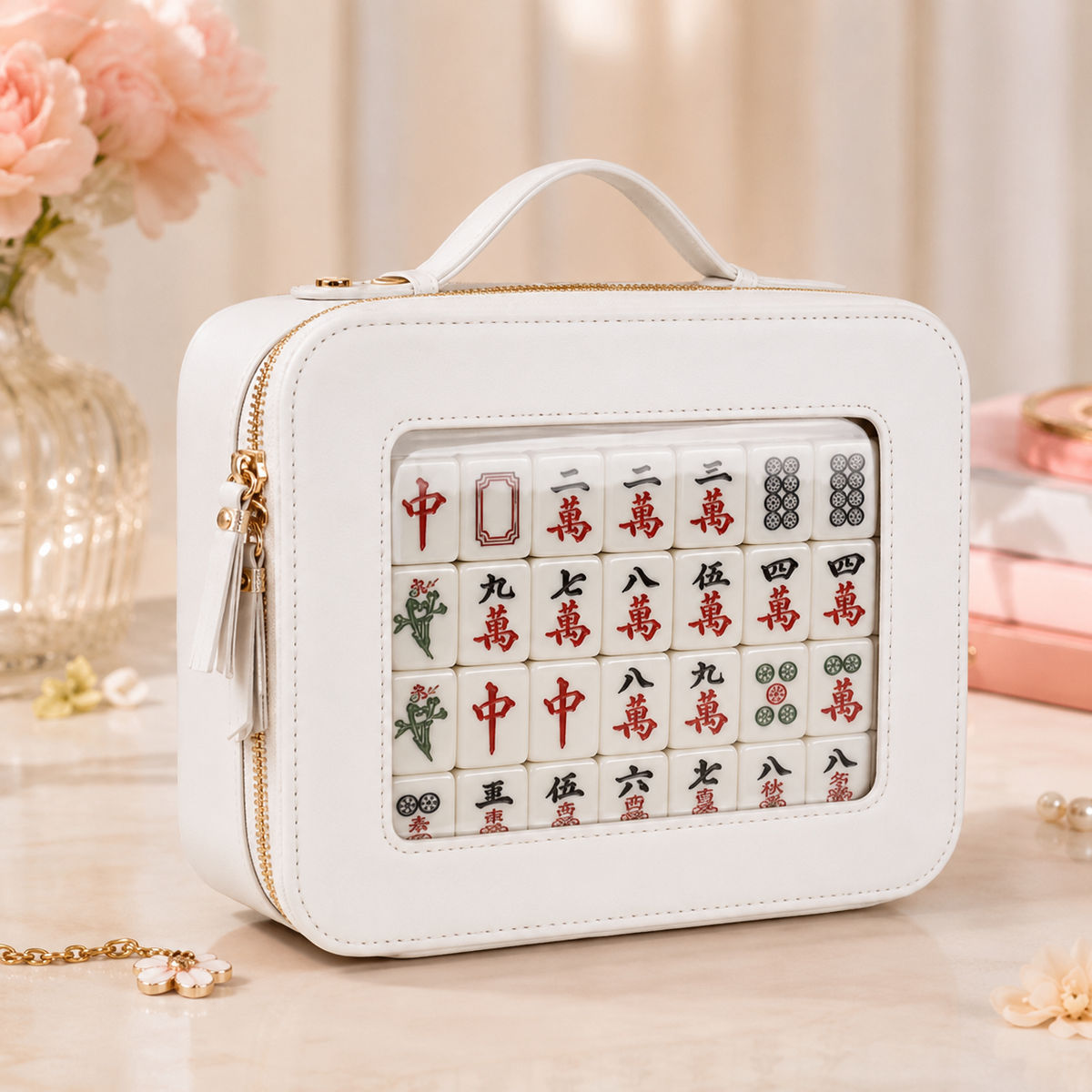
Yes, if the bag's interior is at least 20" × 10" × 4" deep. Mats roll or fold to roughly 18–24" × 9–12". Test your actual mat against the bag dimensions before buying; not all "mahjong bags" have the depth to accommodate both without forced packing.
Should I buy a bag when I buy my set?
Only if you plan to move your set weekly or travel with it immediately. If you play at home for now, buy a bag later when you know you need it. Many players wait a season to see their game habits first.
Do soft bags protect tiles better than hard cases?
No—hard cases protect better. But they're heavier, bulkier, and overkill for weekly car rides. Soft padded bags handle 95% of transport needs. Reserve hard cases for airline travel or long-distance moves.
What's the difference between a mahjong bag and a regular tote?
A real mahjong bag has compartments sized for a mat and tiles, reinforced zippers, and padding. A tote is generic. A mahjong bag saves setup time and organizes better; a tote works if you're not picky.
Can I wash a mahjong bag?
Check the material tag. Canvas or heavy cotton can handle a gentle wash. Synthetic blends may fade or lose water resistance. Most just need a wipe-down with a damp cloth. Avoid submerging bags with zippers.
Is it worth paying more for a branded mahjong bag versus a generic one?
Yes, if the branded version has YKK zippers, double-stitched seams, and compartments that actually fit a full set. Read reviews for zipper durability and seam quality—those are what fail first. Generic bags with poor zippers break in a year.
How heavy is a full bag when packed?
A 160-tile set, mat, four racks, pushers, and dice weigh 5–8 pounds depending on material. A well-designed bag distributes this weight evenly; a poorly made one will feel unbalanced and pull your shoulder.


View More
View More
View More
