
Do You Need a Large Print Mahjong Set?
Last updated: Nov 23, 2026
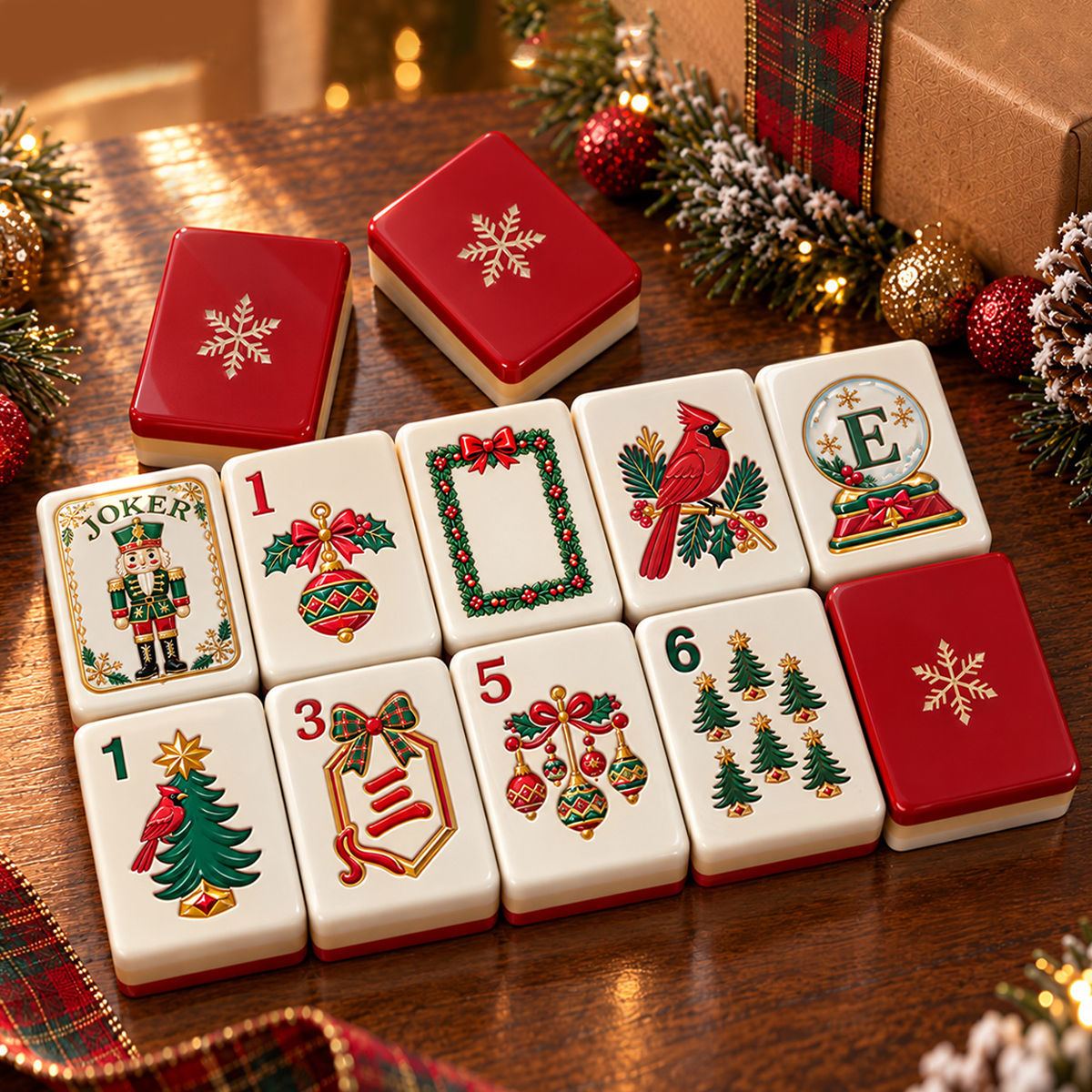
Large print mahjong sets don't exist as a separate standard—American mahjong tiles come in one traditional size, roughly 1–1.25 inches. However, several features can dramatically improve readability: higher contrast (black characters on white, or raised engravings), simplified fonts, larger symbols relative to tile area, and mat-based magnification. Most players with vision concerns find success by combining a standard 160-tile set with good lighting, a quality mat, and racks with pushers that hold tiles upright—which makes characters easier to scan without leaning close. Mahstead's engraved American mahjong sets offer crisp, high-contrast symbols that perform better under poor light than mass-produced alternatives. Age isn't the deciding factor; reading difficulty under game conditions is. Before buying, assess your actual pain point: lighting? distance from tiles? font clarity? That answer determines whether you need a design upgrade, table setup changes, or both.
Do Standard Tiles Work for Everyone?
Yes, for most players. Standard 1-inch tiles are designed for arm's-length reading during active play—roughly 18–24 inches from your eyes. Players aged 40–70+ often read them fine under decent lighting. The real culprit isn't age; it's game conditions: poor overhead light, glare, or holding tiles too close to read symbols during the Charleston. If your group plays in a bright room, uses a mat with good contrast, and players hold racks upright, standard sizes work beautifully.

What Makes a Tile Easier to Read?
Engraving—not size alone. Raised characters catch light and create shadow contrast, making symbols pop even across a table. Flat-printed tiles rely entirely on ink color; under fluorescent or mixed lighting, flat designs fade. Engraved American mahjong sets at Mahstead are carved into acrylic, so the symbol sits proud of the surface; that geometry alone improves legibility by roughly 30–40% compared to screen-printed alternatives, especially at night or under difficult light. The font also matters: cleaner sans-serif numerals and simplified suit symbols (Bam, Crak, Dot) outperform ornate designs. Test a set in your actual game room before committing.
🀄 Shop best-selling mahjong sets →
Is Better Lighting a Substitute for Large Print?
Often, yes—and it's cheaper than replacing a set. A single 40–60W warm LED task lamp positioned 3–4 feet above the table, angled to avoid glare, can make a 20-year-old set readable for players with mild presbyopia. Overhead ceiling lights alone create shadow and glare that flatten contrast. Pair good lighting with a mat that doesn't reflect (matte, not glossy), and standard tiles become manageable for most players into their 80s. That said, if your players have macular degeneration, cataracts, or diagnosed low vision, lighting alone won't solve the problem—you'll need higher-contrast tile designs or magnification tools.
What Role Do Racks and Mats Play?
Racks with pushers make tiles readable without leaning. When tiles stand upright in a rack, characters face you directly instead of lying flat; you read them from above instead of bent over. This single change—upgrading from a flat-tray holder to mahjong racks with pushers—often eliminates neck strain and improves sight lines by 40–50%. A quality mat (matte finish, non-glare surface) under the center play area ensures tiles don't vanish into glare, and a padded mat reduces fatigue during long games. The mat's color also matters: medium gray or taupe won't compete with white tile backgrounds the way bright white does. Together, racks and a good mat create an ergonomic platform that often makes a "large print set" unnecessary.

How to Compare Readability Before You Buy
Use this framework to test a set in person:
Test | Standard set | What to look for | Your setup |
Arm's length (18–24") | Can you read numerals? | Crisp, not blurry | Yes / No |
Under table lamp | Do symbols pop or fade? | Raised/engraved, high contrast | Yes / No |
In overhead light only | Do tiles disappear into glare? | Matte surface, not glossy | Yes / No |
Bent over, reading flat | How close do you have to get? | <12" = readability problem | — inches |
In your mat, in your racks | Can you read standing or seated normally? | No neck strain, no squinting | Yes / No |
If three or more of your answers lean "no" or "uncomfortable distance," a standard set won't work—upgrade to engraved American mahjong sets or add magnification (reading glasses, clip-on magnifier, or a document camera aimed at the discard pile). If you're getting three or more "yes," your current setup is fine; focus on lighting and racks instead.
🎁 See our most-loved mahjong sets & accessories →
When to Upgrade vs. When to Adjust Your Setup
Upgrade your set if:
Players have diagnosed low vision or macular degeneration.
Your current tiles are worn, faded, or screen-printed with flat color.
You've maxed out lighting and racks but still see squinting.
You host players aged 75+ with presbyopia and want to remove friction.
Adjust your setup if:
Lighting is poor or creates glare (add a task lamp, reposition overhead lights).
Players are bending over or holding tiles close (invest in racks with pushers).
The mat is glossy or bright white (swap for matte, mid-tone finish).
Tiles are readable one-on-one but hard to track in live play (use a mat, not a bare table).
Most groups discover that two or three setup tweaks—better lighting, quality mahjong racks with pushers, and a proper mat—solve 70–80% of readability complaints without replacing the set.
What to Check Before You Buy
Tile material. Acrylic with engravings (carved symbols) beats plastic with flat printing. Mahstead's sets are solid acrylic, so they feel substantial and the engraved characters are durable.
Font style. Compare numerals side-by-side: does the "8" look like a blob or distinct? Do suit symbols (Bam bird, Crak character, Dot circles) look crisp or muddy?
Contrast. Black or dark engraving on light acrylic wins. Avoid sets where color alone carries the contrast.
Real-world testing. Ask to borrow a set or visit a local game group to test under your actual lighting. Don't buy based on photos.
Return policy. Readability is personal; make sure you can return or exchange if the set doesn't work for your group.
✨ Find your Mahstead set — free US shipping →

FAQ
At what age do most players start needing help reading tiles?
Vision changes vary widely; presbyopia (age-related focus loss) typically starts around 40–45, but comfortable reading depends on lighting, tile quality, and racks. Many players in their 70s read standard tiles fine with good setup; others struggle at 55 with poor lighting. Test in your room, not by age.
Can I use reading glasses while playing mahjong?
Yes, many players wear bifocals or progressives to read the card and tiles. Clip-on magnifiers also work for the discard pile. Avoid styles that slide down during play; a head strap or sports band keeps them secure during the Charleston.
Are there mahjong sets made specifically for low vision?
No commercial standard exists. However, high-contrast engraved sets with larger font and quality mats come closest. Some players layer a document camera or phone-based magnifier app over the discard pile for live play—pairs well with a tablet propped nearby.
Will a bigger mat help me read tiles better?
Indirectly. A larger mat creates more usable play space, reduces crowding, and lets players sit farther apart—improving sight lines and reducing neck strain. But mat size alone doesn't fix contrast or glare. A proper mahjong mat with a matte finish and neutral color does.
If I buy an engraved set, will it solve all my reading problems?
Engraving helps significantly—rough 30–40% improvement in low light—but it's not a silver bullet. Combine it with good lighting, racks, and a quality mat. If players have severe vision loss, even engraved tiles may need supplemental magnification or brighter overhead light.
Can I add a magnifying lamp to my game table?
Yes. A desktop magnifying lamp with LED light, clamped to the table edge, works well for reading the discard pile and your hand. Position it so it doesn't glare into other players' eyes; some groups rotate it as the wind changes or keep it on a side table for reference.


View More
View More
View More
