
Designer Mahjong Travel Bag: Choose the Right Case for Your Set
Last updated: Nov 23, 2026
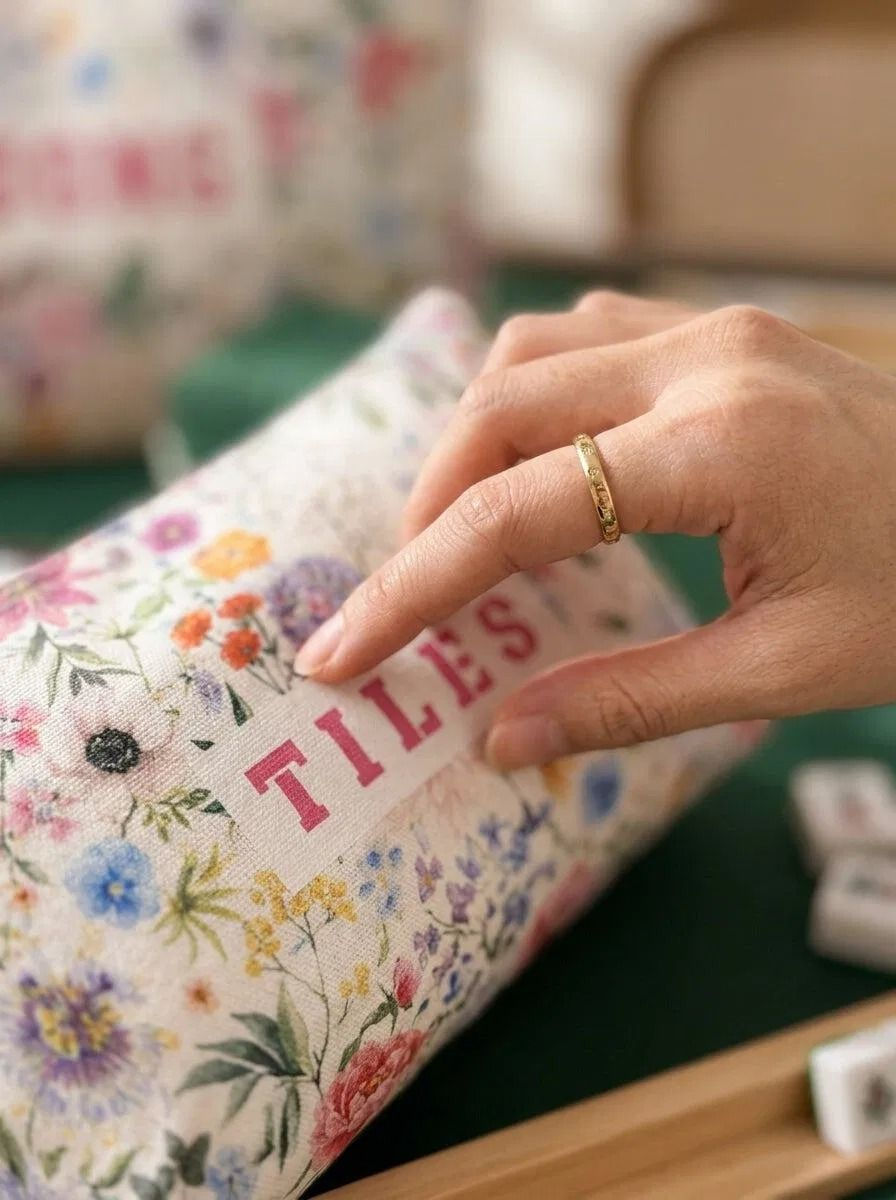
A designer mahjong travel bag is a protective carrying case for a 160-tile acrylic set, mat, and often racks with pushers—ranging from simple canvas totes to structured cases with padded compartments. You'll find options from Mahstead featuring engraved designs, solid colors, and playful themes that fit different travel patterns: weekend games at a friend's house, multi-city tournaments, or regular commutes to a weekly game. Most hold a complete set, dice, and a rolled mat; some include dividers for racks. Cost varies by material and customization. Choose based on how often you travel, what rough handling you expect, and whether you want a statement piece or discreet protection. Avoid bags without padding if you're flying or driving long distances; check internal dimensions before ordering to confirm your mat and set fit comfortably.
What size do I actually need for a full American mahjong set?
A 160-tile acrylic American mahjong set sits in a hard-sided or soft case roughly 10–12 inches long, 6–8 inches wide, and 4–5 inches deep when stacked in its original tray. When you roll a standard mat (usually 27×27 inches), it compresses to about 4–5 inches in diameter and fits alongside or beneath the set case inside a larger bag. Mahjong racks with pushers are thin enough to lay flat in most bags without adding bulk. Before ordering any travel bag, measure your set's case or stack the tiles in a box and measure that; then add 2–3 inches for padding. If your mat is custom-sized or oversized, roll it and measure its diameter. Honest assessment saves returns.

Soft bag versus hard case—which protects better on trips?
Soft canvas or nylon bags with internal padding handle routine transit well—short car rides, airport check-in if packed carefully, casual movement between homes. Hard-shell cases offer military-grade protection for frequent air travel, rough baggage handling, or tournament play where your set might sit in a vehicle trunk or be stacked with others' bags. Soft bags weigh less, fold flat for storage, and often cost less; hard cases are heavier, bulkier, but absorb impact that would shatter acrylic tiles. If you fly with your set more than twice yearly or play competitively, a hard case justifies the trade-off. For weekly home games with occasional transport, soft padding suffices. Most of our players switch between both depending on the trip.
🎁 See our most-loved mahjong sets & accessories →
How do engraved designs affect durability and cleaning?
Engraved text, images, or personalization on an acrylic set's tiles or case exterior is laser-cut into the material, not printed on top, so it won't peel, fade, or wear off with handling. A bag with engraved branding on its exterior (such as personalized initials or a mahjong motif) is equally durable if the bag material itself—canvas, nylon, or vinyl—is quality. The real wear point is seams, zippers, and padding: check stitching on seams before and after heavy use, and test zippers to ensure they glide smoothly when loaded. Engraved tiles stay legible for decades; bags fade or wear if over-stuffed or dragged repeatedly. Cleaning an engraved set or bag is simple—wipe acrylic with a damp cloth, wipe exterior bag material the same way—and the engraving won't blur or fade.
Bag Type | Best For | Durability | Weight | Storage When Empty |
Soft canvas/nylon with padding | Weekly games, short trips | Moderate; padding absorbs light bumps | Light (2–4 lbs) | Folds or rolls flat |
Hard-shell case (molded plastic) | Air travel, tournaments | High; rigid walls resist impact | Heavier (4–6 lbs) | Stands alone or stacks |
Structured tote with dividers | Players who carry extra racks/tiles | Moderate-to-high; internal organization | Medium (3–5 lbs) | Stands or folds |
Quilted or padded sling bag | Casual home-game commute | Light; suitable for short transit | Light (1–3 lbs) | Compresses easily |
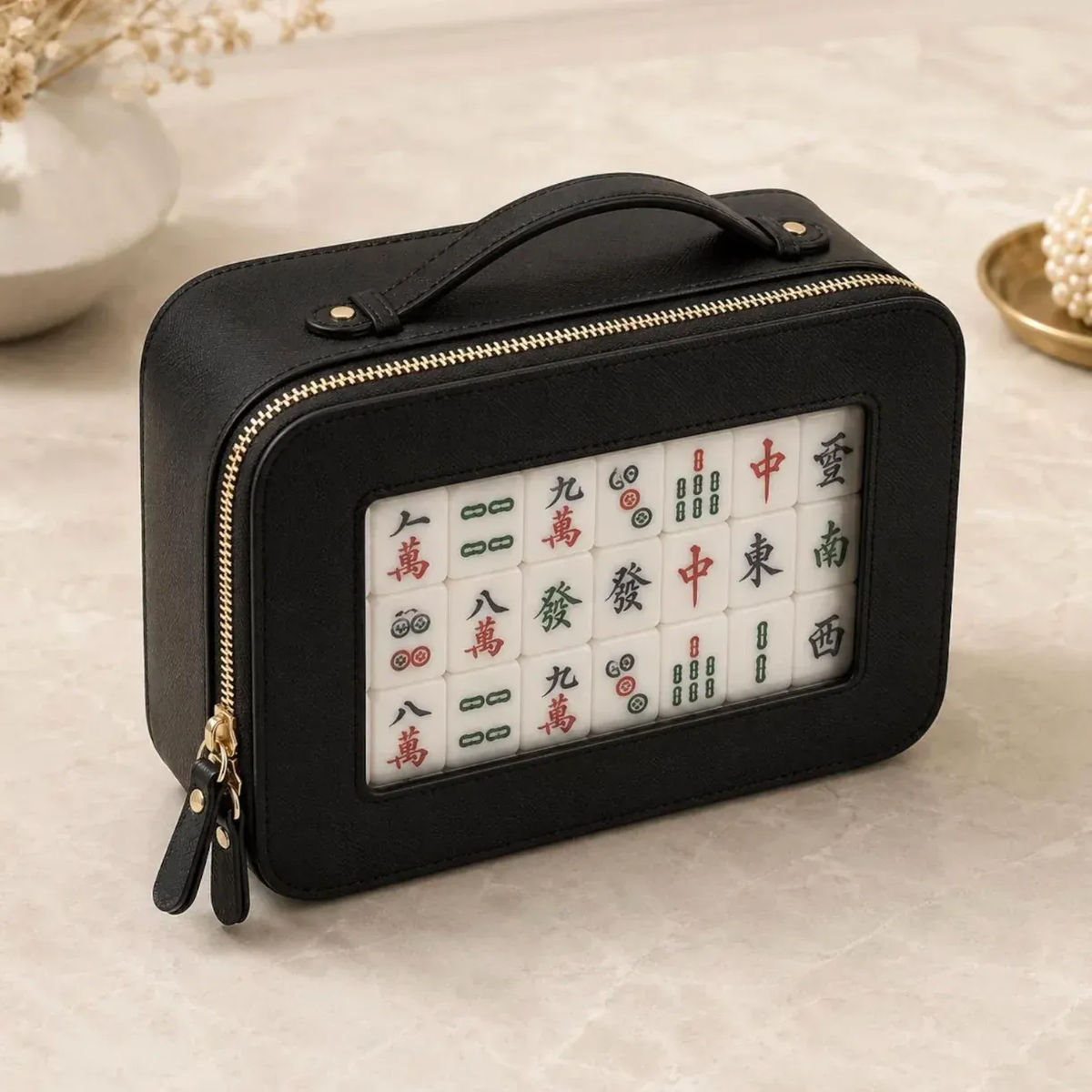
What's inside a well-designed mahjong travel bag?
The best travel bags include internal zippered pockets for dice and scoring chips, a slot or strap for a rolled mat, a cushioned well or tray for the tile set case itself, and often a separate compartment for racks or pushers. Some have mesh panels so you can see contents without opening zippers. A quality bag also features reinforced handles, a protective base (whether rubber feet or thick material) that won't snag on rough floors, and water-resistant exterior fabric if you play in humid climates or travel near water. Avoid bags with thin walls, flimsy zippers, or no interior organization—you'll spend the first five minutes at each game fishing for dice or worrying tiles have shifted. When comparing options, open the bag fully, check seams under light, and confirm pockets align with how you pack (some players separate racks; others keep them with the set).
✨ Find your Mahstead set — free US shipping →
Should you buy a designer bag from a mahjong company or a generic luggage brand?
Mahjong-specific bags (including our best-selling mahjong sets collection) are engineered for the actual dimensions and weight of a 160-tile set, mat, and racks—not "approximately" like a generic cosmetics case. Pockets fit dice; interiors cradle acrylic without rattling; handles suit game-night carry, not luggage trolleys. A generic weekender or tool bag is cheaper and sometimes lighter, but you'll often waste space, risk tiles shifting, and lack dedicated mat storage. Designer mahjong bags from specialty makers reflect player feedback: after hundreds of weekly games and tournaments, we know where zippers jam, which compartments stay unused, and how much cushioning actually matters. If you love the aesthetics of engraved American mahjong sets or personalized accessories, a branded bag extends that identity. If you just need cheap protection, a generic padded camera bag or small briefcase works. But if you host or travel regularly, a purpose-built mahjong bag is a one-time investment that saves frustration.
🀄 Shop best-selling mahjong sets →
What to check before you buy
Measurement: Before ordering, measure your set's footprint and your mat's rolled diameter. Confirm the bag's stated internal dimensions accommodate both with 1–2 inches of breathing room.
Stitching & zippers: Read photos closely. Seams should be straight, stitches tight and even. Zippers should be chunky metal or reinforced plastic, not thin nylon.
Padding thickness: Confirm padding material (closed-cell foam is standard). Thin bubble wrap or felt won't protect acrylic if the bag hits hard surfaces.
Warranty & returns: Check the seller's return window. Mahjong bags are final-sale or 30-day-return at most retailers; order during off-peak weeks to avoid delays.
Handle comfort: If you'll carry the bag to games weekly, hold it or look at reviews about handle shape, padding, and whether straps dig into shoulders.
Material: Canvas and nylon are standard; vinyl adds waterproofing but feels less premium. Ask the seller about material if photos are unclear.

FAQ
Can I fit a mat and a full American mahjong set in the same travel bag?
Yes, if the bag has minimum internal dimensions of about 14×10×6 inches and includes a mat slot. Roll the mat inside the bag (not the set case) to save space. Check dimensions before ordering to avoid crowding tiles or creasing the mat.
Do I need a hard case if I only drive to games?
No. Soft canvas or padded bags handle car transit well. Hard cases shine for air travel, stacking with other luggage, or frequent rough handling. Weekly home-game drives need only padding.
How do I keep acrylic tiles from rattling inside their case during transport?
Place the sealed tile case in foam padding or a bag compartment lined with closed-cell foam or crumpled fabric. Don't leave gaps where tiles can shift or impact the sides.
Are engraved designs on bags easier to personalize than printing?
Engraving is permanent and won't fade or peel; printing can flake over years. Engraving costs more upfront but lasts the bag's lifetime. Printing is cheaper but assumes lighter use.
What's the best way to pack a travel bag to avoid creasing the mat?
Roll the mat tightly around a cardboard tube or keep it rolled, then place it vertically along the bag's side or base. Never fold it; creases are hard to remove from neoprene or vinyl.
Can I fly with a mahjong set in a designer travel bag as carry-on luggage?
Yes, if the bag meets airline carry-on size limits (typically 22×14×9 inches or smaller). A soft bag usually fits; a hard case may require checked baggage. Confirm your airline's policy before travel.
How often should I replace a travel bag?
If used weekly with quality padding and materials, 5–10 years is typical before zippers weaken or stitching frays. Inspect annually for wear; address tears early to extend life.


View More
View More
View More
