
Designer Mahjong Tile Tray: Choose the Right Rack for Your Game
Last updated: Nov 23, 2026
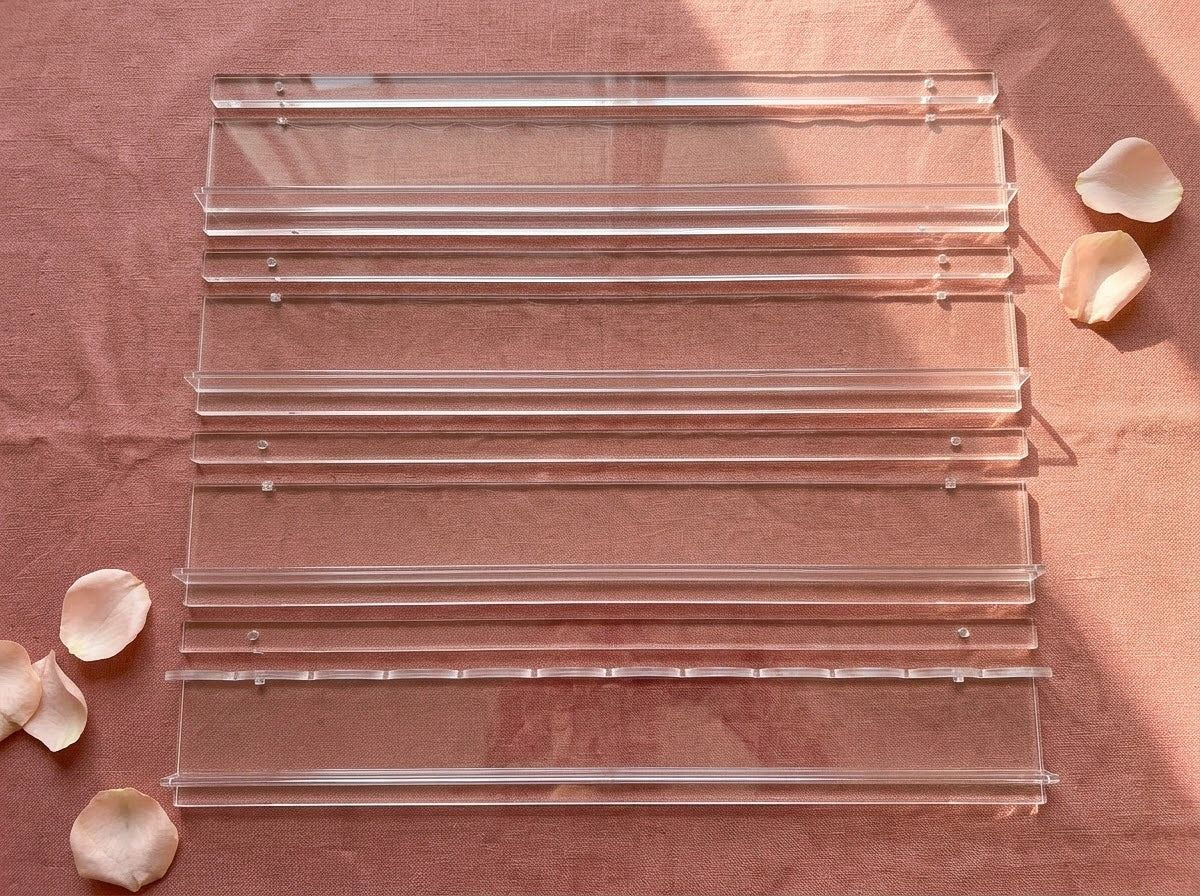
A designer mahjong tile tray (called a rack in American mahjong) is an acrylic or wood holder that keeps your hand of 13–14 tiles upright and organized during play. Each player typically uses one. Mahstead offers engraved acrylic racks with integrated pushers—small sliding pieces that help you sort and display tiles cleanly. A full setup includes four matching racks (one per player) plus a central tile wall organizer. The main benefits are reduced hand strain, clearer tile visibility for the table, and a polished aesthetic. Quality racks prevent tiles from tipping and keep games moving smoothly. Before ordering, confirm the depth (most hold American mahjong tiles comfortably), verify that pushers come included, and check whether the design matches your set's style—Mahstead offers both classic and custom-engraved options across our best-selling mahjong sets collection.
What exactly does a mahjong tile tray do during a game?
A rack holds your 13–14 tiles upright in a row so only you see their faces. Pushers (small wedge-shaped pieces) let you slide tiles smoothly without fumbling. This keeps your hand private, prevents accidental tile reveals, and reduces table clutter. Many players also use a mat beneath the set to define play zones and protect the table surface. The combination of rack, pusher, and mat creates a professional, organized game experience—especially important when hosting weekly games or playing in a group.
🀄 Shop mahjong racks with pushers →
How does a pusher work, and why do I need one?
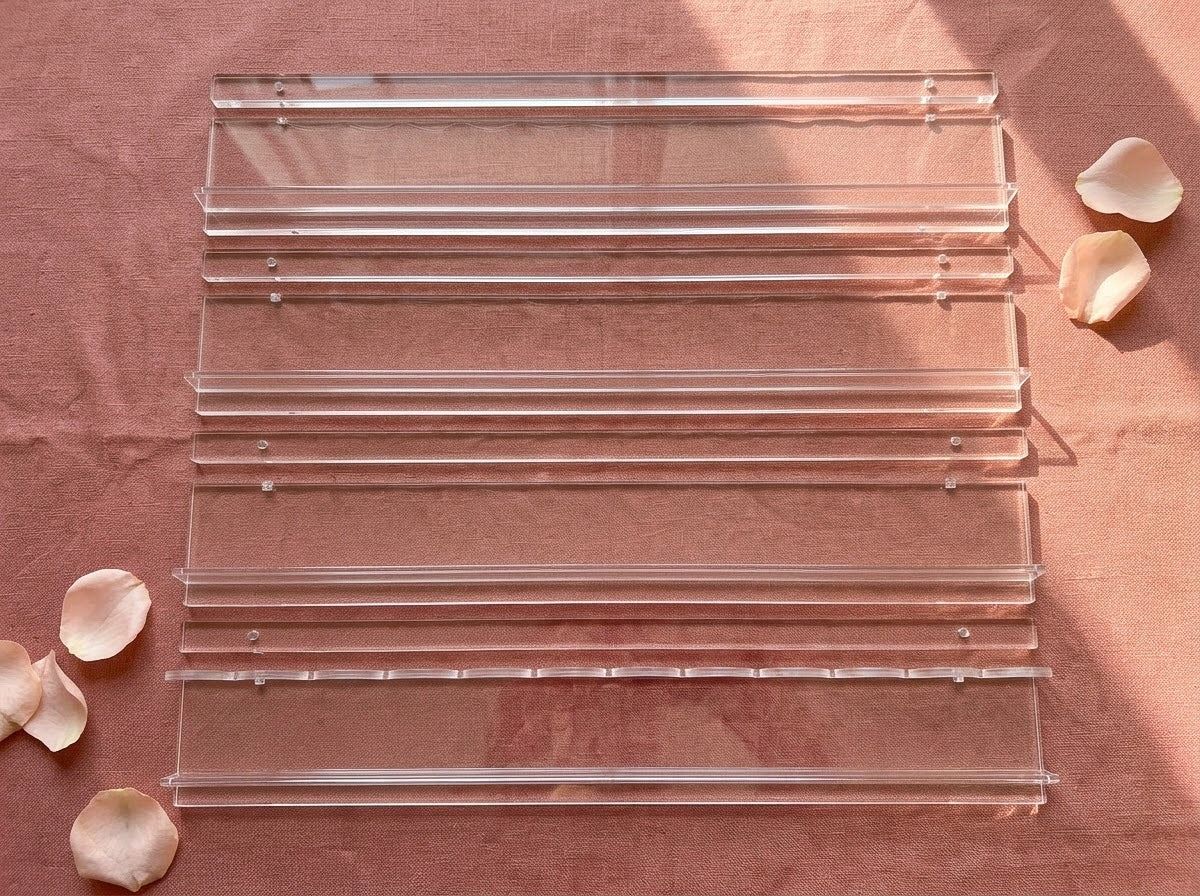
A pusher is a small wedge or flat tool that slots into your rack. After you draw a tile, you use the pusher to shift your remaining tiles together, closing the gap so your hand stays tight and compact. This motion is smooth and deliberate—it prevents tiles from skittering or falling over. Pushers also let you quickly rearrange tiles by suit or number without picking them up, keeping your hand hidden from opponents. Many American mahjong players find that playing without pushers leads to dropped tiles, slower turns, and visible hesitation. Using a pusher is part of the rhythm of the game and shows experience.
What materials are best for a designer rack, and why?
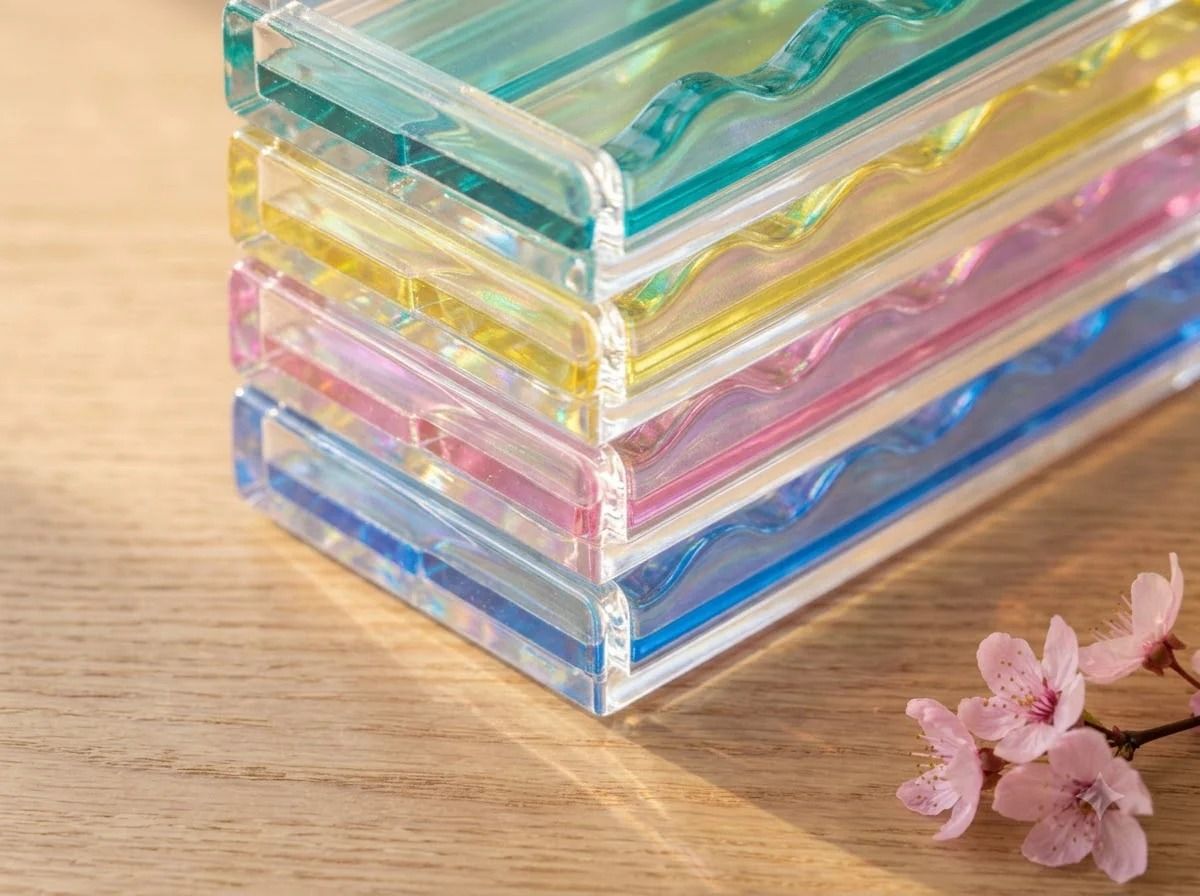
Acrylic racks are durable, lightweight, and easy to clean—they don't absorb moisture from sweaty hands or spilled drinks. Wood racks offer warmth and tradition but require more care and are heavier to transport. Engraved acrylic racks (with custom text, logos, or designs) are popular for personal sets, gifts, and hosting groups. At Mahstead, we design and ship acrylic racks that match our 160-tile sets. They're typically deep enough to hold American mahjong tiles comfortably and come with matching pushers. Acrylic also resists scratching better than bamboo alternatives and doesn't warp in humid climates—a real advantage if you host games year-round. For travel or storage, acrylic is easier to pack and less prone to damage than wood.
Rack depth, width & player count: what should you measure?
American mahjong racks must hold 14 tiles standing upright (or 13 after the first discard). Standard rack depth is 2–3 inches; width is typically 18–24 inches to fit a full hand comfortably. A four-player set requires four individual racks plus one central organizer (or "wall") that holds the remaining undrawn tiles. If you play 2- or 3-player mahjong, you'll use fewer racks but still need each player to have one. Measure your table depth before ordering—most dining tables are 36 inches deep, leaving room for a 24-inch rack on each side plus a central mat. Check the product listing for exact dimensions; Mahstead includes sizing in each rack description so you can verify fit. A rack that's too shallow will cause tiles to topple; too wide wastes table space.
Rack Type | Best For | Material | Key Advantage |
Acrylic, standard engraved | Home games, weekly groups | Acrylic + pushers | Durable, clean, affordable |
Acrylic, custom-engraved | Gifts, personal sets, clubs | Acrylic, branded | Matches your set design |
Modular wall organizer | Hosting larger games | Acrylic | Holds all spare tiles visible |
Travel-friendly shallow | Portable play, dorms | Lightweight acrylic | Compact storage, easy to pack |
🎁 See our most-loved mahjong sets & accessories →

How do you set up and use a rack for the first time?
Place the rack in front of your seat, tilted slightly away from you so only you see the tile faces. Insert the pusher into the left slot of the rack (or right, depending on your dominant hand). Draw 13 tiles from the wall and stand them in the rack from left to right. When you draw your 14th tile (your turn begins), use the pusher to shift the other tiles to close the gap. After you discard, your hand returns to 13 tiles. The pusher stays in place throughout the game. Practice a few turns at home before your first game—the motion becomes automatic quickly. If tiles feel too loose or tight in the rack, check that your tiles are standard American size and that the rack depth matches. Mahstead's racks are engineered for standard 160-tile sets, so if tiles shift unexpectedly, verify your set size matches the rack specifications.
Learn more about game setup and tile handling in our guide to how to play American mahjong.
Hosting a game? Here's what to check before you buy.
Before ordering a set of four racks:
Confirm your table width and seating (square 36"×36" or rectangular 36"×60").
Measure rack depth: standard is 2.5–3 inches; verify this fits your tile size.
Check pusher count: each rack should include one pusher per player (usually 4 total for a full set).
Verify the design matches your tiles (solid color, engraved, logo, text).
Confirm shipping includes all four racks, pushers, and any central organizer.
Ask about spare pushers—they sometimes get lost during play.
If you order an engraved rack, check the proof before production ships.
Mahstead ships racks with free US shipping, so factor in only production time when planning a game date. Custom engravings take longer; order 2–3 weeks ahead if you have a specific date in mind. Check the product page for current lead times before finalizing your order.
Pair your racks with a matching mahjong mat to define play zones and protect your table. A good mat also prevents tiles from sliding during play and adds visual polish to your setup.
✨ Find your Mahstead set — free US shipping →
Comparison: when to upgrade from basic to designer racks.
If you're starting out, a simple acrylic rack with a basic pusher is perfectly functional and affordable. Upgrade to a designer (custom-engraved) rack if you:
Host the same group weekly and want a memorable, branded look.
Give mahjong as a gift to a friend or family member.
Have a personal set you've invested in (a premium 160-tile set with rare tiles or custom packaging).
Play in a club or organization and want matching racks that reflect your group's name or logo.
Travel frequently and need a lightweight, durable setup that lasts years.
A designer rack costs more upfront but lasts through hundreds of games. Many players find that a matched set of four engraved racks elevates the entire experience and makes it easier to keep track of tiles (especially if you host multiple groups). Mahstead's custom options let you add names, dates, club logos, or inside jokes—turning a functional tool into a keepsake.
Browse all mahjong racks with pushers to compare styles and designs available now.
Real-world mistakes to avoid when choosing a rack.
Mistake 1: Buying racks without pushers. A rack without pushers is incomplete and frustrating to use. Always verify that pushers are included before ordering. If you find pushers sold separately, factor that cost into your total.
Mistake 2: Mixing rack brands or materials. Acrylic and wood racks have different heights and depths. Playing with four mismatched racks feels unbalanced and can confuse tile visibility across the table. Stick to one matching set of four.
Mistake 3: Assuming all racks fit standard tiles. Some novelty or vintage racks were designed for older, slightly larger tiles. Modern American mahjong sets (like Mahstead's 160-tile acrylic sets) have standardized tile dimensions. Always ask the seller whether their racks are designed for current American mahjong tile sizes.
Mistake 4: Ordering custom racks without checking the proof. If you customize an engraved rack, typos or logo placement issues can't be fixed after production. Request a digital proof and review it carefully before approving the order.
Mistake 5: Ignoring storage. A rack is easy to store, but four racks plus pushers and a central organizer take up shelf space. If you have limited room, choose a stackable design or store racks flat in a protective mahjong bag or case.
FAQ
Do I need a pusher if I play casually at home?
Pushers aren't mandatory, but they make games faster, cleaner, and more enjoyable. Many casual players add them after their first few games and realize they've been missing out. Once you use a pusher, playing without one feels awkward.
Can I use a single large rack for all four players?
No. Each player needs their own rack so their hand stays hidden. A single shared rack would expose everyone's tiles and break the game's core mechanic.
What if my rack doesn't fit my table?
Measure your table width before ordering. If a standard 24-inch rack is too wide, ask Mahstead about a custom depth or narrower option. You may also reduce table clutter by using a smaller central organizer.
How do I clean an acrylic rack and pusher after heavy use?
Wipe both with a soft, damp cloth and mild soap. Avoid abrasive scrubbers or bleach, which can cloud acrylic. Dry immediately with a lint-free cloth to prevent streaks.
Can I engrave a rack I already own?
Most acrylic racks can be engraved by a local printer or engraving service, but check first to ensure the acrylic type is suitable. Mahstead offers custom-engraved racks from the start, which is often easier and cheaper than retrofitting.
How many spares should I order in case a pusher breaks?
Pushers rarely break, but one per rack is standard. If you host frequently, ordering one or two spares is smart insurance. Ask Mahstead about spare pusher availability when you order your rack set.
Do racks require assembly?
Most acrylic racks arrive ready to use. Verify the product page for any assembly steps. Pushers are typically inserted by hand—no tools needed.
What's the difference between a rack and a "wall" organizer?
A rack holds your hand (13–14 tiles, one per player). A wall organizer is a larger central unit that holds the remaining undrawn tiles, organized by suit and number so players can draw efficiently. You may not need a wall organizer for casual play, but it's useful for hosting tournaments or teaching groups.


View More
View More
View More
