
Concealed Hand in Mahjong: Examples & Rules Explained
Last updated: Nov 23, 2026
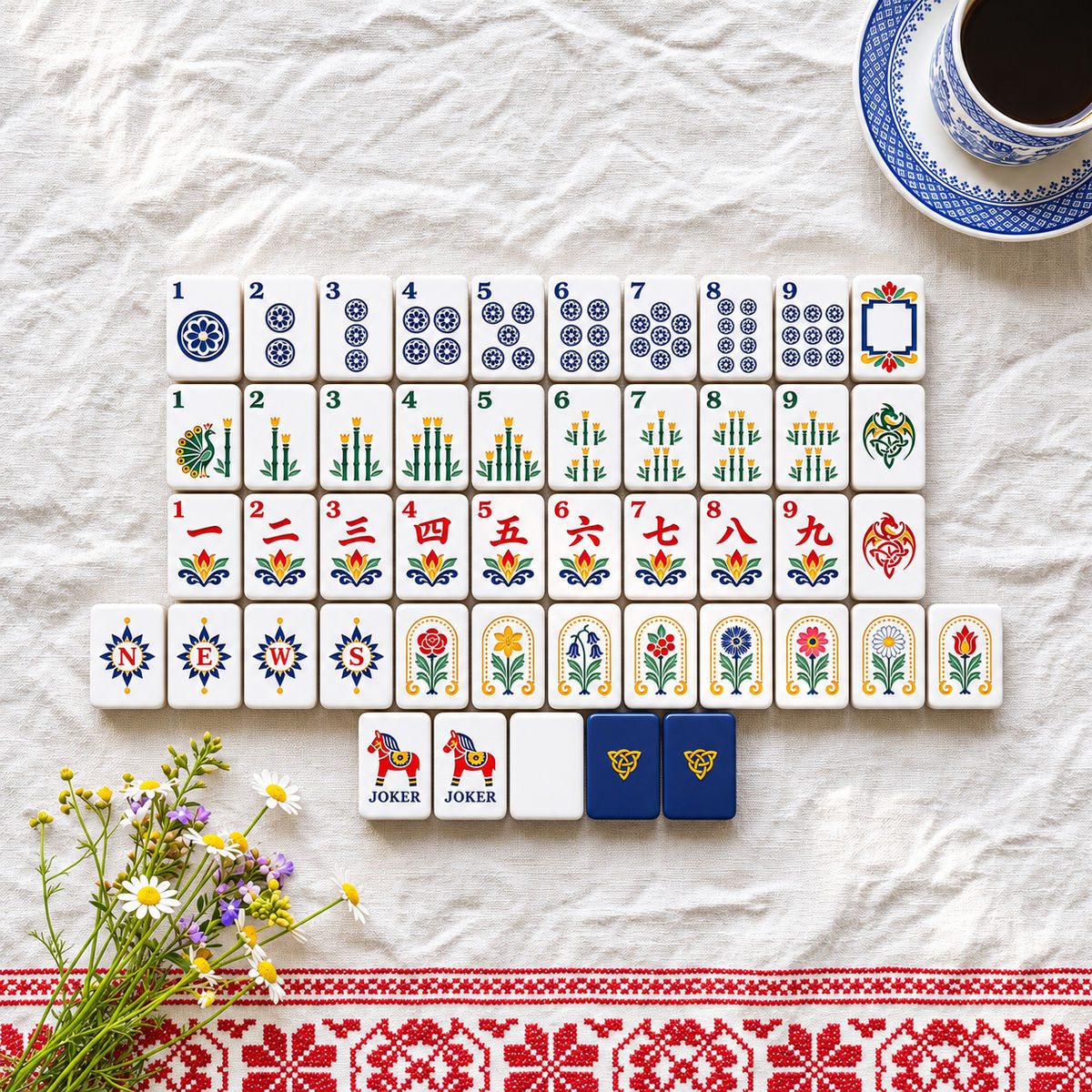
In American mahjong, a concealed hand (also called a "closed hand") means you win without ever exposing a single pung, kong, quint, or sextet to the table. Every tile you play stays in your rack until you declare "mahjong" with all 14 tiles still private. Concealed hands are worth double the points of exposed hands—a powerful incentive to stay quiet. You qualify only if you never call another player's discard and never expose melds yourself. Any exposure (even picking up a pung from the wall after someone else discards into it) breaks the concealment and downgrades your hand to regular scoring. The National Mah Jongg League card lists specific concealed hand patterns each season; we recommend using an engraved American mahjong set so you and your group can track hands consistently across weekly games.
What does "concealed" actually mean in American mahjong?
A concealed hand is one that never exposes any melds. From the moment you draw your first tile in the deal through to the moment you declare mahjong, all 14 of your winning tiles remain hidden in your rack—or on the table in front of you only after you've won. You don't call discards. You don't expose pungs or kongs. You don't even pick a pung off the wall after someone else discards into it. The hand stays sealed until your win.
Why does this matter? Concealed hands reward discipline and strategy. The National Mah Jongg League card designates certain patterns as "concealed" in its listings each season. When you win with one of those patterns and you've kept your hand closed, your payout doubles. A hand that would normally pay 2 units (or 4, or 8, depending on its rarity) pays 4, 8, or 16 instead. That's why at our weekly games, players often pass up easy calls on mid-game discards—they're protecting a hidden winning path worth twice the money.

How do you spot a concealed hand at the table?
Watch for a player who's been silent all game. They haven't called anyone's discard. They haven't exposed a single pung or kong. Their rack sits in front of them, tiles standing upright and face-down from the table's view, and they're drawing from the wall and discarding steadily. That silence and stillness is the red flag—or the signal that they're hunting a concealed hand.
When they draw the winning tile (whether from the wall or, in rare league rules, from the dead wall after a kong), they'll announce "mahjong" and immediately lay down all 14 tiles face-up so the table can verify the hand against the current year's card. The hand must match a pattern marked "concealed" on the card, and no one can dispute that they never exposed melds during play. If they did expose, the win is valid but the payout is the regular (non-doubled) amount.
The easiest way to keep track of who's playing concealed is to watch the racks. Use a mahjong mat with clear markings so everyone's rack zone is obvious, and each player can see at a glance who has and hasn't exposed anything. Many of our weekly games use a mat designed for this exact purpose—the rack areas are recessed or outlined, making it impossible to accidentally expose a tile or miss someone else's pung.
Real examples: what do concealed hands look like?
Here's a simplified walkthrough. Let's say the current year's card lists a concealed pattern for a hand of three sets (like three Bam pungs) plus a pair of Winds. The player with this hand never exposes anything—they draw a 1 Bam, discard a White Dragon; draw a 2 Bam, discard a 1 Dot; keep building. Gradually they assemble three Bam pungs entirely from the wall—no calls. They pair up two East Winds from their early draws. On their 13th turn, they draw the final needed tile (say, a joker that completes one pung as a backup). Now they have 14 tiles: three Bam pungs and a pair of East Winds. None of those tiles were ever exposed to the table. They declare "mahjong," lay all 14 tiles face-up in their sets, and announce "concealed." The table verifies against the card. If it matches a concealed pattern and everyone agrees no exposure happened, the hand pays double.
Compare this to an exposed version of the same hand. Instead of drawing quietly, the player called a discard early: someone threw a 5 Bam and they exposed a pung of 5 Bams on the table. Now the hand is broken—even if they complete the exact same winning configuration at the end, it's no longer concealed. The payout is regular (single unit), not doubled.
In Chinese or Hong Kong mahjong, concealment works differently: you can form sets with sequences (chows) and still be concealed, and calling tile isn't always forbidden until later in the hand. American mahjong is stricter: one exposure = no doubling.
🀄 Shop best-selling mahjong sets →
When should you try for a concealed hand vs. play exposed?
The decision hinges on three factors: the pattern's rarity, your tile draws, and the money at stake.
If the concealed pattern is rare (few tiles or many jokers needed), the doubled payout might be worth the risk of sitting silent and missing easy calls. At our Tuesday games, if the card shows a concealed pattern with only four jokers needed and you draw three jokers by turn five, the pot of doubling your payout often outweighs the payoff of calling early and playing safe.
If you're drawing into the pattern cleanly (tiles coming from the wall without forcing calls), stay concealed. You're likely to win and you'll claim the double. If your tiles are spread across discards and you need calls to complete, expose early—you'll win faster and collect a single payout rather than chase a hand that might break or stall.
If the money is small (casual weekly games among friends), risking a bust to chase concealment often isn't worth it. If the game is high-stakes or part of a tournament, concealment becomes attractive.
A practical checklist for every hand: After the Charleston, review your 13 starting tiles against the card's concealed patterns. Mark which ones you could build concealed. Then ask: Can I draw these tiles mostly from the wall? Or do I need several calls? If mostly wall draws, play concealed. If calls are likely, expose and win faster. This decision often separates experienced players from beginners.

What breaks a concealed hand mid-game?
A concealed hand shatters the moment you:
Call a discard and expose a pung, kong, quint, or sextet (even if you don't physically put it on the table; announcing "pung" when someone discards into your hand counts as exposure in most league rules).
Expose a meld from the wall after another player discards into it (in some variants, you can pick a pung off the wall silently; always check your table's rules).
Draw a tile the table can see because your rack was knocked over or a tile fell face-up—though this is rare if you use a proper rack with pushers that keeps tiles secure and hidden.
Announce a kong after picking from the wall (even a silent kong breaks concealment; this varies by ruleset, so confirm before play).
Once broken, your hand becomes a regular exposed hand, and the doubling is gone. You can still win—just not at double points. Many players at our games have intentionally broken concealment mid-game when they realized the winning hand was unlikely or when a call offered a sure payout instead of a risky wait.
The key: know your table's rules before the hand starts. Some casual groups allow silent kongs; others don't. Some count a pung call as broken; others don't. Agree up front and you avoid disputes at the end.
🎁 See our most-loved mahjong sets & accessories →
Concealed hands in American vs. other mahjong variants
This is a significant difference worth noting if you play multiple styles.
Variant | Concealed Rules | Doubling | Jokers Allowed? |
American | No exposure or calls; must match card pattern; silence until win | 2× payout | Yes, used in open melds only |
Chinese | Sequences (chows) allowed; some calling permitted early-hand; often called "fully concealed" | Varies (often 2×–3×) | Rules vary by ruleset |
Hong Kong | Similar to Chinese; calling often allowed for certain melds | 2×–3× | Fewer jokers, stricter rules |
Riichi (Japanese) | "Tsumo" (draw) wins are concealed; very different structure | Fixed hand values | No jokers |
American mahjong's concealed rule is the most restrictive: absolute silence and no exposure, period. If you play weekly with one group and monthly with another that uses a different variant, this difference will trip you up. At our games, we often have one player who also plays Chinese mahjong, and they sometimes forget that calling isn't allowed mid-hand in American concealment. Clarify the ruleset at the start.
What to check before you buy a set for concealed-hand play
Joker count: A full American mahjong set has 152 playing tiles plus 8 jokers. If you're building hands that rely on many joker substitutions, a 160-tile set with spare jokers ensures you always have backups if one is damaged or lost mid-season.
Tile clarity: Concealed hands require discipline. Players need to see their own tiles clearly (to avoid mistakes) while keeping them hidden from others. Acrylic tiles with crisp engravings and good contrast between Bams, Craks, Dots, and Honors are essential. A mat with a tall, sloped rack zone helps players keep their hand upright and private.
Table space: Concealed play is silent play. Everyone sits for longer stretches without exposing melds, so comfort matters. A quality mat with good wrist support for racks and pushers reduces fatigue and keeps hands organized.
Card reference: Always play with the current year's National Mah Jongg League card visible at the table. Many sets come with a card holder; if yours doesn't, prop the card up so all four players can see which patterns are marked concealed.
✨ Find your Mahstead set — free US shipping →
Why concealed hands matter to your game
Concealed hands are not optional—they're part of the strategic backbone of American mahjong. A player who can recognize a concealed path early and have the patience to follow it silently is dangerous. They're playing a longer game, betting on higher payouts, and their discipline at the table teaches everyone else to slow down and think deeper.
For hosts and weekly-game organizers, framing concealed hands clearly (especially to new players) lifts the entire table's play. Beginners often expose carelessly; once they understand that concealment doubles the payout, they start thinking two or three turns ahead. Your games get sharper, scores get higher, and the social dynamic improves because every player is engaged in the same strategic puzzle.
If you're serious about American mahjong, learn the concealed patterns on this year's card. Practice keeping your rack organized so you can track a concealed hand without accidentally exposing a tile. And invest in equipment—a mat with clear rack zones and racks with pushers that keep tiles secure—so you can focus on the game, not on preventing accidents. For more on the fundamentals, see our guide to how to play American mahjong.

FAQ
Can I call a discard and still have a concealed hand?
No. Any call—pung, kong, or quint from a discard—breaks concealment immediately. Your hand becomes exposed, and the doubled payout is lost. You must draw all your tiles from the wall or the dead wall after kongs.
What if I accidentally expose one tile but no one saw it?
Honesty matters. If the table plays by strict league rules and you exposed a meld (even silently), you're obligated to announce it and play exposed for the rest of the hand. If no one noticed and you declare concealed at the end, but evidence emerges, you lose the hand entirely at most tables.
Does a joker used in a pung I build from the wall break concealment?
No. Using jokers in melds you build from the wall is normal and allowed in American mahjong. Concealment is about not exposing melds to the table, not about how many jokers you use internally.
Can I go back and break concealment on purpose if I realize I won't win?
Yes. If midway through the hand you see you won't complete a concealed pattern, you can expose a pung by calling a discard. You'll play regular exposed mahjong and collect a single payout if you win. Some players do this tactically to secure a win rather than chase a broken concealed path.
What's the difference between a concealed hand and a self-drawn win?
A concealed hand is about not exposing melds during play. A self-drawn win (in some variants) is about drawing the winning tile from the wall instead of calling a discard. American mahjong uses only the first definition: concealment = silence and no exposure. Self-drawn vs. called-discards are not separate scoring categories in American play.


View More
View More
View More
