
Competition Mahjong vs Solitaire: Rules & Play Styles
Last updated: Nov 23, 2026
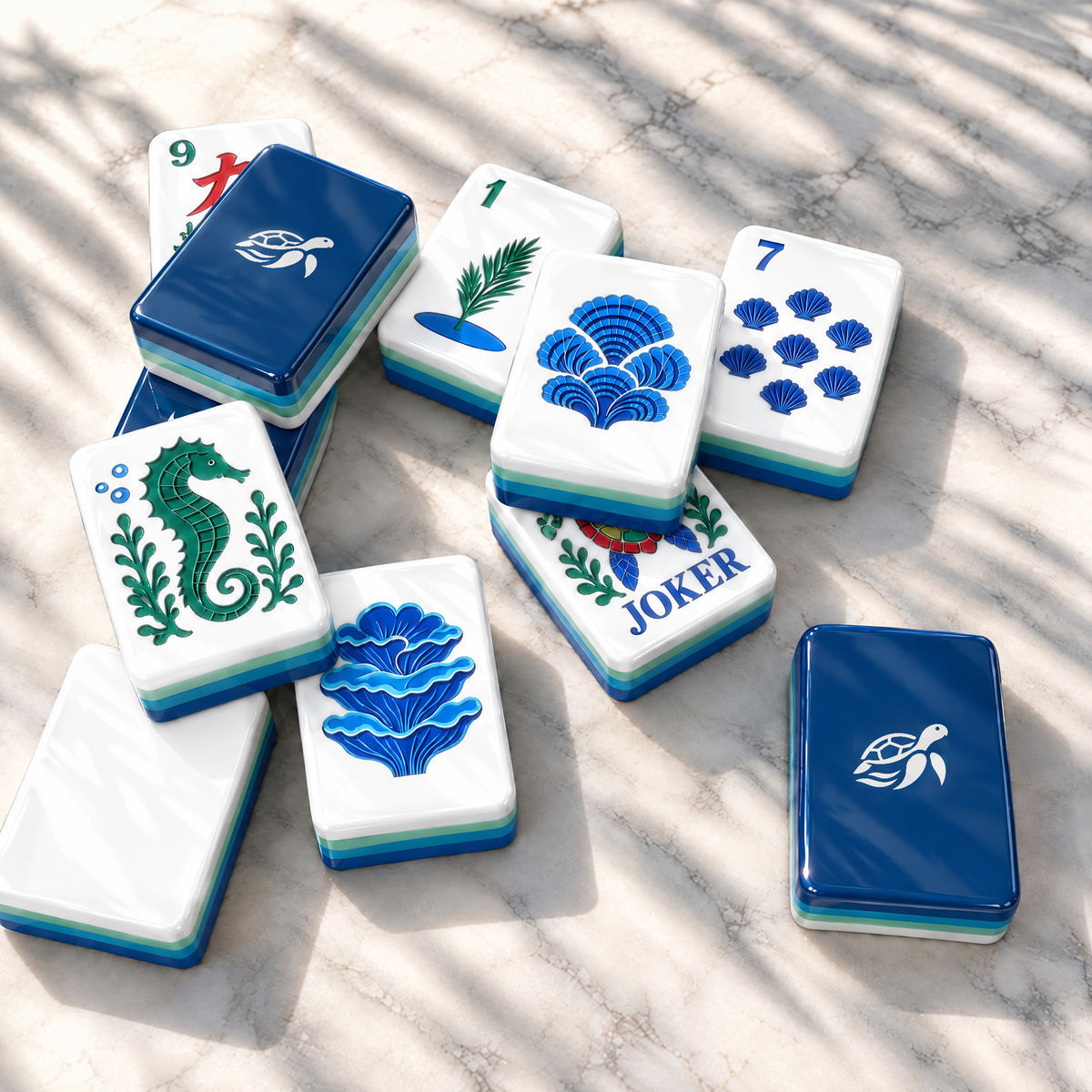
Competition American mahjong (four players, mandatory League card, no wild joker swaps within a hand, strict exposure rules) is a partnership game scored by points—one player declares a winning hand each round, others pay based on difficulty. Mahjong solitaire is a one-player puzzle: you draw and discard freely, match pairs of identical tiles to clear the board, and win when all tiles are gone; no hand card, no other players, no set scoring rules. Tournaments run on the spring-issued League card with hands valid only that year; casual home games use the same card. Solitaire apps and physical pyramid games have no connection to competitive rules. Both use identical tile sets, but competition demands a full 160-tile acrylic set with enough jokers, while solitaire works with any tile collection. Choose competition if you have three friends and want strategic partnership play; pick solitaire for solo relaxation or to learn tile recognition without pressure.
What counts as a valid hand in competition vs. solitaire?
In American competition mahjong, a valid winning hand must match one of the patterns printed on the current year's National Mah Jongg League card—no deviations allowed. The hand always contains 14 tiles (13 in your hand, 1 drawn from the wall) arranged into melds: pungs (3 identical), kongs (4 identical), pairs (2 identical), or quints and sextets (5 and 6 identical). Jokers can substitute for any tile within a meld, but you cannot use a joker as a single tile or as part of a pair. One hand per round wins; the other three players do not declare and receive penalties. In mahjong solitaire, there is no "winning hand"—your goal is to clear the entire board by matching and removing pairs of identical tiles. Solitaire has no melds, no quints, no jokers, and no hand card. You simply pair and eliminate until none remain or you reach a dead state where no legal matches exist.

How do scoring and payouts differ?
American competition uses a multi-tier point system based on hand rarity and difficulty, outlined in the League rulebook. When one player goes out, the other three pay them points—East player (dealer) may pay or collect double. Payouts increase if you go out on a drawn tile (self-draw), or if someone discards the winning tile after you've exposed melds. The League publishes scoring rules each year; games in casual home play follow identical rules but without official records or rank advancement. Mahjong solitaire has no scoring or payouts—you either clear all tiles (you win) or reach a state where no legal matches remain (you lose). Some solitaire variants award point bonuses for speed or fewer remaining tiles, but these are optional house rules. Tournaments and rankings exist only for competitive American mahjong, not solitaire.
Can you play competition mahjong solo, or solitaire with others?
No. American competition mahjong requires exactly four players: East (dealer), South, West, and North. Partners sit opposite each other (East-West vs. North-South). Each player must discard tiles seen by all, draw from a shared wall, and follow hand exposure rules; a solo player cannot replicate this decision-making or the risk/reward of discarding to opponents. You could practice a single position alone, but you lose all strategy. Mahjong solitaire is inherently solo; adding other players removes the puzzle element and turns it into a different game. Some groups play "pass-the-board" solitaire (each person takes a turn clearing one or two tiles) for fun, but this is not a recognized variant and yields no skill transfer to competition play. If you want solo tile practice that reinforces competitive skills, learn the League hand patterns by studying the current card with a full set; this is more useful than solitaire for competition prep.
Which tiles and set rules apply to each game?
Both competition mahjong and solitaire use the same 152 playing tiles: three suits (Bams, Craks, Dots) numbered 1–9, four copies each; 16 winds (4 North, East, West, South); 12 dragons (Red, Green, White); 8 flowers; and 8 jokers. American sets sold today come with 160 tiles (152 playing + 8 spare jokers and blanks). In competition, you always use exactly 152 tiles and 8 jokers per game; the spares sit out and are used only if a tile cracks or is lost during play. Jokers have strict rules: they cannot be mixed suits in an exposed meld, cannot be used as a single tile or pair, and if you draw a joker, you must play it immediately. In solitaire, you typically shuffle all tiles and arrange them into a pyramid, grid, or other layout; jokers are often disabled or treated as wild cards that match any tile—house rules vary widely. A standard 160-tile set works for both games, but competition demands the spare jokers stay untouched unless damage occurs, while solitaire may use them freely as wildcards or discard them.
Factor | Competition Mahjong | Mahjong Solitaire | Why It Matters |
Players | Exactly 4 (2 partnerships) | 1 (solo) | Solitaire teaches tile names, not strategy. |
Hand card | Required (current-year League) | None | Competition hands are standardized; solitaire is freestyle. |
Winning condition | One player matches League hand, others pay | Clear all tiles from board | Different skills: memory vs. pattern-matching. |
Joker rules | Strict (no pair, no single, melds only) | Often wild or disabled | Solitaire jokers give easier wins; competition jokers demand control. |
Game length | ~15–20 min. per hand | 5–30 min. (highly variable) | Competition is faster; solitaire paces by difficulty. |
Best for | Social play, skill growth, leagues | Solo relaxation, tile learning | Pick competition for stakes and friends. |

How do house rules and variants change each game's play?
In American competition mahjong, house rules exist but are rare; most serious players stick to the National Mah Jongg League rulebook published each spring. Casual home games may allow "courtesy calls" (announcing a meld before you win) or extend the dead wall, but these must be agreed before play starts and do not appear in tournament rules. Changing the hand card is not a house rule—it's forbidden; you must use that year's official card. Mahjong solitaire, by contrast, has hundreds of variants with no official governing body. Solitaire versions include pyramids (tiles stacked in rows), gardens (grid layouts), pairs-only (no chains), and digital apps with unique rulesets. Some solitaire apps let you undo moves or reveal hints; others are pure memory. These variants do not prepare you for competition play and do not share scoring or strategy. If you're new to mahjong and want to choose a starting point, competition mahjong builds discipline and hand memory; solitaire offers relaxation and solo fun, but the two are separate skill trees.
🀄 Shop best-selling mahjong sets →
What setup, tiles, and accessories do you need?
Competition mahjong requires a full 160-tile acrylic American set (Mahstead's standard), a mahjong mat to protect tiles and keep the wall organized, racks with pushers so each player can sort and hold melds cleanly, the current-year League hand card (free, published online or printed by your group), and a pen or chip rack for scoring. A bag or case protects your set and mat if you host or travel to weekly games. You may also want dice to determine dealer and wall position. Mahjong solitaire needs only tiles—even a partial set works. If you prefer a structured board, some solitaire kits include printed pyramid or grid templates. Solitaire apps need no physical items at all. For beginners uncertain which path to take, we recommend starting with a quality acrylic set and mat so you can try competition locally; you can always play solitaire on your phone when you're traveling.
🎁 See our most-loved mahjong sets & accessories →
Before you commit, here's what to check:
Do you have three friends who want to learn? If yes, competition. If no, or if you prefer solo play, solitaire.
Will you play at someone's home every week? A mat and racks pay off fast; a set with a case lasts years.
Do you want to improve at one skill, or explore casually? Competition demands hand-card study and strategic thinking; solitaire is low-pressure.
Are you a beginner or returning player? Beginners often enjoy solitaire first to learn tile names, then join a competition group; returning players jump straight to competition.
Will you need to travel with your set? A padded bag or case is essential; many home players keep a set on the table year-round.
✨ Find your Mahstead set — free US shipping →

FAQ
Can I use competition tiles and mat for solitaire?
Yes. A full 160-tile set and mat work for any mahjong game. Competition gear is versatile; solitaire-only boards are simpler but less useful long-term.
Do solitaire apps teach me competition mahjong rules?
No. Apps teach tile names and matching logic, but they do not cover partnerships, hand-card patterns, exposure rules, discards, joker restrictions, or scoring. Apps are entertainment, not training.
Can I play competition mahjong with fewer than four players?
Not properly. Adapted two- and three-player versions exist, but they change hand values and strategy. Stick to four players if possible; see two and three player rules for exceptions.
Which is easier for a complete beginner?
Solitaire is simpler mechanically (just match pairs), but competition mahjong has a clearer social structure and learning curve. Most players do both, not one or the other.
Does the National Mah Jongg League publish official solitaire rules?
No. The League governs only four-player American mahjong. Solitaire is an informal, unregulated game with thousands of homebrew variants.
Do I need to buy different tiles for solitaire and competition?
No. One 160-tile set handles both. Solitaire often disables jokers or uses them as wildcards; competition keeps them under strict rules.


View More
View More
View More
