
Common Mistakes in Wright-Patterson Mahjong
Last updated: Nov 23, 2026
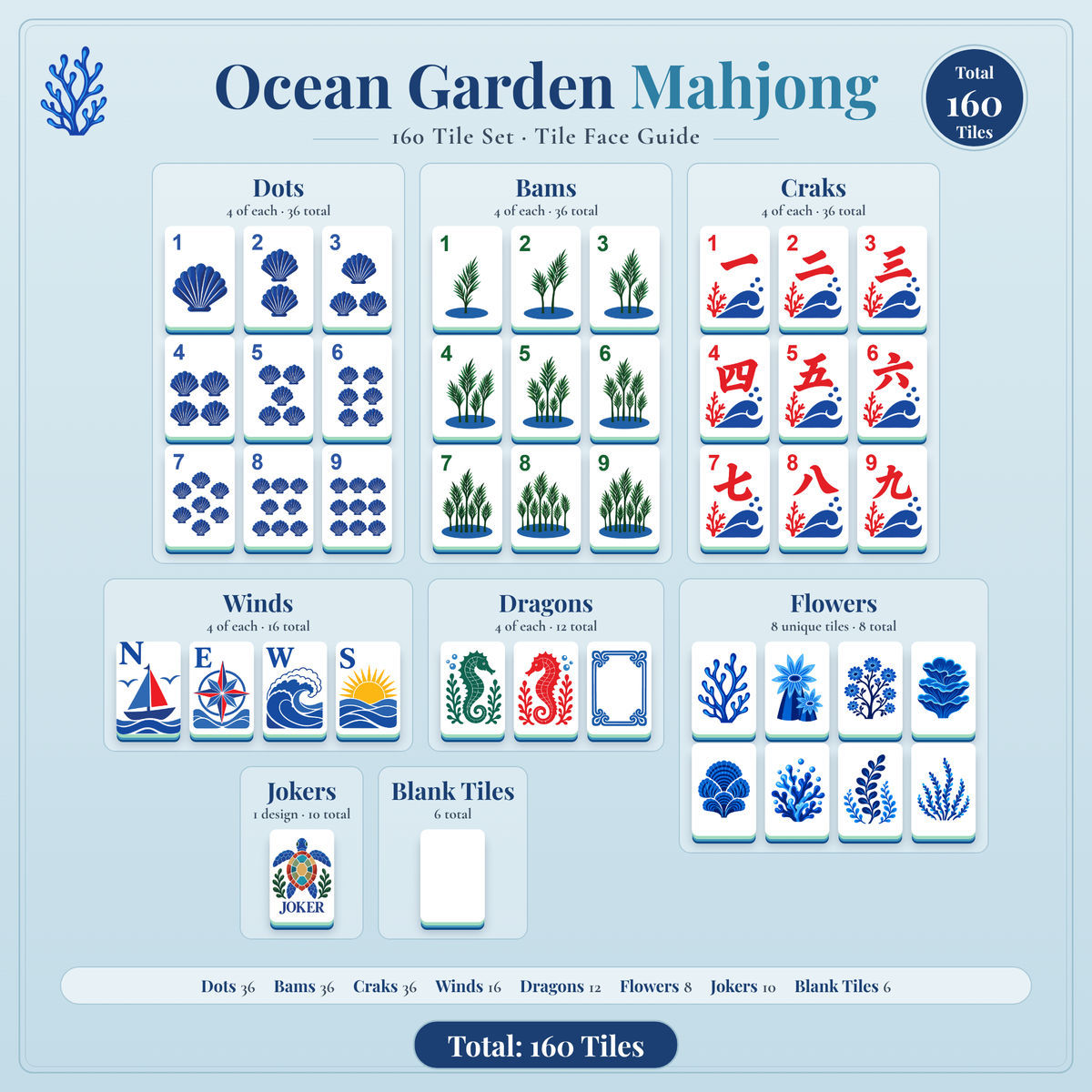
Wright-Patterson mahjong follows core American rules (152 tiles, National Mah Jongg League card, no chows, Charleston ritual) but adds local interpretations around wall building, kong call timing, and hand validation that trip up newcomers and visiting players. The five biggest mistakes are: misaligning wall segments during the initial build, calling kong too late in a turn, joker substitution in pairs (never legal), misreading the current-year card, and using incomplete or mismatched tile sets that cause disputes mid-game. Most occur because players learn from older rule books or mix regional variants without clarifying house rules before the first hand. We recommend verifying your group's specific charleston sequence, kong declaration windows, and who validates hands before sitting down—then investing in a complete, consistent 160-tile set so no tile ambiguity interrupts play.
What exactly is Wright-Patterson mahjong and why does it differ?
Wright-Patterson mahjong is an American variant rooted in the military and aviation communities around Wright-Patterson Air Force Base in Ohio. It adheres to the National Mah Jongg League ruleset for hand composition and tile counts but has regional house rules around wall assembly, kong calling, and discard timing that local players treat as standard. The variant emerged because older players taught younger ones in-person; rulebooks weren't always consulted, so local practice became doctrine. If you learned the game elsewhere—even from a neighboring Ohio city—your table's rules may differ. Always ask before your first game.

How should the wall be built at the start of a Wright-Patterson game?
In American mahjong, the wall must contain exactly 152 tiles arranged in a specific stack order. In Wright-Patterson play, the wall is typically built in four stacks of 38 tiles each, positioned in front of each player. Mistake: players often build uneven stacks or fail to agree on which stack breaks first (East player conventionally breaks the wall). Count your tiles loudly as you stack them—38 per section—so everyone verifies the count before the break. Miscounting here leads to an incomplete hand for one player and accusations of fouled tiles mid-game.
When can you call kong, and what discard rule applies?
In standard American mahjong, a kong (four identical tiles) may be called from your hand or from the discard, but the timing and what you discard afterward varies by house rule. In Wright-Patterson groups, kong calls often follow a strict sequence: if you draw a tile that matches a pung (3-tile set) you already possess, you declare kong immediately, draw a replacement from the wall's dead end, and then discard. Mistake: announcing kong late—after your discard or after another player has drawn—invalidates the kong and forces you to revert to your original hand. Some Wright-Patterson tables also impose a "no kong if you have only one other discardable tile" rule to prevent unfair dead-end access. Clarify this before play starts.
Why is joker use in pairs a trap, and how do you avoid it?
American mahjong rules forbid using a joker in a pair. Period. A pair must always be two identical tiles; jokers can only substitute for missing tiles in a pung (3), kong (4), quint (5), or sextet (6). Many newer players—especially those mixing mahjong with other tile games—mistakenly believe a joker plus one tile counts as a pair. Mistake: this misunderstanding often bubbles up when someone calls mahjong with a joker-and-one-tile "pair" and the hand is rejected, sparking table friction. Prevent this by having one experienced player briefly walk through a sample hand aloud before the first game, showing where jokers do and do not work. Post the rule on your table mat or phone for quick reference during play.
🀄 Shop best-selling mahjong sets →

How do you know if you're reading the current year's card correctly?
The National Mah Jongg League releases a new card every spring. Each year's card is the only legal reference for hand composition in American mahjong. In Wright-Patterson groups, old cards sometimes persist on tables for years after they expire. Mistake: players hold a hand that's valid on 2024's card but invalid on 2026's card, then argue whether the table is using the current-year card. Hands are rejected and bad feelings follow. Before your first game, confirm which year's card your group plays from and verify that printed or digital copies match. If anyone brings an old card, retire it. Many of our players laminate or use mat inlays that keep the current card visible and immovable during a session—a simple way to dodge this trap entirely.
What tile-set problems cause Wright-Patterson disputes, and what should you check before play?
Incomplete, worn, or mismatched tile sets breed confusion. If three tiles are missing, one player may have a hand with fewer tiles than others. If tiles are chipped, faded, or unmarked, players dispute which suit a tile belongs to—especially under poor lighting. If you're using two different sets (one old, one new) the 1 Bam bird imagery may differ, the tile size or weight may vary, and jokers may be different colors. Mistake: starting a game without a pre-game audit. Lay out all 152 tiles, count them by suit, verify joker count, and check for damage or missing symbols. If a tile is cracked or illegible, replace it before sitting down. If you're using a combined set from multiple sources, test it for consistency beforehand. A complete, unified 160-tile acrylic set eliminates this entire class of error because every tile is identical in size, weight, symbol clarity, and durability.
Equipment checklist before a Wright-Patterson game
Item | Check | Why it matters |
Tile count | 152 tiles present, unbroken | Incomplete sets force hand disputes |
Tile clarity | All symbols legible; no fading | Misread suits cause invalid hands |
Joker count | 8 jokers per 152-tile set | Missing jokers limit hand options |
Card currency | Current-year card in use | Old cards reject valid hands |
Wall build | Four stacks of 38 tiles each | Uneven walls cause uneven hand sizes |
Break agreement | East player and break position named | Unclear breaks trigger disputes |
🎁 See our most-loved mahjong sets & accessories →
How do you validate a hand claim without disputes in Wright-Patterson play?
When a player calls mahjong, the hand must be validated before payment is awarded. In Wright-Patterson groups, validation often follows this order: the calling player lays down all tiles in groups; other players verify against the current-year card that the hand matches a listed pattern; the validator checks that all tiles are accounted for and no jokers appear in pairs. Mistake: skipping validation or validating too quickly—someone miscounts groups, a joker is hidden in a pair, or an invalid hand is paid before anyone catches it. Slow down. Have one designated validator (often the player who did not call) lay tiles in three neat rows: pairs on top, melds below. Read the hand aloud. Cross-check the card. Only then settle payment. This takes 30 seconds and prevents hours of argument.
What to check before you buy a set for Wright-Patterson play
Tile count: confirm the set includes exactly 152 playing tiles (not fewer) so no hands are truncated.
Material durability: acrylic tiles resist warping and fading better than bamboo-and-bone sets used in humid game rooms, reducing tile-reading disputes.
Joker count: verify 8 jokers are included; some vintage or budget sets include fewer.
Uniformity: if buying a second set to combine with an old one, confirm tiles match in size, weight, symbol style, and color.
Extras: look for mats with card inlays or racks with pushers to reduce setup errors and speed validation.
✨ Find your Mahstead set — free US shipping →

FAQ
Is Wright-Patterson mahjong an official variant, or just a house-rule group?
Wright-Patterson mahjong is a community-rooted variant—not an official League variant. It follows League rules for tile counts and hand composition but applies local conventions around timing, wall building, and kong calls. Always clarify your local table's specific rules before joining.
Can I use a vintage Wright-Patterson set I inherited, or should I buy a new one?
Inherited sets often have missing tiles, faded symbols, or inconsistent joker counts. Use it as a backup, but validate it completely first. For regular play, a unified, modern set eliminates disputes and lasts longer.
What happens if someone calls mahjong on a hand that doesn't match the current-year card?
The hand is invalid. The calling player forfeits their turn, and play continues. This is why verifying the card year before game one is critical—no arguments mid-session.
Is there a specific Wright-Patterson rule for dead-end tile access after a kong?
Dead-end access varies by local table. Some groups enforce it strictly; others waive it. Confirm your group's rule during setup, not mid-game.
Can jokers replace tiles in the pair position?
No, never. A pair must always be two identical tiles. Jokers work only in melds of three or more tiles. This is American mahjong law, not negotiable.


View More
View More
View More
