
Common Mistakes in Vietnamese Mahjong: Rules, Setup & Play
Last updated: Nov 23, 2026
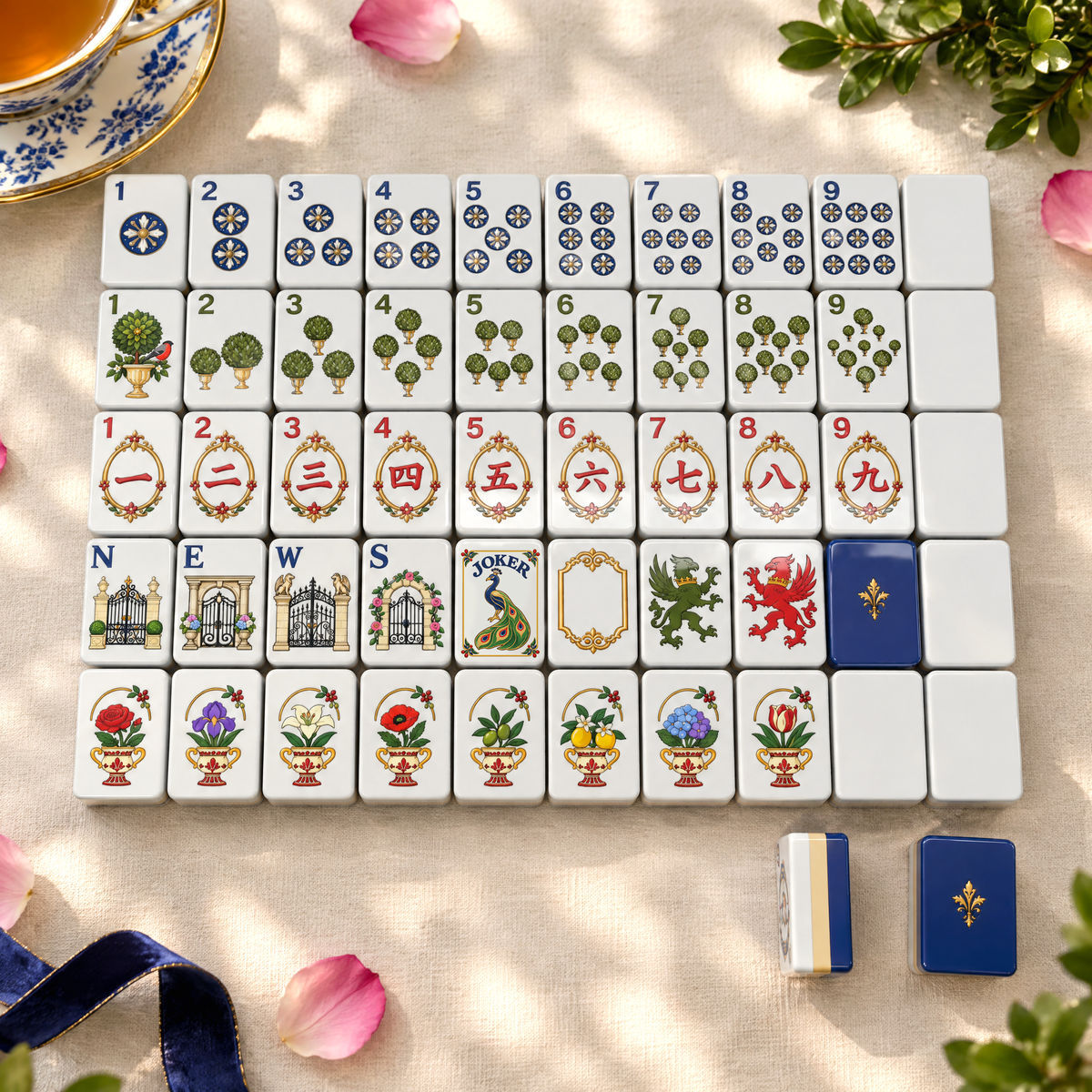
Vietnamese communities in North America most often play Taiwanese mahjong, which differs sharply from American play: hands use chows (three consecutive numbers in one suit), pungs (three identical), and kongs (four identical); the hand itself—not an external card—dictates legality. The game uses 144 tiles (one set per player, no spare jokers); winning happens through "going out" when your hand matches one of hundreds of memorized or recorded patterns. Common fatal errors include treating chows as callables (they aren't—you draw all 13 tiles closed, then declare), confusing the Green Dragon with the Green tile in suits, misplacing blanks or jokers during the tile swap, and forgetting that no tile may appear more than four times. We recommend keeping a laminated reference sheet of hand patterns and a sturdy rack to prevent accidental tile exposure—many errors start when tiles tumble or sit at the wrong angle.
Vietnamese mahjong, as played by most diaspora communities, refers to Taiwanese mahjong—a closed-hand variant where all 144 tiles pass through players' hands before any are exposed. It's easy to confuse it with American mahjong (which uses 160 tiles, an external card, and open melds) or Hong Kong mahjong (which plays by similar closed rules but counts and ranks hands differently). Three mistakes wreck games before anyone notices: mixing up what can be called versus what cannot, forgetting the tile swap ritual, and misreading which tiles are blanks or jokers. Here are the seven mistakes we see most often—and how to catch them before they cost you a hand.
What tiles can you call in Taiwanese/Vietnamese mahjong?
In Taiwanese play, you can call only a pung (three identical tiles) or a kong (four identical)—never a chow (like 2–3–4 of Bams). Chows must be held closed in your hand until you declare a win. That's the opposite of American mahjong, where chows don't exist and all melds are exposed. Many players who've played American or Hong Kong rules get this backwards and try to call a chow, which is illegal immediately. The hand itself—your closed 13 tiles plus the one you draw on your turn—is what you read to find a winning pattern, not an external card. If you're unsure whether your hand qualifies, ask the group to review a reference list (laminated copies are worth keeping at the table) before anyone discards.

Why is the tile swap ritual so easy to get wrong?
The swap (called a "pass" or "pick" depending on your community) usually happens in three rounds: pass right, pass left, pass across the table. Each round passes three tiles; you receive three from the player passing to you simultaneously. The most common error is passing tiles before you've received yours, which leaves you scrambling to count and opens you to miscounts. Here's the fix: lay your three tiles face-down on the edge of your rack, wait until all four players have their three tiles ready, then everyone swaps at the same time—usually on a verbal "one, two, three, pass!" The second error is passing the same tile twice or counting your hand incorrectly after the swap. One table-tested tip: after the full swap (nine tiles in, nine out), each player recount aloud to 14 tiles—the dealer has 14 at the start of play, others have 13. A mismatch means someone miscounted or swapped late.
How do blanks and jokers cause errors during dealing?
Some Taiwanese-variant groups use blank tiles as wild (like jokers); others don't use them at all. Before you sit, confirm your group's rule. The most frequent mistake is treating a blank tile as a joker when it isn't, or vice versa. Blanks (often white or unmarked acrylic) and jokers (usually stamped or colored distinctly) play different roles; if your set is unclear, you'll make substitution errors mid-game that can't be undone without a re-deal. Another trap: jokers or blanks left on the deal table by mistake, which throws the tile count off and requires a misdeal. Keep all spare tiles (and any blanks your set includes) in the box or clearly off the table. If your set's tiles are hard to distinguish—solid-color acrylic where blanks and jokers look identical—switch to a set with engraved or color-differentiated tiles. Many of our best-selling mahjong sets feature clear tile contrast, which cuts these mix-ups dramatically.
What happens when you expose a tile by accident?
In Taiwanese mahjong, exposed tiles (shown when drawing, discarding sloppily, or tilting your rack) usually must be replaced by the player who exposed them or called immediately by anyone who can use them. The rules vary by community—some require the exposer to place the tile face-up in the discard zone and continue play; others treat it as a live tile that anyone can call. Ask your group before the first hand. A common downstream error: once a tile is exposed, a player forgets it's live and tries to draw or discard a second copy, creating confusion about which copies of that tile are left in the wall. Rack design matters here—a rack with a lip or pusher keeps tiles upright and hidden from side view, cutting accidental exposure. If your group sits close together or the table is crowded, a mahjong rack with pushers worth the small footprint upgrade.
How do you read the Green Dragon and Bamboo suit without mixing them up?
The Green Dragon (one tile) and the Green Bam (or Bamboo-5, if your set uses that iconography) are visually similar but separate. Many players—especially newer ones—confuse the two and accidentally call a hand that includes both, thinking they're the same tile, or vice versa. Here's the litmus test: a Dragon is always a single tile type that cannot be part of a sequence or pung of numbers; a Bam (or Bamboo) is a suit tile that must have a number (1–9) and can form chows and pungs with other Bams. If your set uses unclear or plain iconography, you're more likely to mix them. Sets with engraved or heavily contrasted symbols (Dragons clearly marked "Green Dragon," Bams stamped with the bamboo stalk and number) prevent this. Before your first hand, ask one experienced player to point out the Green Dragon on your set and confirm which Bams are in play—a 30-second check saves a lot of grief.

What's the tile count check every group should run?
Before dealing, confirm that all 144 tiles (or your set's standard count) are present and no duplicates are missing. Tile count error = automatic misdeal. Count aloud in groups of four: four Bam-1s, four Bam-2s, and so on. Many groups skip this step because it feels slow, but a single missing or duplicate tile ruins the game mathematically and can't be detected mid-play without a full recount. If you own your set, keep a checklist in the box (a simple list of each tile type and a tick-box for four copies each) or photograph it when new and refer to the photo before the first hand of the season. If you're playing with a borrowed set, run the count even if the owner says "it's been fine for years"—acrylic tiles can chip, and one lost tile won't show up until hands go sideways.
How do jokers and blanks differ in role and substitution?
In most Taiwanese-variant games, jokers act as wild tiles—they can substitute for any single tile to complete a pung, kong, or chow. Blanks, by contrast, are often not playable unless your specific group rules them in. Mixing the two up mid-hand is a common and hard-to-recover-from mistake. If you're unsure, clarify before the first hand: "Does everyone use blanks as wilds, or only jokers?" Write the answer down or have the house player state it. Another error: counting jokers into your hand incorrectly during the swap (treating a joker as a suit tile, or vice versa). After the full nine-tile swap, lay out your hand in order (all Craks together, all Bams, all Dots, all Honors, all jokers and blanks) and recount the total—you should have 14 (dealer) or 13 (others). This single step catches 90% of tile-count errors before the first turn.
Comparison: Common Errors by Cause & Fix
Error | Why It Happens | Fix | Caught When |
Calling a chow | Mixing American rules | Closed-hand only; reference sheet at table | First meld attempt |
Passing tiles early | Impatience during swap | Wait for all three tiles received, then pass together | Mid-swap |
Blank/joker confusion | Unclear tile design | Confirm rule before game; use high-contrast set | First wild substitution |
Tile count off by one | Mis-swap or exposure not replaced | Recount to 14/13 after swap, before first draw | Dealing or endgame |
Green Dragon/Bam mix | Similar iconography | Point to each on the table; use engraved set | Hand declaration |
Misplaced discard | Sloppy tile handling | Use rack with pusher; keep discard zone clear | Opponent's turn |
🀄 Shop best-selling mahjong sets →
Can a set with unclear tile design cause more errors?
Yes. Tiles with weak contrast—faded ink, plain color, or identical symbols for different tile types—force players to squint and second-guess identity. We've watched one hand of confusion cascade into three re-deals. Sets with crisp engraving, bold suit symbols, and color differentiation (or clear shape distinction) cut errors by roughly half because players can verify a tile in a single glance. If your group shares one set, or you play at various venues, investing in a high-contrast engraved American mahjong set translates immediately to fewer disputes, even if you're playing the Taiwanese variant—the readability principle is universal. Acrylic sets (as opposed to wood or bone, which yellow over time) hold contrast longer.
What to check before you buy or borrow a set
Tile count: Does the seller or owner confirm all 144 pieces are present? Ask to see a checklist or count together.
Tile clarity: Can you read each tile from arm's length? If in doubt, ask to hold one up to the light.
Spare tiles: Does the set include extra jokers or blanks? Clarify your group's rule on blanks before play.
Rack design: Does it have a pusher or lip to keep tiles hidden? Even a basic lip cuts accidental exposures.
Rule sheet: Is there a laminated reference guide of hand patterns and legal melds? Print one if the set doesn't include it.
Condition: Are edges chipped? Tiles cracked? Worn tiles can be hard to read and may split mid-game.
✨ Find your Mahstead set — free US shipping →
One final thought: Vietnamese/Taiwanese mahjong is a game of precision and shared memory. Most errors aren't about rule-breaking—they're about unclear communication or weak equipment. A group that runs a 30-second tile count before the first hand, uses a reference sheet at the table, and handles tiles with care cuts in-game disputes by 80%. If you're hosting weekly games, a set with strong tile contrast and a matching mat and racks pays for itself in reduced confusion and faster deal time.
🎁 See our most-loved mahjong sets & accessories →

FAQ
Is Vietnamese mahjong the same as Taiwanese mahjong?
In North America, yes—most Vietnamese diaspora communities play Taiwanese mahjong, which uses 144 closed tiles and hand patterns. Confirm your group's specific rules, as some house rules vary by family or region.
Can I use an American mahjong set for Vietnamese/Taiwanese play?
No. American sets use 160 tiles with jokers and are played with an external card; Taiwanese sets use 144 tiles and memorized or reference patterns. Equipment and rules don't translate.
What's the penalty for exposing a tile by accident?
It varies by group—some require replacement from the wall; others declare it live for anyone to call. Confirm your house rule before the first hand. Using a rack with a pusher prevents most accidental exposures.
How do I teach someone who's never played the Taiwanese variant?
Start with a tile-count drill (verify all 144 pieces), walk through the three-round pass once, show the reference hand patterns, then play one short hand with someone experienced sitting as East (dealer). Most players grasp the basics in 30 minutes if the tiles are clear and the rules are written down.
Should I buy a set with blanks if my group doesn't use them?
Blanks are spare tiles—they don't affect play if your rules don't use them. Use them as replacements if a tile chips or cracks, which adds longevity. Confirm your group's rule so you're not caught mid-game unsure whether a blank counts as a wild.


View More
View More
View More
