
Classical Chinese Mahjong Tips: Rules, Strategy & Setup
Last updated: Nov 23, 2026
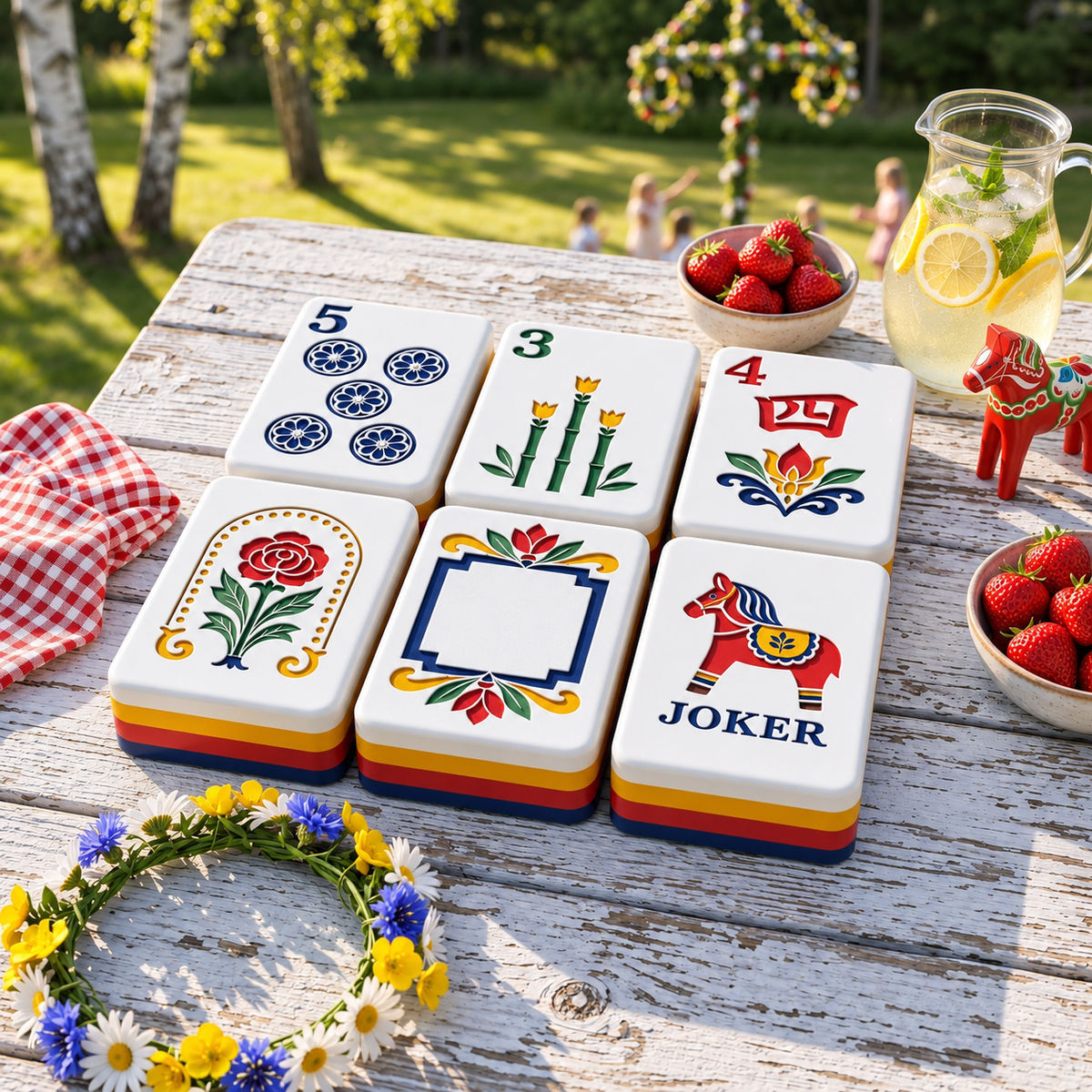
Classical Chinese mahjong uses 144 tiles (34 types × 4 copies each: 1–9 in three suits, honor tiles, and seasons) and wins with a specific hand pattern—typically four melds (three identical or sequential sets) plus a pair. Unlike American mahjong, Chinese play allows and relies on chows (sequences like 3–4–5 of the same suit), pungs (triplets), and kongs (quads). A hand must follow one of many winning patterns, and players draw and discard in turn; the first to complete a legal hand wins. Games last 15–45 minutes depending on pace. Many regional variants exist (Hong Kong, Taiwanese, Riichi); classical Chinese rules form the foundation. We recommend learning from a player in your community first, then practicing with quality tiles—best-selling mahjong sets designed for American play share the same tile names and suit symbols, making printed guides immediately useful. 🀄 Shop best-selling mahjong sets →
How do hand patterns work in classical Chinese mahjong?
A winning hand consists of four melds (groups of three or four tiles) plus one pair (two identical tiles). Melds can be pungs (three identical tiles: 3–3–3), kongs (four identical tiles), or chows (three consecutive numbered tiles of one suit: 2–3–4). Your hand is complete when you draw or claim a discard that fills the final position. Most games require a "win" hand to follow specific pattern rules—these vary by region, but the core principle remains: complete structure plus pair. Memorizing three or four basic patterns is enough to start playing.

What's the difference between a pung and a chow?
A pung is three of the same tile—for example, three 5 Dots. A chow is three different consecutive numbered tiles from one suit—like 5–6–7 Craks. Pungs can be any honors (winds, dragons) or numbers; chows only work with numbered tiles (1–9) and must be in sequence. Beginners often mistake a non-sequential group (like 2–4–6) for a chow; always verify: are the numbers in order and consecutive? If yes, it's a valid chow. This distinction is fundamental because some patterns require chows, others forbid them, and some mixing rules depend on which you expose.
Why do some players meld more openly than others?
In classical Chinese mahjong, when you claim a discard from another player (called "pung" or "kong" out), you must expose that meld on the table—everyone sees it. However, tiles you draw yourself stay hidden in your rack until you win or choose to expose a kong. This creates strategy: exposing melds tells opponents what suits you're collecting, but hidden tiles protect your intentions. Skilled players balance transparency against safety. A player who exposes everything early signals completion risk; one who hides everything may be building strength but loses the option to claim discards cheaply. Watch experienced players to see how they manage this tension.
What are the most common mistakes new players make?
Forgetting chows are ordered sequences: A 1–2–3 Bam is valid; a 1–3–2 is not. Always lay chows left-to-right in numerical order.
Miscounting the hand: The hand is always 13 tiles plus 1 drawn tile (14 total to win), or 13 to declare ready. Count carefully before announcing victory.
Ignoring the "one suit, one honor" rule: Many regional patterns allow only one honored tile per hand, or require all tiles to be one suit. Learn your variant's restrictions before play.
Claiming a discard carelessly: Once you claim a discard, you must meld it openly and continue that turn. Beginners sometimes claim then realize they misread the tile.
Discarding the tile you just drew: You must discard a different tile—a common beginner slip that wastes a turn.
To avoid these, play one practice hand slowly with an experienced player guiding each step. Write down the winning pattern before the hand begins.
How do you count points and declare a win?
Point systems vary sharply by region. In classical play, wins are often scored by pattern (a simple win = 1 point; an all-chow win = 2 points; a winning hand of only identical melds = 4+ points). Some games add doubles for self-drawn wins versus claimed ones. The exact scoring table depends on which regional ruleset you adopt. Before any game, all four players must agree on the scoring method—write it down or reference a chart. A player who completes their hand announces "win" and lays it down for verification; if legal, they score the declared points and receive payment from the other players (or a shared pool). If illegal, the hand is voided and play continues.
🎁 See our most-loved mahjong sets & accessories →
Variant | Hand Structure | Winning Patterns | Chows Allowed? | Draw/Discard Pace | Best For |
Classical Chinese | 4 melds + 1 pair (14 tiles) | Regional rule sets | Yes, core mechanic | Medium (15–20 min/hand) | Learning foundation |
Hong Kong | 4 melds + 1 pair | Specific pattern combos | Yes | Fast (10–15 min/hand) | Speed, gambling |
Taiwanese | 4 melds + 1 pair + bonuses | Tile-specific doubles | Yes | Medium | Social, point variation |
Riichi | 4 melds + 1 pair | Yaku (hand-type) system | Yes | Medium–slow | Skill depth, tournaments |
American | 4 melds/quints/sextets + 1 pair | National Mah Jongg League card (152-tile official game) | No | Slow (30–45 min/hand) | Strategic planning |

How do you practice classical Chinese mahjong at home?
Start with a printed rules sheet for your chosen regional variant—search "classical Chinese mahjong rules" + the region name (e.g., "Cantonese," "Sichuan"). Play three to five practice hands with a patient guide who stops play to explain melds, hand completion, and mistakes. Assign one player as the dealer; play a full round so each person deals once. Keep the rules sheet visible and consult it freely—speed comes later. After two or three sessions, most learners recognize patterns instinctively. When you're ready for a regular game, ask at local community centers, libraries, cultural associations, or older social clubs—classical Chinese mahjong thrives in diaspora communities, and many groups welcome new players at informal weekly games. If you need quality tiles, best-selling acrylic sets include printed tile symbols readable in any lighting and durable enough for years of weekly play.
What should you check before buying tiles for classical play?
Look for sets with clear, high-contrast tile faces (printed or embossed): you need to see Craks, Bams, Dots, winds, and dragons instantly, especially in dim lighting common at home games. Acrylic tiles are easier to read than bone at a glance. Check that the set includes all 144 tiles (or confirm whether extra blank/joker tiles are spare only). Verify the tile size fits your hand and table—standard play uses 25–27 mm tiles; if the table is small, compact sets work better. Test the weight and feel: tiles should slide smoothly and stack without tipping. If you play weekly, durability matters; inspect corners and edges for sharp mold lines that catch on clothing. Consider a matching rack if your group doesn't use racks already—mahjong racks with pushers let new players organize hands without dropping tiles and speed up play once everyone is comfortable. A mat or case protects tiles during storage and travel.
✨ Find your Mahstead set — free US shipping →
Reading Tile Symbols Quickly
Suit | Name | Tiles 1–9 | Honor Code |
Craks (Coins) | 万 | Circles 1–9, often with coin symbols | Red dragon, East wind |
Bams (Bamboos) | 条 | Sticks/reeds 2–9, bird on 1 Bam | Green dragon, South wind |
Dots (Circles) | 饼 | Dots 1–9 arranged in patterns | White dragon/soap, West wind |
Honors | 字 | Winds (N, E, S, W) + Dragons (Red, Green, White) + Seasons | Special bonuses & drawing rules |
Key practice: Shuffle and sort a random hand into suits and number order in under two minutes. Once sorting is automatic, reading the table becomes fluid.
Where to Find a Classical Chinese Mahjong Group
Classical Chinese mahjong communities exist in most cities with Asian populations. Start by checking:
Community centers and public libraries (often host informal games or know of groups)
Cultural associations or Chinese American organizations
Retirement communities and senior centers (very active scenes)
Meetup boards and local social groups (search "mahjong" in your city)
University international student clubs
Buddhist temples, synagogues, or interfaith centers with community rooms
Visit without tiles first: ask about house rules, typical point stakes (if any), and whether new players are welcome. Most groups are warm and teach freely. Once you've played a few times, bring your own set if you prefer—mahjong sets designed for travel fit easily in a car or bag so you're ready for any game.
What to Check Before You Buy
Tile Count & Type: Confirm the set includes 144 tiles (classical play) and check whether extra tiles are included (spares only—never added to play).
Readability: Test tile faces under the lighting of your game space; symbols should be clear and colors distinct (especially Craks and Bams).
Size & Weight: Verify tiles fit your hands and slide smoothly on your table; hold a few before committing.
Regional Ruleset: Decide which variant you'll play (classical, Hong Kong, Taiwanese, Riichi) and ensure your rules sheet matches; many communities play house rules, so clarify before your first game.
Storage & Transport: Choose a set with a durable case or bag if you'll travel weekly; a mat protects tiles during play and storage.
Durability: Inspect corners, edges, and printing quality—acrylic tiles with embossed or printed faces last longest.
🀄 Shop best-selling mahjong sets →

FAQ
Can you play classical Chinese mahjong with American mahjong tiles?
Not reliably. American sets use 160 tiles (including 8 jokers and extra blanks) and are designed for the National Mah Jongg League's American game, which forbids chows and uses a specific annual card. Classical play needs exactly 144 tiles, relies on chows, and follows regional pattern rules, not a printed card. The tile sets are similar but not interchangeable—buy a set labeled for classical or Chinese play.
How long does a typical game take?
Classical Chinese games usually last 15–45 minutes per hand, depending on player speed and regional rules. A full session (four hands, one per dealer) takes 1–3 hours. Fast variants like Hong Kong play are shorter; Riichi games slower due to scoring complexity. Ask your group before joining; most play multiple hands in an evening.
What's the difference between Riichi and classical Chinese mahjong?
Riichi is a Japanese variant with strict hand-type patterns (called yaku) and a declaration system ("riichi") that signals readiness and locks your hand. Classical Chinese play is more flexible: patterns vary by region, and you can adjust your hand up to the draw that wins. Riichi is more tactical; classical play is more adaptable. Both use chows, pungs, and kongs.
Do I need to learn all regional variants or just one?
Start with one. Ask your local group which rules they play, then study that variant exclusively for the first 10–20 hands. Once you're comfortable, the principles transfer to other variants—you'll pick up Hong Kong or Taiwanese rules quickly because the tile mechanics remain the same. Trying to learn two at once confuses beginners.
Is there a best time to practice classical Chinese mahjong before joining a real group?
Yes. Practice two to three times at home with a guide, then join a casual group session. Most groups include at least one very experienced player who'll help correct mistakes without judgment. After four to six group sessions, you'll play confidently and independently. Three to four weeks of weekly play makes you a solid intermediate player.


View More
View More
View More
