
Common Mistakes in Two Player Mahjong & How to Fix Them
Last updated: Nov 23, 2026
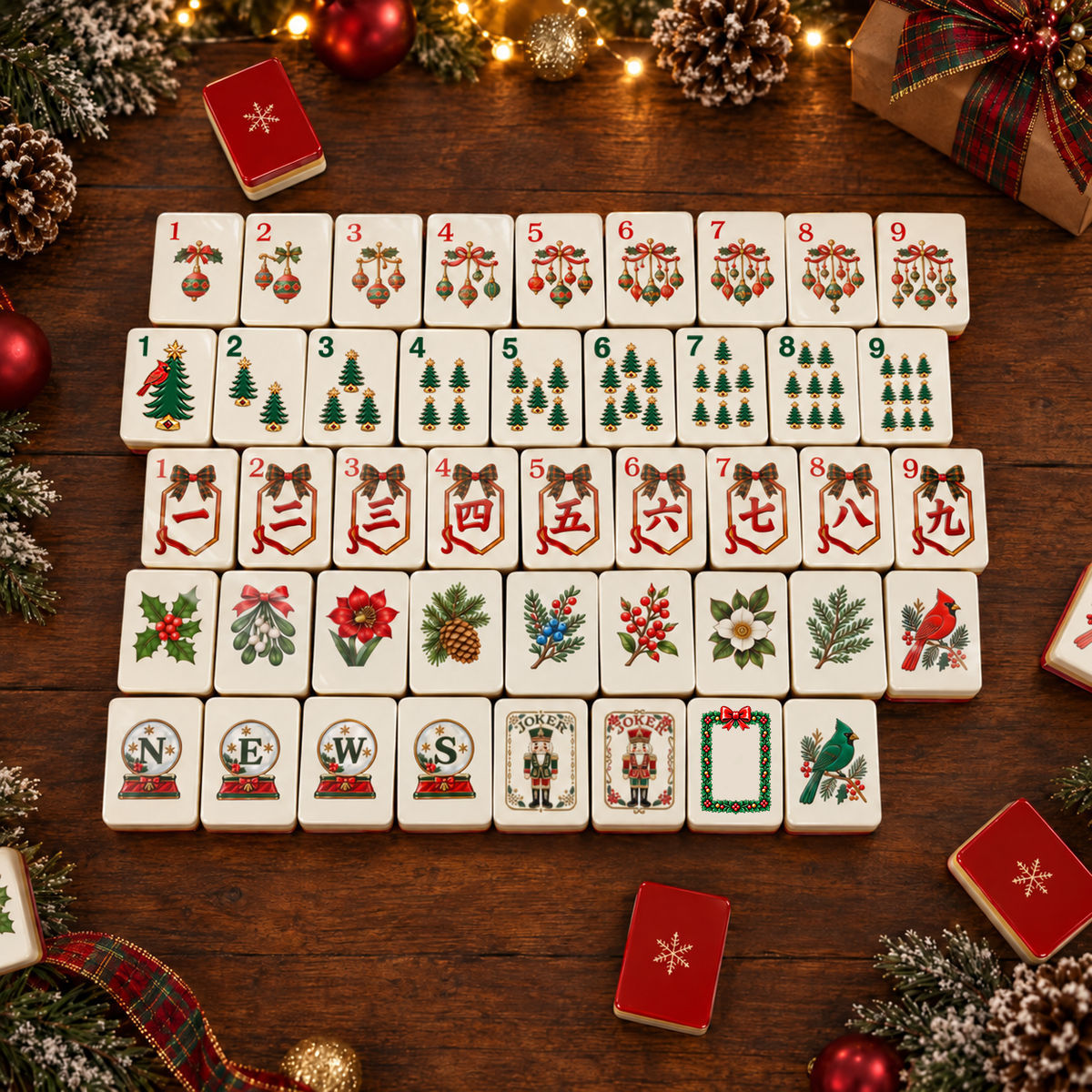
Two player mahjong is not standard American mahjong reduced by players—it's a distinct variant with fundamentally different exposure and claiming rules. In American two player, you may expose pairs (allowed only in four player when chowing), and many tables permit "declared faceup melds" earlier than the standard game allows. The wall shrinks to 38 tiles per hand (half the usual 76), and self-drawn winning tiles follow different precedence rules; the hand typically includes 27 tiles instead of 18. Jokers remain restricted to melds of three or more identical tiles—never pairs or singletons. The biggest error is applying four player precedence rules to two player claims: in two player, declaring a meld immediately (as you draw) often beats a subsequent call. Before your first two player hand, confirm your group's house rules on pair exposure, claim timing, and whether the current year's National Mah Jongg League card applies (many two player groups use modified hands). Our best-selling sets include the full 152 playing tiles plus spares; verify your set is complete before starting.
Two player mahjong rewrites the game you know. Unlike standard four player American mahjong, two player allows pair exposure, speeds up claiming, and halves the wall. We'll walk through the top mistakes we see at the table and how to avoid them.
Can you expose a pair in two player mahjong?
Yes—and this is the biggest rule shift from four player. In standard American mahjong, pairs stay hidden until you win; exposing a pair forfeits the hand. In two player, pairs are openly displayed (face-up on the table) as part of your meld strategy. You still cannot use a joker as a single tile or in a pair, but the pair itself is legal to show. Many two player players build their entire opening strategy around pair management, often declaring pairs early to signal strength or block the opponent's options. Always clarify your house rules on when a pair may be exposed—some groups allow it only after a certain round or only if you've already claimed a pung or kong.

What's the correct wall size for two player mahjong?
Each player draws 38 tiles in two player, totaling 76 tiles from the wall—the same as four player. However, the wall is not physically drawn from one 152-tile set the way four player is; instead, many two player groups redesign the wall layout so that each player's side is shorter or the dead wall is repositioned. The key error is using a standard four player wall layout: this creates imbalances in draw order and tile availability. Before the first hand, you and your opponent must agree on the wall configuration. Some two player groups use a modified drawn wall (44 tiles showing, 32 concealed), while others use a "split wall" (each player controls their own 76-tile stack). Write down your group's wall rule and keep it consistent across all games.
🀄 Shop best-selling mahjong sets →
How does claiming work differently in two player?
Claiming (calling for a discarded tile) follows stricter precedence in two player than in four player, and timing matters more. In four player, a kong call beats a pung call beats a single tile call. In two player, many groups add a "declared faceup meld" rule: if you announce a meld as you draw (before your opponent discards), that claim is locked in—no one else can call the discard. This speeds up play but also means you must pay attention to your opponent's draw phase, not just the discard phase. A common mistake is waiting to see the discard before deciding whether to claim; in aggressive two player groups, you've already lost the tile if you hesitate. Another error is claiming a tile without confirming it completes a legal hand shape: in two player, an illegal claim can result in a hand penalty or replay.
What hand patterns work in two player mahjong?
Most two player groups use one of three hand systems: (1) the current year's National Mah Jongg League card, adapted for 27-tile hands; (2) a simplified "knitted" or "honours" set of hands designed for fast play; or (3) house rules that allow any valid combination of pungs, kongs, and pairs. The mistake here is assuming your opponent knows which system you're playing. A hand that's legal on the League card (e.g., three suited pairs plus a quint) may not be valid under a house rules system. Before the game, show your opponent the hand list or rule sheet. If you're using the League card, note that not all hands on the card work for two player (some require four players' worth of tiles), so you'll need a modified version. This is where many casual two player groups stumble: they mix rule systems mid-game.
Aspect | Four Player American | Two Player Variant | Why It Matters |
Pair exposure | Hidden; exposing forfeits | Open and legal | Changes strategy & tile blocking |
Claiming timing | Discard phase only | Often pre-discard announce | Requires faster attention |
Hand length | 18 tiles + discard | 27 tiles (varies by group) | Affects winning combinations |
Joker in pair | Never allowed | Never allowed | Rule stays the same |
Wall draw | 76 tiles from full set | 76 tiles, repositioned layout | Changes tile draw sequence |
Precedence rule | Kong > pung > single | Declared melds > time-based | Claim order differs |

What does "27-tile hand" mean in two player?
After the wall is drawn and the dead wall set aside, each player ends up with more tiles than in four player (27 total instead of 18). This happens because fewer players means fewer discards and a longer cycle before anyone wins or the hand replays. The 27-tile hand creates a wider board, longer decision trees, and more opportunities to build multiple melds before claiming a win. The mistake is treating a 27-tile hand like an 18-tile hand: you have more time to build, but you also have more time to give away information through your discards. One good practice is to reserve your first few turns for observation; don't rush to expose melds or claim tiles until you understand your opponent's discard pattern. Also, confirm whether your group counts "ready hands" (hands waiting for one tile) differently in two player—some groups relax the "one-chance rule" (the rule that limits how many times you can wait for a single tile without declaring readiness).
Are jokers used the same way in two player mahjong?
Jokers in two player follow exactly the same rules as in four player: they can substitute for any tile in a pung, kong, quint, or sextet, but never for a single tile or a pair. A joker cannot sit alone or complete a pair. This is one rule that never changes across variants. The mistake we see is players treating jokers as "wild" in pairs to speed up two player games—this breaks the integrity of the hand and is not legal. If your group is newer to mahjong, emphasize this rule early: jokers are tools for melds only, not shortcuts around pair rules. One two player advantage: because there are fewer hands and fewer people calling, jokers feel more valuable; your opponent has fewer options to block your use of them.
How do you avoid slow play in two player?
Two player mahjong can feel longer than four player because each player has more tiles to consider and more time before their turn cycles back. The mistake is overthinking every single draw. Set a house rule: each player gets 10–15 seconds per turn (use a phone timer if needed). This keeps the game moving and prevents one person from analyzing every possible meld while the other sits idle. Another slow-down is repeated questions about what's been discarded; keep a "discard row" visible and unambiguous. If you're using mahjong racks with pushers, they help organize your tiles so you can see at a glance what you're holding and what's ready to claim. A common error is reshuffling your tiles after every draw; decide on your tile order once and stick with it.
🎁 See our most-loved mahjong sets & accessories →
What are the house rule traps in two player?
The single biggest mistake in two player is playing without written house rules. Two player is informal enough that players often make assumptions ("I thought we said you can't claim on the first round" or "Wait, are we using the League card or free hands?"). Before your first hand, write down or screenshot your group's answers to these questions:
Is pair exposure allowed? If yes, when (first turn, any time, after a certain meld)?
Do you use the current year's League card, simplified hands, or free hands?
What's the wall layout (standard, split, modified)?
Can you claim a tile the discard player drew but hasn't released yet?
Does "ready hand" work the same as in four player?
What's the penalty for an illegal meld or false claim?
How many jokers are in play (always 8)?
Write these down. Seriously. One evening of clarification prevents ten hours of arguments later.
What to check before you buy a two player mahjong set
A standard American mahjong set includes 152 playing tiles (three suits × 1–9 × four copies, 16 winds, 12 dragons, 8 flowers) plus 8 jokers, totaling 160 tiles. For two player, you need the full 152-tile set—not a reduced "compact" set, which removes tiles and breaks hand legality. Before purchase, confirm the set includes all four copies of every numbered tile and all four winds and dragons. If you're playing with the League card, verify the set matches American mahjong standards (not Chinese or Hong Kong variants, which use different tile counts and suits). A common error is buying a set marketed as "travel" or "portable" that's missing tiles—these are often 120- or 136-tile novelty sets, not playable for serious two player. Our best-selling collection includes complete 160-tile sets with all standard tiles; each set ships with spare jokers for replacements if a tile is lost.
✨ Find your Mahstead set — free US shipping →

FAQ
Can you use the same National Mah Jongg League card for two player as four player?
Not always. The League card is written for four player hands (18 tiles). Most two player hands require 27 tiles, so many combinations on the League card are illegal in two player. Many two player groups use a modified League card or hand list specifically designed for 27-tile hands. Ask your group which list they use before the game; mixing them mid-hand causes disputes.
What happens if someone claims a tile illegally in two player?
The penalty varies by house rules. Common outcomes are: (1) the player must return the tile and replay the turn, (2) the player loses that hand, or (3) the hand is replayed with all tiles reshuffled. Establish this penalty before the first hand. Most friendly groups choose option 1 (replay the turn) to keep the game moving.
Do the winds and dragons work differently in two player?
No. Winds and dragons are melds like any other—pungs, kongs, or quints of identical tiles. The rule is the same in two player and four player: a wind or dragon pung is worth the same as a Bam, Crak, or Dot pung.
How many rounds do you play in two player mahjong?
Most two player games last 8–12 hands (one round per hand, or grouped into East/South/West/North rounds). Agree on the number of hands before you start. Many casual groups play "first to two wins" or "best of four hands." This prevents the game from running forever.
Is two player mahjong suitable for beginners?
Two player is faster and less overwhelming than four player (fewer players to track), but the rule changes (pair exposure, claiming timing, 27-tile hands) make it tricky for true beginners. We recommend learning four player American mahjong first, then moving to two player once you're comfortable with basic melds and claiming. This prevents confusion and keeps both players on the same page.


View More
View More
View More
