
Common Mistakes in Guangdong Mahjong: Rules, Tiles & Play
Last updated: Nov 23, 2026
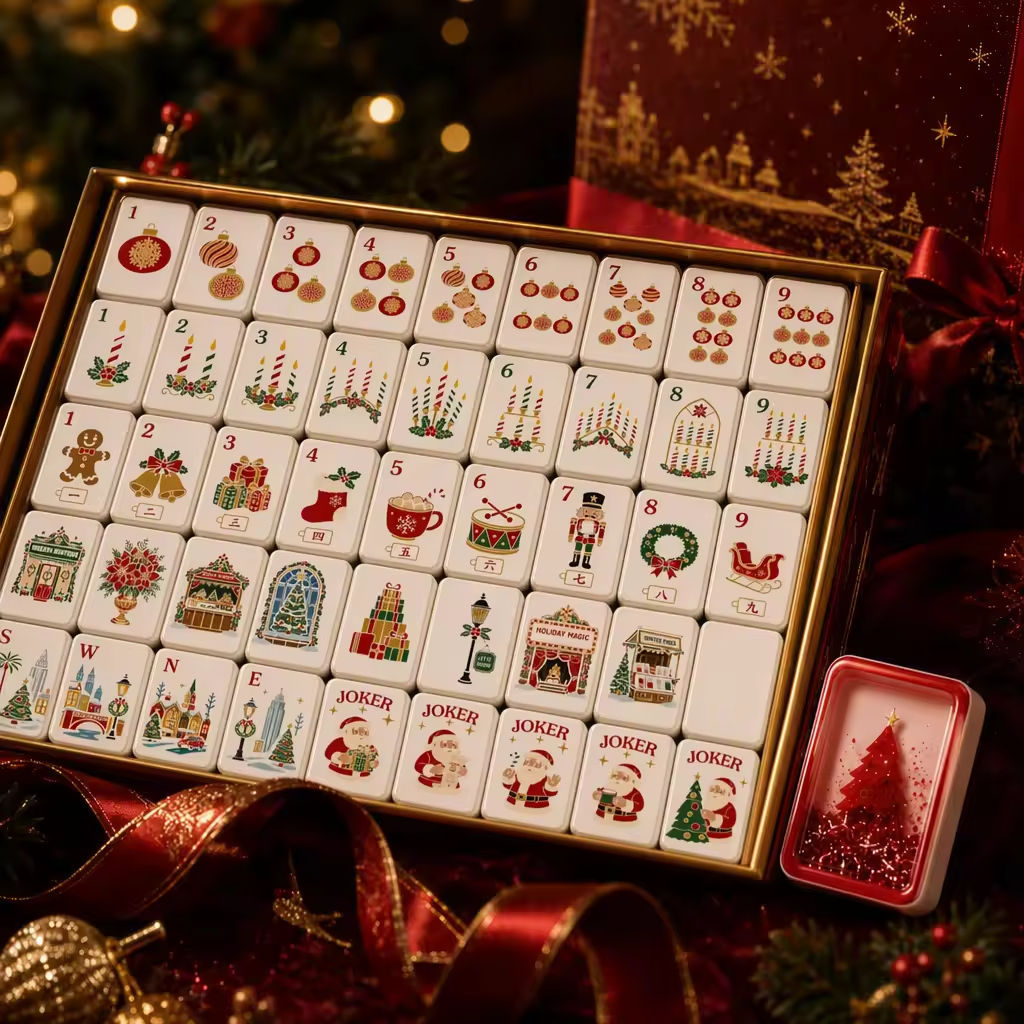
Guangdong mahjong differs sharply from American mahjong in meld exposure and hand formation. In Guangdong, you may call and expose chows (sequences like 3-4-5 Bams)—something never allowed in American play—but you cannot expose single tiles or pairs unless completing a pung or kong. The standard Guangdong hand requires four melds plus a pair; no hands come from an annual card. The draw occurs from a single wall, not rotated between players. Common errors include treating a chow as an illegal pung, exposing pairs when you shouldn't, incorrectly counting remaining tiles in the wall, and misunderstanding which tiles can end a hand. Many players switching between variants forget that Guangdong allows sequences but American does not—flipping that rule leads to immediate miséries. Mahstead focuses on American mahjong sets with precision-made tiles, but understanding how other variants work sharpens your overall tile literacy and helps you avoid costly table mistakes when playing with mixed-variant groups.
Can you expose a chow in Guangdong mahjong when you cannot in American?
Yes—and that's the single biggest difference between the two games. In Guangdong, a chow (three consecutive number tiles in one suit: 3-4-5 Bams, for instance) is a valid exposed meld when you call it on another player's discard. In American mahjong, chows do not exist as a playable unit—you may only expose pungs (three identical tiles), kongs (four identical), quints, and sextets. Many players trained in American rules try to call a chow sequence in Guangdong and immediately confuse the entire table about what's legal. To avoid this: if you're switching between variants, spend your first game as an observer, watching which melds get called and exposed. Write down the suit and number pattern of each called meld—you'll see chows appear regularly in Guangdong, never in American. The rule switch is absolute; there is no middle ground.

How many melds and a pair do you need to win in Guangdong?
Guangdong mahjong always requires exactly four melds plus one pair to win—no exceptions, no special hands with three melds or five. Each meld can be a pung (three identical), kong (four identical), or chow (three consecutive), either exposed or concealed. American mahjong, by contrast, pulls winning hands from the current year's National Mah Jongg League card, which lists dozens of valid patterns, many with unequal meld sizes or no traditional melds at all. In Guangdong, if you have three pungs, one chow, and a pair, you can declare a win; if you have three pungs, one kong, and a pair, that also wins. If you have fewer than four melds or lack a pair, you cannot win—no special exception exists. New players often expect flexibility based on American rules and get stuck waiting for a hand that doesn't fit the four-plus-one formula. Before your first Guangdong game, memorize the phrase "four melds, one pair, always"—test yourself by building a few hands on paper to cement the pattern.
Why does tile counting matter more in Guangdong than American?
In Guangdong, the wall size and draw sequence directly affect your winning probability because the entire deck circulates from one fixed wall, not four rotated walls. American mahjong uses exactly 152 playing tiles (108 number tiles, 16 winds, 12 dragons, 8 flowers, 8 jokers) plus a standard 14-tile hand draw cycle. Guangdong uses 144 tiles (108 number, 16 winds, 12 dragons—no flowers or jokers), and skilled players track how many tiles remain in the wall after each discard and draw. If you lose count, you may misjudge whether you're likely to win before the wall empties, leading you to play defensively when aggression was safe, or vice versa. A critical mistake is forgetting that in Guangdong, the game ends in a draw (no winner, no points exchanged) if the wall runs dry; in American mahjong, play continues until someone wins or the hand is clearly stuck. To avoid confusion: carry a small notepad to track wall depth every five draws. Mark off tile groups (e.g., "8 tiles drawn, ~36 remain"). This is perfectly legal table practice and prevents the costly error of assuming tiles will cycle when they won't.
What happens if you expose a pair or single tile by mistake in Guangdong?
In Guangdong, exposing a pair or single tile when it is not part of a pung, kong, or chow is generally an illegal or dead play—the hand becomes forfeit or the exposure becomes irreversible depending on house rules. The exact penalty varies by region and club, but the most common consequence is that you are penalized and cannot use that tile in a winning hand for the remainder of the hand. American mahjong has no comparable error because American rules do not permit exposing any single tile or pair under any circumstance; you simply never face this situation. Many players new to Guangdong mistakenly believe that exposing a pair (as part of "reading" the board or showing other players) is casual; in fact, any exposed tile in Guangdong that does not complete a legal meld creates a claim against your hand. Before sitting down, ask the table explicitly: "What is the penalty for an accidental tile exposure?" Write it down. This five-second conversation prevents arguments and keeps the game clean. Never expose tiles outside your hand unless you are calling or melding; keep your hand and your table discard clearly separated.

How do you know when the hand is truly over in Guangdong vs. American?
In Guangdong, the hand ends when (1) one player completes four melds and a pair, (2) no tiles remain in the wall and no one has won (a draw), or (3) the game is abandoned by mutual agreement after a dispute. In American mahjong, the hand ends when (1) someone declares a winning hand that matches the current year's National Mah Jongg League card, (2) the Kong box is empty and no more tiles can be drawn, or (3) a joker cannot be placed. The American endgame is mechanical and card-driven; the Guangdong endgame is fluid and wall-dependent. A common error is American players declaring they have won in Guangdong because their four melds match a strong American hand pattern—but if that pattern is not in the four-plus-one format, it is not valid in Guangdong. Another mistake is Guangdong players expecting an American game to continue after the Kong box empties; in American play, that is the hard stop. To avoid confusion: before the first hand, ask "What hand patterns count as a win?"—request one or two examples from experienced players. Write them down. In Guangdong, the examples will all follow four-plus-one; in American, they will vary widely across the card.
Aspect | Guangdong | American | Common Error |
Exposed melds | Chows allowed; pungs, kongs, chows all valid | Chows forbidden; pungs, kongs, quints, sextets only | Calling a chow in American; forbidden by rule |
Winning formula | Always four melds + one pair | Card-dependent; varies by year | Forcing four-plus-one in American; not all hands fit |
Hand source | Created at table; no reference card | Annual National Mah Jongg League card | Using Guangdong logic to evaluate American hand |
Wall & draw | One fixed wall; 144 tiles total | Four rotated walls; 152 tiles + 8 jokers | Miscounting remaining tiles; forgetting wall exhaustion = draw |
Pair exposure | Illegal until final win | Illegal always | Accidentally exposing a pair; causes meld confusion |
End condition | Win or wall empty (draw) | Win or Kong box empty | Playing after wall ends; expecting continued draw |
🀄 Shop best-selling mahjong sets →
What to check before you buy a set for mixed-variant play
If you host games where players switch between American and Guangdong mahjong, invest in a set designed for American play—it includes all 152 tiles American rules require and will not confuse players who are unfamiliar with Guangdong's 144-tile standard. American sets include flowers and jokers, which Guangdong players will simply not use, but this causes no friction; the extra tiles sit aside. When playing Guangdong in an American set, remove the 8 flowers and 8 jokers before building the wall, and set aside the standard 8 American jokers (Guangdong does not use jokers as wild tiles). Verify that your tiles are standard-sized and read clearly—mixed-variant play depends on fast tile recognition, and illegible or unusually sized tiles slow the game and invite disputes. Check that your mats and racks with pushers have enough space for both American (which often uses more exposed melds) and Guangdong play (which emphasizes wall depth and draw tracking). Before your first mixed-variant session, lay out tiles from both game types side by side and confirm your table can accommodate both without crowding the discard zone.
🎁 See our most-loved mahjong sets & accessories →
Mistakes in reading the board and tile tracking
A silent killer in Guangdong is misreading exposed melds because the chow rule is unfamiliar. For example, a player exposes 3-4-5 Craks and you instinctively read it as an error, when it is a legal chow. This leads to a false accusation, wasted time, and damaged trust. Similarly, if you are not tracking which tiles have been discarded and which remain in the wall, you will misjudge the odds of winning—and if the wall empties before you finish, you lose the hand to a draw when you could have pivoted to a defensive posture. To avoid this: (1) during the first two hands of any Guangdong session, do not take big risks; observe which melds are exposed and how they are built; (2) keep a running mental note or written tally of discards—especially high-value tiles like dragons and winds, which are fewer and cycle faster; (3) if you are unsure whether a meld is legal, ask before the next draw happens, not after. Most tables accept a rules question within the current turn. Never accuse; always ask.
✨ Find your Mahstead set — free US shipping →

FAQ
Can I use jokers as wild tiles in Guangdong mahjong like I do in American?
No. Guangdong mahjong does not include jokers; they have no function in standard play. If you are using an American set (which includes jokers), simply leave them in the box. Jokers are unique to American mahjong rule sets.
If I win with three pungs, one chow, and a pair in Guangdong, can I declare on the chow?
Yes, if another player discards a tile that completes that chow, you can call it (exposed) and declare the win immediately. The four-plus-one formula allows any combination of pungs, kongs, and chows as long as the total is four melds.
What is the penalty if the wall runs dry in Guangdong and no one has won?
The hand ends in a draw; typically no one wins points and the game resets. Some clubs award a small consolation payment to the dealer, but this varies by house rules. Always ask before the first hand.
If I forget to expose a meld and hold it concealed, can I still win with it?
Yes. In Guangdong, any meld (pung, kong, or chow) can remain concealed in your hand and still count toward a winning hand. You do not have to expose melds if you do not want to—exposure is optional.
How do I know if a tile I've been tracking is actually gone or just hidden in someone's hand?
You cannot know for certain. In Guangdong, concealed melds mean tiles disappear from sight; skilled players assume a tile is in use if they have seen it discarded by multiple players or if a player has melded it. If you have only seen it once (in one discard), it could still be in someone's hand. Use this uncertainty as a signal to play more conservatively as the wall empties.
Is the hand size the same in Guangdong as in American mahjong?
No. American players typically hold 13 or 14 tiles depending on turn; Guangdong players hold 13 tiles after the draw, then draw one more to reach 14 before discarding one. The cycles differ slightly, but the final hand size is similar. The main difference is the wall structure and draw rotation, not hand size.


View More
View More
View More
