
Common Mistakes in British Mahjong: Rules & How to Avoid Them
Last updated: Nov 23, 2026
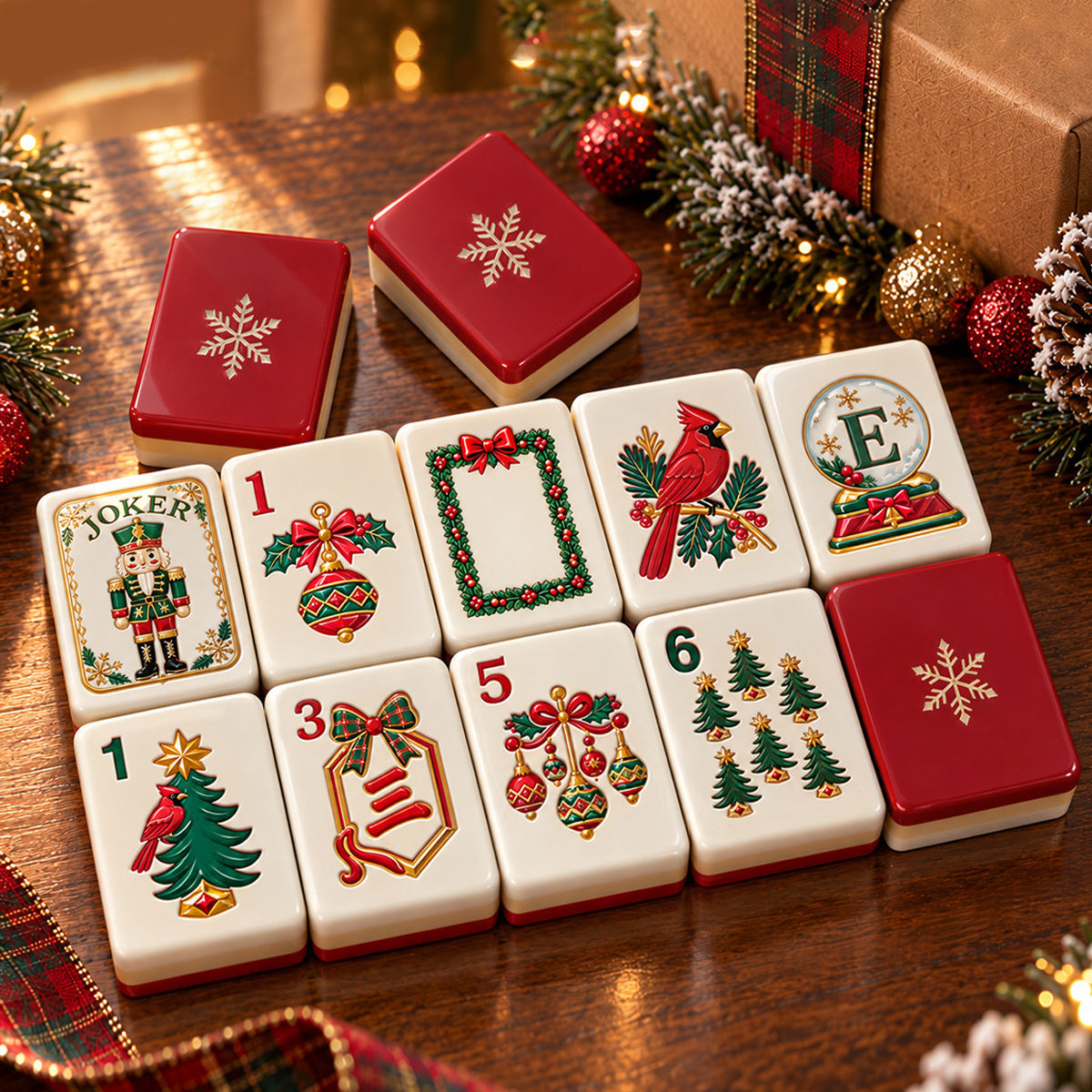
British mahjong (also called Hong Kong or international rules) differs from American play in three critical ways: sequences called chows (three consecutive numbered tiles of the same suit) can be exposed during play, unlike American's pung-only rule; the hand requires 14 tiles (not matching one of a fixed card), and any pair works with any combination of chows, pungs, kongs, and flower tiles; and calling rules are strict—a player must verbally claim a discard instantly, or the tile passes to the next player. Common errors include miscounting visible tiles before calling (leading to false wins), exposing sequences improperly, and playing from memory instead of checking the game state. British players often underestimate how many tiles remain in the wall when determining winning odds. Mahstead's best-selling collection includes sets with tile racks and pushers, which help keep melds organized and reduce calling mistakes during fast-paced British rounds.
British mahjong follows stricter rules than American play in three critical ways: sequences called chows (three consecutive numbered tiles of the same suit) can be exposed during play, unlike American's pung-only rule; the hand requires 14 tiles (not matching one of a fixed card), and any pair works with any combination of chows, pungs, kongs, and flower tiles; and calling rules are strict—a player must verbally claim a discard instantly, or the tile passes to the next player. Common errors include miscounting visible tiles before calling (leading to false wins), exposing sequences improperly, and playing from memory instead of checking the game state. British players often underestimate how many tiles remain in the wall when determining winning odds.
Are you confusing chows with American-style melds?
In British mahjong, a chow is three consecutive numbered tiles in the same suit (e.g., 4 Bam–5 Bam–6 Bam). You can expose a chow during play when you claim a discard. American mahjong allows no chows at all—only pungs (three identical tiles), kongs (four identical), quints (five), and sextets (six). If you learned American first, this is the single biggest mental shift: sequences are legal and common in British play. A chow must be three consecutive numbers in one suit; mixing suits or skipping numbers breaks the hand. Always verify the sequence order before exposing.

Why does your hand get rejected at winning moment?
Winning in British mahjong requires exactly 14 tiles forming a valid pattern: one pair plus four melds (chows, pungs, kongs, or quints). Many players miscalculate the tile count because they forget to count flowers (which sit aside but still occupy "meld slots") or they mentally exclude a discarded tile they're claiming. Count aloud: pair (2) + four melds (at least 3 tiles each = 12) = 14 tiles. If you reach 13, you've made an error somewhere. Also verify your pair is two identical tiles (same number, same suit)—you cannot use two different ranks as a pair, even if they're the same suit. Write the count down before declaring—it takes 10 seconds and stops a bad win.
Are you calling tiles too slowly or claiming out of turn?
British mahjong has a strict calling protocol: the moment a tile is discarded, any player who needs it must claim it immediately by saying "Pung," "Kong," "Chow," or "Win" (depending on British house rules). If you hesitate more than a second or two, the tile legally passes to the next player. Right-of-way matters: if two players both want the same tile, the player sitting closer to the discarder (usually by seat order) wins the claim. Some players freeze when unsure whether a claimed discard will work with their hand—this costs you the tile. Keep your hand mentally organized so you can call within a second. Use racks with pushers to visually separate melds and singles; this cuts decision time in half.
🀄 Shop best-selling mahjong sets →

Have you miscounted the tiles left in the wall?
A standard game begins with 144 tiles in the wall (when each player draws 13 and the dealer takes 14). After each turn, one tile is drawn and one discarded, so the wall shrinks predictably. Many British players forget to subtract exposed melds from the wall count—when someone exposes a pung or chow, those tiles leave the wall, making fewer draws available. If four turns have passed and two pungs are exposed, only 136 tiles remain. This changes your odds of completing a hand from "reasonable" to "nearly impossible." Track the wall by counting discards and visible melds: wall tiles = 144 − (total draws so far) − (tiles in exposed melds). By the 10th turn, with several exposed melds, fewer than 100 tiles typically remain. Knowing this pressure point stops you from calling a "win" that depends on a tile you've already seen discarded.
Is your exposed meld arrangement confusing the table?
In British play, when you claim a discard to form a meld, you expose it in front of your rack so all players see it clearly. Chows should be laid left-to-right in ascending order (4–5–6, never 6–4–5). Pungs stay grouped. Kongs show all four tiles. The discard tile you claimed should be slightly rotated or offset so watchers know which tile completed the meld. Errors happen when a player arranges tiles out of order (misaligning a chow) or mixes a chow with a pung visually, making the table unsure if the hand is legal. Take five seconds to arrange each meld neatly. If you're playing quickly or on a travel-friendly mat, use a mat with line guides to keep melds in straight rows—this eliminates confusion at a glance.
Mistake | Why it costs you | How to fix it | British-only tip |
Counting 13 tiles instead of 14 | Hand declared invalid; loss of hand | Count pair (2) + four melds (12) aloud | Flowers count as melds, not free |
Calling a chow out of order (e.g., 6-4-5) | Other players reject it; table dispute | Always arrange left-to-right: 4-5-6 | Discard tile should be offset visually |
Hesitating >2 seconds after a discard | Tile passes to next player; miss the win | Practice quick mental checks before play | Keep hand pre-sorted by suit and rank |
Forgetting a tile is in a visible meld | Miscalculate wall size; chase impossible wins | Subtract exposed tiles from 144 immediately | Update wall count after each turn |
Playing from habit (American rules) | Attempt illegal chow; hand rejected | Learn chow + sequence rules cold first | No jokers used in single tile or pair |
✨ Find your Mahstead set — free US shipping →
What to check before you buy a set for British mahjong
British mahjong is typically played with a standard 152-tile set (standard Chinese tiles or Hong Kong tiles, often marked with Arabic numerals rather than Chinese characters for speed). Check that your set includes wind and dragon tiles, which are essential for many melds. If you're hosting British players who switch between variants, choose a set with clear tile faces—acrylic or bone tiles with large printed numbers reduce reading errors. A set with a quality mat and racks helps keep melds aligned and visible, which is non-negotiable in fast British rounds. Store your set in a proper bag or case between games to prevent tile damage—bent tiles can't be read at a glance and will slow play.
🎁 See our most-loved mahjong sets & accessories →

FAQ
Can I use an American mahjong set to play British rules?
No. American sets come with 8 jokers and no sequences—British play requires a 144 or 152-tile standard set with wind and dragon tiles, and jokers are not used. You'll also lack tiles for melds that depend on specific suits and numbers.
What's the difference between a chow and a pung?
A chow is three consecutive numbered tiles of one suit (e.g., 2–3–4 Craks). A pung is three identical tiles (e.g., three 2 Craks). Both are legal in British play; American only allows pungs. Chows are called "sequences" in some regions.
If I call a tile and then realize my hand is invalid, do I lose?
Yes, in most British house rules. You must verify your hand mentally before calling—once you claim the tile and expose your hand, it's locked. If the hand is illegal, you typically lose the round and pay a penalty.
How many jokers are in a British mahjong set?
British mahjong does not use jokers. A standard set has 144 or 152 tiles divided into suits, winds, dragons, and sometimes flowers. Jokers are specific to American mahjong.
Can I expose a chow that includes a flower or wind tile?
No. Chows are only numbered tiles (1–9) of the same suit. Winds and dragons form pungs or kongs only. Flowers are melds on their own—you cannot incorporate them into a numbered sequence.


View More
View More
View More
