
Cold Wall Mahjong Rule Explained: When & How to Call
Last updated: Nov 23, 2026
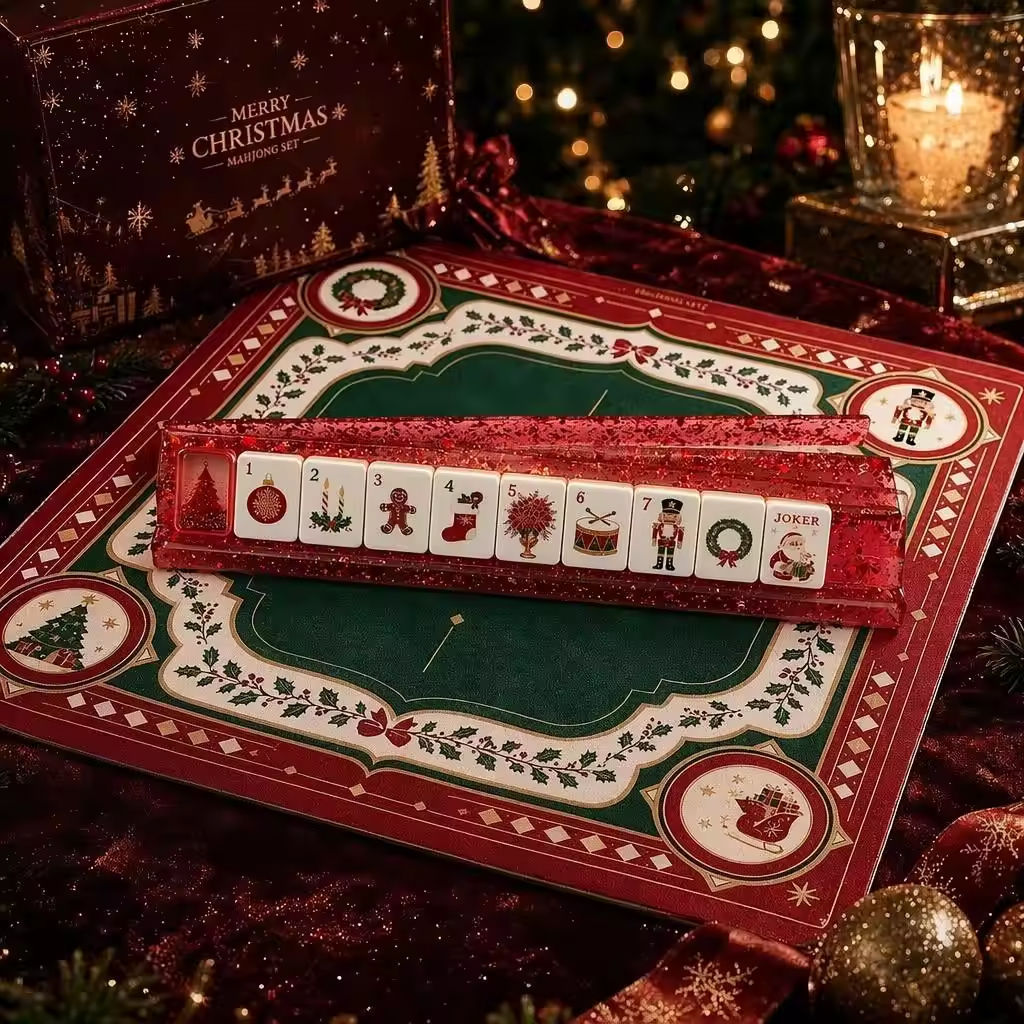
The cold wall is a 14-tile section at the far end of the player wall—directly opposite the dealer—from which no player may draw tiles during normal play. In American mahjong, the original dealer sits opposite the cold wall. Once the wall is set up and the Charleston is complete, players draw exclusively from the living wall (the remaining wall sections where drawing is legal). The cold wall exists because American mahjong requires that all four players' hands close at precisely the same moment: if players could draw from every part of the wall, the game would end unevenly. The cold wall ensures strict synchronization. When the living wall is exhausted and no one has won, the game is declared a dead hand. You cannot draw a loose tile or a dead tile from the cold wall; doing so is a foul and can result in hand disqualification. Understanding this rule matters because it shapes your decision-making around the end-game and prevents accidental rule breaks that new hosts sometimes overlook.
The cold wall is the section of the wall in American mahjong where no player may draw tiles during normal play. In American mahjong, the original dealer sits opposite the cold wall. Once the wall is set up and the Charleston is complete, players draw exclusively from the living wall (the remaining wall sections where drawing is legal). The cold wall exists because American mahjong requires that all four players' hands close at precisely the same moment: if players could draw from every part of the wall, the game would end unevenly. The cold wall ensures strict synchronization. When the living wall is exhausted and no one has won, the game is declared a dead hand. You cannot draw a loose tile or a dead tile from the cold wall; doing so is a foul and can result in hand disqualification.
Where is the cold wall located on the table?
The cold wall occupies the wall section directly opposite the original dealer's seated position. At setup, the wall is divided into four equal sections—one for each player. The section opposite the dealer is never broken into, remaining untouched throughout play. When you sit down at the table, identify the original dealer (or consult the score card if it's not the first hand). Look directly across from that player. That entire section is off-limits. The cold wall stays intact until the hand ends.

How many tiles make up the cold wall?
The cold wall contains 14 tiles out of the 152 tiles in play. The living wall—tiles you can draw from—contains 108 tiles after the Charleston exchange (52 tiles are dealt to the four players' initial hands: 13 per player × 4 = 52 tiles). The wall originally has 152 tiles total; subtract the 38 tiles already in players' hands (including the dealer's extra tile) and you get 114 tiles remaining in the wall. Of those 114, the cold wall takes 14, leaving 100 tiles in the living wall. This calculation prevents any player from controlling the outcome by drawing strategically from the wall's end.
Why does American mahjong have a cold wall when other variants don't?
American mahjong enforces simultaneous hand closure—all four players must complete (or fail to complete) at the exact same moment. Chinese mahjong, Hong Kong, and Riichi variants allow players to win individually whenever they form a valid hand, so the wall is drawn from freely until exhausted. Because American mahjong uses a fixed hand list from the National Mah Jongg League card and requires four synchronized completions, the cold wall prevents one player from monopolizing the final tiles. If anyone could draw from any part of the wall, the game could end in an uncontrolled spiral. The cold wall is not arbitrary—it's structural, ensuring fairness and rhythm.
What happens if you accidentally draw from the cold wall?
Drawing from the cold wall is a foul. If you pull a tile from the cold wall's section during normal play, your hand is dead (disqualified), and you cannot win that hand. The tile you drew must be returned to the wall and the draw order resumes with the next legal player. Many hosts require the offending player to replace one tile already in their hand into the wall as well, but house rules vary. The best way to avoid this is to have all players confirm the wall orientation before the first draw and to count off or use a rack divider to mark the cold wall's boundary. When hosting with engraved or high-quality sets, set up the mat so the cold wall section is labeled or visually distinct—some hosts place a small marker or mat crease to remind everyone where the boundary lies.
🀄 Shop best-selling mahjong sets →

How do you teach the cold wall rule to new players?
Show new players the wall layout before the first tile is drawn. Point directly across from the dealer and say, "That entire section stays closed—we never touch it." Have them walk around the table once to see the orientation. Use a simple physical reminder: on a traditional mat or table, you can place a small object or draw a line to mark the cold wall's far edge. When players practice drawing, have them draw from the living wall (closest to the dealer, moving outward) so they build muscle memory. Some hosts use mats with clearly marked sections or racks with built-in pushers that make the wall's structure visible without confusion. After three or four hands, most players internalize the rule. The first mistake is forgivable; after that, most groups enforce it strictly.
What's the connection between the cold wall and dead hands?
When all players have drawn from the living wall and no one has a winning hand, the hand is declared dead (no winner that round). The cold wall exists so that this outcome is possible and fair. If players could draw from the entire wall indefinitely, someone would eventually complete a hand, but the game would drag on and outcomes would feel arbitrary. The cold wall creates a hard stop: once the living wall is gone, the hand is over. The cold wall enforces the rhythm. This rule is unique to American mahjong and is one reason why American players often experience shorter, more decisive rounds than in other variants.
Concept | Live Wall | Cold Wall | Why It Matters |
Location | Sections nearest the dealer and extending outward | Opposite the dealer, never touched | Ensures players know where to draw |
Tiles in Play | ~100 tiles (varies with dead tile count) | 14 tiles (always closed) | Guarantees synchronized hand end |
Who Draws from It | All four players in rotation | No one, ever | Prevents accidental fouls |
Purpose | Active play and hand completion | Fairness and game structure | Keeps the game fair and predictable |
🎁 See our most-loved mahjong sets & accessories →
What to check before you buy a set (to avoid cold wall confusion)
When choosing a mahjong set to host games, look for:
Clear tile visibility: acrylic tiles in bright colors so players can spot tiles drawn from the wall without leaning.
A durable mat or surface: marks or creases showing the wall's four sections reduce mistakes; many players prefer mats designed with clear orientation lines.
Racks that stabilize the wall: pushers and racks keep tiles upright and aligned, making the cold wall boundary obvious.
A score card or rule sheet: keep the National Mah Jongg League rules or a house-rules document at the table so disputes are settled by reference, not memory.
Space for four players: a table large enough for the wall and all hands means no one has to reach awkwardly, reducing accidental cold wall draws.
If you're hosting weekly games and new players keep making cold wall mistakes, the issue is usually setup, not understanding. A well-organized table prevents confusion.
✨ Find your Mahstead set — free US shipping →

FAQ
Can a player draw a loose tile from the cold wall if it tips over?
No. Even a loose or fallen tile in the cold wall section remains part of the cold wall and cannot be drawn or used. Return it to the wall face-down. Drawing it is a foul.
If the wall is divided unevenly (a player counted wrong), does the cold wall move?
No. The cold wall is defined by the dealer's position at the start of the hand and does not move, even if the wall is miscounted. Reset the wall and recount before the first draw.
What's the difference between the cold wall and the dead wall in Chinese mahjong?
American mahjong uses "cold wall" to mean a closed section opposite the dealer. Chinese mahjong uses "dead wall" to mean a small set of reserved tiles from which winners draw bonus tiles—a completely different mechanic. American mahjong has no bonus draws from the cold wall.
Can you move the cold wall's position if you want a shorter game?
No. The cold wall's location is fixed by rule: it must be opposite the dealer and always 14 tiles. Changing it violates American mahjong rules and invalidates all hands played under the modified rule.
How do you explain the cold wall rule when teaching mahjong to someone who's never played?
Say: "We draw tiles from the wall in this direction (point). That section at the far end never gets touched—it's closed. When the rest runs out, the round ends, whether we won or not." Show them the wall three times before the first hand.
If someone draws from the cold wall by accident and no one notices until later, is the hand still dead?
Yes. The hand is dead the moment an illegal draw occurs, even if discovered later. The winning hand is voided, and the hand resets. This is why confirming the wall at the start of each hand prevents disputes.


View More
View More
View More
