
Clear Mahjong Travel Bag: What to Choose for Your Set
Last updated: Nov 23, 2026
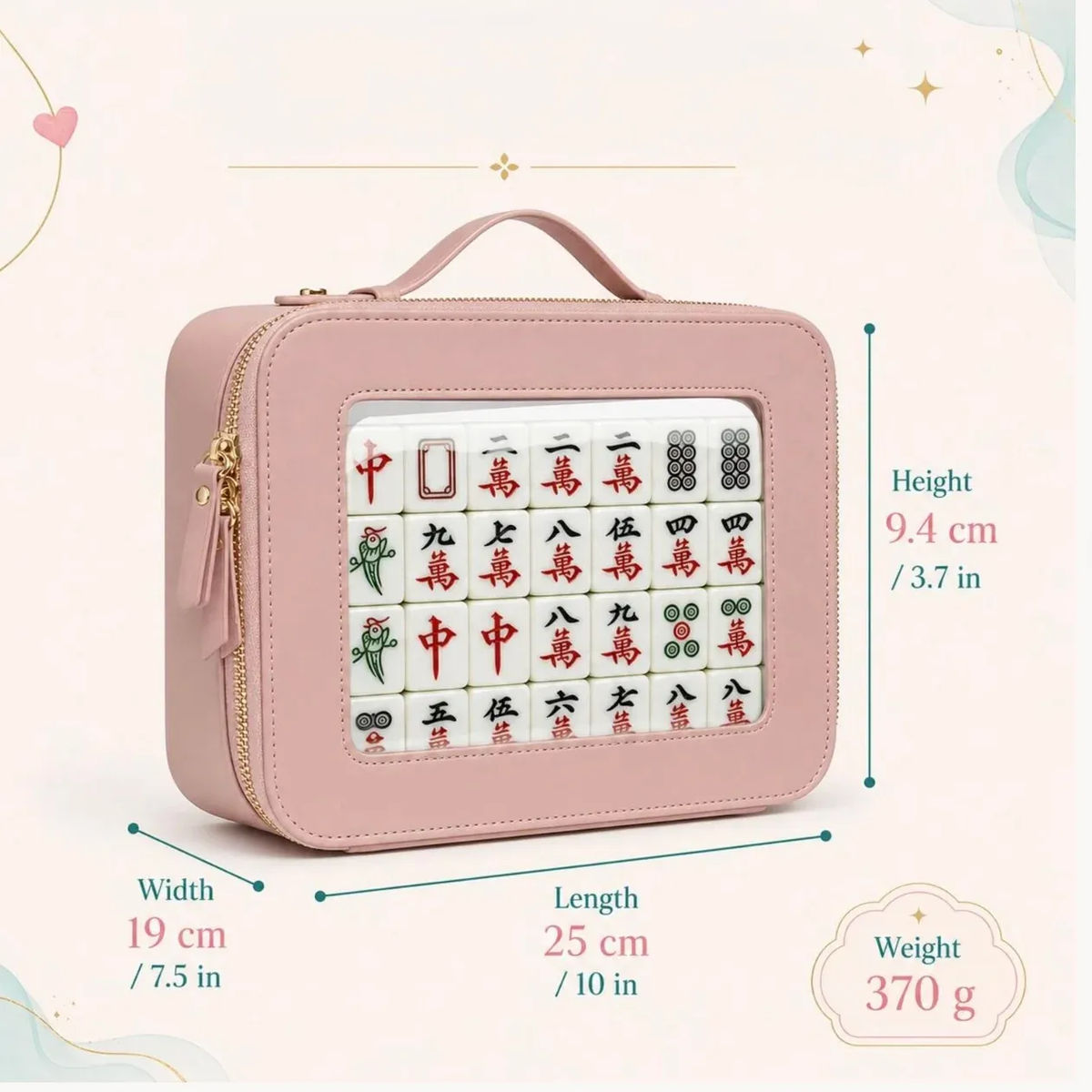
A clear mahjong travel bag is a protective carrying case with transparent panels so you can identify your set without opening it. Most hold a complete 160-tile American mahjong set with accessories like a mat, pushers, or racks. Clear bags come in soft-sided (canvas or vinyl with acrylic windows) or hard-shell designs; soft-sided options are lighter and pack flat, while hard-shell offers maximum protection for frequent travel. Sizes range from compact (fits just tiles and jokers) to large (holds set, mat, and racks together). Cost varies by material and capacity—see the travel bag collection for current options. Before ordering, confirm the bag's internal dimensions match your 160-tile set's footprint, check that handles and zippers feel sturdy, and verify whether dividers or compartments suit how you organize your game gear. Free shipping across the US makes upgrading your carry setup simple. 🀄 Shop travel bags & cases →
Which bag size fits a complete set with a mat?
The size you need depends on whether you're carrying just tiles or a full game kit. A compact bag holds a 160-tile set and jokers comfortably in about 12 × 8 × 4 inches. Adding a mat or rack typically requires a large bag (16 × 12 × 6 inches or bigger). Measure your mat's folded or rolled dimension first—that's your limiting factor. Most players who host weekly games find a large clear bag worth the extra space; you'll pack everything in one trip instead of juggling multiple cases.
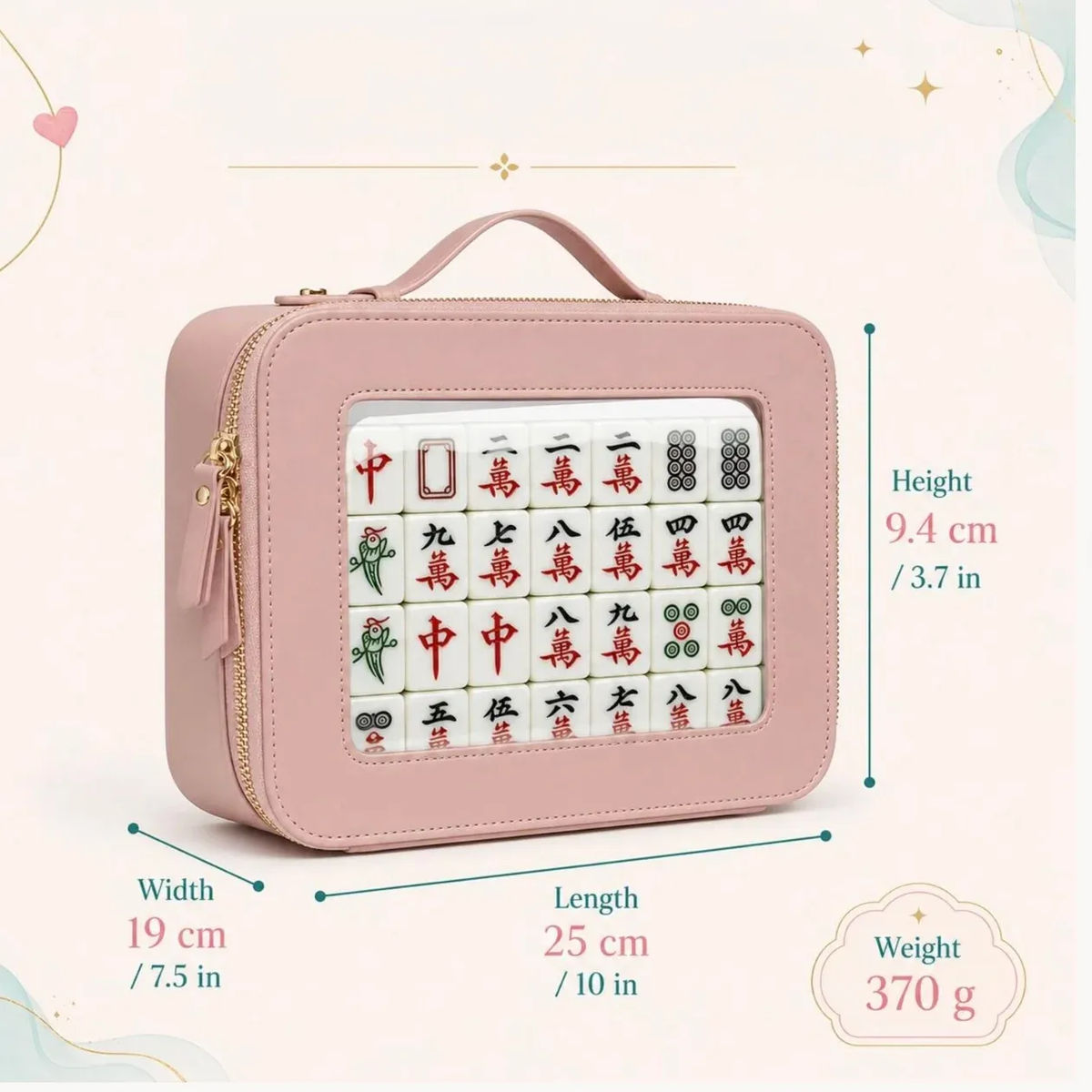
What's the difference between soft-sided and hard-shell bags?
Soft-sided bags (canvas or vinyl with clear acrylic panels) weigh less, pack flat when empty, and are easier to slip into a car. Hard-shell bags protect tiles from crushing if the bag gets sat on or dropped, making them better for frequent air travel or very active transport. Soft-sided wins if you carry your set once or twice a month by car; hard-shell makes sense if your bag lives in an overhead bin or gets stacked under other luggage. Neither affects tile safety on a normal tabletop game—both keep dust and spills out equally well.
How do you organize tiles inside a clear bag?
Smart packing starts with returning tiles to their original sections—most 160-tile sets come with dividers or compartments. Place heavier tiles (like dragons or winds) on the bottom and lighter flowers on top to prevent shifting. Keep jokers in a small pouch or envelope so they don't scatter if the bag tips. If your bag has a zippered top compartment, store the current year's National Mah Jongg League card and a scorepad there so they're visible and dry. When you buy a set from our best-selling collection, the tiles usually nest into the box with sensible divisions—use that layout as your bag-packing template.
🎁 See our most-loved mahjong sets & accessories →
Should you buy a bag designed for mahjong or adapt a general case?
A mahjong-specific bag has interior dimensions and dividers tailored to hold a 160-tile set snugly without tiles sliding around during transport. General utility bags (camera cases, craft organizers) are cheaper and sometimes work, but they often have too much wasted space, uneven cushioning, or dividers in the wrong places. If you host games regularly or travel to play, a mahjong bag pays for itself in peace of mind—your engraved tiles arrive in the exact order you organized them, and the clear panels let you spot a tile without unpacking. For a one-time vacation trip, a padded general bag is fine; for a lifestyle player, invest in mahjong-specific design.
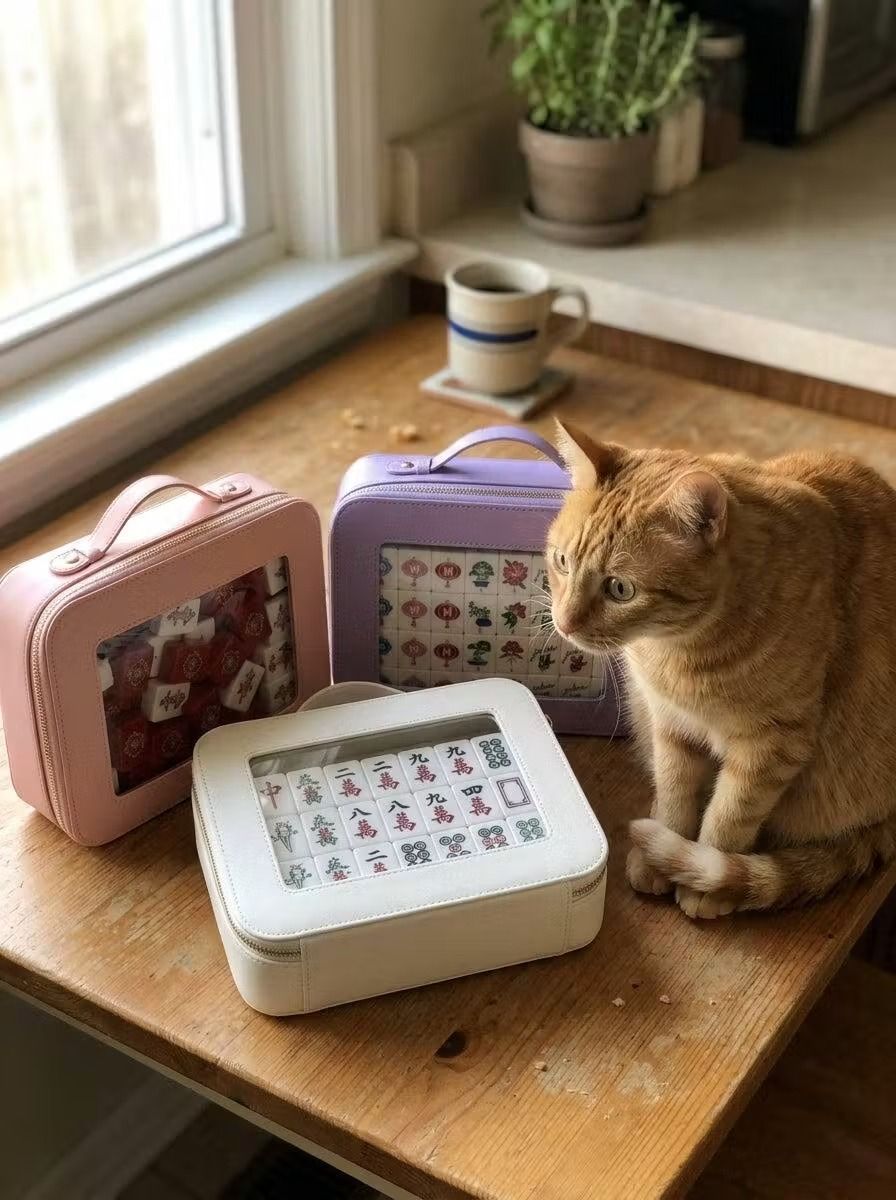
What features prevent tiles from shifting or getting damaged in transit?
Look for bags with padded interiors, elastic straps or velcro bands to hold tile sections in place, and sealed or reinforced zippers. The acrylic window should be recessed slightly into the frame so it doesn't bear the bag's weight if it sits upside down. Dual handles (not a single strap) distribute weight better and reduce strain on zippers. Test the bag's bottom—it should be stiff enough that tiles don't feel loose when you lift it gently. If you're carrying a complete game kit including mahjong mats and racks with pushers, confirm the bag's depth can accommodate a folded mat plus the tile box stacked flat without crushing either one.
Bag Type | Best For | Weight | Key Advantage | Tradeoff |
Compact soft-sided | Tiles + accessories only | 1–2 lbs | Lightweight, packs flat | Won't fit a mat |
Large soft-sided | Set + mat + racks | 2–3 lbs | Roomy, easier to load | Less rigid protection |
Small hard-shell | Travel by air, max protection | 2–3 lbs | Maximum crush resistance | Higher cost, bulky empty |
Large hard-shell | Frequent moves, outdoor games | 3–4 lbs | Ultimate durability | Heaviest option |
What to check before you buy
Dimensions. Measure your 160-tile set's box or case length, width, and height. Add 0.5 inches on each side to account for padding. Cross-reference that figure against the bag's internal cavity (not external size—those are always bigger). Many sellers list external dimensions only; if you can't find internal specs, contact the seller or assume internal is 1 inch smaller in each direction than external.
Clear panel material. Acrylic is scratch-resistant and stays transparent indefinitely. Vinyl (PVC) is cheaper but yellows or clouds after a year in sunlight. If the product page doesn't specify, assume vinyl; acrylic is usually called out as a selling point.
Handle attachment. Reinforced stitching or rivets at handle roots matter more than the handle material itself. Glued handles fail fastest.
Zippers. Metal zippers outlast plastic, especially in humid climates. Check whether the slider moves smoothly when you test one in a store or video.
Compartments. A small top pocket for scorecards and the League card is a huge quality-of-life feature. Elastic straps inside beat loose pockets for keeping tile sections from shifting mid-journey.
Why mahjong sets and bags go together
When you invest in engraved American mahjong sets or custom designs, the tiles deserve a bag that shows them off and protects your investment. A clear bag transforms your set into a conversation starter—arriving at game night with a beautiful, visible collection in a professional case signals that you take the game seriously. And if your tiles are personalized with names or a year, the clear window lets you spot your set instantly on a crowded table. The travel bag collection pairs perfectly with any standard 160-tile set.
✨ Find your Mahstead set — free US shipping →

FAQ
Can a clear mahjong bag hold both a set and a mat rolled inside?
Yes, if you choose a large bag (typically 16+ inches long). Roll the mat tightly, place it vertically along one side, and nestle the tile box against it. Confirm the bag's internal depth is at least 6 inches. Soft-sided bags compress slightly, making this easier than hard-shell; hard-shell offers more protection if you're flying.
How do you clean the clear panels without scratching them?
Use a microfiber cloth and warm soapy water, or a mild glass cleaner (no ammonia if the window is vinyl). Wipe gently in one direction, not circular motions. Acrylic panels are more scratch-resistant than vinyl; avoid abrasive sponges on either material. Let them air-dry completely before closing the bag.
What's the minimum bag size for just tiles and jokers, no mat?
A compact bag measuring roughly 12 × 8 × 4 inches (internal) is sufficient for a standard 160-tile set in its original box or a divided tile tray. Confirm your specific set's dimensions; some original boxes are slightly larger. Compartmentalized organizers inside the bag prevent tiles from rattling.
Should you buy a bag at the same time as your set?
It's smart to order them together if possible. You'll know the bag fits your exact set, and you can unpack and play immediately. If you already own a set without a bag, measure it first, then shop the travel collection so you pick the right size on your first try.
Do clear bags work for Chinese or Hong Kong mahjong sets too?
Mostly yes, but those sets have 144 tiles instead of 160, so a compact bag designed for 160 tiles might be slightly oversized. Check the internal dimensions and compare them to your specific set's box. A bag marketed for "mahjong sets" generically is your safest bet for non-American variants.


View More
View More
View More
