
Clear Mahjong Pushers: Which Type Fits Your Game?
Last updated: Nov 23, 2026
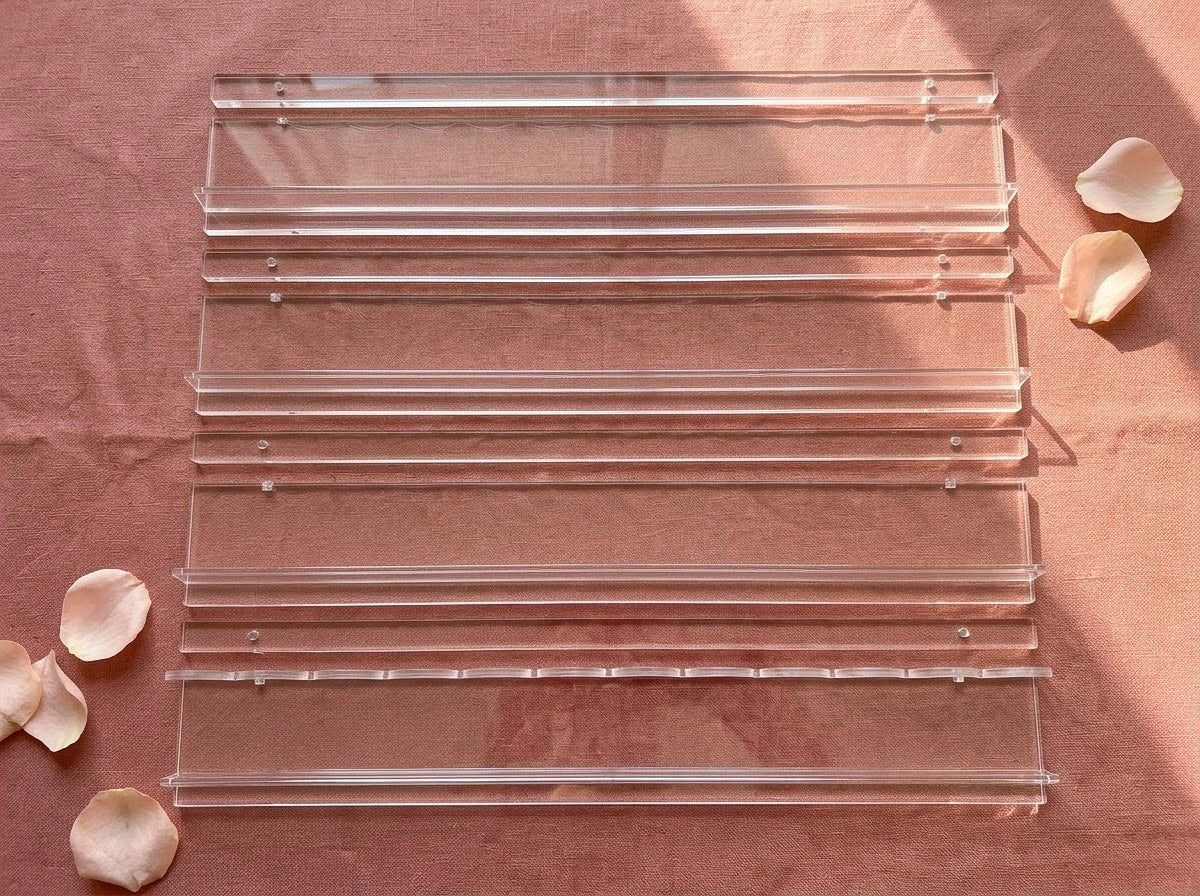
Clear mahjong pushers—usually acrylic or wood rods with a notched or flat end—let you organize and push tiles forward without marking them. On the table, you position them beneath your rack to nudge tiles left and right as you draw and discard, keeping your hand neat and your plays legal. A typical pair runs 7–9 inches long and weighs between 0.3 and 0.8 ounces each. They're included in most racks with pushers collections, and the best choices pair acrylic pushers with tiles that match in weight and glide. Avoid pushers that are too thin (they snap) or too short (they can't reach corner tiles); check the exact measurement before ordering because table felt and tile stacks vary.
What's the difference between acrylic and wood pushers?
Acrylic pushers are translucent or frosted, smooth, and slide easily across felt mats; they don't absorb moisture and won't warp. Wood pushers offer a traditional look and feel slightly heavier, but they can swell if exposed to humidity over time. Acrylic is best for high-volume play and storage in variable climates; wood suits players who prefer a classic, quieter aesthetic and live in stable conditions.
🀄 Shop best-selling mahjong sets →
How long should your pushers be?
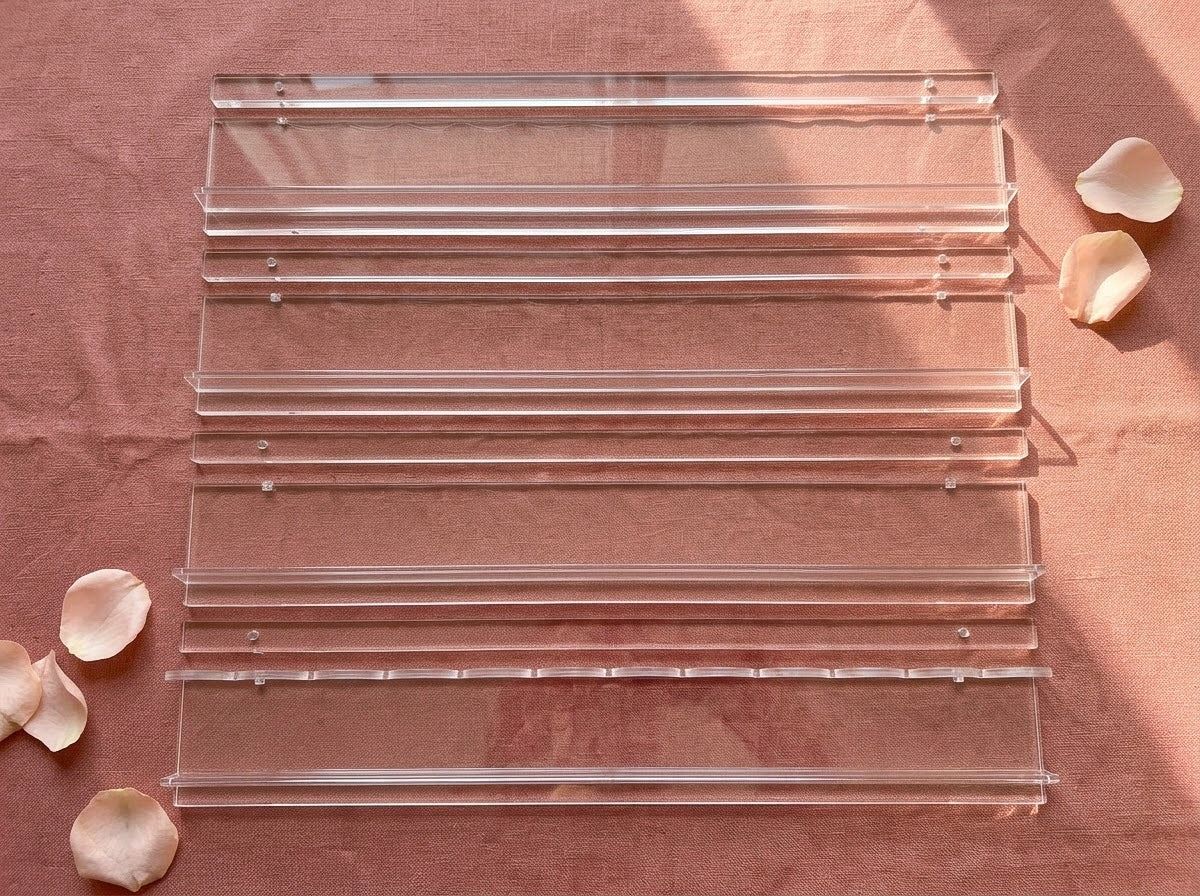
Pusher length depends on your rack depth and tile arrangement. Most standard acrylic racks with pushers pair with 8–9 inch pushers; if your rack is deeper (for players with larger hands), you'll need 9–10 inches. Measure your rack from the back edge to the tile well; pushers should extend just past center so you can nudge corner tiles without lifting your hand. Undersized pushers force awkward reaching; oversized ones poke past your body and annoy neighbors.
What happens if your pushers are too thin?
Thin pushers bend under repeated pressure, especially when moving stacked tiles or tiles on uneven felt. Over a season of weekly games, a flimsy pusher may crack at the notch where the handle meets the rod. The best pushers have a minimum wall thickness (typically 0.15–0.2 inches for acrylic) and a reinforced grip. Test a sample: it should feel sturdy and show no flex when you press gently against a tile.
Should you match pusher color to your set?
Many of our best-selling mahjong sets come with clear or white pushers by default. Clear acrylic works with any tile design—engraved, colorful, or monochrome—because it doesn't compete visually. Colored pushers (smoke, jade, red) can coordinate with themed sets but may feel out of place if your tiles and mat use a different palette. The practical rule: clear or white pushers pair with any aesthetic, while colored pushers should match your overall table setup.
🎁 See our most-loved mahjong sets & accessories →

How do you care for acrylic pushers to avoid cracking?
Store pushers in a cool, dry place away from direct sunlight (UV can cloud acrylic over years). Don't leave them in a hot car or near a radiator; acrylic expands and contracts with temperature swings. After play, wipe them with a soft cloth to remove felt dust and oils from your hands. Avoid harsh chemicals; warm soapy water is enough. Never force a pusher onto a tile to pry it; treat the notch gently. Proper storage in a mahjong bag or case keeps them safe during transport.
Comparison: Pusher Types at a Glance
Type | Material | Durability | Feel | Best For | Care |
Clear acrylic | Acrylic polymer | 3–5 years (high-play) | Smooth, cool | Weekly games, any aesthetic | Wipe cloth, cool storage |
Frosted acrylic | Acrylic (sand-blasted) | 3–5 years (high-play) | Slightly grippy | Players with damp hands | Same as clear |
Wood | Hardwood (maple/walnut) | 2–4 years (variable climate) | Warm, quiet | Traditional look, stable humidity | Oil occasionally, avoid damp |
Composite (bone/resin) | Bonded materials | 2–3 years (light use) | Dense, heavy | Collectors, occasional play | Minimal; avoid soaking |
✨ Find your Mahstead set — free US shipping →
What to Check Before You Order
Pusher length: Measure your rack's tile well depth and add 1–2 inches for overhang. Request dimensions in writing if the listing is vague.
Wall thickness: Ask for minimum specs; acrylic should be ≥0.15 inches thick to resist bending.
Notch design: Flat notches are easiest to use; beveled or rounded notches reduce tile damage but can slip. Test-drive a set at a friend's table if possible.
Weight: Heavy pushers (0.6–0.8 oz each) move smoothly on felt; light pushers (under 0.3 oz) may scatter tiles if you lose control.
Finish: Clear acrylic shows dust; frosted hides it but can feel sticky. Matte finishes are cooler in hot rooms.
Packaging: Pushers should ship in a padded case or sock, not loose in a box, to prevent chipping during transit.
Do you need a matching mat and rack?
Yes and no. Pushers work best with mahjong racks that have a consistent tile well and a stable base; they're almost worthless without a rack. A mahjong mat with low pile felt (not velvet) lets pushers glide smoothly. If your mat is plush or heavily textured, even good pushers will stick. Many of our customers pair an engraved set with a coordinated mat and acrylic racks; the combination balances aesthetics, durability, and function over five to ten years.
Why do some players avoid pushers altogether?
In casual games, some players pick up and place tiles by hand for speed and a personal touch. Pushers slow you down slightly but keep tiles organized, prevent accidental flips, and signal professionalism at tournaments or club games. If you play once a month with close friends, hand-placement is fine; if you host weekly games or play in leagues, pushers become essential to avoid disputes over tile order and tile damage. Most of our customers invest in pushers after one season of frequent play.
A final thought: the right pusher pair is one you forget about until you need it. It should glide, not stick; feel substantial in your hand; and outlast a year of weekly games without cracking or bending. Clear acrylic remains the safest bet for any tile set, climate, or aesthetic. Pair them with a sturdy rack from our collections, a smooth mat, and your setup will serve you through many seasons of play.
FAQ
Can I use pushers with a tabletop or cloth cover instead of a mat?
Not effectively. Cloth absorbs moisture and wrinkles, causing pushers to catch and scatter tiles. A low-pile felt mat is essential for smooth gliding.
Are longer pushers always better?
No. Pushers longer than 10 inches become difficult to control and may poke past your body into neighbors' space. Measure your rack first.
Do clear pushers scratch easily?
Acrylic shows scratches over time, especially if dragged across gritty felt or used with rough tiles. Wipe your mat regularly and store pushers in a bag to minimize contact.
Can I buy pushers separately if mine break?
Yes. Most mahjong racks are sold as complete sets, but individual pushers or replacement pairs are available—check the product details for your specific rack model.
What weight should my pushers be?
Between 0.5 and 0.8 ounces each. Heavier pushers (near 0.8 oz) are easier to control and less likely to flutter across the mat; lighter pushers may slip on humid felt or uneven surfaces.


View More
View More
View More
