
Classical Chinese Mahjong How to Count Points
Last updated: Nov 23, 2026
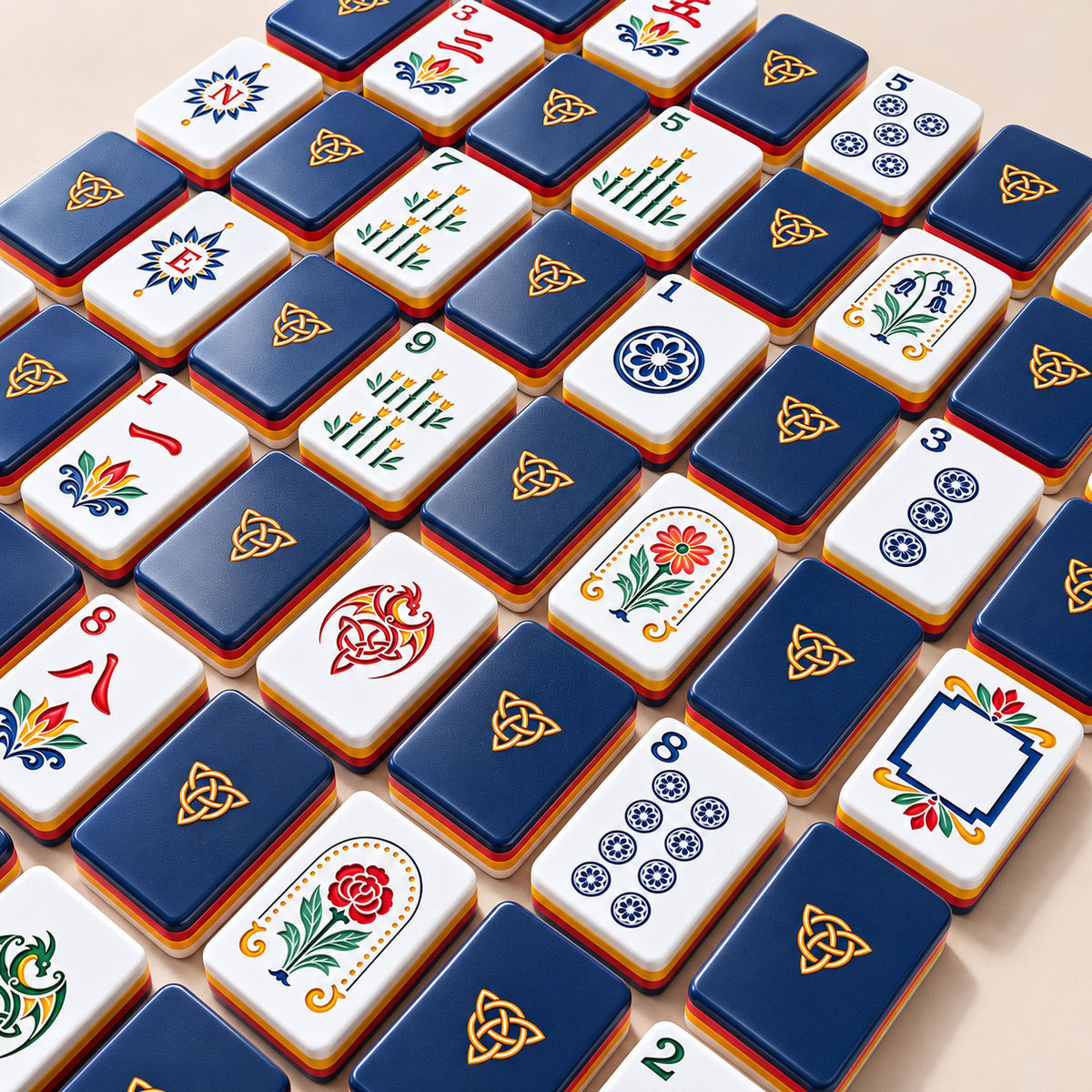
Classical Chinese mahjong (also called Cantonese or Hong Kong mahjong) scores hands using a fan-and-point system rather than preset patterns. One fan equals one double of a base point value (typically 20–40 points, depending on your group). A winning hand must declare a minimum number of fans—usually one to three—to be valid. The dealer (East Wind) pays or receives double; non-dealers pay/receive single. Final points multiply by the number of players paying you. For example, a three-fan hand worth 960 base points paid by three players nets 2,880 points to the winner. Score depends on visible melds (pungs, kongs, pairs), concealed melds, terminal or honor tiles, and whether you drew your winning tile from the wall or claimed a discard. Unlike American mahjong's fixed card, Chinese scoring demands quick mental math at the table—most players learn through repeated play and regional rulebooks.
What exactly is a "fan" in Chinese mahjong scoring?
A fan is a scoring unit equal to one doubling of points. If the base value is 20 points and you earn two fans, your hand is worth 20 × 2 × 2 = 80 points before dealer multipliers or payment splits. Each fan adds one layer of complexity to your hand's legal value. Most home games require a minimum of one fan to win; competitive play often demands two or three. Fans stack—they are not separate scores but cumulative doublings of the same base.

How do you calculate the base point value?
Base points depend on your hand's tile composition: honor tiles (dragons, winds) and terminals (1s and 9s) are worth more than simple number tiles. A concealed pung (three hidden identical tiles) is worth more than an exposed one. A kong is worth more than a pung. You count the point value of each meld, add them together, then multiply by the number of fans to get your raw score. Then apply dealer multiplier and split among players who did not win. Most regional rulesets provide a quick reference chart; memorizing these values takes weeks of play.
Why does dealer status change the payout?
The dealer (East Wind, seated in a fixed position or rotating each round) holds a special role: they pay double if they lose, or receive double if they win. This incentivizes winning as dealer and penalties losing players more heavily when the dealer is strong. Non-dealers pay or receive single, and the math adjusts. For a three-fan hand, the dealer pays three non-dealers triple what a non-dealer would pay—creating strategy around dealer position and risk appetite.
🀄 Shop best-selling mahjong sets →
What is the difference between open and concealed melds in scoring?
An exposed (or open) pung means you called a discard to complete it and laid it face-up on the table; a concealed pung was drawn from your hand without calling. Concealed melds are worth roughly double or triple the points of open melds, because drawing all tiles yourself is harder than claiming a discard. Kongs (four identical tiles) beat pungs; a concealed kong is worth the most. This bonus encourages defensive play—hiding your tiles and drawing from the wall rather than revealing your strategy.
Meld Type | Points (Base) | Open or Concealed | Why It Matters |
Simple pung (2–8) | 2 pts each | Open | Easiest to form, lowest value |
Simple pung (2–8) | 4 pts each | Concealed | Same tiles, hidden = double points |
Terminal/honor pung | 4 pts each | Open | Harder tiles, higher base |
Terminal/honor pung | 8 pts each | Concealed | Most defensive play |
Kong (simple) | 8 pts (base) | Open | Four tiles add fans faster |
Kong (simple) | 16 pts (base) | Concealed | Rare, high reward |
How does winning off the wall versus claiming a discard affect your score?
If you draw your winning tile from the wall (the tile pile), you earn a "self-drawn" bonus—extra fans or points added to your hand. If you declare "mahjong" by claiming an opponent's discard, you earn no self-drawn bonus but still score the hand. A self-drawn win is worth more because it requires luck and does not depend on an opponent's mistake. Some versions award one extra fan; others add a fixed point multiplier. This rule varies sharply by region—always agree before play starts.
🎁 See our most-loved mahjong sets & accessories →

What about hand limits and maxima in classical Chinese mahjong?
Most regional variants cap the maximum score to prevent runaway payouts—often at 8 fans or a fixed point ceiling (e.g., 2,000 points). A "limit hand" (e.g., seven pung with a pair, all terminals and honors) may be worth the maximum payout regardless of actual fan count. Limit hands are rare and celebrated; hitting one is a major table moment. Always check your rulebook or ask the dealer whether limits apply before the game starts.
Regional scoring differences: Cantonese, Taiwanese, and Hong Kong variants
Cantonese (Hong Kong) mahjong is the most common classical variant in North America; it uses a base of 20 points and requires a one-fan minimum to win. Taiwanese mahjong has stricter concealment rules and often uses a base of 40 points with higher fan thresholds. Sichuan (Blood Dragon) mahjong is much faster and more aggressive, with higher payouts and simpler fan counting. Each region has different bonus rules for dragons, flowers, and quints. Learn your table's house rules before sitting down—ask the dealer or most experienced player to walk you through one winning hand.
Common scoring mistakes and how to avoid them
Mistake 1: Forgetting the dealer multiplier. Non-dealers often calculate their payout correctly but forget the dealer pays or receives double. Designate one player as scorekeeper to confirm before chips move.
Mistake 2: Miscounting fans in your own hand. Before declaring mahjong, recount your melds against the rulebook. A misdeclared hand may cost you the game.
Mistake 3: Confusing open and concealed meld values. The difference is often 2×, so keep your tiles arranged clearly so opponents can see what you drew versus what you called.
Mistake 4: Not agreeing on limits beforehand. A hand that scores 5,000 points in one ruleset scores 1,500 in another. Discuss point caps and special hands at the start.
Mistake 5: Claiming a discard when you're not ready. Once you say "mahjong" and grab a discard, you own the score—no takebacks. Count first, claim second.
Step-by-step: Calculate a real Chinese mahjong hand
Example hand: You are non-dealer. You have three concealed pungs of simple tiles (2 Bam, 5 Dot, 7 Crak), one open pung of Green Dragons, and a pair of White Dragons. You drew your winning tile from the wall (self-drawn).
Step 1: Count visible melds.
Three concealed pungs of simple tiles: 4 + 4 + 4 = 12 pts
One open Green Dragon pung: 4 pts
White Dragon pair: no points (pairs don't score)
Subtotal: 16 pts
Step 2: Add bonuses.
Self-drawn bonus: +1 fan (house rule)
No other bonuses apply
Total fans: 1
Step 3: Calculate final score.
Base: 16 pts × 1 fan = 16 pts
Non-dealer, so no ×2 multiplier
Three other players each pay 16 pts
Your total: 48 pts
This is a minimal-value hand and only legal because you met the one-fan minimum; in competitive play requiring two or three fans minimum, this hand would not win.
What to check before you buy (or before you play)
Before joining a game, ask:
Minimum fans required? (Usually 1–3.)
Base point value? (Typically 20 or 40.)
Do limits apply? (Maximum payout per hand?)
Self-drawn bonus? (Extra fans or points?)
Dealer role? (Fixed position or rotation?)
House-specific rules? (Flowers count? Quints allowed?)
Print or screenshot the agreed rules and keep them at the table. Disputes over scoring are the top reason games break up mid-session.
✨ Find your Mahstead set — free US shipping →
Switching from American mahjong to classical Chinese scoring is like learning a new language—the tiles stay the same, but the logic changes completely. American mahjong uses a printed card and preset patterns; Chinese mahjong asks you to spot fan combinations and calculate payouts mentally. We recommend practicing a few hands before playing for money, and keeping a mahjong mat with plenty of space so your melds stay organized and easy to read. Clear tile visibility—crisp numbers and suit symbols—helps you count faster and reduces disputes at the table.

FAQ
Can you win a hand with zero fans in classical Chinese mahjong?
No. Most house rules require a minimum of one fan to declare mahjong. Competitive play often requires two or three. Check your table's house rules before the game starts.
Does the winning player always receive money from all three opponents?
Yes. In a four-player game, if you win, each of the three non-winning players pays you their share of the score. The dealer pays or receives double.
What happens if two players claim the same discard?
The player closest to the discarder in turn order wins the tile. If both want to mahjong, mahjong beats all other calls (pung, kong, chow). Check your rulebook for ties.
How do I memorize all the point values for different melds?
Most players keep a laminated reference chart at the table for the first dozen games. After 20–30 hands, values become automatic. Practice with a regular group.
Is classical Chinese mahjong faster or slower than American mahjong?
Classical Chinese is typically faster—no card lookup, no pre-play Charleston, and games last 30–45 minutes versus 45–90 for American. Scoring is quicker once you know the rules.
What is the difference between Hong Kong and Cantonese mahjong?
Hong Kong and Cantonese mahjong are often used interchangeably; both use similar fan and point systems. Regional sub-variants (Sichuan, Taiwanese) have stricter rules and higher payouts.


View More
View More
View More
