
Classical Chinese Mahjong for Beginners: Rules & Setup
Last updated: Nov 23, 2026
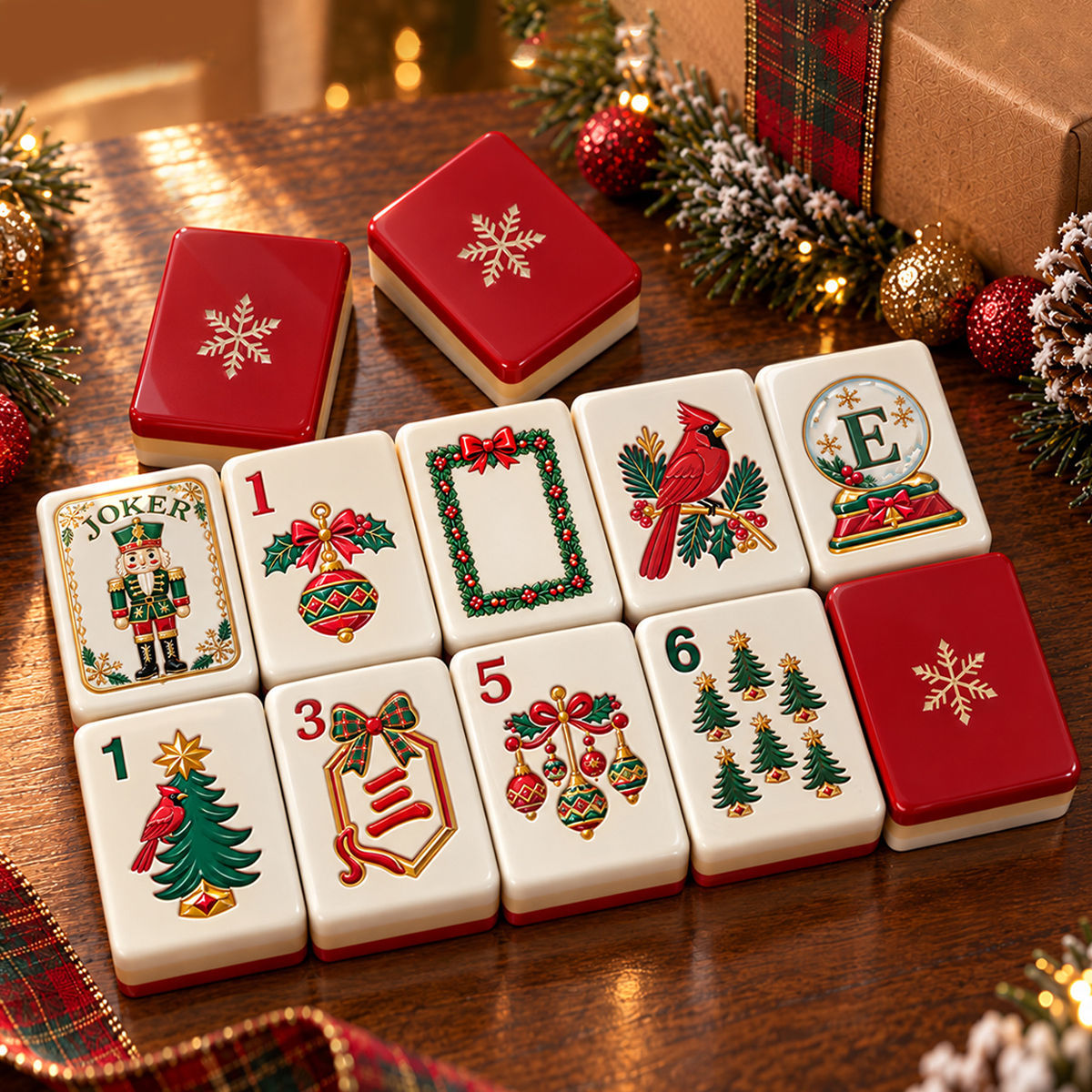
Classical Chinese mahjong uses 144 tiles: three suits (Bamboo, Character, Dot) numbered 1–9, four of each = 108 tiles; seven winds (N, E, W, S, center, white, red) = 28 tiles; and eight flowers and seasons = 8 tiles. A game begins with each player drawing 13 tiles, then one tile per turn; the first to complete a legal hand wins the round. Unlike American mahjong, classical Chinese allows chows (sequences of three consecutive numbers in one suit), requires no official hand card, and uses no jokers. Rounds take 20–45 minutes. You'll need a set of 144 tiles, a score sheet, and four players. The rules vary by region (Cantonese, Shanghai, Beijing styles differ subtly), but the core gameplay—draw, discard, watch for winning hands—is universal. Many Western players start with classical Chinese because the rules feel closer to poker or rummy: you read the board yourself rather than memorize annual hands. Our best-selling mahjong sets include classical Chinese tile designs if you prefer studying that variant before moving to American play.
What tiles make up a classical Chinese set?
A standard 144-tile classical Chinese mahjong set contains three identical copies of a core: three suits (Bamboo, Character, Dot) × nine ranks (1–9) × four copies = 108 suited tiles; seven winds (N, E, W, S, center, white, red) × four copies = 28 tiles; and eight flowers/seasons (each unique, not copied four times) = 8 tiles. Some sets add extra blank tiles for storage or practice. The artwork differs from American sets: Chinese tiles often show calligraphic characters and traditional imagery rather than the bold numerals and English letters of American designs.

How does play flow in one round?
Four players sit around the table. The banker (usually East Wind) draws 14 tiles while others draw 13 each from a shuffled wall. Starting with the banker, each player draws one tile from the wall and discards one tile face-up to the center. Other players watch for tiles they can use: if your discard matches someone's hand pattern, they call it and take it. Play continues until one player completes a winning hand (usually a specific combination of pungs, kongs, and/or chows) and declares mahjong. Scoring depends on the hand's complexity and any bonus tiles (flowers/seasons). A single round lasts roughly 20–45 minutes; a full session typically runs four rounds to allow each player a turn as banker.
What's the difference between chows and pungs?
A pung is three identical tiles (e.g., three 5 Bamboos). A kong is four identical tiles. A chow is a sequence of three consecutive numbers in the same suit (e.g., 3 Bamboo, 4 Bamboo, 5 Bamboo). This is the biggest rule difference from American mahjong: American play forbids chows and uses only pungs, kongs, and special American hands from the League card. Classical Chinese play requires chows for most winning hands. A typical winning hand in classical Chinese contains two or three chows, one or two pungs, and a pair. Learning to spot chow patterns—looking ahead to build 3-4-5 or 7-8-9 before your opponent—is the core skill that separates casual from strong players.
How do winning hands work?
Hand Type | Composition | Example | Difficulty |
Standard | One pair + four melds (pung/kong/chow) | Pair of 1 Dot + 4 melds | Beginner |
All pung | One pair + four pungs or kongs | Pair of East + four pungs | Medium |
All chow | One pair + four chows | Pair of Red Dragon + four chows | Medium |
Seven pair | Seven separate pairs, no melds | East + South + 5 Dot + 5 Crak + 6 Bam + Red + White | Beginner |
All terminal/honor | Tiles only from 1, 9, winds, dragons | (harder to complete) | Advanced |
Most classical Chinese regional variants allow winning on "open" hands (your melds were called from discards) or "closed" hands (you built everything yourself), with closed hands scoring higher. Some games allow self-drawn tiles (winning from the wall rather than someone's discard) to score double. Rules vary by locality; ask your group which variant they play before joining.
How is classical Chinese different from American mahjong?
American mahjong uses 152 tiles (including jokers), follows a fixed hand card issued each year, requires the Charleston tile-passing ritual, and forbids chows—you match NMJL hands exactly. Classical Chinese uses 144 tiles, has no jokers, requires no card, and lets you build hands freely using chows and pungs. American is a recognition game: you spot patterns on the card. Classical Chinese is a strategy game: you remember which tiles are out, guess what your opponents need, and build your own hand while blocking theirs. American games last 8–16 hands per session (2–3 hours); classical Chinese sessions run four fixed rounds. If you've played American mahjong and want a deeper learning curve, classical Chinese is a natural step—the tile suits are identical, but the gameplay is entirely different.

What should a beginner practice first?
Start by memorizing the three suits and their ranks (1–9 in each), then the seven winds and three dragons. Shuffle tiles face-down and practice building a hand: draw tiles, look for patterns, try to form two or three chows and one or two pungs. Once you spot chows easily, play a practice round with one or two friends (two-player is simpler than four). Agree on a scoring system—many beginners use flat points (winner gets 1 point per loser, doubled for closed hands) rather than complex multipliers. Watch online videos of regional variants to hear how players call tiles and settle scores. After five practice rounds, join a weekly group; most communities host beginner sessions at libraries, community centers, or cultural organizations.
What equipment do you need to start?
A complete classical Chinese mahjong set, a score sheet or notebook, dice (to determine the starting position and wall section), and paper for tracking melds called this round. Some players prefer a mat with a raised lip to prevent tiles sliding; others use a simple flat surface. If you want to eventually explore American mahjong too, our best-selling mahjong sets offer designs that work for both classical study and American play—the tile suits are the same, so one set teaches you suit recognition either way. A mahjong mat and set bag make storage and transport easier if you plan to visit games weekly.
🀄 Shop best-selling mahjong sets →
What mistakes trip up beginners?
Confusing "open" and "closed" hand scoring. If you call tiles from discards, your hand is open and usually scores less. Closed hands (built entirely from draws) score double or more. Confirm your group's scoring before the round starts. Holding chow-like tiles too long. If you have 3 Bamboo and 5 Bamboo, you need a 4 Bamboo; if no one discards one and you don't draw it after two rounds, those tiles are dead. Discard one and pivot to a pung you can complete faster. Forgetting which tiles are out. After the discard pile grows, remember what's been played—it tells you what's still in the wall. If three 7 Dots are already discarded, no one can draw a fourth, so a pung of 7 Dots from the wall is impossible. Ignoring your opponents' melds. If East called a chow of 5-6-7 Bamboo, East probably needs 4 Bamboo or 8 Bamboo to expand it. Don't discard either. These habits separate lucky draws from skilled play.
🎁 See our most-loved mahjong sets & accessories →
What to check before you buy
Tile size and weight. Classical Chinese tiles are typically smaller (around 0.75–0.9 inches) and lighter than American tiles. Test-hold one before buying if possible.
Character clarity. Ensure the suit symbols (Bamboo = stalks, Character = calligraphy, Dot = circles) are crisp and won't blur with handling.
Completeness. Verify the set includes all 144 tiles plus any storage blanks. Count: three suits × nine ranks × four copies (108) + seven winds × four (28) + eight flowers (8) = 144 total.
Case durability. If you'll transport the set weekly, a reinforced bag prevents tile cracking.
Regional variant. Some classical Chinese sets reflect specific regional play (Cantonese, Shanghai, Beijing style). Ask your group which they prefer before ordering.
✨ Find your Mahstead set — free US shipping →

FAQ
Can I use an American mahjong set to play classical Chinese?
Yes, with caveats. American sets have the same three suits and winds, so the core tiles match. However, American sets include jokers and may have no flowers, or different flower designs. You'll need to agree which American tiles substitute for flowers (or omit them). The tile counts differ: American is 152 tiles + 8 jokers; classical Chinese is 144 tiles. For serious classical Chinese play, a dedicated 144-tile set is clearer.
How long does it take to learn classical Chinese mahjong?
One afternoon for the tile names and basic hand patterns (chows, pungs, pairs). Two weeks of casual play to spot chows instantly and remember which tiles are out. Three months of weekly games to play competitively and adjust strategy mid-round. Most beginners enjoy it from day one, even if they don't win.
What regional variant should a beginner learn?
Cantonese (Hong Kong) mahjong is the most common in Western groups and has straightforward rules: one pair, four melds, win on closed or open hands, self-draw scores double. If your local group plays Shanghai or Beijing style, start with their rules. Online videos and strategy guides exist for each; pick the one your group uses.
Do I need to memorize all scoring multipliers?
No. Most beginner groups use flat scoring: winner earns 1 point per loser, doubled for closed hands or self-draw. Advanced scoring (hands multiplied by complexity, flowers, dragons, triples, etc.) comes after you can win hands consistently. Ask your group how they score before joining.
Can I play classical Chinese mahjong with two or three people?
Yes, but rules change. Two-player uses a modified wall and hand size; three-player is less common but playable with house rules. Standard four-player is the most popular because all four players stay engaged every turn. Start with four-player games to learn the standard flow.
Where can I find a beginner group to join?
Community centers, libraries, cultural organizations, and synagogues often host mahjong clubs and beginner sessions. Check Meetup boards and local Facebook groups for "mahjong" + your city. Many groups are welcoming to newcomers and teach rules on the spot. Call ahead to confirm they teach classical Chinese rather than American.


View More
View More
View More
