
Chinoiserie Mahjong Case: Which Style Fits Your Game?
Last updated: Nov 23, 2026
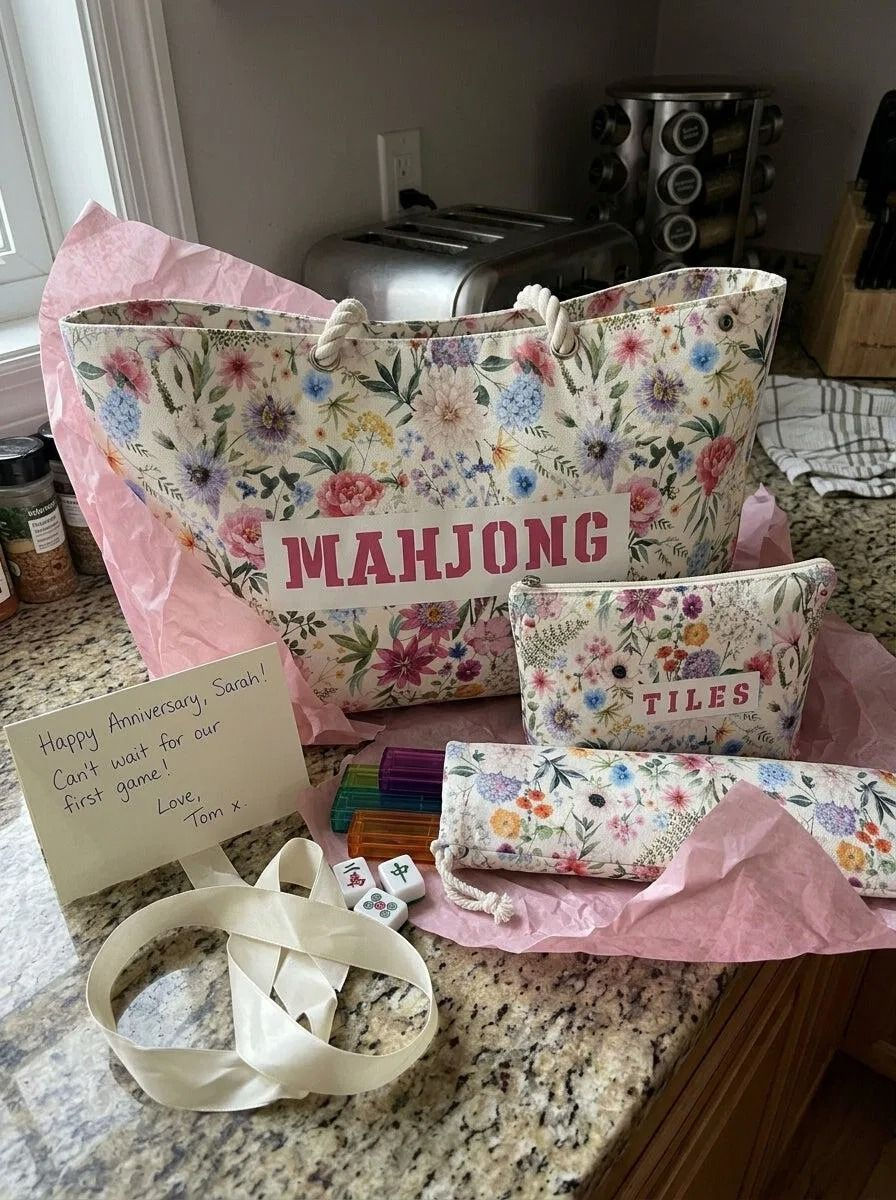
A chinoiserie mahjong case blends ornamental Asian artwork—landscapes, pagodas, birds, floral motifs—with functional storage for American mahjong sets. These cases range from decorative fabric drawstring bags (ideal for occasional players) to reinforced hardshell or embroidered carriers (for frequent travel or display). Most fit a standard 152-tile set with racks and mats; some hold dice and pushers too. Cost and durability depend on material: embroidered silk or brocade cases offer luxury but need careful handling, while canvas or polyester options balance protection and portability. Choose based on where you'll play—home-only sets need less reinforcement than cases that travel weekly to game nights—and whether you value aesthetics or pure durability.
What exactly fits inside a chinoiserie case?
A standard chinoiserie case holds one complete mahjong set (152 tiles plus 8 jokers), your mahjong racks with pushers, a mat or table cover, dice, and small accessories like scorecard holders. Internal compartments or zipped pockets keep tiles separated from racks so nothing shifts during travel. Measure your set's dimensions before ordering—acrylic tile sets are heavier than bone-bamboo—and confirm the case has reinforced handles or a shoulder strap if you're carrying it weekly to game night.
🀄 Shop best-selling mahjong sets →

How do chinoiserie designs differ from plain cases?
Chinoiserie cases feature hand-embroidered silhouettes, brocade panels, or printed artwork depicting classical Chinese or East Asian motifs: mountains, cranes, plum blossoms, dragons, or pagoda scenes. These are decorative and functional—they sit on a shelf or in a game room without looking like sports equipment. Plain polyester or canvas cases prioritize durability and washability but lack visual character. If your best-selling mahjong set is engraved with personal names or titles, a beautiful case turns the whole package into a gift-worthy ensemble rather than a utilitarian container.
What materials offer the best protection without damage?
Material | Best for | Durability | Care | Risk |
Embroidered silk or brocade | Display or occasional home play | Moderate; beautiful aging | Spot-clean, avoid moisture | Snagging, fading in sunlight |
Canvas with reinforced seams | Weekly travel | High; withstands drops | Machine wash cold, air dry | Creasing if overpacked |
Polyester with padded lining | Frequent transport | Very high; water-resistant | Wipe with damp cloth | Can feel cheap; less aesthetic |
Hardshell with velvet interior | Travel or storage | Highest; protects tiles | Dust occasionally | Heavy; takes up shelf space |
Canvas with reinforced seams suits players who travel to weekly games and need their set to survive car trunks and living-room closets. Silk cases are stunning but demand consistent climate control—avoid basements and attics where humidity and temperature swing. Polyester lined with felt offers a middle ground: durable, washable, and attractive enough for a coffee table.
🎁 See our most-loved mahjong sets & accessories →
Which chinoiserie case design speaks to your playing style?
Classic chinoiserie patterns fall into distinct categories. Landscape scenes (misty mountains, pagodas, bridges) suit players who view mahjong as a meditative ritual and want their case to reflect that calm aesthetic. Bird and flower motifs work well for players who host game night and want guests to see a living-room accessory, not storage. Geometric or brocade patterns appeal to minimalists—ornamental without being pictorial. Dragon or phoenix imagery resonates with players who know the cultural weight of these symbols in Asian design. Browse our travel bag collection to see which visual language matches your personality and your game room's décor.
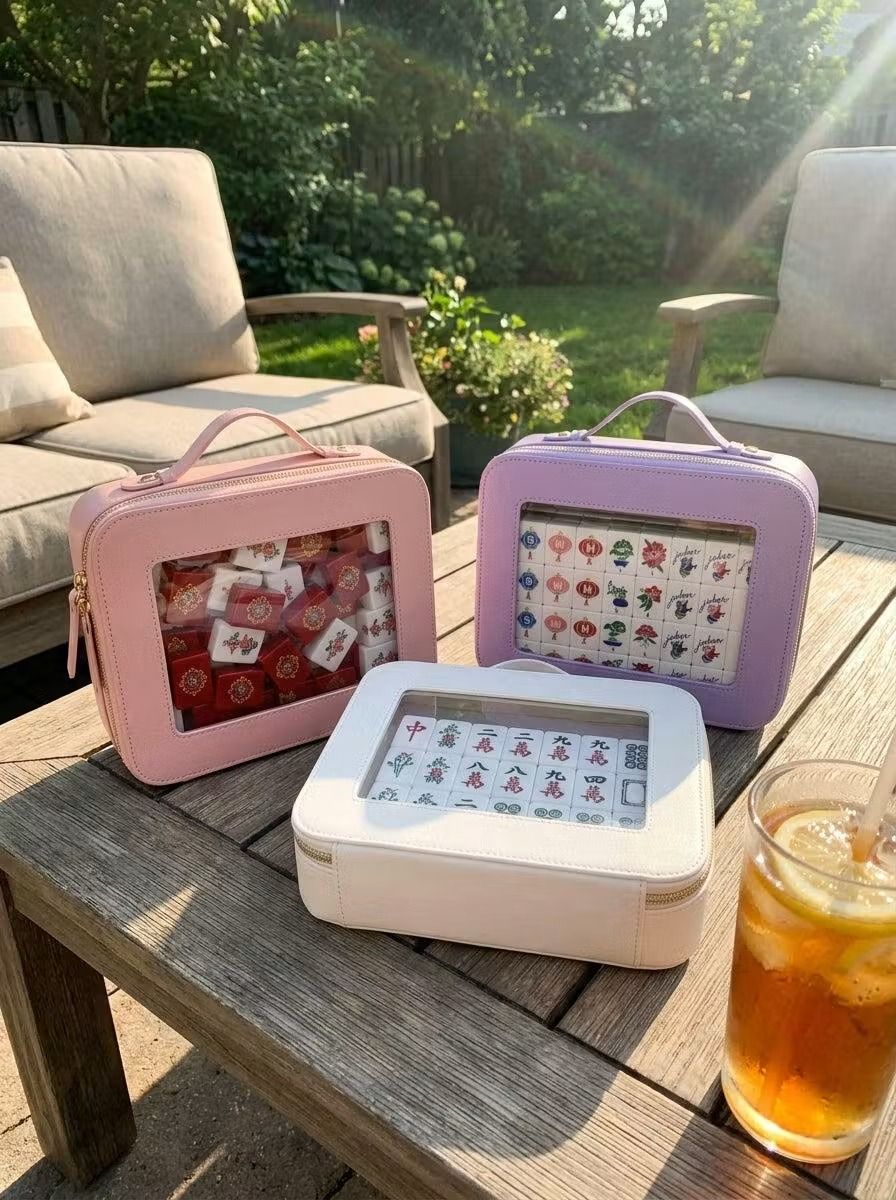
What's the difference between a case, a bag, and a mat cover?
A case is hard-sided or semi-rigid and stands alone; it protects tiles during travel and storage. A bag is soft-sided and portable—often with one large compartment or multiple pockets—ideal for carrying your whole setup to a friend's house. A mahjong mat cover is a flat or rolled sleeve for your playing surface alone, not the full set. Many players own one of each: a case at home for storage, a bag for travel, and a mat cover to keep dust off the playing surface between sessions. If you play the same location weekly, a single well-designed case may be enough. If you rotate between three houses or travel seasonally, a dedicated bag gives you flexibility.
What should you check before ordering a chinoiserie case?
Measure your set first. An acrylic American mahjong set with racks and pushers is bulkier than you might expect. Get the exact dimensions of your tiles (length × width × height), add 1 inch for cushioning, and compare to the case's interior. Confirm the lining—velvet, felt, or padded cotton—won't snag or dye onto light-colored tiles. Check handle or strap design; if you carry your set more than once a month, reinforced handles matter. Ask about zippers vs. buttons vs. drawstring—zippers offer security but can catch fabric; drawstrings are charming but less secure. Verify ventilation; silk cases in humid climates can trap moisture, so opt for canvas or polyester if your game room gets steamy. Plan for extras—if your case won't fit dice, a card holder, and your scoring pad, decide whether you'll store those separately or choose a larger case.
✨ Find your Mahstead set — free US shipping →
How does a chinoiserie case complement a personalized mahjong set?
When you buy an engraved American mahjong set—one with your family name, a game-night nickname, or a memorable year engraved on the tiles or rack—a beautiful case elevates that investment from thing you own to heirloom you cherish. The case becomes part of the gift narrative: someone receives not just tiles and a mat, but a complete, carefully curated ensemble. Chinoiserie designs feel intentional and thoughtful in ways plain cases do not. We've seen players gift their mothers or sisters a new set paired with a silk-embroidered case, and the recipient's face tells the whole story.

FAQ
Can I fit my mat inside a chinoiserie case, or should I store it separately?
Most cases have enough room for a folded mat plus your set and racks. If your case is tight, roll the mat and secure it with a strap outside the bag, or store the mat in a separate cover to keep it flat and prevent creasing.
Will a chinoiserie case protect my tiles from moisture and dust?
Yes, if it's well-constructed with a secure closure and padded lining. Avoid leaving it in direct sunlight or damp basements—UV and humidity are the real enemies. Canvas and polyester cases are more moisture-resistant than silk; check the fabric weight before buying.
What's the typical lifespan of an embroidered silk case?
With careful use—no overstuffing, spot-cleaning only, stored indoors in stable humidity—an embroidered silk case can last 10+ years and look more beautiful as it ages. Heavy travel or humid climates reduce lifespan. Canvas cases often outlast silk but won't develop the same patina.
Can I wash a chinoiserie case, or is dry-cleaning required?
Depend on material. Canvas with polyester lining can be gently machine-washed cold and air-dried. Embroidered silk requires spot-cleaning only; dry-cleaning may damage thread colors. Polyester bags wipe clean with a damp cloth. Always check the care tag before buying.
Should I buy a case before or after buying my mahjong set?
Buy your set first, measure it, then order a case. Tile dimensions vary slightly between manufacturers, and you want a snug fit—too loose and your tiles shift; too tight and you'll force the set in and risk damaging handles or seams.
Are there chinoiserie cases designed for specific mahjong variants (Chinese, Riichi, Hong Kong)?
Most chinoiserie cases on the market accommodate Western or American mahjong sets, as those dominate the travel case market. If you play Riichi or Chinese mahjong with different tile counts or sizes, measure your specific set before assuming a standard case will fit.


View More
View More
View More
