
Siamese Mahjong Terms and Glossary: A Player's Guide
Last updated: Nov 23, 2026
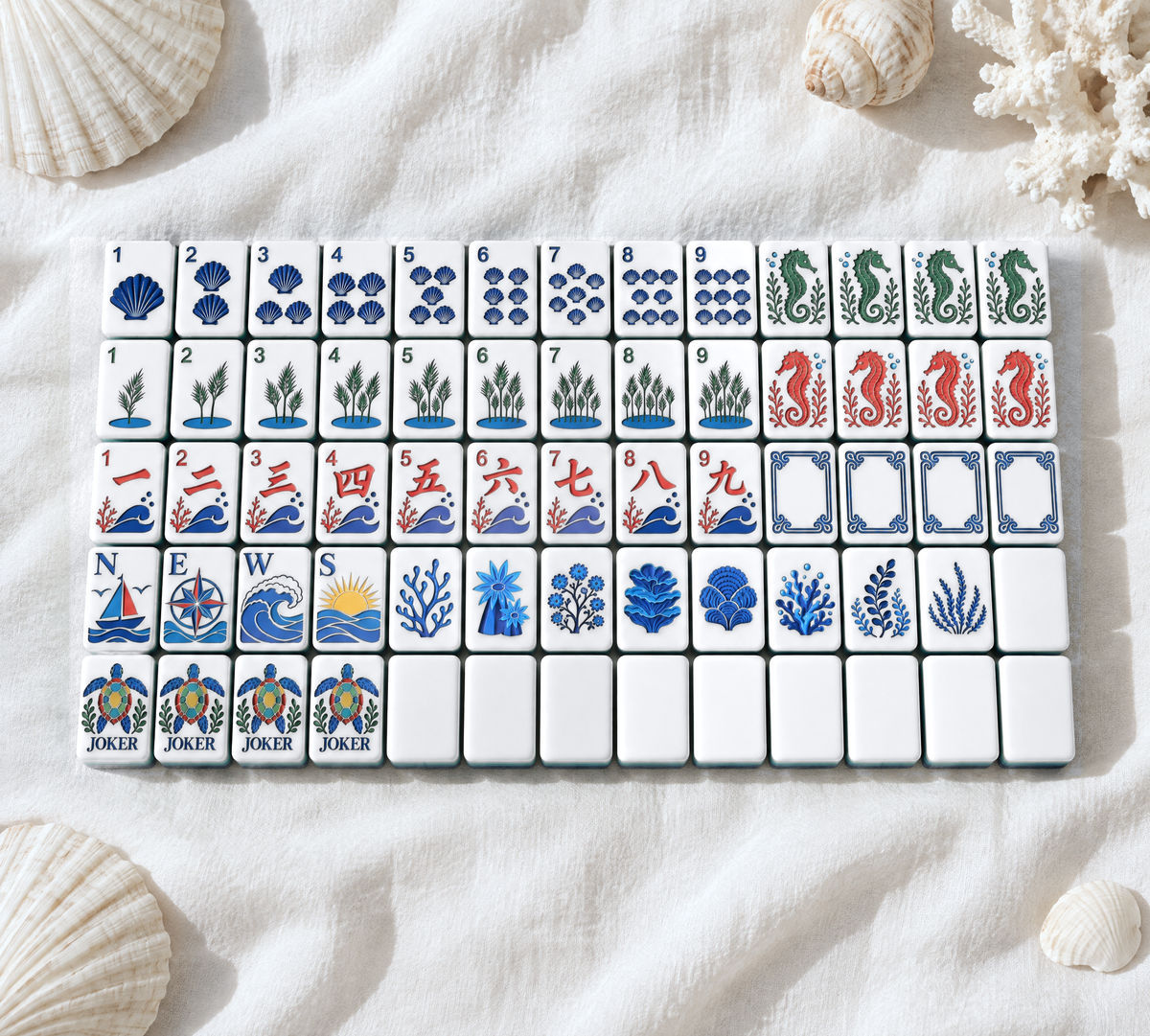
Siamese mahjong (also called Thai mahjong) uses 108 tiles—three suits of 1–9 (Bam, Crak, Dot), honor tiles (winds and dragons), and flowers—played with four players toward a fixed hand list unique to the region. Unlike American mahjong, Siamese play allows chows (sequences of three consecutive numbers in one suit), pungs (three identical tiles), and kongs (four identical), and jokers are used freely within melds. A game round consists of multiple hands until a player declares mahjong (a complete, legal combination). Key Siamese terms include pung (triplet), kong (quartet), chow (sequence), quint (five-tile meld), mahjong (winning hand), and loose tile (the draw). Scoring varies by hand type and typically rewards all-chow or all-pung combinations. If you're transitioning from American to Siamese play, expect fewer restrictions on melds but stricter hand composition rules; many players enjoy both variants with best-selling mahjong sets that include guides for multiple rule systems.
Siamese mahjong is a Southeast Asian variant with its own tile system, hand patterns, and scoring logic. Unlike American mahjong, Siamese play allows chows (sequences of three consecutive numbers in one suit), pungs (three identical tiles), and kongs (four identical), and jokers are used freely within melds. A game round consists of multiple hands until a player declares mahjong (a complete, legal combination). Key Siamese terms include pung (triplet), kong (quartet), chow (sequence), quint (five-tile meld), mahjong (winning hand), and loose tile (the draw). Scoring varies by hand type and typically rewards all-chow or all-pung combinations. If you're transitioning from American to Siamese play, expect fewer restrictions on melds but stricter hand composition rules.
What does "pung" mean in Siamese mahjong?
A pung is a meld of three identical tiles in one suit or honor group. In Siamese play, a pung must be exposed immediately and kept visible on the table. Pungs are fundamental building blocks; players collect them early and often. Unlike American mahjong, where a pung can only contain three matching tiles, Siamese players also work toward quints (five identical tiles) for higher scoring. A pung is always closed (drawn from your hand) or open (called from another player's discard).

How do chows work in Siamese mahjong?
A chow is a sequence of three consecutive numbers in a single suit—for example, 4 Bam, 5 Bam, 6 Bam. Siamese mahjong allows chows freely in winning hands, whereas American mahjong forbids chows entirely. You can expose a chow from a discard, and like a pung, it remains visible. Many Siamese hands reward all-chow combinations with bonus points. Valid chows always contain one suit; mixing suits (e.g., 5 Bam, 6 Crak, 7 Dot) is illegal. Mastering chow recognition helps you anticipate winning patterns faster.
What's the difference between Siamese and American mahjong terms?
Term | Siamese Meaning | American Equivalent | Key Difference |
Pung | 3 identical tiles | Pung (same) | Both require identical tiles |
Kong | 4 identical tiles | Kong (same) | Both require identical tiles |
Chow | 3-tile sequence (1-2-3, etc.) | Forbidden | American mahjong has NO chows |
Quint | 5 identical tiles | Quint (same) | Both score high; Siamese allows more |
Mahjong | Winning hand (any legal combo) | Mahjong (same) | Siamese allows chows; American does not |
Loose tile | Draw from wall after discard | Draw (similar) | Terminology differs; function identical |
Flower | Bonus tile (4 total in deck) | Flower (same) | Both count as bonus scoring |
🀄 Shop best-selling mahjong sets →
What does "kong" mean and how does it score?
A kong is a meld of four identical tiles. Siamese players may form a closed kong (drawn from hand) or open kong (called from a discard). When you form a kong, you draw a replacement tile from the end of the wall; this tile is called the loose tile. Kongs are high-value plays because they tie up four tiles in one meld, forcing opponents to adjust their strategy. Scoring for a kong depends on whether it was closed (higher points) or open (lower points), and whether the hand type (all-pung, mixed, etc.) qualifies for bonuses. Siamese rules often double or triple kong points compared to pung points, making them a turning point in any game.
How are flowers and winds used in Siamese mahjong?
Flowers are bonus tiles that do not appear in melds; when drawn, they are replaced immediately and score points. Winds (East, South, West, North) function as honor tiles that form pungs or kongs. A wind pung (three identical winds, such as three East) is legal and often scores. Dragons (Red, Green, White) also function as honors. In Siamese play, the prevailing wind (the round wind, e.g., East round) and your seat wind (your position) determine which wind melds score bonus points. For example, if the round is East and you are seated East, an East pung scores higher than a South pung. Understanding wind scoring is crucial because a single wind meld can swing the total by 10–20 points. Flowers and wind bonuses reward table position strategy in ways American mahjong does not.
🎁 See our most-loved mahjong sets & accessories →

What are the main scoring rules in Siamese mahjong?
Siamese mahjong scoring is point-based and adds up across melds, hand type, and bonuses. Each meld (pung, kong, chow, quint) carries a base score—kongs are worth more than pungs, and certain hand types (all-pung, all-chow, mixed) earn multiplier bonuses. Wind melds involving your seat wind or the prevailing wind double or triple their value. Flower tiles contribute fixed points per flower drawn. A winning hand total is compared against a minimum threshold; if your hand falls short, you cannot declare mahjong. Scoring shifts between players: in some rounds, the winner is paid by all three opponents equally; in others, the discarder (the player whose tile was used) pays the full amount. Siamese scoring demands mental math and strategy—you must track not only your own melds but also the table's prevailing wind and position rotations. Many players find Siamese scoring more transparent than American point-based systems because all multipliers are clearly stated in the hand guide.
What tiles are in a Siamese mahjong set?
A standard Siamese mahjong deck contains 108 tiles: three suits (Bam, Crak, Dot), each numbered 1–9 with four copies of each number (36 tiles per suit, 108 total); seven winds (four each of East, South, West, North, plus three blanks—though this varies by region); dragons; and flowers. Some sets sold for international play include jokers to help beginners, though classical Siamese play does not use jokers. If you're hosting a regular Siamese game and want durability plus the flexibility to play American mahjong too, consider a 160-tile set that includes both tile sets and a reference guide—these sets travel well and last through years of weekly games. Tile material (acrylic, bone, bamboo) affects grip and sound; acrylic is easier to clean and suits casual home play, while bone offers the traditional feel many Siamese players prefer.
What is a "loose tile" and when do I draw it?
A loose tile (also called a dead tile or replacement tile) is drawn from the end of the wall immediately after you form a kong. Here's the sequence: you declare your kong, show the four matching tiles, and then draw a replacement from the wall's far end before discarding. This rule prevents kongs from reducing your hand size; you always maintain 13 tiles in hand (plus your current draw). If the loose tile completes a quint with your four kongs, you can score bonus points. Loose tiles are critical for hand flow because they slow down play and give other players a chance to discard cards they need to abandon. Tracking loose tiles helps you count remaining tiles and adjust your strategy.
How do I transition from American to Siamese mahjong?
Start by learning that chows are legal in Siamese play—this is the biggest rule shift. In American mahjong, you memorize hands from the current year's card and pursue only those combinations. In Siamese mahjong, you build toward hand patterns (all-pung, mixed, all-chow) and score based on meld type and bonuses, not a predefined list. Spend one session as scorekeeper to watch scoring unfold; write down each meld and its point value. Ask experienced players to narrate their decisions aloud so you hear how they count kongs, wind bonuses, and flower multipliers. Join a Siamese game hosted at a community center or cultural organization if possible; peer teaching is faster than reading rules. Practice counting points on a sample hand (e.g., two kongs, two pungs, one chow, one flower, East seat in East round) to build fluency. Most players pick up Siamese basics in 2–3 games. Explore guides to variant rules to solidify patterns.
✨ Find your Mahstead set — free US shipping →
What to check before you buy a Siamese mahjong set
Tile count and composition: Confirm the set contains 108 tiles (or 120+ if jokers/blanks are added for flexibility). Check that it includes flowers and wind tiles labeled in English or your preferred language.
Tile size and weight: Siamese tiles are typically 1 to 1.25 inches per side. Hold a sample or compare images to verify they feel comfortable in your hand during an hour-long game.
Material: Acrylic sets are durable, washable, and affordable for casual play; bone or resin sets offer a heavier, more traditional feel but require careful storage.
Guides and references: Ensure the set includes a hand guide or scoresheet in English. Many sets sold for international play include both American and Siamese instructions.
Storage and travel: If you host games at different homes, confirm the set comes with a sturdy bag. Loose tiles shift during transport; padded bags or cases prevent chips and cracks.
Return and support: Buy from sellers who allow returns if you receive damaged tiles or if the composition doesn't match the listing.

FAQ
Is Siamese mahjong the same as Thai mahjong?
Yes, "Siamese" and "Thai" refer to the same game. Siamese is the historical term; Thai is the modern name. Both use 108 tiles, allow chows, and reward wind bonuses. Rules vary slightly by region and house.
Can I play Siamese mahjong with an American mahjong set?
Not easily. American sets contain 152 tiles with no chows and jokers; Siamese play needs 108 tiles without jokers and relies on chows. Buy or borrow a Siamese-specific set for accurate play.
What's the minimum number of players for Siamese mahjong?
Four players. Siamese mahjong is designed for four-player competition. Two- or three-player variants exist but are less common and require rule modifications.
How long does a typical Siamese mahjong game last?
One round (a complete set of hands at one prevailing wind) typically takes 45 minutes to an hour with four experienced players. A full session (four rounds, one for each wind) runs 3 to 4 hours.
What's a "quint" and why does it score so high?
A quint is five identical tiles. In Siamese mahjong, a quint scores 2 to 3 times more than a pung because it ties up a large portion of your hand in one meld. Quints are rare and highly rewarded.
Do Siamese mahjong rules change by country or region?
Yes. Thai, Malaysian, and Singaporean players use slightly different scoring systems and hand guides. Always ask your table's house rules before the first game, especially for scoring multipliers and wind bonuses.


View More
View More
View More
