
Chinese Official Mahjong Etiquette: Rules, Table Manners & Respect
Last updated: Nov 23, 2026
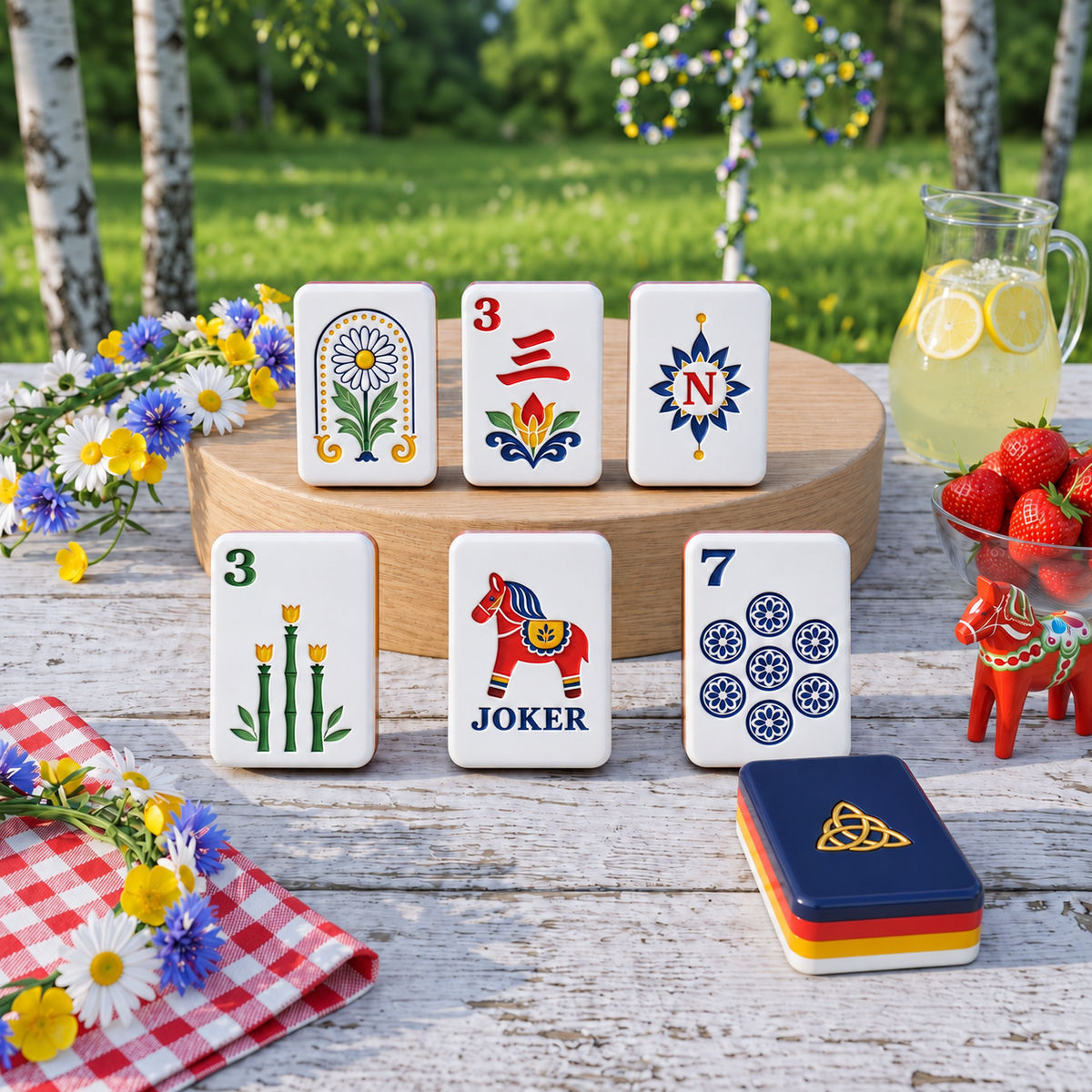
Chinese official mahjong etiquette encompasses three core areas: tile handling (shuffling with both hands, displaying tiles cleanly, never reaching across the table), conversation rules (silence during play, no coaching or signaling, no discussion of discards), and respect customs (bowing slightly to stronger players, deferring to the dealer, respecting the wall break). Games typically last 2–4 hours and involve 4 players. Unlike American mahjong, which uses hand cards and a fixed yearly catalog, Chinese mahjong plays with 144 tiles directly on the table, demands faster play, and enforces stricter silence. The etiquette codes vary slightly between Hong Kong, Taiwanese, and mainland styles but share the principle: the game itself is the conversation. Breaking these rules—touching another player's tiles, speaking strategy, or rushing the wall—marks you as careless or disrespectful. Our best-selling mahjong sets include options with acrylic tiles that glide smoothly across a quality mat, helping you handle and display tiles with the precision Chinese play demands.
Why does tile handling matter so much in Chinese mahjong?
In Chinese mahjong, your hands touch the tiles constantly—drawing from the wall, organizing your rack, discarding. Poor handling looks sloppy and signals disrespect to the game and other players. Grip tiles gently with fingertips, never slap or throw them. When drawing, use two hands: one to stabilize the wall, one to draw smoothly. Stack your discard in the center neatly in rows of six, never toss tiles randomly. Never touch another player's rack, wall section, or discard pile. These behaviors say you understand the game's gravity and value the other players' focus.

What conversation rules apply once play begins?
Once the game starts, play in near-silence. Do not comment on your hand, discuss strategy, or recap the last round. Do not coach other players or warn them of risks. Do not signal with facial expressions, body language, or exclamations. Do not ask about specific discards or explain why someone played a tile. Small courtesies—"your turn" or "dealer again"—are fine, but extended chat breaks concentration and is considered rude. If you're a guest or newer player, speak even less; observe how the regular players behave and mirror that restraint. Silence shows respect for the game's complexity and honors everyone's mental effort.
How do you show respect to the dealer and stronger players?
The dealer (typically determined by dice or rotation) has authority over disputes and sets the pace. Defer to their decisions without argument. If you're learning, acknowledge when stronger players teach you afterward, never during play. A subtle bow or nod when entering a serious game signals humility. If you lose decisively, accept the outcome gracefully. Do not blame luck, claim a mistake was unfair, or demand a replay. Strong players notice respect; they remember who handled defeat with dignity and will invite them back. Conversely, they avoid players who argue or excuse losses. In Chinese mahjong circles, reputation is built slowly and lost quickly.
What's the right way to break and manage the wall?
The wall—the stack of 144 tiles arranged in stacks of two tiles high—is broken by the dealer or a player they designate, based on a dice roll. The breaker pulls two stacks of two (four tiles total) from the designated point. Never reach across the wall or touch tiles before it's your turn to draw. Keep your section of the wall neat and easy to read; organize your own stack so the dealer can see remaining tiles clearly. If tiles fall or the wall becomes disorganized, quietly fix it without commentary. Fumbling the wall signals carelessness; smooth, practiced handling shows you've played many games.
How does rank or seating shape etiquette expectations?
Traditional Chinese mahjong assigns positions: East (dealer), South, West, North. East typically has seniority or stronger play; South sits to the right. If you're North or West (lower ranks), arrive early, set up without being asked, and defer to East's pacing. Do not challenge the dealer's calls or question scoring unless you're certain of an error. In friendly games, ranks matter less; in money games or club play, they're strict. Learn your group's hierarchy before sitting. If you're invited to join a regular table, ask beforehand what rank beginners occupy—this prevents awkward corrections mid-game. Respect shown upfront opens doors to more games with better players.
Etiquette Element | What to Do | What NOT to Do | Why It Matters |
Tile handling | Two-hand grip, gentle, neat discard stack | Slap tiles, grab from wall carelessly, reach across table | Signals discipline and respect for the game |
Conversation | Silence during play, soft courtesies only | Comment on hands, coach, discuss strategy, sigh heavily | Protects everyone's focus and fair play |
Dealer respect | Defer to their calls, follow their pace | Challenge them, argue scoring, rush them | Upholds game authority and smoothness |
Losing | Accept gracefully, ask to learn | Blame luck, demand replays, excuse errors | Builds reputation for returning games |
Wall care | Keep neat, draw smoothly, organize your section | Fumble tiles, touch before your turn, leave disarray | Prevents disputes and keeps play flowing |
🀄 Shop best-selling mahjong sets →

Are there etiquette differences between Hong Kong, Taiwanese, and mainland Chinese mahjong?
Yes, subtle but real. Hong Kong mahjong tends toward faster play and stricter silence; Taiwanese play is slightly more relaxed about brief conversation between hands; mainland play emphasizes dealer authority more rigidly. All three prioritize tile handling respect and no mid-game coaching. If you're joining a new group, ask quietly before play: "What style do you play, and what silence rule do you prefer?" This question alone signals that you respect their norms and are willing to adapt. Most groups appreciate newcomers who ask rather than assume. The core etiquette—gentle handling, focus, respect—transcends regional style.
What mistakes do Western or beginner players make most often?
Beginners often touch tiles they shouldn't (reaching across, handling other players' racks), talk too much during play, or misread the wall's organization. Western players sometimes treat mahjong like a casual card game rather than a tradition requiring presence. They may laugh loudly, replay hands out loud, or rush between games. Never eat or drink over the tiles; keep hands clean and dry. Never check your phone at the table. Never leave mid-game unless genuinely urgent. If you must step away, give 15 minutes' notice. Arriving late without warning is disrespectful. These aren't small things—they're the difference between being invited back and being quietly excluded. Chinese mahjong circles notice everything.
How do you prepare mentally for a serious game?
Arrive 10–15 minutes early so you can settle, use the bathroom, and quiet your mind. Do not rush to the table stressed from work or arguments; take a few breaths. Greet each player briefly and respectfully. Sit upright, keep your phone silent and away, and resolve to speak only when necessary. During games, focus entirely on the play—not on external distractions, past rounds, or personal matters. This mental discipline is as much etiquette as physical behavior; it shows you value the other players' time and the game's integrity. If you're tired or distracted, ask to sit out the next round. Playing poorly while mentally absent wastes everyone's time and is considered disrespectful.
🎁 See our most-loved mahjong sets & accessories →
What to check before you buy a set for serious play
If you're stepping into a Chinese mahjong circle, your equipment signals respect or carelessness. Look for sets with acrylic or bone tiles (not plastic) that glide smoothly and feel substantial; loose or rattling tiles suggest you don't maintain gear well. Check that all 144 tiles are present and undamaged—missing a single tile breaks the game. Pair your set with a quality mahjong mat that protects tiles and provides a clean playing surface; a worn mat looks unprofessional. Store your set in a sturdy bag or case so tiles don't shift or chip during transport. Clean tiles before each session if you're storing them long-term—dust or discoloration reads as negligence. A well-maintained set is an unspoken way of saying: "I respect this game and your time."
✨ Find your Mahstead set — free US shipping →

FAQ
Is silence strictly enforced, or can players chat between hands?
Chat is fine between hands or before play begins. Once tiles touch the table, silence is expected. Most groups allow minimal speech during the game (announcing tile draws, confirming dealer), but strategy discussion or commentary on play is off-limits. If in doubt, watch the table's rhythm and match it.
What happens if I accidentally break an etiquette rule?
In casual play, a polite correction or a knowing glance may follow. In serious or money games, repeat violations can result in exclusion. Own minor mistakes quietly and move on. Never make excuses. Serious violations (touching another's tiles repeatedly, loudly coaching) earn warnings; players may ask you not to return.
Should I wear formal clothing to a Chinese mahjong game?
No, but wear clean, neat clothes—nothing stained or torn. Avoid loud patterns or excessive jewelry that jingles. Comfort is fine; you'll sit for hours. Clean hands and short fingernails are more important than formal dress; they allow smooth tile handling and signal respect for hygiene.
How do I learn etiquette if I don't have a mentor in the game?
Watch an experienced group play for 20 minutes before joining. Ask the dealer: "Is there anything I should know before I play?" Read brief guides on Hong Kong or Cantonese mahjong rules. Most importantly, observe silence, handle tiles gently, and avoid speaking unless spoken to. Players forgive honest effort in a newcomer who shows humility.
Does etiquette change if money is involved?
Yes, significantly. Money games enforce stricter silence, faster play, and zero tolerance for rule disputes. Tile handling becomes even more critical because stakes raise suspicion of carelessness or foul play. If you're new to money games, ask the dealer how scoring and disputes are resolved beforehand. Never join a game where rules are unclear.
What's the best etiquette for declining a game invitation?
Decline politely and promptly: "Thank you for inviting me, but I can't make it this week. I hope to join you next time." Do not make excuses or over-explain. If you decline repeatedly, you signal disinterest; players stop asking. If you accept and then cancel last-minute, you've broken trust. Respect people's time by confirming early or declining early.


View More
View More
View More
