
Chinese Official Mahjong Winning Hands: Rules & Examples
Last updated: Nov 23, 2026
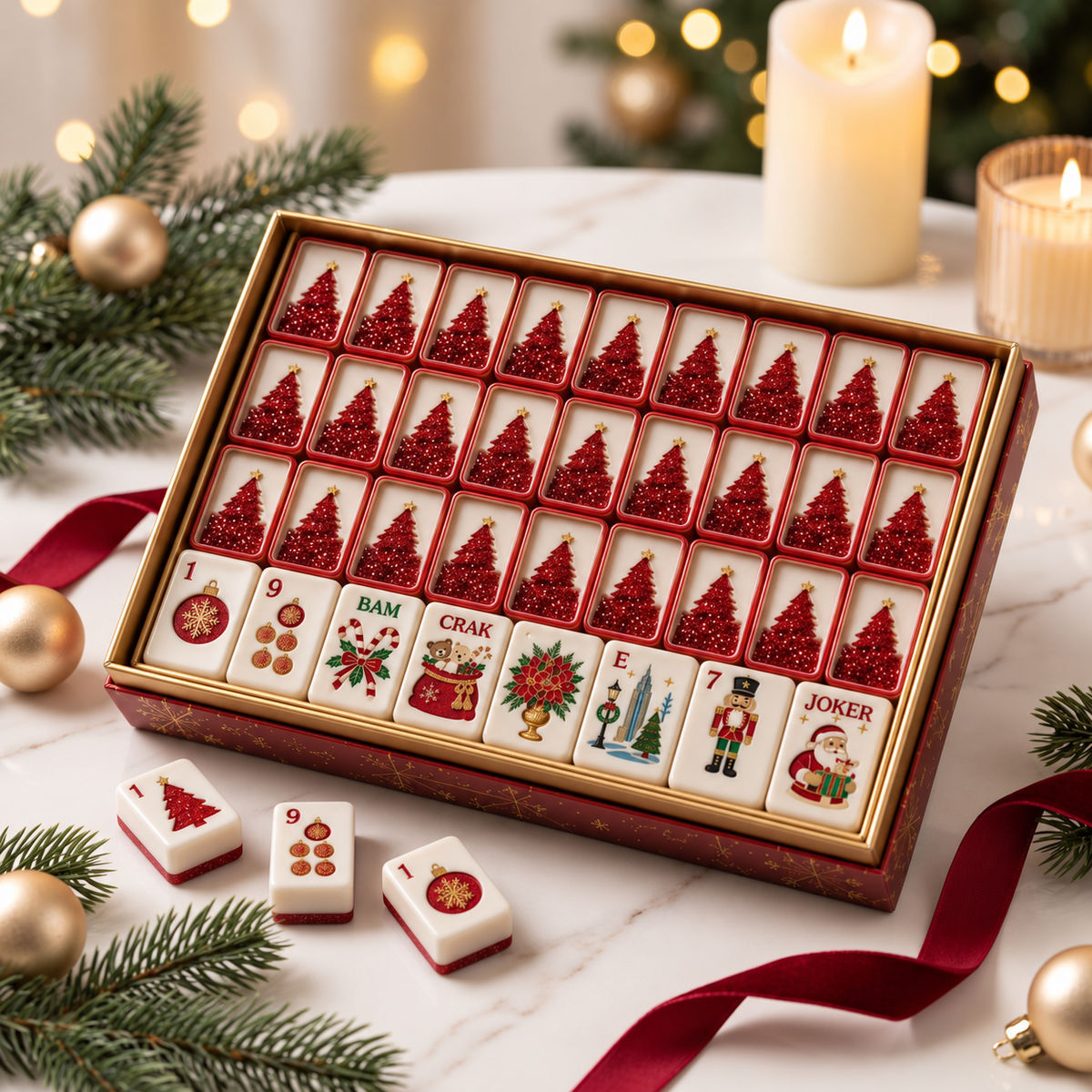
Chinese official mahjong (also called "Chinese Classical" or mainland standard) recognizes winning hands built from four melds (each a pung, kong, or chow/sequence) plus one pair—totaling 14 tiles. A chow is three consecutive numbers in one suit (e.g., 3–4–5 Bams); a pung is three identical tiles; a kong is four identical tiles. You win by drawing or calling discard to complete the 14th tile. The hand must follow a pattern listed on the official scoring table; not all valid meld combinations score. Scoring depends on hand type (all simples, all terminals, mixed types) and multipliers like "all chows" or "outside hand." Unlike American mahjong, chows are core to play—you call them openly—and jokers do not exist. The variant is widespread in China, Taiwan (with local rule variants), and online platforms; it differs fundamentally from Hong Kong, Riichi, and American rules, each with their own meld structures and winning logic.
What tiles are used in Chinese official mahjong?
Chinese official sets use 108 tiles: three suits (Bams, Craks, Dots) numbered 1–9, four copies each (36 per suit) = 108. Some sets include Winds (4 copies each of North, East, South, West = 16 tiles) and Dragons (usually Red, Green, White = 12 tiles), making 136–144 total, but the core playable set is 108. Honor tiles (Winds, Dragons) and terminal tiles (1s and 9s) carry higher scoring value in special hands. Flowers and seasons appear in some regional variants but are optional. There are no jokers in Chinese official mahjong—every tile is a fixed rank and suit.

How do melds and sequences work differently from American rules?
In Chinese mahjong, a chow (sequence) is three consecutive tiles in one suit—e.g., 3–4–5 Bams, Red Dragon–Green Dragon–White Dragon (in Honors), or 7–8–9 Dots. Chows are called openly when a discard matches; you expose them face-up on the table. Pungs (three identical tiles) and kongs (four identical) are also exposed. Crucially, a pair cannot be a sequence—the final winning pair must be two identical tiles. This differs sharply from American mahjong, where chows do not exist; you build only from pungs, kongs, quints, and sextets, and jokers substitute freely in exposed melds. Chinese melds follow rigid positional rules: a chow must form in numerical order, and exposed melds cannot be rearranged. In American play, you hold concealed tiles and expose only complete, identical groups—no sequences ever—and jokers bind the meld.
What patterns make a legal winning hand?
A legal winning hand in Chinese mahjong combines four melds and one pair. The simplest pattern is "no honors"—all four melds and the pair use only numbered tiles (1–9 in each suit). A stronger hand is "all chows"—all four melds are sequences; this scores higher. "All pungs" means all four melds are three-tile groups (no sequences). "Dragon hand" uses one or more Dragon tiles; "wind hand" uses one or more Wind tiles. Mixed hands blend different meld types. Rarer patterns include "seven pairs" (seven pairs instead of the standard four melds + pair structure—regional variant), "thirteen terminals," and "all simples" (only 2–8, no 1s or 9s). Every pattern has a fixed point value on the official scoring chart. Not every meld combination is legal; the hand must match a listed pattern. For example, two chows in one suit and two chows in another, plus a pair, is legal; but three melds from one suit and one from another may not score under certain systems.
How is scoring calculated?
Chinese official mahjong scoring uses a base point system with multipliers. A basic hand—any four melds plus a pair that contains no special features—earns 1 point (often worth one unit of currency or chip value agreed beforehand). Melds with terminals and honors earn 2 points each; an "all chows" hand doubles the base. A hand with no terminals or honors (all simples) earns higher multiplier status. Scoring accelerates: "all terminals and honors," "big four winds," "all dragons," and "all green" (using only Green Tiles in special sets) may be worth 4, 8, or 16+ points. Some hands are "limit hands"—they cap at maximum payout (often 8 or 16 points per player). A winning player collects from all three opponents. Payments can also be scaled by dealer status: the East player often pays or receives double. Exact multipliers vary by region and table—Taiwan, mainland China, and overseas communities use subtly different official charts. Always agree on scoring and dealer role before play.
How does winning by draw vs. call differ?
In Chinese mahjong, you can win by self-draw—drawing from the wall and completing your hand without a call. Self-draw often earns a bonus (e.g., +1 point) because you took no help from discards. You can also win by calling a discard—another player discards the tile you need to complete your hand, you declare "win," and take it to finish. Calling discard is legal only if the tile completes one of your four melds or the pair. If you call too early or incorrectly (e.g., calling on a tile that doesn't complete a legal pattern), you incur a penalty or forfeit the win. Speed matters: the first player to claim the discard wins; if multiple players want the same tile, dealer privilege or table order determines who takes it. Some variants allow "robbing" the kong—if another player draws the fourth tile to complete a kong, you may declare win if that tile completes your hand. Self-draw is often safer because no opponent can interfere; calling relies on reading discards and table flow.

How does Chinese mahjong differ from American, Hong Kong, and Riichi variants?
Aspect | Chinese Official | American | Hong Kong | Riichi (Japanese) |
Tile count | 108 (+ optional Honors) | 152 + 8 jokers | 108 (+ Flowers) | 136 |
Chows/Sequences | Yes, called openly | No chows ever | Yes, called openly | Yes, sequences in hand |
Jokers | None | 8 jokers, substitute freely | None | No jokers |
Melds exposed | Pung, Kong, Chow | Pung, Kong, Quint, Sextet only | Pung, Kong, Chow | Limited exposure |
Winning pair | Must be identical tiles | Must be identical tiles | Must be identical tiles | Must be identical tiles |
Drawing tiles | One player draws per turn | One player draws per turn | One player draws per turn | One player draws per turn |
Point multipliers | Base + pattern multipliers | Fixed card-based hands | Complex scoring system | Yaku (hand type) multipliers |
Card/hand reference | Official government chart | National Mah Jongg League card (annual) | Regional house rules | Yaku reference chart |
American mahjong requires the current year's National Mah Jongg League card to play—hands come only from that card, and you hold tiles concealed until you expose complete melds. Jokers appear in every American set and can substitute in any exposed pung, kong, or longer meld. Riichi (Japanese) mahjong emphasizes concealed hand-building and betting rounds; you declare "riichi" (ready state) before winning. Hong Kong rules allow calling chows but use a faster-paced turn system and more aggressive scoring. Chinese official rules focus on pattern matching from a static scoring table and balance self-draw vs. called wins equally.
What do you need to start playing?
For Chinese official mahjong, you need 108 tiles minimum (36 per suit: Bams, Craks, Dots, numbered 1–9). A table or mat to hold tiles is helpful; mahjong mats protect tiles and define player spaces. Many players use mahjong racks with pushers to organize their hand and shield tiles from view. You'll also want a score sheet or chip set to track points. If you plan to play Chinese, Hong Kong, and American variants at the same table, a full 160-tile best-selling set gives you enough tiles for any variant and spares for damage or loss. A travel bag or case keeps everything organized if you move games between venues.
🀄 Shop best-selling mahjong sets →
Common mistakes to avoid
Mixing hand types. Beginners sometimes believe any four melds plus a pair is a win. Not so—your hand must match a named pattern on the official scoring table. Always check the chart before declaring win.
Calling chows incorrectly. Once you call a chow and expose it, you cannot change the meld order. If a discarded 5 Bam can complete 3–4–5 or 4–5–6, decide before calling; wrong choice may invalidate your hand.
Forgetting about dealer status. East player (dealer) often pays or collects double; non-dealers pay or receive single. Always clarify dealer role and payment direction before the game.
Ignoring regional rule variants. Mainland, Taiwan, and overseas communities use slightly different scoring tables and winning patterns. Agree on which official system you're using before play—don't assume all tables follow the same rule.
Exposing melds too early. Unlike American mahjong, where concealment is enforced, Chinese rules allow more flexibility. However, exposing a meld commits you to that grouping; if you later realize it was wrong, penalties apply.
Confusing self-draw bonus. A self-drawn winning tile often scores 1 point higher than a called win; remember to claim the bonus if you draw your winning tile.
Which variant should you play?
If you play weekly with the same group and have an established rule book, stick with it—consistency beats switching systems mid-season. If you're hosting players who know different variants, agree on one for the evening. Explore how to play American mahjong if your group focuses on the NMJL card; read about mahjong variants if you're curious about switching. Chinese official is ideal for purists who enjoy pattern recognition and minimal equipment fuss; American is best for players who like hidden tiles and joker flexibility. Hong Kong suits fast-paced, social play; Riichi appeals to competitive players who study hand probability and betting strategy. Most serious players learn multiple variants—it sharpens your tile sense and opens doors to new game groups.
🎁 See our most-loved mahjong sets & accessories →
Before you buy a set for Chinese mahjong
Tile count: Verify you have at least 108 playable tiles. Some sets advertise 160 or more—that includes spares and works fine.
Honor tiles: Check whether the set includes Winds and Dragons. Some Chinese sets do; some don't. If your group uses them, confirm before purchase.
Tile readability: Chinese numerals, Arabic numerals, or pictographs? All are valid; choose what your group prefers. Acrylic tiles are durable and easy to clean between games.
Storage and transport: A set larger than 108 needs room. Evaluate bags and cases for regular transport, or a sturdy mat bag if you play at home.
Rule agreement: Before buying, confirm which official scoring system your group uses (mainland vs. Taiwan). Rules differ enough to affect meld values.
✨ Find your Mahstead set — free US shipping →

FAQ
Can you use a set with 144 or 152 tiles to play Chinese mahjong?
Yes. Chinese official play uses only 108 tiles per game; extra tiles are spares. A larger set gives you backup tiles if any crack or chip. Mahstead ships 160-tile sets with extra tiles for this reason—peace of mind across all variants.
Do I need jokers to play Chinese mahjong?
No. Chinese official mahjong has no jokers. If your set includes them, simply set them aside. American and some Hong Kong variants require jokers; Chinese does not.
How long does a typical game last?
A single hand takes 10–20 minutes; a complete game (often four hands, one per player as East/dealer) takes 60–90 minutes. Speed depends on player experience and table pace.
What's the scoring limit in Chinese mahjong?
Most tables cap a hand at 8 or 16 points maximum. Some special hands ("all dragons," "big four winds") may exceed that cap if regional rules allow. Always agree on limit before play.
Can I learn Chinese mahjong if I only know American?
Absolutely. The core concept—four melds plus pair—is the same. The main differences are chows (sequences are legal and called), no jokers, and a different hand reference chart. Most American players pick it up in a few games.
Which set should I buy if I want to play multiple variants?
A 160-tile set works for Chinese, American, Hong Kong, and most others. Confirm your group's preference, but a larger set lets you switch variants without buying again.


View More
View More
View More
