
Chinese Mahjong FAQ: Rules, Tiles, and How It Differs from American
Last updated: Nov 23, 2026
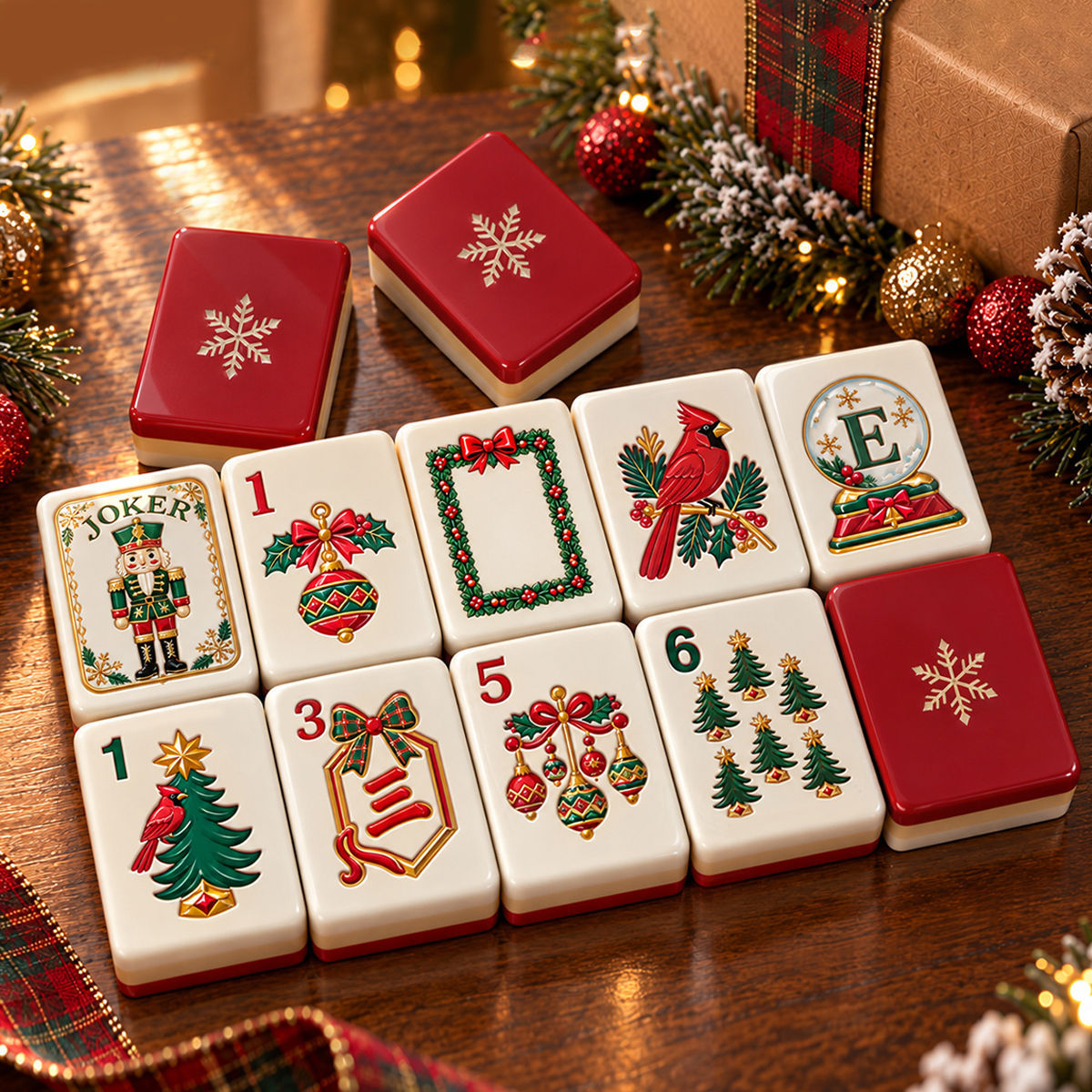
Chinese mahjong uses 136 tiles (108 number tiles in three suits—Bams, Craks, Dots—1–9 with four copies each; 16 winds; 12 dragons; and no flowers or jokers). You form melds by drawing and discarding, calling sequences (chows: three consecutive numbers), pungs (three identical tiles), and kongs (four identical). The key difference from American mahjong: you win by completing a hand of four melds and a pair, and scoring depends on the melds themselves, not pattern matching to a card. Chows are called openly and count toward your hand; jokers don't exist. A complete hand takes 14 tiles (13 in hand plus one drawn on your winning turn). Games run 2–4 hours. Chinese mahjong suits different groups because sequences create variety in strategy and speed; many players find it more flexible than the rigid American card system.
What tiles are in a Chinese mahjong set, exactly?
Chinese mahjong contains 136 tiles: four each of Bams 1–9, Craks 1–9, Dots 1–9 (108 tiles total), four each of East, South, West, North winds (16 tiles), and four each of Red, Green, and White dragons (12 tiles). No flowers, no jokers, no blanks—every tile has a twin three times over. The set comes in a box or case; tiles are plastic, bamboo, or bone and usually stack in racks with grooves. This fixed tile count means games are always balanced and predictable, unlike American mahjong's variable hand patterns.

How does winning work in Chinese mahjong?
You win when your hand contains four melds (pungs, kongs, or chows) plus one pair, totaling 14 tiles. A chow is three consecutive numbers in the same suit—for example, 3 Bam, 4 Bam, 5 Bam. A pung is three identical tiles (e.g., three 5 Dots). A kong is four identical tiles, kept concealed or declared openly depending on scoring rules. The last tile comes from the wall (drawing) or from another player's discard. Scoring rewards the combination and type of melds: all pungs, all terminals and honors, dragons, self-drawn tiles—each has point values. The winner collects payment from all three other players (or three players if solo scoring).
Can you play Chinese mahjong with fewer than four players?
Yes, but the rules change. Three-player Chinese mahjong removes the East wind and one set of all other tiles (keeping 108 tiles total), shortens hands to 11 tiles, and often speeds up. Two-player variants exist but are rare and awkward because the draw pile and discard dynamics collapse. Most groups default to four players; if one sits out, rotate so no one dominates dealer position. Some clubs run two simultaneous tables and swap a player between rounds for fairness.
What's the main difference between Chinese and American mahjong?
Feature | Chinese Mahjong | American Mahjong |
Tile count | 136 tiles | 152 tiles (+ 8 jokers) |
Sequences allowed | Yes; called chows, scored as melds | No; only pungs, kongs, quints, sextets |
Winning rule | 4 melds + 1 pair (14 tiles) | Hand must match the current year's card pattern |
Jokers | None | 8 used as wild tiles in exposed melds |
Scoring system | Point values for meld types (e.g., all honors, mixed) | All-in payments; hand category determines who pays |
Card dependency | Optional reference sheets; rules are memorized | Mandatory annual card; no hand is valid without it |
Game length | 2–3 hours (3–4 hands) | 2–4 hours (4 hands); depends on skill |
Typical round | 4 players, dealer rotates | 4 players, winds rotate |
Chinese mahjong emphasizes flexibility and speed because you're building melds in real time, while American mahjong is pattern-recognition: you memorize the card, pursue one hand at a time, and only play when you can win. Neither is harder—just different.
How do you keep score in Chinese mahjong?
Scoring varies by ruleset (Cantonese, Taiwanese, Riichi), but the principle is consistent: melds have base points, and winning adds multipliers (called "doubles" or "fanulas"). For example, a hand of all pungs might be worth 2 points; winning by drawing your own tile doubles it; a hand of all terminals and honors is worth 8 points. After a hand ends, the winner collects from all three other players. Some groups use chips; others tally on paper. A few sets include a scoring app or manual. The real trick is learning which combinations score high—that comes from playing 5–10 hands and taking notes. Unlike American mahjong's all-in betting structure, Chinese mahjong's per-meld scoring rewards defense and reading discards early.
Do you need a special card to play Chinese mahjong?
No. Chinese mahjong rules are memorized or referenced in a small printed chart you keep at the table—there's no annual card like American mahjong requires. New players often start with a cheat sheet listing chow types, pung bonuses, and winning combinations, but within a few games you'll internalize the patterns. The ruleset itself is centuries old and standardized within regional variants (Cantonese, Taiwanese, Hong Kong). You don't need to buy a new card every spring.

What's a "kong" and when do you declare it?
A kong is four identical tiles—for example, four 7 Craks. You declare a kong immediately when you draw it or when it's completed in your hand after another player's discard. A concealed kong (four identical tiles you drew yourself, kept hidden) earns bonus points; an open kong (declared after taking a discard or completing an existing pung with a fourth tile) scores less but is still valuable. Once you declare a kong, you draw a replacement tile from the end of the wall, maintaining your hand at 13 tiles until you win. Kongs are crucial to high-scoring hands and are among the first melds players compete for.
What happens if two players try to win on the same discard?
The player closest to the discarder in turn order wins. For example, if East discards and South, West, and North all need that tile, South (the next player clockwise) claims it. This rule prevents deadlock and keeps games fast. If nobody calls the tile, it's discarded into the middle and play continues. In some regional rules, a player closer to winning gets priority, but the standard rule is positional—nearest to the discarder wins first.
🀄 Shop best-selling mahjong sets →
Where do beginners trip up when learning Chinese mahjong?
Confusing chows with pungs: New players sometimes think 1–2–3 and 4–5–6 are interchangeable. They're not. A chow is always three consecutive numbers in one suit; a pung is always three identical tiles. Both are melds, but you build and score them differently.
Miscounting your hand: If you have 13 tiles in hand and draw one more on your turn, you must discard one to stay at 13. Forgetting to discard leaves you at 14, which is a winning hand—only if all four melds are complete. Otherwise, it's a dead hand and your turn is forfeit.
Holding tiles too long: Unlike American mahjong, where you hold all 13 tiles visible, Chinese players keep some tiles facedown until a meld is complete. This risks confusion about what you actually have. Write down your melds as you declare them.
Discarding dangerously: In the early game, every discard teaches opponents what you don't want. If you throw three Bams in a row, everyone knows you're not building a Bam chow. Discard honors and extreme numbers (1s and 9s) early unless you're committing to a hand.
Missing dead tiles: Once a tile is called in a kong, four copies are gone. If you've seen three 5 Dots discarded, the fourth is in someone's kong or undrawn. Plan around it.
How to choose your first Chinese mahjong set
If you're learning Chinese mahjong or hosting weekly games, buy a set that's easy to read and durable. Look for tiles with clear numbers, large suit symbols (Bam tree, Crak character, Dot circle), and winds/dragons marked in contrasting colors. Acrylic or plastic tiles last longer than paper; bamboo with bone facing is classic but fragile in travel. A complete best-selling collection includes the tiles, a mat, racks, and a carry case—everything you need to host.
For hosting, we recommend:
Set: 136-tile Chinese mahjong set with racks (easier than spreading tiles on the table).
Mat: A felt or cloth mat with edge borders to contain tiles and noise; helps with game pacing.
Case: A travel bag or hard case if you move the set between venues.
Dice: Two or three dice for wall-draw randomization.
What to check before you buy
Tile thickness: Thicker tiles (wood-core) feel better but cost more. Plastic is fine for casual play.
Rack fit: Ensure racks accommodate all 136 tiles comfortably; crowded racks cause misdeals.
Case durability: If you travel monthly, a padded bag or hard case is worth the investment; loose tiles in a box get damaged.
Readability: Older sets have small characters. Modern sets print large, clear suit symbols and numbers.
Weight: Lighter is easier to carry; heavier (bone/bamboo) feels premium but demands extra care.
Mahstead's engraved mahjong sets offer personalization—great if your game group has a standing name or you want to mark your set in a crowded venue. We also offer mahjong racks with pushers that work with standard 136-tile counts, and travel bags designed to protect tiles during transport.
🎁 See our most-loved mahjong sets & accessories →
Regional variants: where Chinese mahjong differs within itself
Cantonese mahjong (Guangdong province) is the most common export version. It emphasizes pairs, honor tiles, and complicated bonus combinations. Games are fast and competitive.
Taiwanese mahjong adds more melds (like seven pairs) and allows simpler hands. It's gentler for learners and older players.
Hong Kong mahjong (similar to Cantonese) rewards all-pung hands and "self-drawn" wins heavily. Scoring is more aggressive.
Riichi mahjong (Japanese variant) introduced the "ready hand" announcement—you declare readiness and other players can't change discard strategy. It's heavily tournament-standardized.
Each variant uses the same 136 tiles and four-player format, but scoring tables and allowed hands differ. Before joining a group, ask which ruleset they follow—most casual clubs default to Cantonese, and books or charts are available for free online.

FAQ
Can you play Chinese mahjong with American mahjong tiles?
No. American sets have 152 tiles including flowers and jokers; Chinese is 136 with no flowers or jokers. The tile counts and suits are different. You'd need a dedicated Chinese set.
How long does one game of Chinese mahjong take?
One hand averages 15–30 minutes depending on skill; a full game is 3–4 hands, so 60–120 minutes. Competitive play is faster; casual groups take breaks and chat, so 2–3 hours is typical.
If I draw a tile and don't want it, can I put it back?
No. Once drawn, it's in your hand. You must discard one tile to stay balanced. This is final and cannot be reversed.
What happens if nobody wins after all tiles are drawn?
The hand is a draw or "no winner." No one pays. Dealer stays and plays again, or the turn passes depending on house rules. Most groups pass the dealer role to keep games fair.
Is Chinese mahjong harder than American?
Different, not harder. Chinese rewards real-time strategy and pattern recognition (building melds on the fly); American rewards memorization of one card and single-hand pursuit. Choose based on whether you prefer flexibility or structure.
Can I play Chinese mahjong online or on an app?
Yes. Apps exist for Cantonese, Taiwanese, and Riichi mahjong, but they're best as learning tools. In-person games are much faster and more social—most players prefer the physical tile feel and face-to-face reading. ✨ Find your Mahstead set — free US shipping → --- ## Next steps: host your first Chinese mahjong game 1. Buy or borrow a 136-tile Chinese set from a local Asian market, or order online. Check tile readability and case durability. 2. Learn one ruleset (Cantonese is easiest for starters). Grab a cheat sheet or join a free beginner session at a community center or club. 3. Invite four players (or three if you can't fill the table). Set a time and venue—someone's home works fine. 4. Print a scoring reference and set it where everyone can see. Have paper and a pen to tally points. 5. Play three hands your first session. Don't worry about perfect play; focus on learning the rhythm—draw, play, discard, repeat. 6. Schedule a second game within a week while memory is fresh. After 5–10 hands, the flow clicks. Many cities have mahjong clubs or meetup groups you can find through community centers, libraries, or online forums. Local Asian cultural associations often host open tables for beginners; some charge a small fee per session, others are free. If you're hosting regularly, invest in a mat and a case—they transform a casual game into something comfortable and repeatable. With a dedicated set, you'll host weekly games within a month. ---


View More
View More
View More
