
Chinese Official Mahjong Lessons Online: Where to Learn & What Works
Last updated: Nov 23, 2026
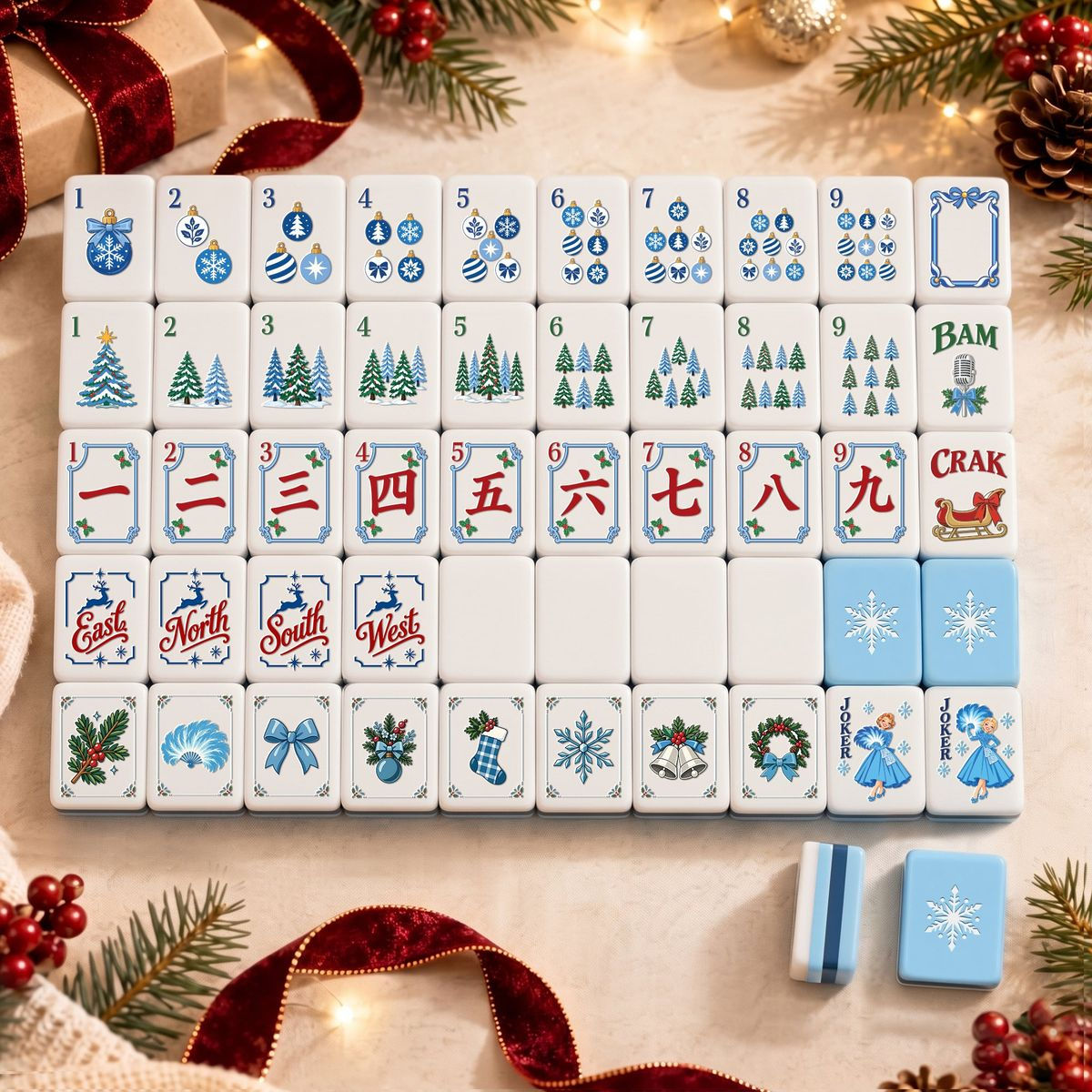
Chinese official mahjong lessons online come primarily from three sources: dedicated platforms based in China, international Riichi-certified organizations, and livestreamed instruction from certified players. Most programs teach Riichi mahjong (Japanese rules, fastest-growing competitive format), Chinese Classical rules, or Hong Kong variants—each with distinct tile counts, hand patterns, and scoring systems. Lessons typically run 60–120 minutes per session, cost varies by instructor credentials and region (ask about rates directly), and most require you to purchase a compatible tile set beforehand. Avoid programs claiming to teach "universal" mahjong or skipping the Charleston and tile-draw mechanics; authentic lessons emphasize the specific variant's rulebook. We recommend starting with a trial lesson to assess teaching pace before committing to a course package, and investing in a quality tile set that matches your chosen variant—Chinese Classical uses 136 or 152 tiles, while Riichi uses 136, each with different wind and dragon distributions.
🀄 Shop best-selling mahjong sets →
How do Chinese official mahjong rules differ from what I already know?
If you play American mahjong, expect a total overhaul. American mahjong forbids sequences (chows); Chinese play requires them. Chinese doesn't use jokers—every tile has a fixed identity. Hands are drawn from a rulebook or "buku," not a seasonal card. Winning in Chinese mahjong often demands specific combinations (pung-pung-pung, or mixed chow-pung patterns), not the wide flexibility American players enjoy. Most critically, Chinese play is simultaneous—all four players watch and claim tiles at once; American play flows in turn order. If you've mastered the Charleston explained, you already understand tile-passing rhythm, but Chinese lessons will teach you an entirely different tile-melding system.

Which Chinese mahjong variant should I learn: Riichi, Classical, or Hong Kong?
Riichi mahjong (Japanese competitive standard) dominates online instruction because it has the largest international tournament scene and the most standardized rulebooks. It's played on 136 tiles, uses no blanks or jokers, and emphasizes hand scoring precision and defensive play. Online Riichi courses are abundant and instructor credentials are verifiable through international federations.
Chinese Classical (mainland China standard) uses 152 tiles in some formats, includes more tile-melding flexibility, and is less about hand rarity than about fast tile discarding and reading opponents' intentions. Fewer English-language courses exist, but livestreams from Chinese provincial championship players are increasingly available with subtitles.
Hong Kong mahjong sits between the two—136 tiles, looser hand restrictions than Riichi, faster pacing. It's popular in Southeast Asia and among diaspora communities in North America. Finding English-language instruction is harder; most learners pick up Hong Kong rules through in-person play with family or community groups.
Choose based on where you want to play competitively and who teaches near your timezone. Riichi has the most structured online pathway; Classical and Hong Kong demand more networking or community club access.
What platform or instructor should I actually choose?
Finding a reputable Chinese mahjong instructor online requires checking three criteria: rulebook transparency (does the course outline which variant and reference manual?), instructor credentials (competition records, federation membership, or video testimonials from past students), and trial-lesson flexibility (can you observe or join a single session before paying for packages?).
Platforms vary widely. Some offer pre-recorded video courses with Discord community support; others do live group sessions with 4–8 players; still others offer one-on-one coaching. Live group sessions let you practice against opponents immediately but move faster; video courses let you rewind confusing explanations but offer no real-play feedback. One-on-one coaching is the most thorough but costs the most.
Red flags: "complete beginner to champion in four weeks," "no need to buy tiles," or instructors who won't explain their rulebook choice. Green flags: instructors who spend the first 20 minutes explaining why they teach their chosen variant, who provide a tile-set shopping guide, and who record sessions so you can review.
🎁 See our most-loved mahjong sets & accessories →
What tile set do I actually need for online lessons?
This depends on your variant. Riichi and Hong Kong use 136-tile sets (three suits 1–9, honor tiles, no blanks). Chinese Classical uses either 136 or 152 tiles depending on the rulebook (ask your instructor). American mahjong, by contrast, uses 152 tiles plus jokers and is incompatible with Chinese play—don't assume your existing set will work.
Before buying, ask your instructor: "What exact tile count and suit structure does your course use?" Confirm the absence or presence of jokers, season tiles, and blank tiles. Look for sets labeled explicitly as "Riichi 136," "Chinese Classical," or "Hong Kong mahjong" to avoid confusion.
Physical sets are better than apps for online lessons because your instructor can see your tile arrangement on camera and diagnose errors in hand-building that software hides. An acrylic or bamboo set with clear numbers and suit symbols helps during instruction; decorative sets with faint carvings create frustration when you're learning.
We stock best-selling mahjong sets with 160-tile configurations designed for the widest learner base, but confirm your lesson platform's exact variant requirement first.

What's the real time commitment for online lessons?
Most structured courses run 8–12 weeks, meeting 1–2 times weekly for 60–90 minutes. That's roughly 12–20 hours of instruction before you're ready for casual play with peers. Competitive proficiency typically requires 3–6 months of lessons plus weekly practice games.
A single trial lesson is 60 minutes. A 4-week beginner package is usually 4–6 sessions (240–360 minutes total). A full competitive track (16–24 sessions) spans 4–6 months.
Time outside formal lessons matters equally. You'll need 1–2 hours weekly to review hand patterns, study the rulebook, and watch recorded professional games. Practicing against live opponents (through instructor-run study groups or community clubs) accelerates learning dramatically—solo study stalls after week 6.
Budget for upfront tile-set learning (3–5 hours getting comfortable with tile recognition and hand layout) before your first lesson starts. Instructors expect you to recognize tiles by sight, not by counting symbols each turn.
How do I avoid common mistakes that derail online learners?
New online students stumble on five predictable errors. First, they buy the wrong tile set because they didn't confirm the variant with their instructor—then restart three weeks in. Second, they expect one lesson to "click" everything into place; Chinese mahjong hand logic requires 4–5 repetitions before pattern recognition becomes automatic. Third, they stop taking lessons once they can play one hand type successfully, missing the 80% of hands still opaque to them. Fourth, they practice solo (mental games or apps) instead of joining study groups, which means they never learn opponent psychology, the fastest part of the game. Fifth, they choose an instructor based on cost alone without checking credentials, then waste months on simplified versions that won't transfer to real competitive play.
Prevention checklist:
Confirm your variant name and tile count in writing before purchasing a set.
Commit to 8 lessons minimum before evaluating progress.
Join a practice group (Discord, weekly Zoom games, or local clubs) by week 2.
Watch recorded tournament games in your variant weekly; you learn more from pattern observation than from books.
Ask your instructor for a hand-pattern study sheet after each lesson; review it before the next session.
✨ Find your Mahstead set — free US shipping →
Quick comparison: lesson formats at a glance
Lesson Format | Best For | Pace | Feedback Quality | When to Choose |
Pre-recorded video course | Self-paced learners | Slow (yours to control) | Moderate (Discord Q&A) | You travel or prefer rewinding explanations |
Live group sessions | Social learners | Fast (instructor-led) | High (real play + correction) | You want immediate practice opponents & live feedback |
One-on-one coaching | Competitive players | Medium (customized) | Very high (all attention on you) | You have irregular schedule or need rapid advancement |
Tournament prep workshop | Advanced players | Fast (dense) | High (match simulation) | You're competing within 8 weeks |
What to check before you buy a lesson package
Ask these questions before signing up:
Rulebook and variant: Which rulebook does the course follow? (Ask for the exact name—e.g., "JMA Riichi," "Chinese Standard of 2024," "Hong Kong Mahjong Association rules.") Does it include exceptions or house rules?
Instructor background: Has the instructor competed? At what level? What's their win-loss record or tournament ranking?
Tile-set guidance: Does the instructor provide a shopping guide or recommended set list? If not, ask them directly which set you should buy before lesson one.
Cancellation and replay: If you miss a live session, can you watch a recording? Is there a refund policy if you find the pace mismatched after lesson one?
Practice community: Are there study groups or practice opponents included, or do you find them yourself?
Curriculum order: What hands are taught week-by-week? Ask for a syllabus. Beware courses that skip basic hand types or jump to advanced scoring.

FAQ
Can I learn Chinese mahjong if I only speak English?
Yes. Most platforms aimed at Western learners teach entirely in English with cultural context. However, some livestreamed Chinese instructors may use Mandarin with English subtitles; request translated materials if that's your platform choice. The rulebook itself translates easily; tile names and hand patterns are universal.
Do I need to own a physical tile set, or can I use an app?
Physical sets are better for online lessons because instructors can see your hand arrangement and spot errors. Apps hide the spatial layout and the tactile memory that speeds learning. Buy a physical set first; apps are fine for solo practice after you've grasped the basics.
How much does a lesson course typically cost?
Costs vary by instructor, region, and variant. Ask your instructor for a quote directly. Trial lessons are often free or low-cost; full course packages range widely depending on session length, group size, and credential level.
If I learn Riichi mahjong online, can I play American mahjong with my local club?
Not without significant relearning. American mahjong and Riichi are incompatible—different tile counts, no sequences in American play, joker usage, seasonal cards, and hand patterns are entirely separate. They're essentially different games. Pick one variant based on where you want to play.
How do I find a local practice group after my lessons end?
Check community centers, libraries, and cultural centers in your area (many host or can recommend mahjong clubs). Search online meetup boards and Facebook groups for "[your city] mahjong." Ask your instructor if they host alumni study groups or can refer you to competitive play communities in your region.


View More
View More
View More
