
Chinese Mahjong vs Vietnamese Mahjong: Key Differences
Last updated: Nov 23, 2026
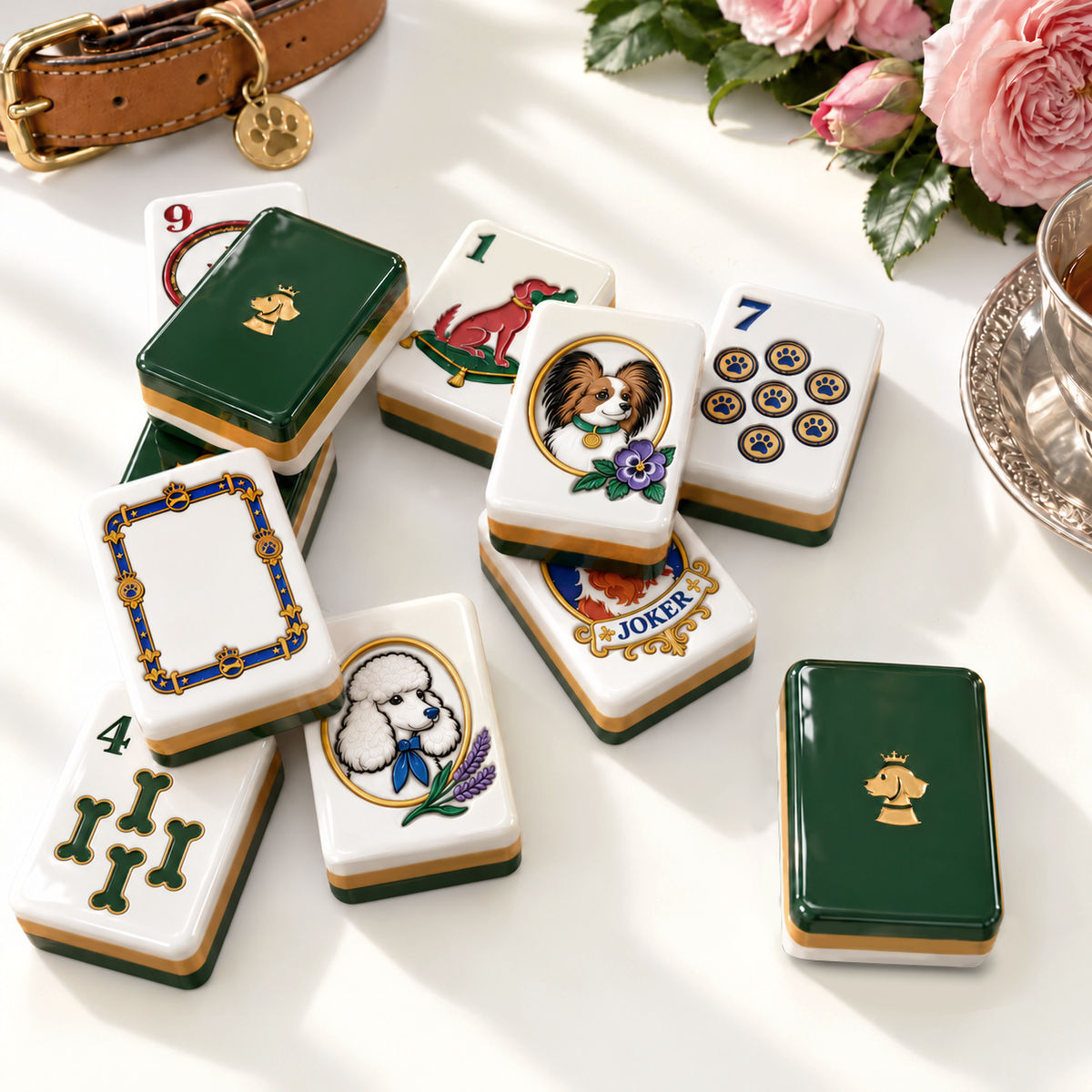
Chinese mahjong (Cantonese style) uses 136 or 144 tiles with chows (sequences like 1-2-3), pungs (triplets), and kongs (quads); hands vary by region and year. Vietnamese mahjong, evolved from Chinese, typically uses 144 tiles but emphasizes different hand structures, bonus scoring for melds, and faster tempo. Key differences: Chinese allows exposed sequences; Vietnamese focuses on speed and "flowers" bonuses. Both require 4 players, a dealer, and wind rotations. If you play American mahjong weekly, switching to Chinese or Vietnamese demands relearning hand logic entirely—American forbids chows and uses a printed card valid only one year. Mahstead's best-selling mahjong sets are designed for American play; if you're learning Chinese or Vietnamese, seek region-specific tiles with proper numbering conventions.
How many tiles does each game actually use?
Chinese mahjong exists in two main standards: the 136-tile Cantonese format (no flowers or seasons) and the 144-tile version (with 8 flowers and 8 seasons, making 16 honor tiles total). Vietnamese mahjong almost always uses 144 tiles but distributes them differently—honors (winds and dragons) total 16, and flowers add another 8. American mahjong, by contrast, plays with exactly 152 tiles: 108 number tiles (three suits, 1–9, four of each), 16 winds, 12 dragons, and 8 flowers, plus 8 jokers. The tile count directly shapes strategy: fewer tiles in Chinese mahjong mean fewer discard options and higher draw probability; 144 tiles in Vietnamese create a middle ground between Chinese constraint and American flexibility.

What's the core rule difference: chows, pungs, and exposure?
Chinese mahjong allows chows—sequences like 3 Bamboo–4 Bamboo–5 Bamboo—and you can call them from the discard pile, exposing your meld face-up. This lets opponents read your progress and adjust their strategy. Pungs (three identical tiles) and kongs (four identical) work the same across all variants. Vietnamese mahjong also permits chows and calls but layers in "flower" bonuses (completing a hand with specific flower patterns earns extra points) and penalizes certain discards. American mahjong forbids chows entirely—you can only expose pungs, kongs, quints, and sextets (never sequences), and jokers are wild only in these exposed groups. This one rule alone makes American hands vastly harder to form: with no sequences allowed, you're locked into pungs and kongs of identical numbers or all honors, making hand variety narrower but strategic depth deeper.
How does scoring differ between the variants?
Chinese mahjong awards points based on hand type (e.g., all pungs, mixed suits, concealed hand) and multiplies by the doubling factor—"faan" (fan)—which varies by region. A single faan might be 1 point unit; winning hands range from 1 faan (minimal) to 13+ faan (limit hands). Vietnamese mahjong uses a similar faan system but adds bonus points for flower melds and faster wins (early draw or winning on the first discard). American mahjong uses a flat point system keyed to the current year's official card: certain hand patterns earn fixed point values (typically 30–90 points), with bonuses for limiting (preventing others from calling your discards) and no multiplication factor. The net effect: Chinese games feel probabilistic and regional-rule-dependent; American games are standardized and predictable, tied rigidly to one card per year.
Which variant is easier to learn: start here.
If you've never played mahjong, Chinese is often easier than American because chows are more intuitive—building a sequence 1-2-3 mirrors card games like Rummy. You can call melds, so the game pace feels open and social. Vietnamese adds small complexity through flower bonuses but keeps the core chow-and-pung framework. American is the hardest entry point: no chows, dense hand patterns, mandatory use of an annual card, and the Charleston tile-passing ritual before play begins. Most weekly American mahjong groups expect players to already know the basics; Chinese and Vietnamese games tolerate casual learners better. However, if you live in North America and want to join a regular table, American mahjong is the standard—you'll find more groups, more teaching, and more equipment designed for it. The best-selling mahjong sets cater to American play; if you're committed to Chinese or Vietnamese, order region-specific tiles with Simplified or Traditional Chinese numerals.
🀄 Shop best-selling mahjong sets →

Can you switch between games with the same tiles?
No. The tile distribution and number systems differ too sharply. A standard American set has 152 tiles (108 number, 16 winds, 12 dragons, 8 flowers, 8 jokers) and uses Arabic numerals or dot/bar/circle symbols to denote suits. Chinese 144-tile sets omit jokers and often include both Simplified and Traditional Chinese numerals; Vietnamese sets follow a similar 144-tile structure but may label flowers differently. Trying to play American rules with a Chinese tile set fails because American hands require specific joker counts and American-only patterns. Conversely, Chinese tile sets lack jokers, which American hands depend on as wildcards. If you host regular games and want to offer both American and Chinese or Vietnamese play, you'll need two separate sets. Many players keep a best-selling mahjong set for American nights and a separate region-specific purchase for Chinese/Vietnamese guests—it's the clearest way to avoid mid-game confusion.
Comparison: Quick Reference
Aspect | Chinese Mahjong | Vietnamese Mahjong | American Mahjong |
Tile Count | 136 or 144 | 144 | 152 |
Jokers | None | None | 8 (required) |
Chows Allowed? | Yes, can call | Yes, can call | No—forbidden |
Exposed Melds | Chows, pungs, kongs | Chows, pungs, kongs, flowers | Pungs, kongs, quints, sextets only |
Hand Validity | Regional rule books | Regional rule books | Official NMJL card (annual) |
Scoring System | Faan (fan) multiplier | Faan + flower bonuses | Fixed points per pattern |
Best For | Casual, regional play | Social, speed-focused | Serious, standardized play |
Learning Curve | Moderate | Moderate | Steep |
🎁 See our most-loved mahjong sets & accessories →
What to check before you buy tiles for Chinese or Vietnamese mahjong
If you're set on Chinese or Vietnamese mahjong, verify the tile numerals match your region's convention before ordering. Cantonese Chinese sets often use Traditional Chinese characters; Simplified Chinese sets are common in Mainland China. Vietnamese sets may use Vietnamese labels alongside Chinese numerals. Check whether the set includes flowers and seasons (144 tiles) or neither (136 tiles)—this determines which sub-variant you're playing. Confirm the tile size and material: Mahstead's acrylic sets are engineered for American play with specific weight and feel; Chinese and Vietnamese sets from overseas sellers may use bone, bamboo, or different acrylic compositions that feel unfamiliar to American hands. Buy from sellers who specify the exact tile count, character set, and regional rulebook included—a set without clear rules documentation will frustrate a new player. If your group already plays American mahjong, don't assume you'll "just learn" another variant on the fly; set one night aside to review rules with everyone present, ideally with a native speaker or an authoritative regional guide.
✨ Find your Mahstead set — free US shipping →

FAQ
Can I play Chinese mahjong with an American mahjong set?
No. American sets include 8 jokers that Chinese variants don't use, and the hand patterns are incompatible. You need region-specific tiles and rules.
Which mahjong variant has the shortest games?
Vietnamese mahjong typically plays fastest due to bonus scoring for quick wins and melds, often finishing 20–30 minutes per hand. Chinese games take 30–45 minutes; American games typically 45–60 minutes.
Do Chinese and Vietnamese mahjong tournaments exist in the U.S.?
Yes, in cities with large Chinese and Vietnamese communities—check local cultural centers, community colleges, and informal meetup boards in your area for organized play.
If I learn American mahjong, will Chinese mahjong feel impossible?
Not impossible, but you'll unlearn the "no chows" rule and relearn open calling. Many players switch easily; the mental reset takes 2–3 games, not weeks.
What happens if I mix American and Chinese tiles at the same table?
Chaos. The tile counts don't match, hands become invalid, and scoring breaks. Always confirm everyone is using the same tile set and rulebook before the Charleston.
Is Vietnamese mahjong recognized by an international governing body like American mahjong is?
No single worldwide body; Vietnamese rules are regional and informal, passed orally or through family traditions. American mahjong has the National Mah Jongg League (NMJL) issuing an official annual card, making it highly standardized.


View More
View More
View More
