
Chinese Mahjong vs Filipino Mahjong: Key Differences
Last updated: Nov 23, 2026
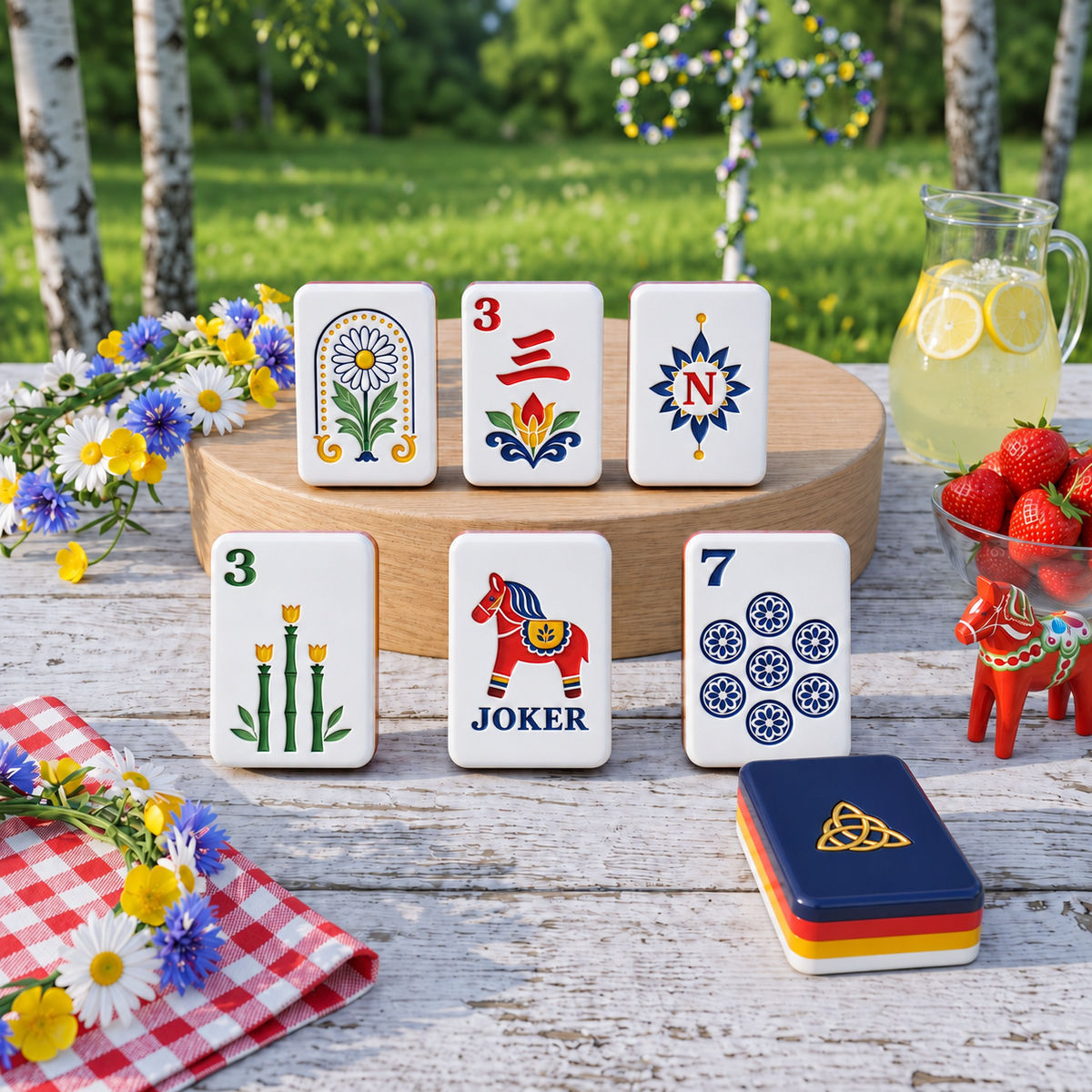
Chinese mahjong uses 144 tiles (three suits, winds, dragons, flowers, and seasons) and requires chows (sequences), pungs (triplets), and kongs (quads) to form winning hands drawn from a live wall that gradually shrinks. Filipino mahjong—played in the Philippines—blends Chinese rules with local variations, often using 144 tiles but with house rules on calling, exposure, and point calculation that vary by region and family tradition. Chinese mahjong has strict Hong Kong, Cantonese, and Taiwanese variants; Filipino play is more informal and flexible, changing between tables. Both differ fundamentally from American mahjong, which uses 152 tiles, forbids chows, requires hands from the annual National Mah Jongg League card, and relies on the Charleston (tile-passing ritual). If you're playing with an established group, learn their specific rulebook first; most Filipino games won't transfer to an American set or card, and vice versa. We recommend confirming your group's variant before investing in tiles.
What is Chinese mahjong exactly?
Chinese mahjong is the ancestral game played across mainland China, Hong Kong, Taiwan, and Chinese diaspora communities worldwide. It uses 144 tiles split into three numbered suits (Bamboo, Characters, Dots), plus winds (North, East, South, West), dragons (Red, Green, White), and flowers/seasons. Players draw from a central wall and discard, building winning hands from melds (chows—three consecutive numbers; pungs—three identical; kongs—four identical). The key rule: chows can be called and exposed on the table, unlike American mahjong. Rounds end when someone wins or the wall exhausts, and scoring depends on the hand's complexity and seat position. Chinese mahjong has deep regional sub-variants—Hong Kong style favors fast play and gambling; Taiwanese adds bonus melds; Cantonese uses different point values. The game has been played for over a thousand years and remains the most-played mahjong variant globally.

How does Filipino mahjong differ from Chinese mahjong?
Filipino mahjong keeps the 144-tile structure and basic suit/wind/dragon framework but loosens formality through house rules that evolve by family and venue. Most Philippine tables permit calling on all melds (chows included), but the exact rules for exposure, stealing tiles, and point thresholds vary widely—sometimes dramatically from one barangay to another. Winning hands often follow Chinese patterns but may allow "all chow" or "mixed hand" wins that aren't standard in Hong Kong or Taiwanese play. Filipino games tend to prioritize speed and social play over rigid scoring hierarchies; a hand might be worth fewer points than in Chinese variants, or bonus calculations ignored entirely. Dealer rotation and betting structures also differ. The unifying feature is flexibility: Filipino players adapt rules mid-session based on group preference, whereas Chinese mahjong variants are governed by published rulebooks. If you sit at a Filipino table expecting strict Hong Kong rules, you'll quickly learn the locals play by custom.
Can you play Filipino mahjong with an American mahjong set?
No. American mahjong sets contain 152 tiles (not 144) and include 8 jokers, plus they omit seasons entirely—you get only winds, dragons, and three suits of numbers 1–9. More critically, American mahjong forbids chows (sequences) completely; you can only expose pungs, kongs, quints, and sextets, and hands must match patterns from the annual National Mah Jongg League card. Filipino and Chinese players rely on chow calls and sequences as core mechanics, so an American set and rulebook won't work for either game. Similarly, a Chinese 144-tile set won't work for American play—wrong tile count, missing jokers, and no card reference. We see players occasionally try to "convert" sets; it never ends well. Buy or borrow the correct set for your game variant. If you're hosting multiple variants, you'll need separate sets. Visit our best-selling mahjong sets page to explore options; we carry American 160-tile sets designed for that specific ruleset.
🀄 Shop best-selling mahjong sets →
Which tile distribution matters most?
The tile distribution determines what hands are mathematically possible. Chinese and Filipino mahjong both use exactly 144 tiles: 36 per suit (1–9 in each of Bamboo, Character, Dot, four copies each = 108 tiles total), plus 16 winds (four of each direction), 12 dragons (four each color), and 8 flowers. Because every tile is identical within type, you know exactly what's in play—there are no jokers or wildcards to substitute. By contrast, American mahjong includes 8 jokers that can replace any tile in a pung, kong, quint, or sextet (but never in a single tile or pair). This means American hands often contain one or two jokers, radically changing strategy and hand composition compared to Chinese or Filipino play, where jokers don't exist. If you're switching between variants, your mental model of "completed hand" changes: Chinese/Filipino success requires reading the wall to forecast chows; American play requires counting jokers and reading the card for legal patterns. The distribution also affects table dynamics—Chinese and Filipino games are longer when the wall runs thin (no jokers to speed wins), whereas American games move faster because jokers unlock more combinations. Knowing your game's tile set before you buy ensures you get playable equipment.
What scoring system do Chinese, Filipino, and American mahjong use?
Chinese mahjong scoring rewards hand complexity: the more difficult or rare your winning pattern, the higher your multiplier. Base points depend on seat position (dealer wins double) and the concealment of your winning meld. Hand combinations like "all pungs," "outside hand," or "honor hand" double or triple your payout. Taiwanese scoring emphasizes limiting points (a hand caps at eight or ten), whereas Hong Kong uses open-ended multipliers. Filipino scoring often simplifies this: many casual tables use flat point values regardless of complexity, or follow a modified Chinese system where the threshold for a winning hand is lower. American mahjong uses a completely different system—no multipliers or dealer doubles. Instead, each hand on the current year's National Mah Jongg League card has a fixed score (usually 20–90 points depending on difficulty). American games count "wins" and total points across multiple rounds; the player with the most points after a set number of rounds wins the session. This means an American "winning hand" is atomic—you either complete a card pattern and score, or you don't—whereas Chinese/Filipino winners negotiate payouts based on the hand's merit. These differences make scoring conversion between variants impossible; a hand worth 64 points in Hong Kong play might score zero in American or a flat 30 in Filipino casual play.
🎁 See our most-loved mahjong sets & accessories →

Regional Variant Comparison Table
Variant | Tiles | Chows Allowed? | Jokers | Winning Hand | Scoring Basis | Dealer Advantage? |
Chinese (Hong Kong) | 144 | Yes | None | Complex meld patterns + tile calls | Multiplier per hand type | Yes (2×) |
Chinese (Taiwanese) | 144 | Yes | None | 8–10 point limit ceiling | Capped multiplier | Yes (2×) |
Chinese (Cantonese) | 144 | Yes | None | Specific pattern sets | Regional point grid | Yes (2×) |
Filipino (Manila/Metro) | 144 | Yes (varies) | None | House-rule patterns | Flat or simplified | Varies by house |
Filipino (provincial) | 144 | Yes (local custom) | None | Family-specific melds | Informal/negotiated | Rarely enforced |
American | 152 | No | 8 | Card pattern match | Fixed per card | No (equal for all) |
Common mistakes when switching variants
Assuming all mahjong sets are interchangeable. They aren't. A 144-tile Chinese set won't work for American play (wrong tile count and tile types), and an American 152-tile set can't be used for Chinese or Filipino play (missing seasonal tiles, contains jokers that don't exist in those games). Buy the right set for your game.
Playing "house rules" without documenting them. Filipino mahjong thrives on flexibility, but switching groups without clarifying calling rules, point values, and dealer rotation causes frustration. Before money changes hands, agree on the rulebook (even if it's a one-page house document) and stick to it for the session.
Mixing chow expectations between variants. Chinese and Filipino players can call and expose chows; American players cannot. If you're teaching someone from one world to another, explicitly state: "In this game, sequences don't exist" or "Here, every meld must be called on the table." Ambiguity stalls the game.
Confusing "winning hand" criteria. Chinese and Filipino hands must form specific patterns (all pungs, mixed hand, etc.); American hands must match the current year's card. A pattern that wins at one table is invalid at another. Always know which ruleset applies.
Neglecting regional sub-variants. A player from Hong Kong and a player from Taiwan both speak "Chinese mahjong," but their scoring and meld rules differ. Before play, confirm: Hong Kong, Taiwanese, Cantonese, or local custom? The same question applies to Filipino play—a Manila table is not a provincial family game.
What to check before you buy
Confirm your group's exact variant. Ask: "Do we play Hong Kong Chinese, Taiwanese, Cantonese, American, or a local Filipino house style?" Get the answer in writing if possible.
Count the tiles. Chinese and Filipino mahjong = 144 tiles. American mahjong = 152 playing tiles (plus spare jokers in a 160-tile set). Buying the wrong count wastes money.
Check tile types. If seasons are required, does your set include them? If chows are forbidden (American), do you need jokers? Match the set to the rules.
Test with your group first. Borrow a set or play with borrowed tiles before investing in a full set with custom engraving. House rules can surprise you.
Confirm calling and exposure rules. Some Filipino tables allow calling chows; some don't. Some allow stealing tiles from discards; some forbid it. Document these before buying.
Our pick for hosting mixed-variant games
If you host both American and Chinese/Filipino players, you'll need separate sets—there's no hybrid that works for both. For American play, we recommend exploring our best-selling mahjong sets and engraved American mahjong sets, which are designed to the 152-tile American standard. For Chinese or Filipino play, source a traditional 144-tile set from specialists in that variant; we focus on American mahjong equipment.
To host either variant smoothly, pair your set with a quality mahjong mat (defines play area and protects tiles), racks with pushers (organizes hand and speeds play), and a travel bag or case (keeps tiles organized and tiles safe between sessions). A clear mat also helps new players see the discard area and the wall layout—critical for teaching cross-variant guests.
✨ Find your Mahstead set — free US shipping →

FAQ
Can I convert a Chinese mahjong set to American rules?
No. Chinese sets contain 144 tiles with no jokers; American play requires 152 tiles and 8 jokers. The tile types don't match (no seasons in American), and chow rules differ entirely. Buy the correct set for your variant.
Is Filipino mahjong closer to Chinese or American?
Filipino mahjong is rooted in Chinese mahjong—same 144-tile structure, same chow mechanics. It diverges only through house rules and simplified scoring. American mahjong is a wholly separate game invented in the 1920s and plays nothing like Filipino or Chinese variants.
Why do Filipino players change rules mid-game?
Flexibility is cultural—the goal is enjoyment and social connection, not rigid rule enforcement. A hand might be declared a win by house tradition, even if strict Chinese scoring wouldn't count it. This makes Filipino mahjong approachable for casual players but unpredictable for newcomers. Always confirm house rules before sitting down.
Do I need an annual card to play Chinese or Filipino mahjong?
No. Only American mahjong uses the National Mah Jongg League card, issued every spring. Chinese and Filipino players memorize or reference published rulebooks that don't change annually. An American card is useless for either variant.
What's the easiest variant to learn first?
Filipino casual play often has fewer rigid rules, so it can feel more forgiving for beginners. However, Chinese Hong Kong mahjong has published rulebooks, making it easier to study independently. American mahjong is quickest to learn structurally (no chows, card-driven), but strategy depth is comparable across all three. Choose based on where you have a local group to teach you.
If I'm visiting the Philippines, can I play at a local table?
Yes, if you clarify house rules first. Filipino mahjong is friendly to visitors, but the specific ruleset varies by venue and family. Spend 10 minutes asking about calling, point values, and dealer rotation before betting. Locals will appreciate the diligence.


View More
View More
View More
