
Chinese Mahjong vs. American: Rules, Tiles & How to Play
Last updated: Nov 23, 2026
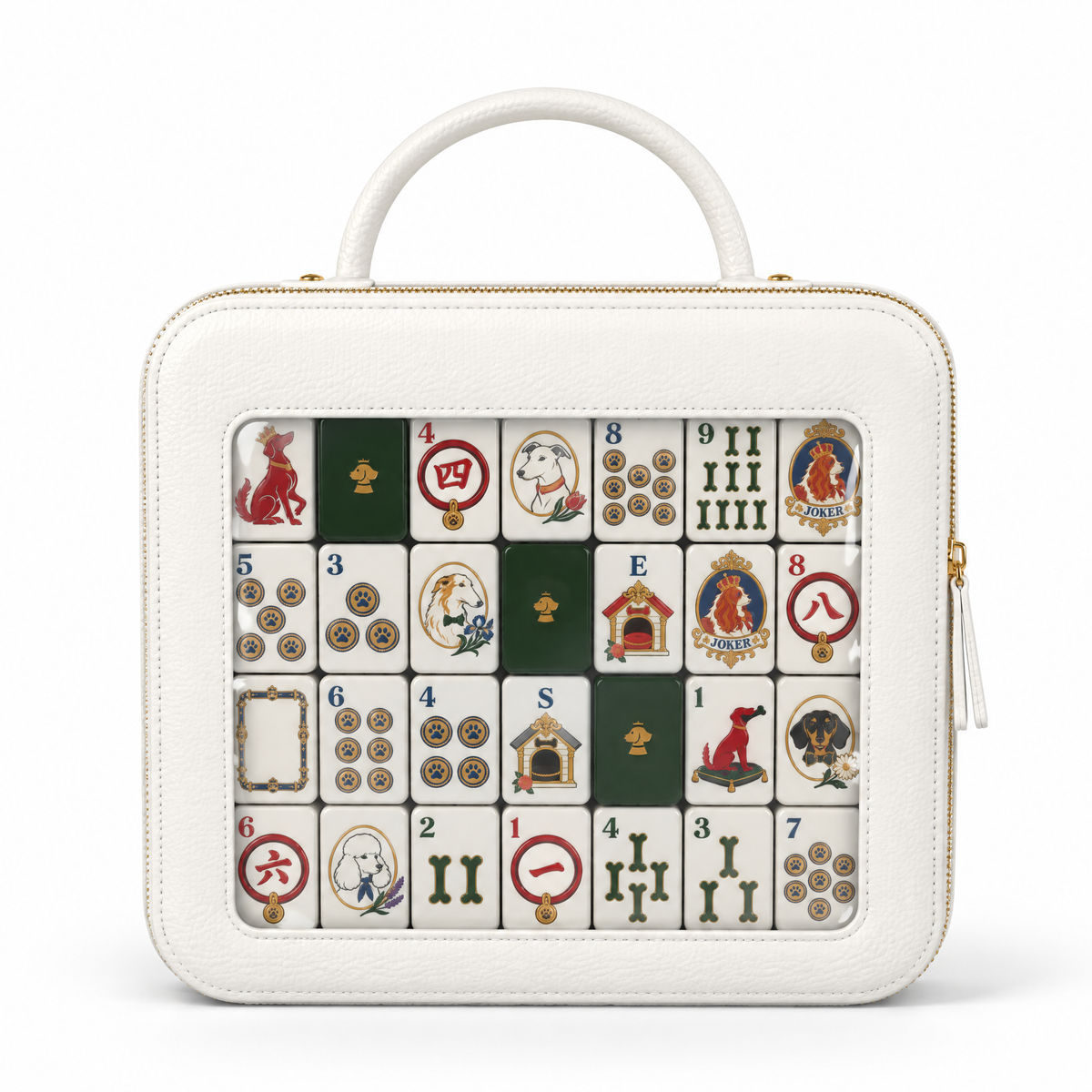
Chinese mahjong (also called Cantonese or Traditional mahjong) uses 136 tiles—four copies each of 34 distinct types—split into Bamboo, Character, Dot, Wind, and Dragon suits. Players draw and discard sequentially to form Chows (sequences like 1-2-3), Pungs (triples), and Kongs (quads), plus a pair. The first to complete a legal hand yells "Mahjong!" and scores points based on hand complexity and winners' payments. American mahjong, by contrast, uses 152 tiles, forbids Chows entirely, draws from a wall using a wall break, and hands change annually per the National Mah Jongg League card. Chinese mahjong has no jokers, no pre-game tile pass (Charleston), and no fixed hand patterns—any logical combination wins. If you're exploring variants, we recommend starting with best-selling mahjong sets to see what modern players choose most.
Chinese mahjong is the ancestor of all modern variants, using simpler tile sets and fundamentally different hand-building rules than American mahjong. Understanding the core differences helps you choose the right game for your table.
What tiles does Chinese mahjong use?
Chinese mahjong draws from 136 tiles total: four of each of 34 types. The lineup includes Bamboo (1–9, often showing stalks), Character (1–9, typically in calligraphic form), Dot (1–9, arranged in pips), and Honour tiles—four Winds (North, East, South, West) and three Dragons (Red, Green, White). You'll never find jokers, bonus tiles, or flowers in a traditional Chinese set. Each tile exists in exactly four copies; no spares, no blanks. This fixed, smaller deck fundamentally shapes strategy—every player knows precisely what remains in play. By comparison, American mahjong uses 152 tiles including 8 jokers, 8 flower tiles, and wind/dragon combinations that differ from Chinese rules.

How does hand-building differ from American mahjong?
The biggest rule divide: Chinese mahjong allows Chows (sequences of three consecutive numbers in the same suit, like 4-5-6 Bamboo), while American mahjong forbids them entirely. In Chinese play, you can declare a Chow by calling a discard from any player, expose it on the table, and continue. American mahjong restricts exposed melds to Pungs (triples), Kongs (quads), Quints (5), and Sextets (6)—all identical tiles. Chinese hands win when all 14 tiles form a legal combination: either three sets (each Chow, Pung, or Kong) plus a pair, or special patterns like all pairs or all Pungs. American hands are rigid: they must match one of hundreds of fixed combinations printed on the annual League card. This means Chinese mahjong rewards flexible, adaptive thinking; American rewards pattern recognition and seasonal card mastery.
What scoring system does Chinese mahjong use?
Chinese mahjong scoring depends on how many points a hand earns—typically 1 to 8 points (in basic variants) or more in advanced systems. Points multiply by the number of players paying: if you win a hand worth 3 points as East player (with a bonus multiplier), all three opponents pay you 3 points each. The "winner" (East) rotates clockwise unless East wins again. Payment rules vary by region: Cantonese, Sichuan, Shanghai, and Hong Kong mahjong each weight Chows, Pungs, and special hands differently. American mahjong uses a simpler flat scoring: a player either wins (and collects from all three) or loses (and pays all three), with no intermediate point gradations per hand—only winners and losers. Bonus tiles and special combinations boost American scores on the card itself, not through region-specific house rules.
Do players draw from a wall in Chinese mahjong?
Yes, but differently than American mahjong. In Chinese play, 13 tiles form an initial hand; the 14th tile is drawn from a wall (usually arranged in a square, with four players each owning a side). The wall is built by stacking tiles face-down in rows—typically two tiles high per stack—and a designated player breaks it at a random spot. After each discard, the next player draws one tile from the wall and discards one. If no one can play a discard (no Chow calls, no Pung declaration possible), that tile is placed in a centre "dead wall" zone, and play continues. American mahjong uses a similar wall-break protocol but with different tile counts and no dead wall; the wall break happens at the start of one complete hand and is predetermined by a dice roll, not random.
What's the role of the Charleston in Chinese mahjong?
Chinese mahjong has no Charleston. There is no pre-game tile-passing ritual. Players receive their 13 starting tiles by drawing from the wall (or sometimes by dealer distribution in friendly games), and play begins immediately. The Charleston—a three-pass tile exchange among players—exists only in American mahjong and was invented as part of the American variant's standardization in the early 20th century. If you learn Chinese mahjong after American play, the absence of the Charleston will feel refreshingly swift; you skip straight to the first discard.

Which variant should you choose—Chinese or American?
This depends on your playing group and available time. Choose Chinese mahjong if you want open-ended strategy, enjoy calling Chows, prefer regionally flexible rules, or play with East Asian friends or family who learned the traditional game. It's faster to teach (no annual card to memorize), easier to improvise house rules, and deeply social—payment flows back and forth throughout the evening. Choose American mahjong if you value a standardized, consistent game played across North America, enjoy pattern-matching with a fixed card, prefer strategic depth through restricted melds, or want to join organised tournaments and clubs that use the National Mah Jongg League card. American mahjong also scales to 2–3 players with tweaked rules; Chinese mahjong is best with four.
Aspect | Chinese Mahjong | American Mahjong |
Tile count | 136 tiles (4 copies of 34 types) | 152 tiles (+ 8 jokers) |
Chows allowed? | Yes; callable from any player | No; forbidden |
Exposed melds | Chow, Pung, Kong | Pung, Kong, Quint, Sextet only |
Hand patterns | Flexible; any legal combo wins | Fixed; must match League card |
Annual updates | No; rules stay consistent | Yes; card changes each spring |
Jokers | None | 8 required in play |
Scoring | Points vary by hand value & region | Flat: win all three or lose to all three |
Charleston | No pre-game tile pass | Required before play starts |
Play speed | Faster; fewer rule lookups | Slightly slower; card reference needed |
Best player count | 4 (3 possible with house rules) | 4 (2–3 with variant rules) |
What equipment do you need for Chinese mahjong?
A Chinese mahjong set includes 136 tiles, typically housed in a wooden or bamboo case with bamboo racks (three high) for each player. Many sets include a small wooden marker for tracking score, a dice pair for wall-break determination, and sometimes a wind indicator tile. Unlike American mahjong, Chinese sets rarely include spare tiles or jokers. The tiles themselves are often smaller and lighter than American tiles (closer to dominoes in thickness and heft), and the suits are marked in traditional Chinese characters and symbols rather than English abbreviations. A typical set fits a medium carrying case, making it portable. If you're buying your first set and want modern design flexibility—custom engravings, acrylic durability, or a blend of traditional aesthetics with contemporary play—explore our best-selling mahjong sets, which include options suited to both American and Chinese play styles.
🀄 Shop best-selling mahjong sets →
How do you call a Chow in Chinese mahjong?
When a player discards a tile, any player sitting after that discarder can declare a Chow if they hold two consecutive tiles in the same suit. For example, if the discarder throws a 5 Bamboo, you can call it if you hold 4 and 6 Bamboo—you now own 4-5-6 Bamboo as an exposed set. Call loudly and clearly (or say "Chow" in Cantonese: "Chi"), place the three tiles face-up on your rack, and rearrange your hand. The next player then discards. Calling a Chow is mandatory if you declare it—you cannot take it back. If two players want the same discard (one for a Chow, another for a Pung or Kong or the winning tile), the winning claim takes priority; then Pung; then Chow. This hierarchy prevents conflicts. In American mahjong, there is no Chow mechanic at all, so this decision tree doesn't apply.
🎁 See our most-loved mahjong sets & accessories →
What are common mistakes when switching from American to Chinese mahjong?
Forgetting Chows are legal. New players trained only on American rules often discard tiles carelessly, not realising they've given a Chow-ready opponent a free win. Always track what two-tile combos neighbouring players might hold.
Misreading the wall break. Chinese wall breaks use dice; American uses a predetermined marker. Practise rolling dice and counting correctly before your first game.
Assuming fixed hand patterns. In Chinese mahjong, you don't need to match a card. Any three sets plus a pair works. This freedom confuses American players at first—lean into it.
Paying wrong amounts. Chinese mahjong payment multiplies by player count and hand value. American uses flat all-or-nothing scoring. Clarify your group's region-specific rules before dealing.
Mixing joker rules. Chinese mahjong has zero jokers; American has eight. Never accidentally introduce American jokers into a Chinese game or vice versa.
What to check before you buy a Chinese mahjong set
Tile size: Chinese tiles are often smaller than American (closer to playing-card size). Make sure your hands can manage them comfortably.
Material: Bamboo and bone are traditional; modern acrylic or Bakelite sets are durable and travel-friendly.
Racks: Some sets come with tall bamboo racks; others with low plastic ones. Tall racks are easier on the eyes and back during long games.
Case: A solid wood or reinforced case protects tiles during transport. Check that hinges are secure and latches don't jam.
Tile clarity: Inspect that characters and suit symbols are deeply carved or printed, not faint—you'll read them dozens of times an hour.
Set completeness: Verify all 136 tiles are present. Count by suit and wind/dragon type. Missing even one tile ruins an evening.
Regional rules: Confirm which Chinese mahjong variant your group plays (Cantonese, Sichuan, Hong Kong, Shanghai). Rules overlap but differ in scoring and special hands. Get a rule sheet before buying.
✨ Find your Mahstead set — free US shipping →

FAQ
Can I use an American mahjong set to play Chinese mahjong?
No. American sets have 152 tiles, jokers, and flowers—Chinese mahjong needs exactly 136 tiles with no jokers. The tile sets are incompatible. You need a dedicated Chinese set.
Is Chinese mahjong harder than American mahjong?
They're different, not objectively harder. Chinese mahjong is easier to teach (no annual card to memorize) but rewards quick strategic thinking and tile-reading. American mahjong requires pattern memorisation and strict rule adherence but is more standardised. Choose based on your strengths.
Do I need to know Chinese to play Chinese mahjong?
No. Suit symbols (Bamboo stalks, Character glyphs, pips for Dots, Winds as compass marks, Dragons as red/green/white symbols) are visual. Learning a few Cantonese call words ("Chow," "Pung," "Kong," "Mahjong") is helpful but optional—many English-speaking groups play with English terms.
What's the difference between Hong Kong and Cantonese mahjong?
They're regional variants of Chinese mahjong with the same tile set and Chow rules but different scoring systems and bonus hand rankings. Cantonese (or traditional Guangdong) mahjong is the most widespread. Hong Kong mahjong often includes more complex bonus patterns. Both use 136 tiles and Chows; ask your group which variant they play before buying a set.
How long does a game of Chinese mahjong take?
A casual 4-player game typically lasts 1–2 hours for a session of several rounds. A single hand takes 10–20 minutes. American mahjong games run similar lengths, though the Charleston adds 5 minutes at the start.


View More
View More
View More
