
Chinese Mahjong Rules: Complete Guide for Western Players
Last updated: Nov 23, 2026
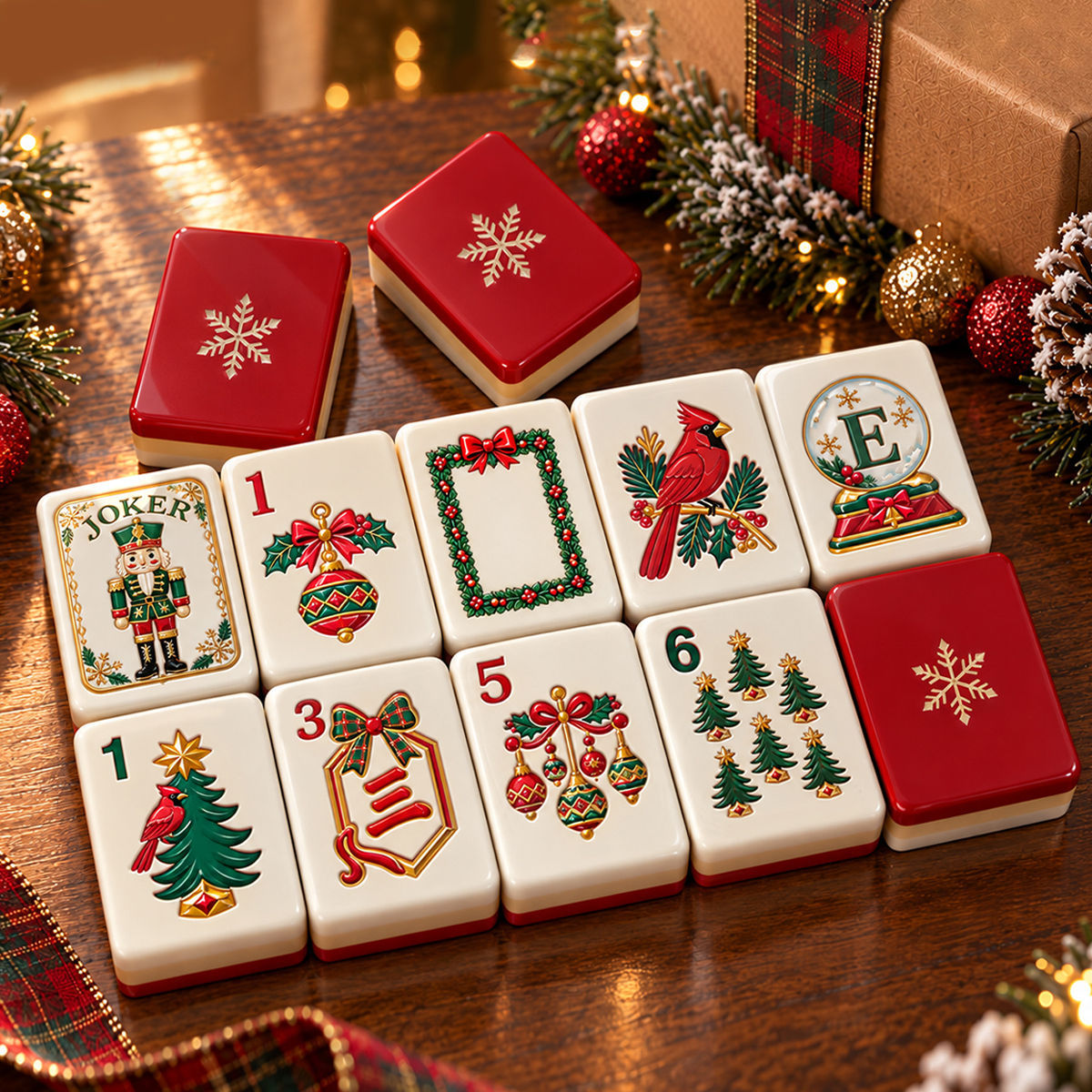
Chinese mahjong uses 144 tiles (three suits—Bamboo, Character, Dot—numbered 1–9 in four copies each, plus 16 winds and 12 dragons, with no flowers or jokers in standard play). You draw and discard one tile per turn, aiming to form a complete hand of four melds and a pair before anyone else. Unlike American mahjong, which uses an annual card and no sequences, Chinese mahjong allows chows (three consecutive tiles: 1-2-3 Bamboo, for example) as valid melds alongside pungs (three identical tiles) and kongs (four identical tiles). Scoring depends on the hand's composition—sets complete faster than American games, typically 15–20 minutes per hand. Hands are created freely each game, not from a published card; drawing the winning tile yourself scores higher than claiming a discard. Mahstead's best-selling mahjong sets include Western players learning both systems and can accommodate house rules, making them ideal if you're building experience across variants. --- 🀄 Shop best-selling mahjong sets →
How do meld types work in Chinese mahjong?
Chinese mahjong recognizes three meld categories: pungs (three identical tiles—three 5 Dots), kongs (four identical tiles—four 5 Dots), and chows (three consecutive numbers of the same suit—3-4-5 Bamboo). Only the player holding the tiles in their hand can form them initially; once exposed, only the next player can claim a discard to complete a chow or pung. Kongs can be claimed or formed privately. A winning hand requires exactly four melds and one pair—no wildcards or jokers substitute. This rigid structure rewards speed and memory over the combinatorial flexibility of American mahjong.

What does a complete Chinese mahjong hand look like?
A winning hand consists of four melds and one pair totaling 14 tiles. Example: pung of 2 Characters (2-2-2), chow of 4-5-6 Dots, pung of East Wind (East-East-East), chow of 7-8-9 Bamboo, plus a pair of 3 Characters (3-3). All 14 tiles must be "complete" the moment you win—no waiting for a future draw. Unlike American mahjong's complex hand types from the yearly card, any valid combination of melds and a pair wins in Chinese play. Scoring for that hand depends on whether you drew your winning tile (self-draw, higher score) or claimed another player's discard (lower score), and bonuses apply for all-pung hands, all-chow hands, or other patterns your group recognizes.
How does winning and claiming work?
You win by completing your hand with exactly 14 tiles. If you draw your own winning tile from the wall, you announce "win" and score bonus points; if another player discards your winning tile and you claim it, you score fewer points. Only the player whose turn it is can draw; other players may claim a discard only to complete a pung, kong, or—crucially—to win. Once a tile is discarded, the next player in turn order has first claim; if multiple players want that tile, the player closest to winning (usually rightmost in turn order) takes it. Unclaimed discards are dead and cannot be reused. This forces quick decisions and creates tension absent from American mahjong's rigid draw-and-discard cycle.
How does Chinese scoring differ from American mahjong?
Chinese mahjong scoring revolves around hand type and win method rather than the point-counting system of American mahjong. A self-drawn win (你赢了 or "zimo") earns base points from each player, typically doubled or multiplied. A claimed-discard win (胡 or "hu") earns points only from the player who discarded the tile, often at a lower rate. Bonus patterns include all-pung (no chows), all-chow (no pungs), all-terminal-or-honor tiles, and concealed hands (no exposed melds). Regional house rules add complexity: some groups apply "fan" (翻, meaning "doubled") rules where every bonus pattern multiplies the base score, turning a modestly-scoring hand into a significant payout. American mahjong's fixed point values per hand type (from the yearly card) make scoring more transparent and less negotiable than Chinese variants.
Variant | Tile Count | Melds | Win Requirement | Scoring Method | Learning Curve |
Chinese | 144 | Pungs, Kongs, Chows | 4 melds + 1 pair | Hand type + bonuses | Moderate (fewer rules, more memory) |
American | 152 (play) | Pungs, Kongs, Quints, Sextets | From yearly card only | Fixed points per hand | Steeper (card + rule lookup each hand) |
Hong Kong | 144 | Pungs, Kongs, Chows | 1 eye + melds | Multiples of base score | Complex (many regional variations) |

What are the key rule differences from American mahjong?
The largest divide is melds: American mahjong forbids chows and sequences entirely—only identical-tile groups (pungs, kongs, quints, sextets) count as exposed melds. Chinese mahjong requires chows as part of normal play. Second, American mahjong plays with 152 tiles and 8 jokers, using an annual published card to determine which hands win; Chinese mahjong uses 144 tiles with no jokers, and any four-meld-plus-pair combination wins. Third, American draws and discards happen in a fixed order each turn; Chinese play allows players to claim discards out of turn if it completes a winning hand or a pung/kong. Fourth, American mahjong includes a tile-passing ritual (the Charleston) before play; Chinese games begin immediately with a draw from the wall. Finally, American scoring is additive (points per hand from a card); Chinese scoring multiplies based on pattern and method. If you play both, learn how to read the American mahjong card first—it governs every hand.
🎁 See our most-loved mahjong sets & accessories →
How do you start and end a hand in Chinese mahjong?
Chinese mahjong begins with the dealer shuffling and stacking tiles in a wall of 34 tiles per side (totaling 136; the remaining 8 are the live wall for draws and kongs). The dealer draws first, then each player in turn order (East, South, West, North) draws one tile and discards one. Players take turns in a fixed cycle: draw, then play. If you draw your winning tile or claim someone's discard to win, you announce immediately and the hand ends. Scoring is tallied, and the dealer typically plays again (unless local rules rotate the deal). Unlike American mahjong's elaborate Charleston setup, Chinese play moves directly into the draw phase, making setup faster but requiring players to remember which tiles have been discarded and which remain in the wall—a skill Western players often underestimate.
What happens if no one wins?
If the wall runs dry and no player has won, the hand is drawn (no winner, no payout). Some groups award a small penalty to the last player to discard; others simply reshuffle and play again. American mahjong, by contrast, always designates a "dead hand" if a play error occurs, but games rarely end without a winner because the published card and joker rules make winning hands frequent. Chinese mahjong draws occur more often, especially in early rounds, because players must create their own winning combinations. This teaches patience and discipline—folding early if your tiles don't align is a valid strategy, and accepting draws keeps games flowing.
✨ Find your Mahstead set — free US shipping →
Step-by-step: Your first Chinese mahjong hand
Form a group of four players.
Designate the dealer (East); other seats are South, West, North in clockwise order.
Shuffle and build the wall (136 tiles stacked, 8 live).
Dealer draws first, then South, West, North in turn.
Dealer discards one tile face-up; other players draw before their turn or claim the discard.
Play cycles: each player draws, then plays (discards) one tile.
Announce a win the moment you hold 14 tiles forming four melds and one pair.
Calculate and settle points; reshuffle for the next hand.
What to check before you buy
If you're building a set for Chinese mahjong play, explore durable tiles and mats that can withstand frequent reshuffling and wall-building. Chinese play wears tiles faster than American games because players spend more time handling the wall and building tile combinations by hand. A set with clear, high-contrast suit markings (Bamboo, Character, Dot) prevents errors when scanning the wall for discards. If you play with house rules—such as regional scoring multipliers or bonus patterns—consider sets with legible tile faces and a clear wind designation, and ensure your group agrees on rules before play begins. Mahstead's engraved American mahjong sets can also be used for Chinese play if your group prefers Western-style tiles; the tile composition is the same, only the rulings differ.

FAQ
Can jokers be used in Chinese mahjong?
No. Standard Chinese mahjong uses exactly 144 tiles (no jokers or wildcards). Some regional house rules allow one or two jokers as wild tiles, but this is non-standard; always confirm with your group before play.
Is a 1-2-3 sequence in the same suit always a valid chow?
Yes. A chow is three consecutive numbers of the same suit: 1-2-3, 2-3-4, … 7-8-9 Bamboo (or Character or Dot). Terminal chows (1-2-3 or 7-8-9) often score bonus points in scoring variants.
What happens if I accidentally discard a tile I need?
Once a tile is discarded and no player claims it within that turn, it becomes dead and cannot be reclaimed or played. This is why memorizing discards is crucial in Chinese mahjong.
Do I have to claim a discard if it completes my hand?
No. You may choose not to claim a discard even if it wins your hand (called "passing"). This is rare and only used in house-rule situations; standard play encourages claiming a win immediately.
How many hands does a typical Chinese mahjong session include?
A session typically lasts 2–4 hours and includes 4–16 hands (four rounds, each round four hands with a rotating dealer). American mahjong sessions often run similarly, though hand duration varies.
Can pungs and chows be mixed in the same hand?
Yes. A valid hand contains any combination of four melds—pungs, kongs, or chows—plus one pair. For example: pung, chow, pung, kong, plus pair.


View More
View More
View More
