
Chinese Mahjong Kong Strategy: When to Form and When to Wait
Last updated: Nov 23, 2026
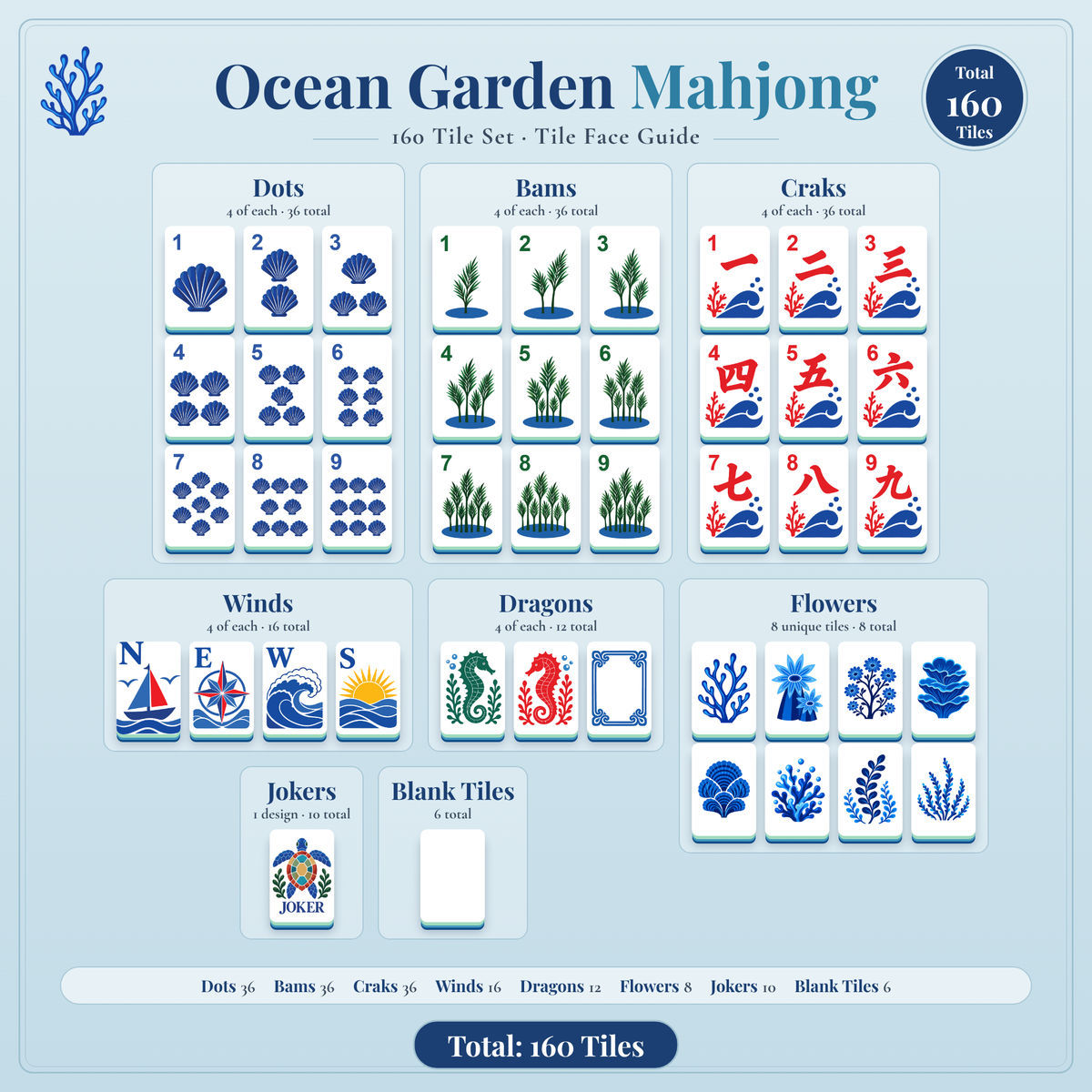
In Chinese mahjong, a kong is a set of four identical tiles you declare openly or concealed depending on when you form it. Unlike American mahjong—where kongs are fixed and part of the official hand only—Chinese variants reward kong declarations with immediate bonus payments and an extra tile draw from the dead wall, incentivizing aggressive early play. A concealed kong (formed from your draw before the discard phase) earns higher payments than an exposed kong (formed after someone discards the fourth tile). The core strategy hinges on three factors: (1) probability that the kong helps your hand type, (2) whether exposing it telegraphs your winning pattern to opponents, and (3) the current game state (early round vs. endgame). Early-game concealed kongs in high-value hands maximize points; late-game kongs risk tipping your shape. Understanding when to hold a fourth tile versus declaring immediately is what separates consistent winners from impulsive players. We recommend studying hand records and playing on platforms where you can replay decisions to build intuition, and hosting regular games with the best-selling American and Chinese mahjong sets to practice in person.
What is a Kong and Why Does It Matter in Chinese Mahjong?
A kong is four identical tiles in a melee (suits), honor, or flower. In Cantonese/Hong Kong mahjong, declaring a kong immediately scores you a bonus—typically 32 points for an exposed kong, 64 for a concealed kong—before anyone wins the hand. You also draw an extra tile from the back of the wall (the dead wall or kong reserve), giving you 14 tiles while others have 13. This asymmetry creates a strategic fork: revealing a kong early can help you toward a winning combination but also signals your direction to competitors. In Standard Chinese (Mainland) mahjong, kong scoring and redraw mechanics vary; always check your table's ruleset first.

Should You Declare a Kong or Hold the Fourth Tile?
The decision hinges on hand urgency and pattern clarity. If your hand is still shapeless (no clear winning combination yet) and you hold a fourth tile, hold it. Declaring exposes your interest in that suit and commits you to a specific pattern; opponents will read your discard sequence and avoid feeding you. If your hand is already close to a specific type (e.g., all Bamboos, or a hand needing only one more pung) and a fourth tile genuinely accelerates you, declare it—the extra draw and bonus payment justify the exposure. In endgame (fewer than five tiles left in the wall), declaring a kong is often a trap: you draw, your opponents discard cautiously, and the hand drags on with diminished odds that anyone wins. Early game (first half of the round), concealed kongs are gold because the opponent field is still wide open and your pattern is less obvious.
Situation | Hold or Declare? | Reasoning | Risk Level |
Loose hand, multiple open patterns | Hold | Signals nothing; keeps options alive | Low |
One pattern type, fourth tile completes a pung | Declare (exposed) | Opponents know anyway; acceleration outweighs risk | Medium |
Concealed fourth tile, strong hand already formed | Declare (concealed) | Double points; extra draw high-value | Low–Medium |
Endgame, hand unfinished | Hold | Kong draw unlikely to help; expires slow | Medium |
Two kongs already exposed, adding a third | Hold (if possible) | Overexposure marks you as threat; invites blocking | High |
How Does Hand Type Affect Kong Timing?
Your target hand type—whether it's "pung" heavy, "chow" dependent, or a specific honor combination—determines if a fourth tile is strategic or wasted. Hands requiring many pungs (three or more) benefit from early kong declarations because the bonus tile draw has a reasonable chance of completing another pung. Hands needing chows (sequences in the suits) see less direct benefit from kongs, since a fourth identical tile cannot form a chow; you declare the kong, but the hand type doesn't accelerate proportionally. Honor-heavy hands (winds, dragons, flowers) are kong-dependent: if your win condition is three Reds, one Green, and two White honors, declaring a concealed kong of Red early is often worth it because the draw can fill the next pung. Flower hands, which require specific combinations of flowers and seasons, rarely benefit from tile kongs because flowers are already rare; holding a fourth flower tile is usually a dead draw. Study your target hand type before the round begins—use the current year's National Mah Jongg League card reference or your regional ruleset—and adjust kong aggression accordingly.
What Mistakes Do New Players Make With Kongs?
The most costly error is declaring a kong too early in a weak hand. Novices see four identical tiles and immediately declare, excited by the bonus points. This broadcasts their suit interest before they've secured a winning path. Experienced opponents then block that suit, strand your hand, and you cannot pivot fast enough. A second trap is chasing kongs. After opponent A declares a kong, opponent B thinks "I'll declare one too to catch up on points." This cascades into a tableau of exposed kongs with no hand types complete—the hand drags, interest builds without urgency, and the eventual winner often came from left field. Third mistake: ignoring the dead wall state. If three kongs have been declared already, only one kong draw remains in the dead wall. Holding a fourth tile hoping for the fourth kong draw is futile. Fourth error: concealing a kong when the table already reads your pattern. If you've discarded six low Bamboos, then suddenly hold a seventh Bamboo and a fourth Bamboo appears on your side, your opponents know you're Bamboo-heavy regardless of whether the kong is concealed. The concealment bonus doesn't help; you've already tipped your hand through discard. Finally, many players overvalue the bonus payment and undervalue the tempo loss. Declaring a kong takes two seconds per person at the table; every declaration pauses the game and forces a dead-wall draw. In a tight endgame, that pause can be the difference between drawing your winning tile or letting it pass to another player.
🀄 Shop best-selling mahjong sets →

When Is a Concealed Kong Better Than an Exposed One?
A concealed kong—formed entirely from your draw without anyone discarding the fourth tile—scores double and keeps your hand invisible longer. You draw the extra tile face-down before anyone sees it, read it privately, and then declare the kong. This is superior when (1) your hand type is not yet obvious, (2) you need the bonus points and extra tile to finalize your shape, and (3) it's early to mid-game and you can afford the tempo cost. An exposed kong (someone else discarded the fourth tile, or you picked a fourth tile after the discard phase) scores half, but it's often strategically smarter in two cases: first, when the fourth tile is already visible and holding it gains nothing (secrecy is already compromised); second, when the kong completes a visible pattern anyway—declaring it signals clarity rather than surprise, and your opponents may pivot sooner, shortening a slow hand. In late-game with few tiles left, an exposed kong that draws the final dead-wall tile can be a backdoor win; the acceleration matters more than the lower score. The trap is declaring a concealed kong when the table already suspects it. If you've been fishing in Craks all game and suddenly put down a concealed kong, no one believes it was concealed—you've created unnecessary table suspicion without the secrecy payoff.
How Does Kong Strategy Change in Different Chinese Mahjong Variants?
Hong Kong and Cantonese mahjong reward kongs heavily and treat them as core scoring mechanics; early-game kong strategy is aggressive. Taiwanese mahjong often has stricter concealment rules and different payment structures; holding kongs longer and declaring them late (once your hand is nearly complete) is often correct. Mainland Chinese (Standard) mahjong sometimes permits kongs only in specific hand types or restricts concealed kongs; check your house rules. Riichi (Japanese) mahjong has no explicit kongs in the same sense—there are quints and sextets, but they're called differently and scored within the hand, not as separate bonuses. If you're switching between variants at different tables, always ask the host which version you're playing and whether kongs reset payment schedules. We recommend hosting regular games with engraved acrylic mahjong sets and writing the ruleset on a card at the table so no one drifts between variants mid-session. Many arguments stem from assuming everyone knows the same kong rules when they've learned in different regions.
🎁 See our most-loved mahjong sets & accessories →
What to Check Before You Play
Know your ruleset: Ask the host whether kongs are concealed-only, exposed-only, or both permitted; confirm payment amounts (often 32/64 or 16/32 depending on variant and hand complexity).
Count visible kongs: Before deciding to hold a fourth tile, tally how many kongs have been declared. If three are already out, the dead wall has only one kong draw left; holding a fourth tile is weaker.
Read opponent discard sequences: If an opponent has discarded six of a suit, they have no fourth tile to declare a kong in that suit; your kong there is safe. If an opponent is discarding one tile per suit evenly, they're likely fishing and will block your kongs.
Check hand-type constraints: Verify whether your target win combination actually benefits from the kong's bonus tile draw. Some hands are purely structural; the extra tile won't help.
Track the dead wall: After each kong, one fewer draw remains. In endgame, the dead wall emptying means fewer second-chance draws for anyone.
✨ Find your Mahstead set — free US shipping →

FAQ
Can I declare a kong if I already have three of the same tile in my hand and draw the fourth?
Yes. That's a concealed kong. You declare it before the normal discard phase, collect the bonus payment, and draw an extra tile from the dead wall. The three tiles remain in your hand; the kong itself sits separately on your rack.
What happens if two players need the same tile and one has declared a kong but hasn't drawn yet?
Once a kong is declared, the declaring player draws from the dead wall immediately—that tile is removed from the pool. The other player cannot claim it. This is why declaring a kong is sometimes a blocking move in tight endgames.
Is it ever correct to hold a fourth tile all the way to the end of the hand?
Rarely. Holding a fourth tile reduces your hand size to 12 usable tiles (13 minus the held tile), weakening your odds of completing a win. Only hold it if concealing the tile type is strategically worth the hand weakness—e.g., late-game when declarer anonymity gives you a last-draw advantage.
How do I know if my target hand type benefits from a kong?
Check your hand structure. If your win condition requires three or more identical-tile sets (pungs, kongs, or flowers of one type), kongs help. If it requires sequences (chows) or is honor-heavy with only one or two identical sets, the kong bonus draw is less likely to accelerate you—hold instead.
Can I cancel a declared kong?
No. Once a kong is exposed or announced, it stands. In some house rules, you may rearrange what's visible on your rack, but the declaration cannot be retracted. Always pause before declaring.
Why do experienced players sometimes hold kongs even in winning hands?
Late-game table politics. If holding the fourth tile keeps you under the radar while a more obvious player gets blocked, you preserve your equity. Declaring the kong exposes you as a threat and invites more aggressive blocking. Sometimes the hidden win is worth more than the kong bonus.


View More
View More
View More
