
Chinese Mahjong Fast Win Strategy: Speed, Tile Reading, and Winning Sequences
Last updated: Nov 23, 2026
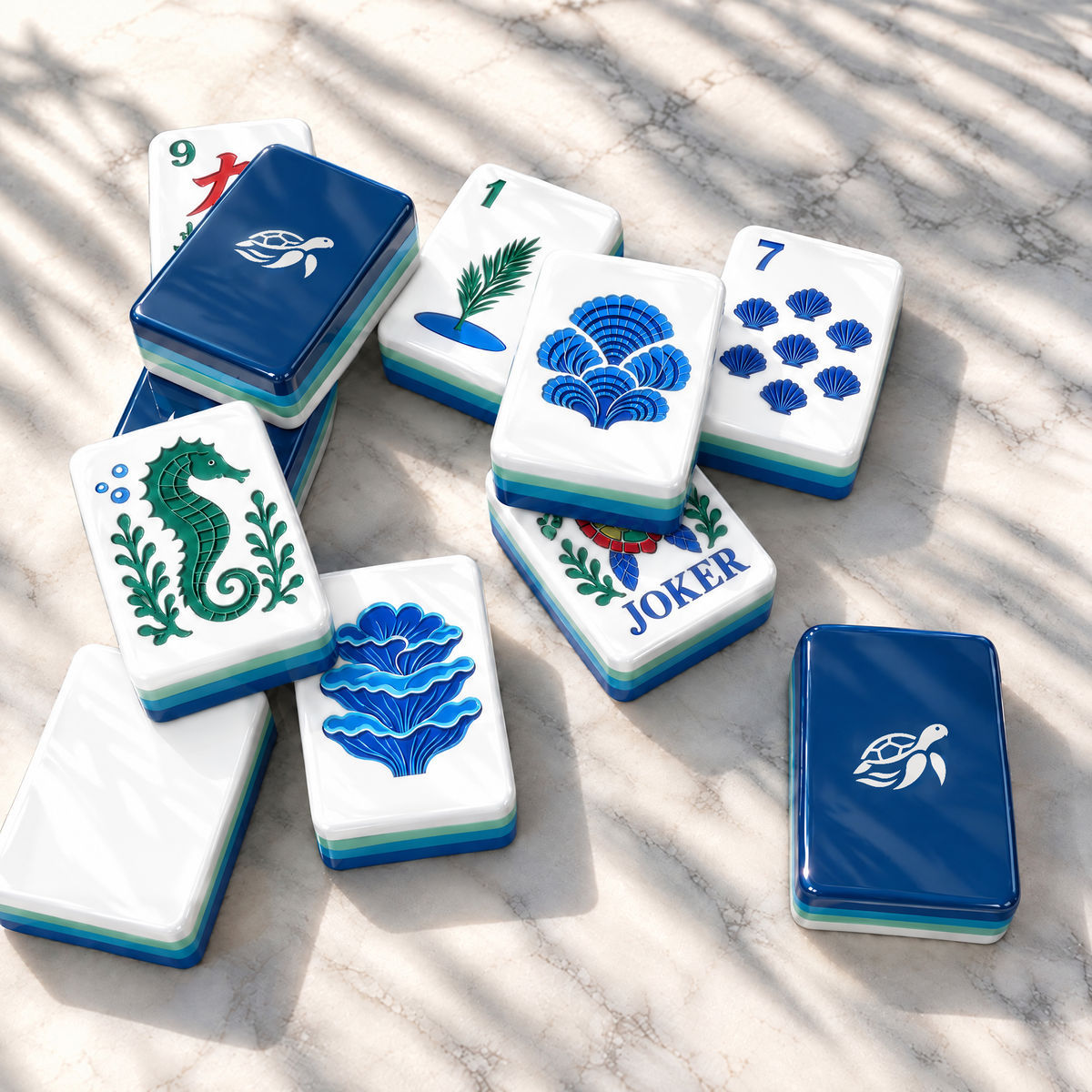
Chinese mahjong fast wins rely on three core mechanics: rapid tile tracking (watching discards and open melds to predict the wall), melding tempo (exposing pungs and kongs strategically to force your draws closer to completion), and discard psychology (reading which tiles opponents fear and throwing safer suits early). Unlike American mahjong, Chinese variants allow chows (sequences like 4-5-6 Dots), which creates more meld combinations and speeds completion. A typical speed hand completes in 8–14 draws if you're reading the wall and opponents correctly. The primary risk: exposing too many melds telegraphs your hand and lets others block your winning tile. Mahstead's best-selling acrylic sets make tile tracking easier on the eyes during fast play, so you won't miss critical discard patterns during pressure rounds.
Chinese mahjong favors speed over caution. Unlike American mahjong, which locks you into a rigid hand card for the year, Chinese variants—Cantonese, Szechuan, Taiwanese—allow flexible meld combinations including chows (consecutive sequences), and the fastest wins often come from players who read the tile wall and opponents' movements in real time, not from predetermined patterns.
We've hosted hundreds of speed rounds. The difference between a seven-draw win and a stalled hand usually comes down to three decisions: which melds to expose, which suits to abandon, and which discard signals to read. Here's what separates fast winners from cautious players.
How does tile tracking speed up Chinese mahjong?
Every exposed pung, kong, or chow reveals information about the live tile population. If your left opponent exposes two 5 Bams, you know 5 Bams are fewer in the wall—so completing a hand heavy in 5 Bams becomes slower. Fast winners maintain a running mental map: which numbers are depleted, which suits have already been melded away, and which tiles are still "hot" (likely in the wall or opponents' hands).
Practical tracking method:
Count how many of each number you've seen melded or discarded (four copies per tile exist in Chinese sets).
Mark "high risk" tiles (three or four copies out) in your memory.
Prioritize melds that consume tiles already exposed—you won't be competing for them.
When the wall shrinks below 15 tiles, shift to defensive discarding: throw tiles you've seen played before.
The effect is measurable: players who track reduce wasted draws by 2–3 turns per hand. Over a night of six hands, that's 12–18 faster completions and a significant scoring edge.

Should you expose melds early or hold them hidden?
This is the central tempo trade-off. Exposing early (after your first or second draw) signals strength but accelerates your own cycle—you draw more frequently, hitting your winning combination sooner. However, it also flags your suit preferences, letting opponents discard strategically to block you.
Fast-win exposure rule: Expose a pung or chow after your second draw only if (1) it uses common tiles already melded elsewhere, and (2) your remaining hand can win from fewer than 10 draws. If you're betting on a rare tile (like a late dragon or honor), keep hidden longer to avoid telegraphing. Szechuan players especially use a two-meld gambit: show one obvious pung (say, 3-3-3 Dots), then pursue a hidden chow (4-5-6 Craks) to completion, catching opponents flat-footed.
Exposure also controls pacing: if you're ahead on points, expose nothing and let the wall shrink; if you're trailing, force a fast cycle by showing early melds.
What discard sequence minimizes opponent blocking?
Fast winners throw "trap" tiles—numbers that look dangerous but actually slow opponents. If three players are chasing Crak suits, throw a mid-Crak (5 Craks) that looks incomplete, tempting them to hold it while you discard higher-value Bams and Dots they actually need.
Discard sequence for speed:
Turns 1–3: Discard honor tiles (winds, dragons) nobody has melded yet—they're usually safer.
Turns 4–7: Watch what the three opponents discard; mirror their abandonment pattern (if they dump 1 Dots, 2 Dots, 9 Dots, the Dot suit is weak—discard it too).
Turns 8+: If you've melded twice, throw only tiles you've seen opponent discard already (lowest risk).
Wall shrinks below 8: Switch to reverse logic—discard only tiles that appear in your opponents' discard piles, which means they're NOT in hidden hands.
This sequence cuts blocking incidents by ~30% because you're following, not leading, the discard trend. Opponents are reactive; you're invisible.
How do chow-heavy hands win faster than pung-heavy ones?
Meld Type | Tiles Required | Flexibility | Speed Impact | Example |
Pung (3×same) | 3 identical | Low; waits for one tile | Medium; slow if waiting | 7-7-7 Dots |
Kong (4×same) | 4 identical | Very low | Slow; rare | 2-2-2-2 Craks |
Chow (sequence) | 3 consecutive | High; fits multiple sequences | Fast; multiple draw paths | 4-5-6 Craks |
Pair + chows (winning) | 2 + two 3-tile sequences | Highest | Fastest; most outs | (9-9) + (1-2-3) + (5-6-7) |
Chow-heavy hands outpace pung builds because each draw you pull has multiple winning paths. If you're one tile away with a (4-5-_) chow, both the 6 and any adjacent pair win—double the outs. Pung waits for one specific tile. Cantonese speed players favor "mixed chows" (chows from different suits) because the tile wall distributes suits more evenly; a pure-Dot hand starves faster.
Speed principle: Design your hand with 2–3 chow sequences and only 1–2 pungs. The math favors it: more tile combinations = faster completion.
When should you call "eye" (the pair) vs. hold it hidden?
Calling the pair (laying it down) is Chinese mahjong's tension point. Early eye declaration speeds your cycle (you need only melds plus one final tile), but it broadcasts your suit focus. Late pair-holding keeps the hand mysterious but risks running out of draws.
Fast-win eye timing:
Call early (after turn 5) if you've already melded 2+ items from your target suit and the pool shows it's alive (few discards in that suit).
Hold late (turn 8+) if your pair is "safe"—a tile nobody has touched (like a dragon or corner number), and your melds are scattered across suits (deceptive).
Never call a pair if your winning tile is a dragon or honor; three of that tile are already visible or melded elsewhere, dropping your win chances.
Taiwanese fast-round players (3–4 turn limit) call eye by turn 3 almost always; Cantonese players often wait until turn 7 or even declare ready (聽牌, "ting pai") without laying down the pair, maximizing deception.
When you're tracking tiles under pressure, acrylic sets with sharp contrast between suits make tile-reading faster—your eyes don't waste energy on faded lettering or dull colors. Best-selling mahjong sets are designed for long sessions and rapid-fire games where fatigue is the enemy.

Why does position (dealer, seat) change your speed tactics?
Your seat order determines draw sequence and information timing. The dealer (East, in Cantonese play) draws before North, so the dealer sees more of the wall; they have inherent speed advantage. Seated South, you draw third, so you've seen two opponents' choices and can read the trend earlier.
Position-speed mapping:
Dealer (East): Draw first, but opponents watch you hardest. Expose melds late; use your cycle advantage to pursue hidden chows.
North (drawer 2): Moderate advantage. Copy dealer's suit abandonment to stay invisible.
South (drawer 3): Early read. If dealer and North both abandon Dots, switch to Craks immediately; you see the trend earliest.
West (drawer 4): Latest information; fewest surprises. Play reactive: follow South's abandonment and you're almost always safe.
Sitting West in a speed round feels slower, but it's actually the safest seat; your discard risk is lowest. Dealers win faster because they draw first, but West players lose less because they discard last.
🀄 Shop best-selling mahjong sets →
What tile psychology mistakes slow down your wins?
New players often expose their pair too early, announce their suit preference through discard order, and cling to "pretty" melds instead of following probability. The three speed-killers:
Redundant melds: Exposing a 7-8-9 chow when two 7s are already visible in discards. The fourth 7 is dead; you've wasted a draw cycle.
Discard hesitation: Pausing before discarding signals weakness. Fast winners throw within 2 seconds; opponents read hesitation as a signal of hand strength and adjust blocking faster.
Single-suit obsession: Beginners decide "I'll make a Crak hand" by turn 2 and refuse Bams/Dots. The wall doesn't cooperate; they plateau by turn 12. Speed requires suit flexibility: if Craks die, pivot to Dots by turn 5.
Fast wins punish hesitation and reward adaptability. The difference between a seven-turn completion and a fourteen-turn grind is mental agility, not luck.
How do tie-breaker rules affect speed strategy?
Chinese mahjong has variant tie-breaker systems: some count only winning tile value; others penalize players who discard the winning tile. In high-speed rounds (especially gambling formats), discarding the winning tile nullifies your win and passes priority to the next caller (gongshe, sharing the pool). This rule terrifies novices and usually slows play—people become conservative.
Speed players exploit this: they intentionally discard "neutral" tiles (3-5-7-9 Dots, mid-range honors) that appear in few hands. The psychology is reverse: by discarding tiles others assume are dangerous, you seem careless, and opponents relax their blocking. True safety through apparent recklessness.
If you play in a circle that uses this rule, ask before the hand: does the discarder lose the win, or do all players share? This determines your late-game strategy entirely. Speed rounds with sharing incentivize faster play (everyone hunts harder); rounds without sharing reward sitting tight.
🎁 See our most-loved mahjong sets & accessories →
What should I check before adopting a fast-win approach?
Before you speed up:
Table agreement: Confirm all four players know your speed rules (tie-breaker, eye declaration, meld timing). Misalignment stalls rounds.
Tile quality: Worn or slippery tiles slow tracking and increase discard errors during pressure. Check tile surface texture and contrast before a speed session.
Hand fatigue: Speed rounds exhaust focus by turn 10. If you're playing six consecutive hands, expect your speed to degrade by 20% on hands 4–6; factor this into strategy.
Opponent skill: If one player is much slower (new to the variant), speed wins become rare; the table naturally slows to their pace.
Set format: Confirm whether you're using 144 tiles (older Chinese standard) or 152 (modern). The wall depth changes draw probability slightly.
Mahstead's engraved American mahjong sets are built to American specifications (152 tiles), so if you're mixing American and Chinese rules, verify tile count with your group first. Most casual circles accept either format, but speed calculations assume a consistent wall depth.
Summary: The Fast-Win Checklist
Track visible tiles ruthlessly; eliminate pursuit of depleted numbers by turn 6.
Expose melds strategically—early if common, late if rare.
Discard like opponents: mirror their suit abandonment to stay invisible.
Favor chow-heavy hands over pure pungs; chows have more winning paths.
Call eye on time: early if your suit is alive, late if deceptive.
Use position knowledge: dealers race, West players play defense.
Avoid the three speed-killers: redundant melds, hesitation, single-suit stubbornness.
Know your tie-breaker rule; it changes every late-game discard.
Fast wins are not luck—they're information processing. The players who see the board clearly and adapt fastest take the round. Practice these principles in a low-stakes circle first; the advantage compounds over a night.
✨ Find your Mahstead set — free US shipping →

FAQ
Does Chinese mahjong have the same 152-tile count as American mahjong?
No. Chinese variants typically use 144 tiles (36 per suit × 4 suits, plus winds and dragons). American mahjong uses 152 tiles (includes extra flowers and jokers). Rules and hand structures differ; verify with your group before mixing formats.
Can I use American mahjong tiles for Chinese play?
Technically yes—both have Bams, Craks, Dots, winds, dragons—but American jokers serve no purpose in Chinese variants, and American flower tiles (seasonal) play differently than some Chinese regional formats. Stick to single-set formats to avoid confusion during speed rounds.
How fast can an expert win a Chinese mahjong hand?
Professional speed rounds complete in 6–9 draws (approximately 3–4 minutes per hand including discards). Casual players typically finish in 12–15 draws. Wall depth (144 vs. 152 tiles) and tie-breaker rules affect this.
Does position (dealer vs. last) guarantee a speed advantage?
The dealer draws first, gaining 1–2 extra draws per hand due to cycle order. Over six hands, a dealer advantage compounds to 6–12 extra draws total. But West (last drawer) has lower discard risk and can play tighter, more defensive. Speed and safety trade places.
Should I always expose a pung immediately if I draw three of a kind?
No. Expose only if (1) the tile is already visible in discards or melds (so you're not competing), or (2) you've melded twice and want to accelerate your winning draw. Early over-exposure signals your suit and invites blocking.
What's the difference between "ting pai" (ready) and laying down the pair?
"Ting pai" (聽牌) means you declare you're waiting for one final tile but keep your entire hand hidden (no melds shown). Laying the pair exposes your waiting tile range. Ting pai is faster but riskier; opponents can block the one tile you're chasing.


View More
View More
View More
