
Chinese Mahjong Books for Beginners: Learn the Rules & Start Playing
Last updated: Nov 23, 2026
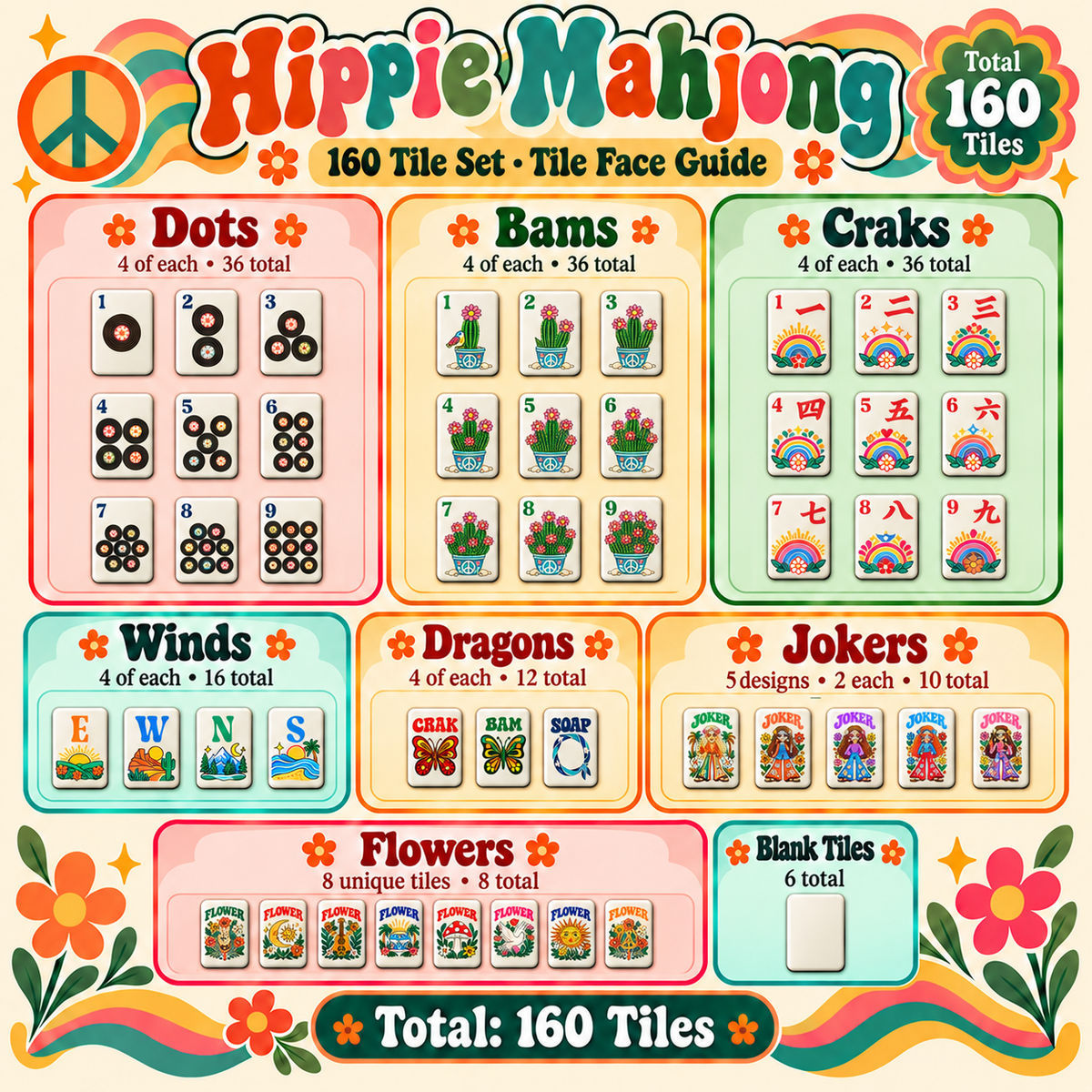
Chinese mahjong books for beginners teach you how to form chows (sequences like 1-2-3), pungs (three identical tiles), and kongs (four identical tiles), and how to win by declaring a complete hand—unlike American mahjong, which relies on a yearly card and preset patterns. The best starter books include rule diagrams, hand examples, and scoring tables specific to your regional variant (Cantonese, Hong Kong, or Riichi). Most beginner texts take 2–4 weeks to digest if you practice weekly; you'll learn tile groupings, the discard pile, and basic strategy before advancing to blocking and defensive play. Look for books with clear English translations, illustrated tile faces (since Chinese characters and bamboo imagery confuse newcomers), and practice hands you can solve yourself. Avoid books that assume prior tile-game knowledge or skip scoring explanations—Mahstead's best-selling mahjong sets ship with clear tile labels so your book's examples make sense immediately.
What's the difference between Chinese and American mahjong?
Chinese mahjong lets you form chows (sequences of three consecutive numbers in the same suit, like 2 Bams, 3 Bams, 4 Bams). American mahjong forbids chows entirely—you only use pungs (three identical tiles), kongs (four identical tiles), and quints or sextets (five or six identical tiles). Chinese mahjong has no official hand card; players memorize winning combinations. American mahjong binds all hands to the National Mah Jongg League card, updated yearly. Chinese sets use 136 or 144 tiles; American sets use 152 tiles plus jokers. Winning conditions differ too: Chinese mahjong demands a completed hand plus one additional tile from the wall or discard pile; American mahjong requires only the specific hand pattern from the card. Scoring in Chinese variants often rewards only the winner; American scoring awards points to all players. Choose a beginner book labeled for your preferred variant so you don't waste time unlearning rules.

Which beginner books teach Chinese mahjong rules most clearly?
The clearest Chinese mahjong books for beginners use step-by-step tile illustrations, separate sections for each regional style, and worked examples showing how to discard safely. Look for titles that explain the "wall break," tile-drawing order, and Kong declaration separately before combining them into a full game sequence. Books with laminated quick-reference cards or QR codes linking to video tutorials help enormously—you can pause, rewind, and replay a specific move. Titles focused on Hong Kong or Cantonese mahjong often include bonus sections on "flower" tiles and bonus scoring, which trip up beginners. Books by authors with competitive tournament experience tend to cover blocking and reading the discard pile earlier, giving you a practical edge by week three. Avoid dense rulebooks written for advanced players; start with a beginner-focused title even if it feels slow—you'll retain patterns better and spot mistakes in your own play sooner. Regional variants matter: a Riichi mahjong book teaches hand progression and closed melds that don't apply to Cantonese mahjong, so confirm the book matches your target game before purchasing.
What should a beginner book's structure include?
Section | Why It Matters | What to Look For |
Tile Overview | You can't form hands if you don't recognize every tile face. | Enlarged images of all 136–144 tiles with English labels and Chinese characters side-by-side. |
Hand-Building Basics | Chows, pungs, and kongs are the foundation of every hand. | 10+ worked examples showing how to spot incomplete melds and complete them legally. |
Discard Logic | Beginners discard randomly; books should teach which tiles are "safe." | Case studies comparing safe vs. risky discards and their consequences in real games. |
Scoring Tables | Chinese mahjong scoring is granular; this section prevents disputes. | One-page summary table for your regional variant (Hong Kong, Cantonese, or Riichi) with point multipliers clearly labeled. |
Practice Hands | Theory alone doesn't build muscle memory; practice is essential. | 15+ solvable hands with answers in the back; ideally graded from easy to medium difficulty. |
Frequently Fouled Moves | Beginners make the same mistakes repeatedly. | A dedicated section listing illegal discards, premature claims, and wall-breaking errors with photos of what went wrong. |
A book missing any of these sections will leave gaps in your play that frustrate you during your first live game. Prioritize clarity over brevity—a 200-page beginner book is better than a 50-page "quick guide" that skips scoring or hand combinations.
How long does it take to learn from a beginner book?
Most players learn the core rules in 2–4 weeks if they read for 15–20 minutes daily and play at least one full game weekly. The first week teaches tile recognition, basic melds, and legal moves; by week two, you'll spot common hand patterns and avoid obvious mistakes. Week three adds discard strategy and reading your opponents' kept tiles. Week four is when defensive play—blocking opponents and calculating risk—starts to click. However, reaching true competence (predicting tiles, blocking skillfully, adapting to variant rule shifts) takes 8–12 weeks of consistent play. Books alone aren't enough; you need a live group. After reading your beginner book, join a weekly game at a local community center, library, or mahjong club so experienced players can correct your moves and answer questions in real time. Online forums and video tutorials fill gaps between sessions but can't replace the feedback of watching real opponents play.
What if your beginner book covers a different variant than your local game?
If your book teaches Riichi mahjong but your group plays Hong Kong mahjong, you've learned roughly 60% of what you need—the tile recognition, basic melds, and discard logic transfer directly. The remaining 40% (scoring, bonus tiles, and hand name priorities) differs sharply. Don't panic; ask your group leader if a second, variant-specific book is worth buying or if watching three games before your first play suffices. Many groups tolerate a "beginner's first night" where you observe, ask questions, and play a low-stakes game with gentle correction. The rules of one variant will feel automatic by week three, making the rules of a second variant learnable in a single session. Prioritize playing the variant your group actually uses over mastering a regional style no one near you plays—muscle memory and confidence matter more than theoretical breadth early on. If you're committed to learning multiple variants, buy one beginner book per variant rather than a hybrid "Compare All Variants" book, which often confuses newcomers by highlighting differences instead of drilling fundamentals.

How do you practice between game sessions using a beginner book?
Work through the practice hands in your book once daily, setting a 10-minute timer to keep the pace realistic. Write down which tiles you'd discard and why, then check the author's answer. If yours differs, reread the relevant rule section before your next session. Many players photograph the page with the answer and keep it on their phone for review during dead time. Use the scoring table on a spreadsheet or downloaded calculator app to score five completed hands per week—speed and accuracy matter when you're playing live. Record one confusing rule per session and email your group's organizer; hearing the answer in context (from a player who's seen that situation happen) sticks better than rereading text. Ask if your group has a group chat where players post practice hands or poll rules; you'll often get quick, friendly clarification and feel part of the community before your first game. Avoid memorizing every hand or tile combination; focus instead on recognizing patterns (spotting two tiles away from a chow, recognizing a safe discard, knowing when to claim a tile). A beginner book is a map, not the territory—use it to navigate real play, not to replace it.
🀄 Shop best-selling mahjong sets →
What equipment helps you practice from a beginner book?
Once you've chosen a beginner book and a variant, you'll want a practice set to work through the hands and examples the book provides. Best-selling mahjong sets include engraved tile faces and clear English labels so you can match the book's illustrations to real tiles—this connection is crucial for building speed and confidence. A mahjong mat keeps tiles organized during solo practice, making it easy to lay out the examples the book shows. Mahjong racks with pushers let you hold tiles like a real player, training your hand position and comfort. Many beginner books include photos of tile arrangements on a mat; having the same mat layout during practice cements the visual pattern and speeds recognition during live play. You don't need fancy equipment to learn, but matching your practice setup to your game environment eliminates friction on your first night and builds muscle memory faster.
What to check before you buy a beginner book
Author credentials: Does the author have competitive tournament experience or write for a mahjong federation?
Target variant: Does the book clearly label which regional style (Hong Kong, Cantonese, Riichi, Taiwanese) it teaches?
Illustrated hands: Are there at least 15 practice hands with step-by-step solutions?
Tile images: Are all tile faces shown with both English labels and Chinese characters?
Scoring clarity: Is there a one-page reference table for quick lookup during play?
Publication date: Books from the last 10 years use clearer printing and modern rule interpretations; older texts may contradict your local group's house rules.
Language quality: Skim a sample page; if the English feels machine-translated or awkward, the rule explanations may confuse rather than clarify.
ISBN availability: Can you get it used or through a library first, or does it only exist as a limited print run?
🎁 See our most-loved mahjong sets & accessories →
Where to find beginner books and local games
Most beginner mahjong books are available through major online retailers, library systems, and used resale platforms. Search your region's name plus "mahjong book" (e.g., "Hong Kong mahjong beginner book") to surface variant-specific titles. Your local library often carries one or two titles; ask the librarian to request an interlibrary loan if not. Mahjong clubs, community centers, synagogues, and country clubs sometimes stock lending libraries of beginner books—call ahead or join their Discord/Facebook group to ask. Once you've learned the basics, ask your group's leader for a book recommendation; they've probably helped dozens of beginners and know which title avoided confusion. Many groups share a one-page rule cheat sheet alongside the beginner book, highlighting house rules unique to your game. Online mahjong communities (forums, subreddits, YouTube channels) often post free rule summaries and video tutorials that complement the paid book and fill gaps. Don't buy the book in isolation; connect with a local or online community first so your reading stays aligned with the actual rules you'll play.
✨ Find your Mahstead set — free US shipping →

FAQ
Can one beginner book teach me all Chinese mahjong variants?
No. Each variant (Hong Kong, Cantonese, Riichi, Taiwanese) has different scoring, hand names, and bonus tile rules. Buy a single-variant book matched to your local game instead—you'll absorb it faster and avoid confusion.
How much does a good beginner book cost?
Prices vary widely depending on the publisher and whether you buy new or used. Check your library first; many offer free copies, saving you money while you confirm you enjoy the variant.
Do I need a mahjong set to learn from a beginner book, or is reading enough?
Reading alone teaches rules but won't build the speed and pattern recognition live play demands. Buying or borrowing a set to work through the book's practice hands cuts your learning time in half and builds confidence before your first real game.
What if my group plays with house rules not covered in my beginner book?
This is normal. Ask your group leader for a one-page house rules summary before your first game. Stick to the book's core rules during play and let your group correct you gently—most players expect beginners to make mistakes and help willingly.
Is a beginner book enough to win, or do I need a coach?
A book teaches legality and basic strategy; winning takes live experience and feedback from other players. Attend your group's games regularly after finishing the book. Most groups include a mix of skill levels, and experienced players often offer informal coaching during play.


View More
View More
View More
