
Changsha Mahjong Lessons Online: Learn Chinese Tiles From Home
Last updated: Nov 23, 2026
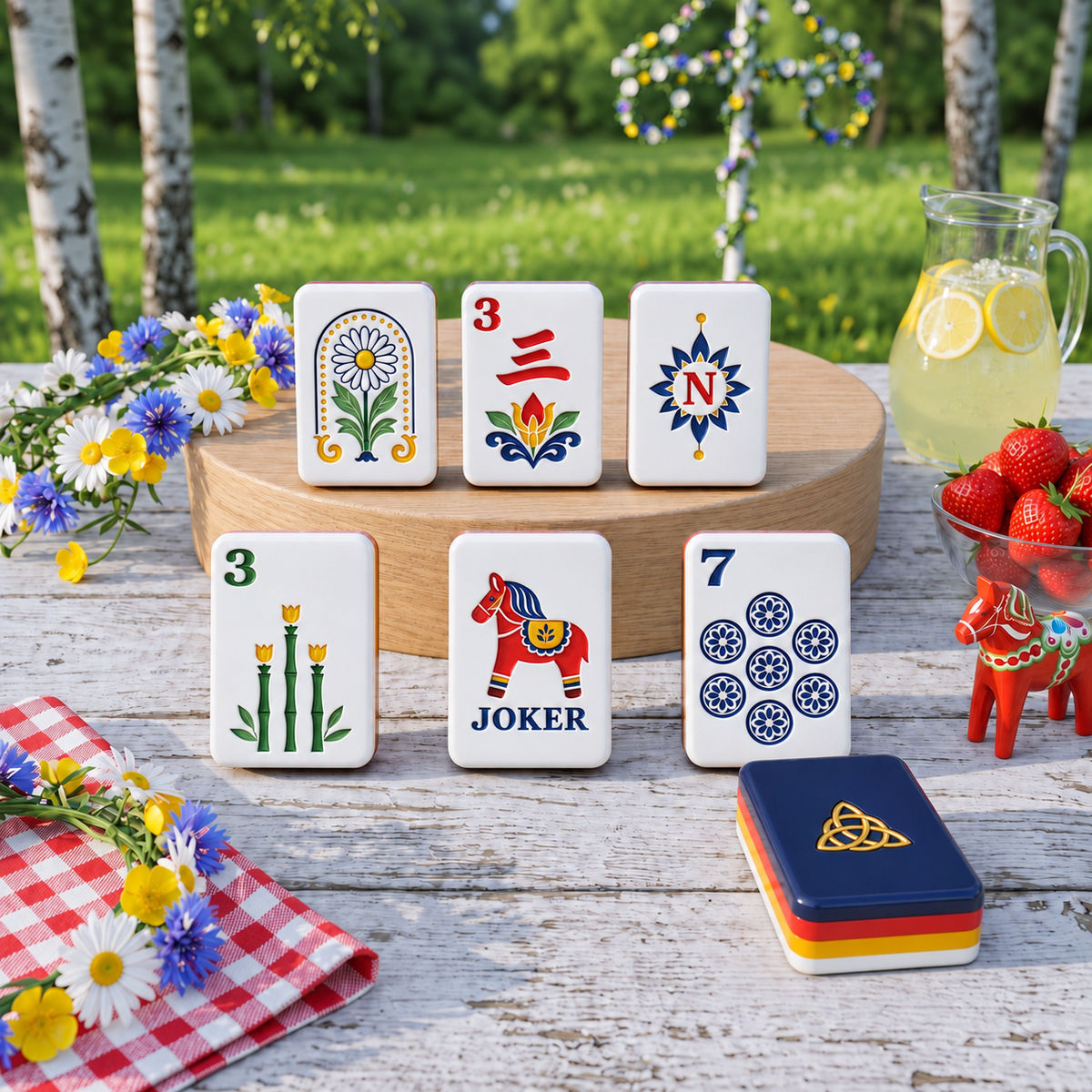
Changsha mahjong is a fast-paced Chinese variant played in Hunan's capital with a simplified tile set (108 tiles: three suits 1–9 plus winds and dragons, no flowers or jokers). Online lessons come from dedicated YouTube channels, WeChat groups run by Changsha players, and platforms like Bilibili and regional Chinese gaming communities; most free content is in Mandarin with visual demonstration. A typical beginner course spans 4–6 weeks (one or two 30- to 60-minute sessions weekly), teaching hand types (hu patterns), discard logic, and the rapid calling style. Unlike American mahjong, Changsha allows chows (1–2–3 sequences), has no jokers, no Charleston, and no printed hand card; all patterns are memorized.
🀄 Shop best-selling mahjong sets →
Where can you find Changsha mahjong lessons online?
Changsha mahjong instruction lives on Chinese-language platforms and diaspora communities. Bilibili (the Chinese video site) hosts dozens of beginner playlists—search "长沙麻将教学" (Changsha mahjong teaching); most run 15–45 minutes and show tile layout, hand winning patterns, and discard strategy frame by frame. WeChat groups (the primary social and gaming hub for Chinese players worldwide) often feature Changsha players who host weekly teaching sessions or link to recorded tutorials. YouTube has fewer dedicated Changsha courses than American mahjong, but search "Changsha mahjong rules" or "Hunan mahjong tutorial" in English to find diaspora instructors or expat players who break down the game. Meetup boards and local Chinese community centers (libraries, cultural associations, restaurants with game rooms) sometimes advertise weekly play circles where a more advanced player will teach newcomers—often free or a small table fee. The language barrier is real: most instructors teach in Mandarin, so pair visual lessons with a printed rules sheet or phone translation app to decode hand names and strategy calls.

How do Changsha rules differ from American mahjong?
The rule divergence is fundamental and affects every decision you make at the table. American mahjong uses 152 tiles (three suits × 1–9, winds, dragons, flowers, jokers) and depends entirely on the current year's National Mah Jongg League card—you memorize or reference that card to know which hand patterns win. Changsha mahjong uses only 108 tiles (three suits × 1–9, winds, dragons; no flowers, no jokers, no card). American hands are exposed as separate melds (pungs, kongs, quints)—you lay down groups on the table as you build them. Changsha play is also based on exposed melds, but the allowed patterns (hu types) are fixed by long tradition, not an annual card. Most importantly: American mahjong has no sequences—you cannot call or expose a 1–2–3 run of any suit. Changsha and most other Chinese variants allow and require chows (sequences). Jokers are central to American play; Changsha has none. Changsha is also faster and louder—tiles are thrown down with snap and rhythm, discards are called aloud ("碰" for pung, "吃" for chow), and the game moves in rapid rounds. If you've learned American mahjong first, Changsha will feel like you're playing a different game—so don't mix the two until you're fluent in each.
What tile set do you need to play Changsha mahjong online?
A 108-tile Chinese mahjong set is mandatory, not optional. You cannot improvise with American tiles: a standard American set has 152 tiles with jokers and flowers; a Changsha set has exactly 108—three full suits (Bams, Craks, Dots) numbered 1 through 9 (36 tiles), 16 winds (4 each), and 12 dragons (4 Red, 4 Green, 4 White). When you join an online lesson or play session, the instructor or host will assume you have this tile count and layout. The difference matters: an American set will confuse you (extra tiles you don't use) and confuse your teacher (who will think you don't understand the game). Chinese sets come in bamboo, bone, plastic, or acrylic; acrylic is cheapest and most durable for learning—affordable, visible on video call, and unbreakable if you drop them on a hard table during a practice session. Mahstead specializes in American mahjong sets with engraved designs and custom branding, not Chinese-standard 108-tile sets, so for Changsha practice you'll source your tiles from a Chinese import seller or a general game shop online. Once you acquire your 108-tile set, store it in a simple drawstring bag (no mat needed for online play; a towel on your desk works fine) so you can pull it out for weekly lesson calls.

What's the fastest way to learn Changsha hand patterns (hu)?
Hand memorization is the skill barrier. Changsha has dozens of recognized hu patterns, but beginners focus on 8–15 core types: pairs (俱乐部), triplets (三元), sequences, mixed sets, "all simple" (all tiles 2–8, no terminals), "all terminals" (1s and 9s only), "all same suit," and "seven pairs." Unlike American mahjong where you reference the printed card, Changsha requires you to remember these patterns from play. The fastest learning path: (1) Watch a beginner playlist (2–3 videos, 30–60 minutes total) to see the 8–10 most common patterns visually, with tiles laid out flat; (2) Draw each pattern on paper or print a pattern sheet and review for 10 minutes daily for one week; (3) Play a practice hand simulator (search "Changsha mahjong online game" or "长沙麻将游戏" on Bilibili or WeChat Mini-Programs) for 15–20 hands while watching for those patterns; (4) Join a lesson where the teacher plays slowly and explains why each discard was chosen. The key: Changsha is faster than American mahjong, so repetition and visual memory trump reading. After 20–30 hands, the patterns stick. Many learners plateau because they try to memorize all patterns at once; commit to the core five first, then add two more per week. Chinese players learn this as children, so they have speed you won't match for months—don't compete on speed; compete on pattern recognition and discard logic.
How do you join an active Changsha mahjong online community?
Entry depends on language comfort and where you live. If you read Mandarin: search WeChat for regional groups (search terms like "长沙麻将群" or "Changsha mahjong group"); ask friends or family in China to invite you to established circles. Many groups have 8–20 members and rotate teaching/play sessions on weekends. If you read some Mandarin or have translation help: post on Meetup.com or Douban (the Chinese social board) in your city—search "mahjong" and "Changsha"—and you'll find expat or immigrant groups that welcome learners. If you're English-only: YouTube comment sections on Changsha tutorials often link to Discord or Telegram communities run by English speakers teaching the game; join those and ask for a beginner buddy. Red flags: avoid groups that charge membership fees upfront or demand money to enter online play. Most community play is free or a small house fee (shared pizza or drinks) once you're ready for casual stakes. The culture in Changsha circles is welcoming to beginners if you show respect, attend regularly, and ask clear questions—arriving late, skipping sessions, or treating it as a one-time curiosity will label you as unserious. Commit to 4–6 weeks of weekly play, and you'll be invited back.
Learning Path | Time Per Week | Best For | Outcome After 4 Weeks |
YouTube solo + tile practice | 1–2 hours | Self-taught learners, visual learners | Know 5–8 patterns, play slow practice hands |
Online lesson + WeChat group play | 2–3 hours (1 lesson + 1–2 casual games) | Beginners with community access | Know 8–12 patterns, play at beginner speed |
Bilibili + Bilibili game simulator | 1.5–2 hours (video + gameplay) | Chinese-reading learners | Faster pattern recall, competitive readiness |
Full mentorship (weekly 1-on-1 call) | 3–4 hours (1 hour lesson + practice) | Serious learners wanting fastest progress | Play competent full games, teach others basics |
What to check before you buy tiles and start learning
Tile count: Make absolutely sure your set has exactly 108 tiles—not 120 (some add blanks), not 144, not 152. Count them out of the box or ask the seller directly. Tile size: Standard Chinese sets use tiles sized 26–28mm long × 16–17mm wide × 12–14mm thick. This matters because the rapid calling style and throwing speed in Changsha play is faster; smaller or oversized tiles feel wrong. Engraving or printing clarity: Acrylic tiles with printed suit marks (Bams, Craks, Dots) and numbers should be bold and clear, not faded—you'll be reading them quickly during play. Character labels: If the set has both English numbers and Chinese characters, even better; if only Chinese, make sure the characters match your tutor's (some dialects use variant characters). Storage: Buy or make a simple drawstring bag—not a fancy mat (unnecessary for Changsha) but a protective bag so tiles don't scatter. Test tile balance: Drop a few tiles on a flat surface—they should lie flat, not wobble. Warped tiles slow the game and frustrate players.
🎁 See our most-loved mahjong sets & accessories →
If you're also curious about American mahjong and want to compare, read our guide to how to play American mahjong and explore American mahjong sets with custom engravings that make great gifts for long-term players. Both games share tiles and speed, but the strategy and rules are worlds apart—master one at a time.
✨ Find your Mahstead set — free US shipping →

FAQ
Can I learn Changsha mahjong without knowing Mandarin?
Partially. Pattern recognition is visual—you can watch tiles being played and mimick moves. But rule explanations, strategy calls, and hand names are mostly Mandarin. Use a translation app or pair with an English-speaking tutor. Visual tutorials help more than text.
How long before I can play a full game without stopping?
Most beginners play slow, stop-and-start games after 10–15 hands (2–3 weeks of weekly sessions). Full fluent games—rapid discards, instant pattern calls—take 8–12 weeks of regular play. Speed comes from repetition, not instruction.
Is a 108-tile set for Changsha the same as a set for other Chinese variants?
Yes and no. Most Chinese variants use 108 tiles, but regional rules differ (Sichuan, Guangdong, Shanghai each have tweaks). A standard 108-tile set works for all variants, but hand patterns and calling rules will differ. Check which regional variant your tutor teaches before buying.
Should I use an app instead of physical tiles for learning?
Apps accelerate pattern recognition because they shuffle and deal fast—great for solo practice. But online lessons and group play need real tiles (visible on video, tactile, audible when thrown). Use both: app for solo drill, physical tiles for lessons and play.
What happens if I mix up American and Changsha rules mid-game?
Chaos. The games are too different. Commit to learning one fully (4–6 weeks of steady play) before starting the other. Once you know both well, switching is fast—but as a beginner, one game at a time prevents frustration and rule confusion.


View More
View More
View More
