
Cantonese Mahjong With 3 Players: Rules, Setup & Play
Last updated: Nov 23, 2026
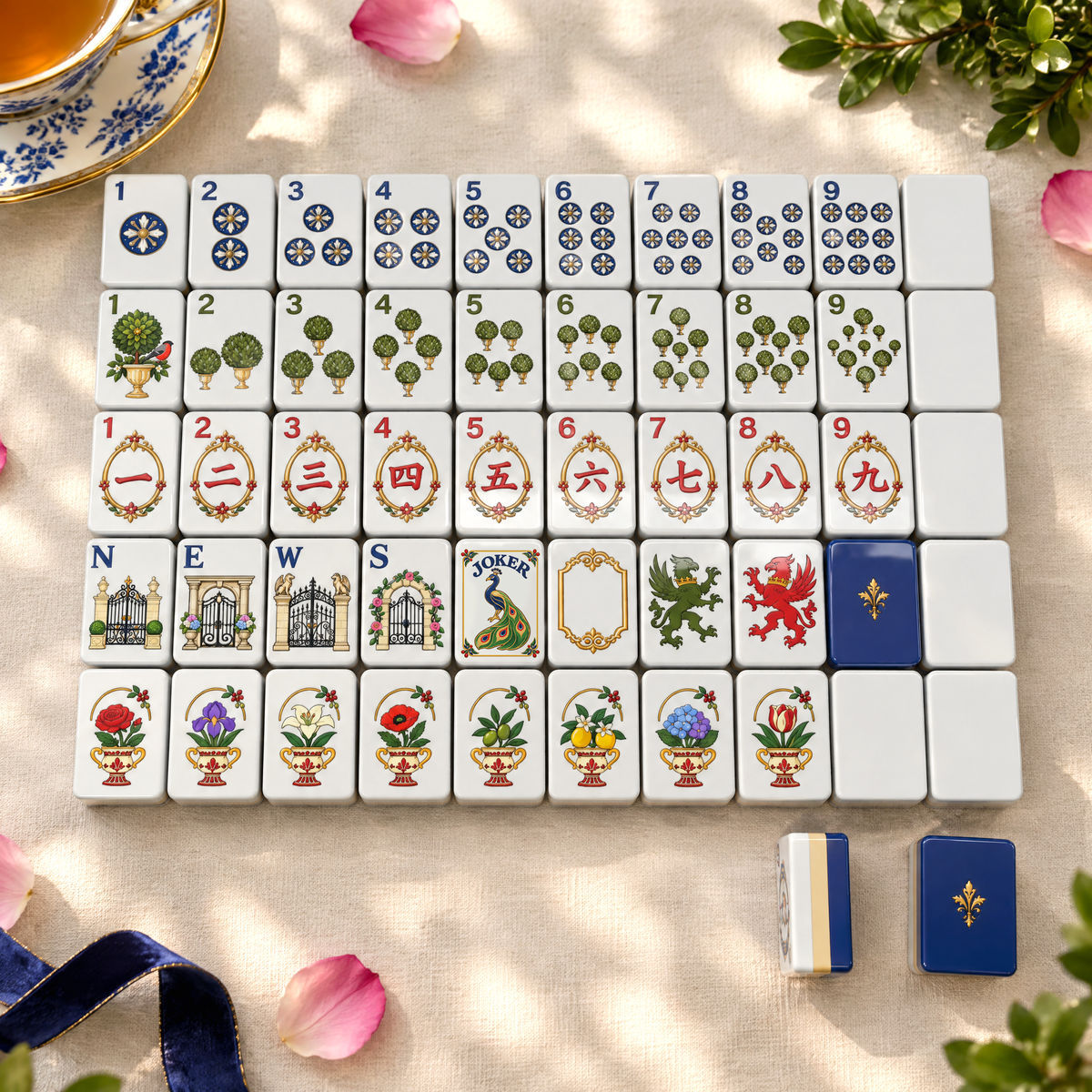
Cantonese mahjong with three players uses the full 144-tile set (or 152 with American-style jokers) and modifies the wall draw and winning conditions to account for the missing seat. East, South, and West positions play; North's tiles are removed before play begins. Each player draws 13 tiles after the initial 12-tile distribution and the first discard. The winning hand is still 14 tiles (1 melds + 1 pair or a special pattern), but waits shorten and discard pressure increases because fewer players mean fewer tiles in play. Winning pays from all three players rather than just one. The game plays faster than four-player Cantonese mahjong—typically 20–30 minutes per hand—and requires sharper reading of hand intent and fewer defensive holds.
How do you set up the three-player wall?
Remove all tiles belonging to North's seat before shuffling. Shuffle the remaining 144 tiles and build three walls of 48 tiles each (instead of four walls of 36). East builds first and draws from the right end of the South wall (or from East's own wall, depending on house rules). Each player begins with 12 tiles; East draws a 13th, then the first discard begins. No "dead wall" is kept, so all 144 tiles remain in active circulation. This means fewer hidden tiles and faster exposure of information—you'll see more of what's discarded early, which changes strategy compared to four-player games.

What's the winning hand structure in three-player Cantonese mahjong?
A winning hand must be exactly 14 tiles: three melds (pung, kong, or chow) and one pair, or a winning pattern from the standard mahjong hand patterns. Honour tiles (winds and dragons) follow standard rules—you can still form pung of East Wind or Red Dragon. Eyes (the pair) must be a single type. Chows are allowed in Cantonese mahjong, unlike American mahjong. Winning pays—or self-drawn wins—are simpler: in three-player, payouts go to all remaining players equally, not split among four. Some groups allow bonus scoring for concealed melds or self-drawn wins; confirm house rules before play.
How does play order change with three players?
Rotation follows the missing North seat: East → South → West → East (back around). After East discards, South draws and discards, then West draws and discards. This order continues until someone wins or the wall empties. Because there are fewer players, each person plays more frequently and the pressure to build or defend increases. You discard roughly 48 tiles per hand, so waits expire faster and winning opportunities are tighter. Turn tempo quickens—a typical hand finishes in 8–12 minutes of actual play, compared to 12–18 minutes in a four-player game.
What are the key strategy differences from four-player Cantonese mahjong?
With three players, information cascades faster: you see two-thirds of all discards instead of one-half, so reading your opponents' hands becomes more predictive and riskier. Defensive plays narrow: you can't "pass" as easily because each discard matters more to fewer people. Mid-game shifts are sharper: an opponent's shift from one suit to another signals a faster pivot, and you must respond quickly. Chow awareness peaks: fewer players mean more active chows in play; watch for half-built sequences early and block aggressively. Dead tiles are rarer: what looked safe in a four-player game can become dangerous with three, because someone held it deliberately. Keep your melds and pair flexible longer, and avoid early locks into one suit.
When should you call (win) versus hold?
In three-player Cantonese mahjong, holding for a higher-scoring hand is riskier because the wall empties 25% faster. If you have a clean one-away (needs only one tile type in multiple positions), call it within 3–5 discards; waiting longer often means the wall closes. Self-drawn wins (zimo) are rare but worth more in scoring; only hold for zimo if you're one tile away and the discard pile shows you're safe from others' winning hands. Pair waits are shorter: don't build hands that need a specific pair if you're mid-game with half the wall gone. Conversely, if the discard pile is quiet and locked (few honors or terminals), you can afford to wait 1–2 more turns for a bigger hand, because others are also struggling.
Scenario | Three-Player Play | Four-Player Play | Why It Matters |
Wall emptiness | 25% faster | Standard speed | Fewer turns = fewer waits |
Payout per win | Three sources | One source + kitty | Each player pays full share |
Safe tiles | 50% visibility | 25% visibility | Harder to hide; risk is higher |
Winning hand waits | 1–2 tiles away | 2–3 tiles away | Call faster or lock into melds |
Typical hand length | 8–12 min | 12–18 min | Tempo is tight and aggressive |
What tiles should you keep or discard early?
Discard your extremes (1s and 9s) first unless you're building a terminal-heavy hand. With three players, they sit in the discard pile longer and telegraph weakness. Hold mid-range (4–6) and honours strategically: they're slower to discard and keep your hand flexible. Watch for "dead" suits: if two players have already discarded many Bams, the third Bam player (if there is one) likely has few; pushing Bams becomes safer. Sequence building is loud: if you pick up a 2-Dot early and no 1-Dot or 3-Dot appears, others notice—you're advertising an incomplete chow, which costs you. Finish sequences fast or discard them; hanging sequences invite others to block you. Pair hunting is open: three players mean someone else is also hunting a pair; if you've discarded three Reds and see the fourth Red early, someone is waiting for it—play accordingly.
🀄 Shop best-selling mahjong sets →

What are common mistakes in three-player Cantonese mahjong?
Holding too long for a high-scoring hand: the wall closes before you draw that golden tile. Settle for a clean one-away win instead. Not reading the discard pile: with 50% visibility, a missing tile usually means someone is holding it deliberately. Ignore it. Calling too late: if you're one away in the mid-game and hesitate, you've burned a turn and likely missed the draw. Call faster in three-player. Pushing a discarded suit: if two players have both discarded West Wind, don't assume it's dead—the third player might be sitting on three. Overdefending: if you're not close to winning, defend selectively; a locked hand wastes your draws. Mixing up the turn order: after someone wins and East shifts, confirm who's East next round—rotation is unfamiliar at first.
How does scoring change with three players?
Scoring in Cantonese mahjong is suit-dependent (Bams, Craks, Dots, Honours) and hand-dependent (limit hands, clean hands, special patterns). With three players, every winning hand is paid by all three players equally—no "kitty" contribution from a dead hand. If you win a 1-fan hand and each player owes you the same amount (based on local rates), you collect from South and West. Zimo (self-drawn win) often pays double from each player, so the total payout is triple. Robbing a kong (winning on a tile another player just added to a kong) pays only from the kong player, not all three. Confirm your group's scoring system before play—some groups use simplified single-multiplier systems for three-player, while others use the full ladder. Keeping a scorecard with a mahjong mat that has built-in score-tracking zones helps avoid disputes.
Which three-player variant is closest to American mahjong?
American mahjong uses 152 tiles with eight jokers, requires hands only from the year's National Mah Jongg League card, and forbids chows. It doesn't adapt well to three players because the card structure assumes four hands and the joker balance shifts. Cantonese mahjong is more flexible: it uses 144 tiles (or 152 with house-rule jokers), allows chows and honours, and has no restrictive card—this makes it the true three-player standard in Asia and among Western casual groups. If you're learning three-player specifically, start with Cantonese rules, not American. American mahjong scoring is also fundamentally different—American uses limit hands with fixed point values, while Cantonese uses cumulative fan (or points per tile type).
🎁 See our most-loved mahjong sets & accessories →
Can you play three-player with an American mahjong set?
Yes, but with limitations. An American mahjong set contains 152 tiles (160 with spares). For three-player Cantonese mahjong, use 144 tiles and set aside eight jokers and/or blanks—don't mix them into the active game. Remove all North seat tiles before shuffling. The issue is that American sets use acrylic tiles designed for American rules (no chows, jokers as wildcards, specific hand limits). Cantonese play assumes bone or bamboo tiles and treats jokers differently—in most Cantonese games, jokers are not used at all, or used only as house-rule wild cards for specific hands. If your group plays strict Cantonese (no wild tiles), an American set's jokers can confuse newcomers. That said, many Western casual groups hybrid the rules: they use American tiles, allow chows, and treat jokers as Cantonese wild cards. It works—just clarify rules upfront.
What's the best table setup for three-player mahjong?
A three-player game needs less table space than four-player, but discard piles must remain visible to all three players. Arrange seats in a triangle or use a three-sided mahjong mat—East, South, and West face inward, with the fourth side (North) left open or used for the wall. Each player should have racks with pushers to organize their hand and prevent tiles from tipping. The wall is typically built in the center or along the open side. If you're hosting, a round or U-shaped table works better than a rectangular one—all three players have equal reach and visibility. Keep the discard pile compact and organized by player (or by turn) so waits and denials are clear. Using a mat with clear boundaries helps new players see who discards what and when.
✨ Find your Mahstead set — free US shipping →
What to check before you buy a three-player set
Tile count: Ensure the set has 144 tiles minimum (or 152 for American-style hybrids). Our best-selling acrylic sets come with 160 tiles, giving you room to remove the North seat and still have spares.
Tile readability: Cantonese mahjong demands quick visual parsing of suits and numbers. Acrylic tiles with clear engraving help in lower light. Avoid sets with tiny, faded markings.
Weight and feel: Plastic tiles click differently than bone. Test a hand before committing to a set if possible; they should feel stable in a rack with pushers without sliding.
Mat fit: If you're buying a mat too, confirm it's sized for three players or flexible enough to fit a three-sided setup.
Joker handling: Decide upfront whether your group uses jokers, and ensure your set's joker design is clear (printed symbols, not blank tiles).

FAQ
Can you play three-player mahjong without removing North's tiles?
No. Removing North tiles before shuffling ensures exactly 144 tiles (or 152 if using American-style jokers) and balances the walls. Playing without removal leaves too many tiles and breaks the draw sequence.
Is three-player Cantonese mahjong faster than American mahjong with three players?
Yes. Cantonese three-player typically runs 8–12 minutes per hand, versus 12–18 for American four-player. Cantonese has no restrictive card and simpler waits, so hands close faster and payouts simpler.
What's the typical payout structure for three-player Cantonese mahjong?
Every winning hand is paid by all three remaining players equally. A zimo (self-drawn win) often pays double per player. Confirm your group's exact rates and scoring ladder before play—they vary by region.
Can beginners play three-player Cantonese mahjong?
Yes, if they know chows, pungs, kongs, and pair basics. Three-player is actually easier for newcomers: fewer players mean less simultaneous discards to track, and the faster pace keeps attention sharp.
What's the biggest strategy shift from four-player to three-player mahjong?
Information cascades faster—you see two-thirds of discards instead of half—so reading opponents' hands is more predictive and dangerous. Call winning hands sooner; holding too long loses to the collapsing wall.


View More
View More
View More
