
Cantonese Mahjong Payment & Betting Rules Explained
Last updated: Nov 23, 2026
Cantonese mahjong payment works through a points-multiplier system: winners collect from all three opponents based on their hand's base value, doubled or trebled by payment rules tied to winning method (self-draw, discard, special hands). The loser pays the winner a sum determined by multiplying base points by a factor—typically 1× to 8× or higher for rare hands. Unlike American mahjong, Cantonese uses sequences (chows), and players track cumulative payments across rounds. Most casual games settle in small denominations or play for fun with scorecards; organized clubs may use formal rates. We recommend playing with a dedicated scorecard and clear pre-game agreement on multiplier limits to avoid disputes. Cantonese payment varies by regional house rules, so establish yours before the first hand.
How does Cantonese payment differ from American mahjong?
American mahjong pays a fixed amount per hand based on the National Mah Jongg League card (a hand is either valid or not—no intermediate scoring). Cantonese mahjong scores hands on a sliding scale: base points start low and multiply upward depending on hand rarity, winning method, and bonus conditions. American players expose melds and share a single valid hand structure each season; Cantonese players conceal tiles longer, build hands from sequences and sets, and use a permanent ruleset. American games are winner-takes-one flat payment; Cantonese typically see winners collect from all three opponents using multiplied amounts. The emotional rhythm differs: American mahjong delivers a sudden binary win; Cantonese rewards tactical complexity with graduated payouts.

What is the base points system in Cantonese mahjong?
Base points (or "fan") form the foundation. A simple hand (a pung of one suit, a chow, a pair, etc.) earns 1 base point. More complex patterns—like all one suit, or a hand with no simples (only terminals and honors)—earn 2, 3, or more base points. Some variants cap base points at 5 or 8 maximum; others allow higher totals. Once base points are set, players multiply by 2 for each "double"—doubling conditions include self-drawing the winning tile (draw win), having all tiles from the same wind, or winning on the last tile of the wall. A hand with 2 base points and three doubles becomes 2 × 2 × 2 × 2 = 16 payment units. Players agree before the game on unit value (play for bragging rights, match sticks, or nominal coins), so the table stays transparent.
How do self-draw wins and discard wins affect payment?
Self-draw win (kong kong in Cantonese): You draw your winning tile from the wall or your own draw. All three opponents pay you the full multiplied amount. A 2-point hand with 2 doubles = 8 units collected from each opponent (24 units total into your stack).
Discard win (hu or tsumo on discard): Someone discards your winning tile. Only the discarder pays—typically the full amount, though some rule sets charge the discarder slightly more to penalize careless tile play. The other two players pay nothing.
Kong bonus: Drawing the final tile of a kong (a four-of-a-kind meld) magnifies payment. Some Cantonese variants double or triple the hand's base points if you win on the kong tile.
This distinction creates real strategy: avoiding throwing "hot tiles" (likely to be claimed) and balancing aggressive melds against defensive caution. Player skill shows in reading the board and managing payment risk.

What are common Cantonese payment multipliers and limits?
Most casual friendly games use these rough guidelines (house rules vary widely by region and group):
Situation | Base Points | Doubling Method | Example Payment per Opponent |
Simple hand, discard win | 1 point | None | 1 unit |
All one suit, self-draw | 2 points | ×2 for suit, ×2 for self-draw | 8 units |
Hand with no simples | 3 points | ×2 for terminals only | 6 units |
All honors, self-draw | 4 points | ×2 for self-draw, ×2 for honor limit | 16 units |
All green/all red dragons, self-draw | 5 points | ×2 for mono-color, ×2 for self-draw, +kong bonus | 20–40 units |
Some tables cap payments at 8, 16, or 32 units per opponent to keep the game social. Others use an escalating multiplier: each successive hand by the same player (a "hot streak") increases the multiplier slightly. Agree on limits before starting—nothing sours a friendly game like unexpected high stakes.
How do you settle payments fairly and track scores?
Before the game:
Agree on unit value (play for fun, match sticks, or a small denomination).
Set a payment cap per opponent per hand (optional but recommended for casual play).
Establish doubling rules for kong wins, self-draws, and special hands.
Decide if "limit hands" (rare, all-terminal patterns, etc.) have a ceiling or unlimited multiplier.
During play: Use a scorecard or pen-and-paper ledger. After each hand, the winner calls out the hand type (e.g., "2 points, all one suit, self-draw"), and the table verifies it against the Cantonese hand chart (if using one; some groups memorize rules). Each opponent writes down what they owe. Keep a running total—player A owes 12 units, player B is +8 units, etc. This prevents disputes and keeps everyone honest.
At the end: Settle net scores. If player A is +24 units, player B is –18, and player C is –6, player B pays A 18 units and player C pays A 6. No circular payments. If using match sticks or a dedicated scorepad rather than real money, record the outcome and compare it to previous sessions for bragging rights.
Pro tip: Use a soft pencil and eraser on a dry-erase scorecard, or photograph the final tally on your phone. Disputes fade when the math is visible and signed by all players.
What payment mistakes should you avoid?
Undercounting base points: New players sometimes forget that a "pair" of winds counts as a meld, or miscalculate terminals-only hands. Always verify hand structure against the group's rule reference before paying.
Ignoring house rules: One player's "self-draw always doubles" is another player's "self-draw only doubles on the last tile." Confirm rules before the game, not mid-hand.
Allowing unlimited multipliers: A casual game can spiral into absurd payments (256 units, 512 units) if no cap is set. Agree on a ceiling (16 or 32 units per opponent) unless everyone explicitly consents to unlimited scoring.
Mixing cash with abstract scoring: If one player thinks you're playing for real money and another thinks it's for fun, bad feelings emerge. Decide upfront and state it aloud.
Poor record-keeping: Rely on memory, and Player A will claim they only owe 5 units instead of 8. Write it down. Immediately.
Penalizing the wrong player on discard wins: A discard win from Player A to Player B should charge only Player A; don't split the payment three ways unless your house rules explicitly say so.
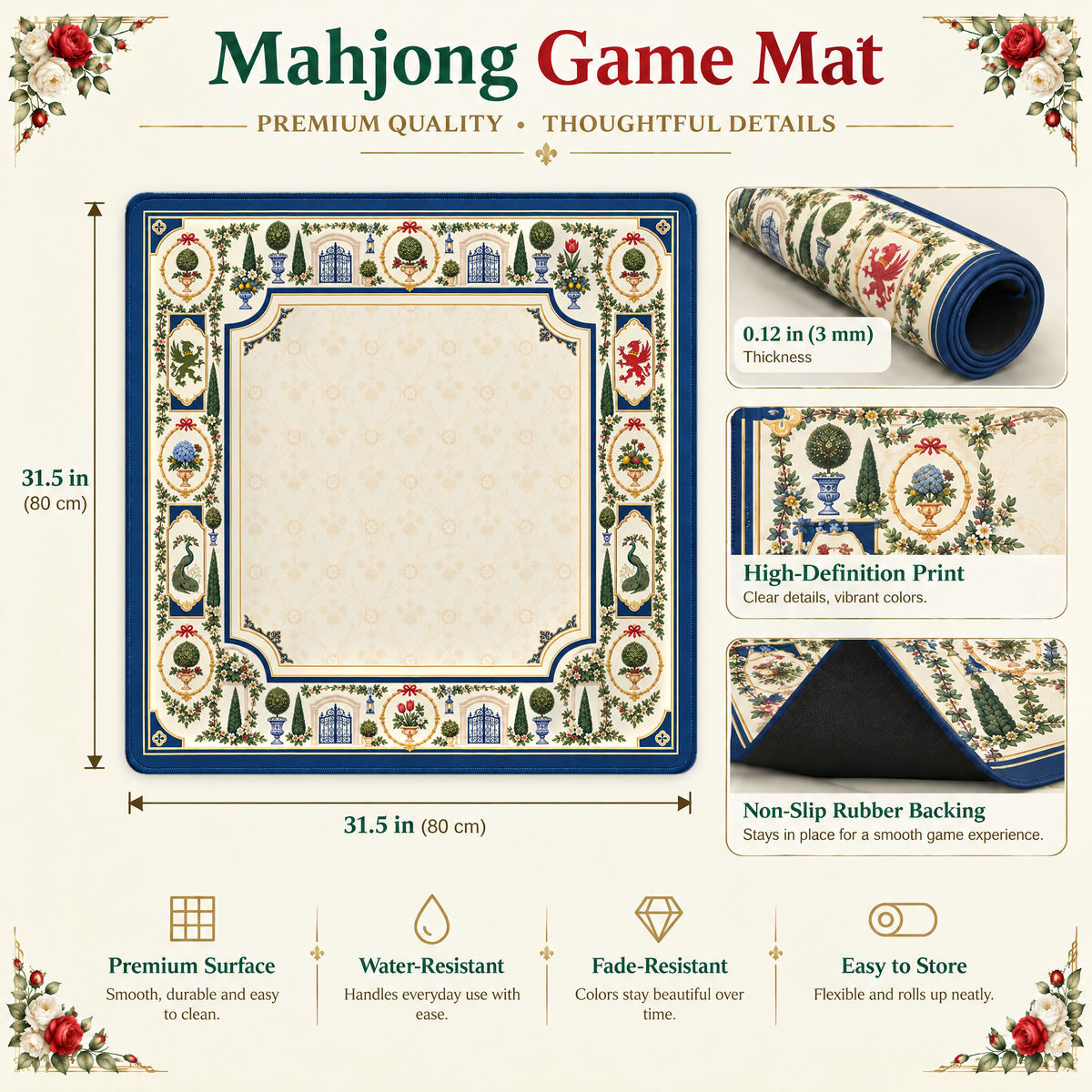
When hosting a weekly game, clarity prevents ninety percent of arguments. We recommend choosing a durable, easy-to-read best-selling mahjong set so all players can quickly verify tile values and avoid payment confusion from misread tiles. Similarly, a quality mahjong mat with clean demarcations helps everyone see whose discard pool belongs to whom, reducing claims of miscounted discards.
🀄 Shop best-selling mahjong sets →
Cantonese mahjong rewards consistent, careful play and forward planning—exactly like American mahjong, but with a finer granularity in scoring. The payment system motivates defensive tiles (avoiding hot discards) and rewards pattern recognition (spotting rare hand shapes early). Once your group establishes stable rules, the scoring becomes second nature. Many players find Cantonese payment more satisfying than fixed-amount games because a skilled win—one that took strategy and risk—yields higher reward.
What to check before you buy:
Do all players in your group agree on base point values and doubling conditions? (Yes → proceed; No → decide together first.)
Will you use real money, match sticks, or a scoreboard? (Scoreboard is lowest-friction for friendly games.)
Do you have a written-down or memorized reference for hand patterns and their base point values? (Many online Cantonese mahjong charts exist; save one as a group reference.)
Are all tiles in your set clearly legible, and is the set housed safely between games? (A worn, faded set leads to tile-reading errors and payment disputes.)
🎁 See our most-loved mahjong sets & accessories →
For hosting consistency, mahjong racks with pushers help each player organize their hand without accidentally exposing tiles, which prevents premature reveals that trigger false settlement claims. A travel bag or case keeps your set intact and ready for weekly games—no missing tiles, no confusion mid-hand.
✨ Find your Mahstead set — free US shipping →

FAQ
Can payment multipliers go unlimited in Cantonese mahjong, or should we cap them?
Multipliers can theoretically go unlimited (a 5-point hand with five doubles = 160 units), but casual games nearly always cap at 16, 32, or 64 units per opponent to keep the table social and avoid unexpected financial stress. Agree your ceiling before the first hand.
If I win by discard, do all three opponents pay me, or just the discarder?
Only the discarder pays you the full multiplied amount. The other two players owe nothing on a discard win. On a self-draw win, all three pay you the same multiplied amount.
How do I know if my hand is worth 1 point, 2 points, or more?
Your group should reference a Cantonese mahjong hand chart (available online and in many books). Patterns like "all one suit" = 2 points, "all terminals and honors" = 3+ points, "all honors" = 4+ points. Memorize or agree on a written list before the game.
What happens if a player miscalculates their hand and we pay out the wrong amount?
If you catch the error before the next game begins, recalculate and settle the difference. If discovered mid-session, stop, verify the hand structure against your rule chart, and pay the correct amount. Prevent this by having a neutral "rules referee" verify high-scoring hands before payment.
Should real money ever be used in a friendly Cantonese mahjong game?
In many regions and countries, playing mahjong for even small cash stakes is legal among friends for recreation; check your local laws. We recommend beginners use match sticks, scorecards, or bragging rights first, then transition to small nominal amounts only if all players are comfortable and consent explicitly.
How do I record scores fairly across multiple sessions?
Keep a cumulative ledger with player names, session date, hand-by-hand scores, and final totals. At each week's end, update cumulative point totals. Over many weeks, this reveals who plays most skillfully and keeps a season-long narrative—far more satisfying than single-game winners.


View More
View More
View More
