
Cantonese Mahjong Flowers and Bonus Tiles: Rules & Setup
Last updated: Nov 23, 2026
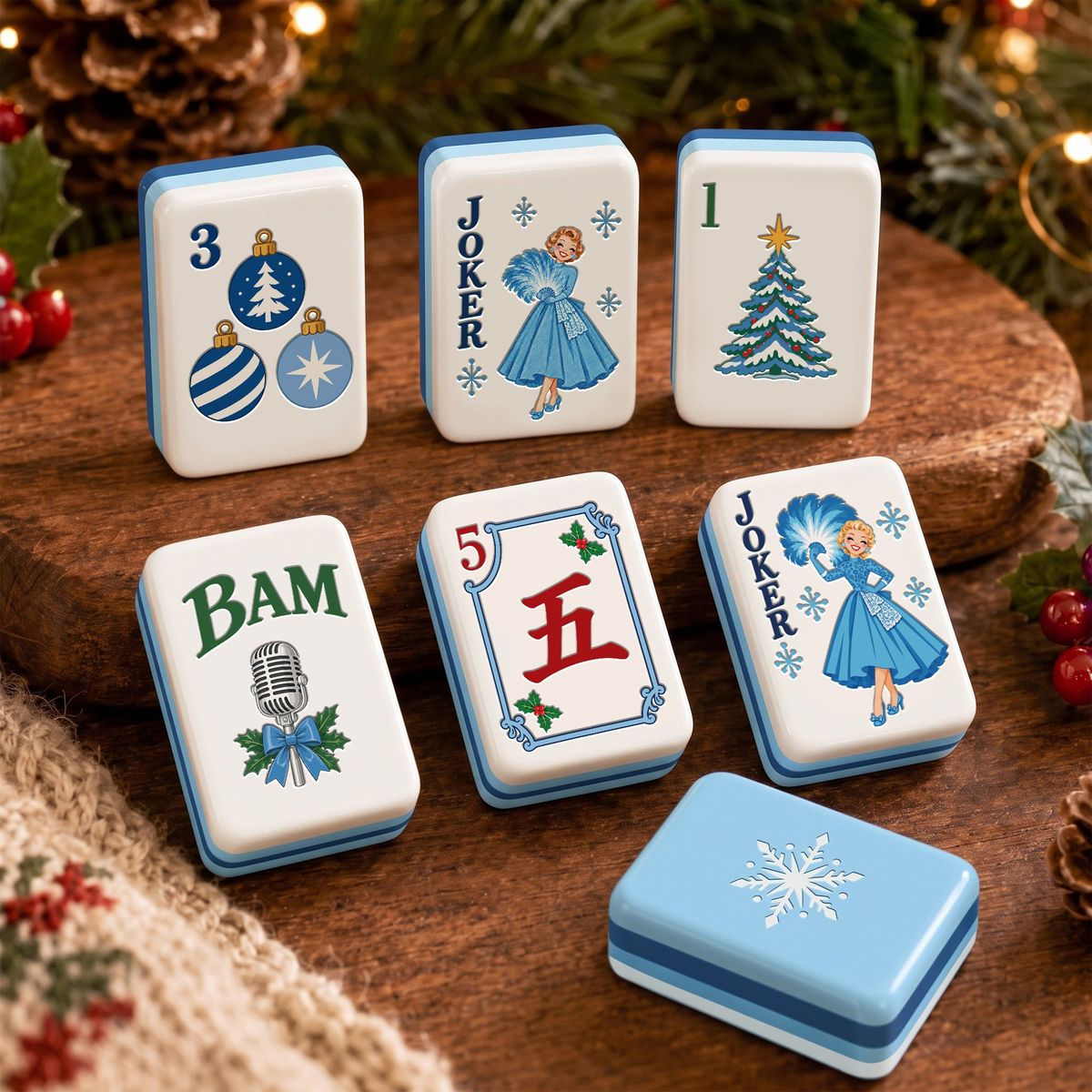
Cantonese mahjong (also called Guangdong or Hong Kong style) includes eight bonus tiles: four flowers (春夏秋冬—spring, summer, autumn, winter) and four seasons. When you draw a flower or season tile during play, you immediately expose it, score bonus points, and draw a replacement from the dead wall. These tiles never form part of your final hand; they're auto-scoring bonuses. American mahjong has no bonus draws—flowers here are regular tiles you collect in your 14-tile hand. Cantonese games use 144 tiles total (not 152), play to different point values, and require the tile-by-tile discard sequence. You'll find Cantonese rules on specialized rule cards or online resources; our best-selling mahjong sets include American tiles and reference cards, but for Cantonese play you'll need a separate Cantonese-specific set and rules guide.
Cantonese mahjong flowers and bonus tiles operate on an entirely different principle than the American variant. The confusion often starts here: in American mahjong, flowers are just regular tiles. In Cantonese (Hong Kong) mahjong, they're immediate scoring events that interrupt the game flow. We'll walk through exactly how they work, when they activate, and why learning this mechanic matters if you're switching between variants or hosting a mixed group.
What are flowers and bonus tiles in Cantonese mahjong?
Cantonese mahjong has four flower tiles (plum, orchid, bamboo, chrysanthemum) and four season tiles (spring, summer, autumn, winter). These eight tiles are bonus draws; they never stay in your hand. When you draw one during your turn, the game pauses, you score points immediately, you expose the tile, and you draw a replacement tile from the dead wall to maintain your hand size. This is fundamentally different from American mahjong, where drawing any tile keeps your hand at exactly 14 tiles and the flower is just a regular tile in your winning hand.

How do you score when you draw a flower or season?
In Cantonese mahjong, each flower or season tile you draw earns automatic bonus points—typically between 1 and 5 fan (the Cantonese scoring unit), depending on your local house rules and which flower/season it is. Some regions award equal points per bonus tile; others assign different values to each. The exact scoring must be established before play begins, as house rules vary widely across different neighborhoods and clubs. Unlike American mahjong's fixed National Mah Jongg League card, Cantonese play relies on a pre-game agreement about point values and whether bonus tiles can boost an already-winning hand.
When during play do you draw a bonus tile?
Bonus tiles are drawn during the normal tile-picking phase of your turn—before you discard. If your first pick is a flower or season, you immediately set it aside, draw another tile from the dead wall to replace it, and then proceed to discard one tile as usual. This means you still end your turn with exactly 13 tiles in hand (ready to receive the next player's discard or win). If no player draws the bonus tile during regular play, it remains in the dead wall. Some Cantonese variants award bonus points to whoever draws the bonus tile during the final draws before the game exhausts all tiles.
🀄 Shop best-selling mahjong sets →
How do Cantonese bonus tiles differ from American mahjong flowers?
American mahjong has eight flower tiles that are part of the 152-tile set. When you draw a flower during play, you keep it in your hand; it counts as part of your exposed melds or final winning hand. Flowers are not bonuses—they're regular tiles. You may only expose a flower as part of a pung (three identical flowers), a kong (four identical), or within a winning hand on the official card. Cantonese mahjong, by contrast, treats flowers as automatic interim scoring events, not as hand tiles. The moment you draw one, points are awarded, and you draw a replacement. This speeds up Cantonese play with frequent small scoring pulses instead of waiting for the final winning hand to settle all points.
Aspect | American Mahjong | Cantonese Mahjong |
Flower tiles in set | 8 (regular tiles) | 8 (bonus only) |
What happens when you draw one | Stays in your hand | Exposed, scored, replaced |
Points for drawing flower | Zero (scored only on winning hand) | Immediate bonus (typically 1–5 fan) |
Flowers in final hand | Can be part of winning combo | Never part of final hand |
Total tiles in play | 152 + 8 jokers | 144 (no jokers in classic play) |

Can bonus tiles be drawn early or late in the round?
Yes. Bonus tiles can be drawn at any point during the hand, from the very first pick through the final exhausted draw. The key rule: whenever a bonus tile is drawn, regardless of turn order or game phase, it triggers the immediate scoring and replacement. Some houses rule that if a bonus tile sits in the dead wall and is never drawn, no bonus is awarded for that tile during that round. Others add all undrawn bonus points to the final winner's score. Clarify these edge cases before the first hand to avoid disputes mid-game.
🎁 See our most-loved mahjong sets & accessories →
What rule card or guide do you need to play Cantonese?
Cantonese mahjong is not governed by a single official league card like American mahjong is. Instead, you'll rely on regional or personal house rules, many of which are passed orally or documented in local club guidelines. Online communities and Cantonese mahjong Facebook groups often share rule sheets; several print-on-demand retailers sell simplified Cantonese reference cards. The National Mah Jongg League card (used for American mahjong) does not apply to Cantonese play. If you're hosting a mixed group with both American and Cantonese players, we recommend having both rule sets clearly posted—confusion between the two is common and easily resolved with a quick pre-game review.
How do bonus tiles affect final scoring?
In pure Cantonese play, bonus tiles are scored separately from the final winning hand. If you win and have drawn two bonus tiles during play, you've already collected those points mid-round. Your final win score is calculated independently using the hand's combination value, pung/kong multipliers, and other scoring conditions. In some house rules, however, bonus tiles drawn by the winner just before winning can increase the final payout. Always establish whether bonus draws stack with final-hand scoring or remain independent payouts.
What to check before you buy a set for Cantonese play
Confirm the tile count: Cantonese sets have 144 tiles; American sets have 152 + 8 jokers. A 160-tile acrylic set marketed for American play will be too large for traditional Cantonese rules.
Verify the tile faces: Cantonese tile artwork and symbols differ slightly from American conventions. Ensure any online purchase shows photos of the tile face design.
Check what's included: If you're buying a set with a mat or racks, confirm they're sized for your tile set (144 or 152).
Get a rules document: Purchase or download a Cantonese rule card before play; don't rely on oral tradition if players are new to the variant.
Test-draw a bonus tile: Before your first round, simulate drawing a bonus tile to confirm everyone understands the pause, score, and replacement sequence.
✨ Find your Mahstead set — free US shipping →
Why American and Cantonese rules feel so different
The biggest mindset shift is how bonus tiles interrupt the hand. American players expect a solid 14-tile hand and steady discards until someone wins. Cantonese players are accustomed to pauses, immediate scoring, and a 13-tile holding during play. If you're hosting both groups at the same table, run separate games or agree to stick with one variant per session. Mixing them mid-round creates rule collisions that frustrate everyone. Our collection of best-selling sets is optimized for American mahjong; for Cantonese, you'll want a dedicated 144-tile set and house-rule agreement clearly written out before the first tile is drawn.

FAQ
Do Cantonese mahjong bonus tiles ever enter your hand?
No. Bonus tiles are always removed from your hand immediately upon draw, scored, and replaced with a dead-wall tile. They never form part of your 13-tile holding or final winning hand.
Is drawing a bonus tile considered a "win" in Cantonese mahjong?
No. Drawing a bonus is not a win condition; it's a mid-hand scoring event. You continue play normally after the bonus is scored and replaced.
Can you refuse to draw a bonus tile if it's not helpful?
No. Bonus tiles are mandatory draws—they are treated as part of the dead-wall distribution and cannot be declined.
What happens if a bonus tile is never drawn during the hand?
House rules vary. Common practice: either no bonus is awarded for that tile, or the final winner receives a flat bonus payment. Clarify this before play.
Can American mahjong players use Cantonese bonus-tile rules if they swap out flowers?
Technically, yes—but it changes the game balance and scoring logic so fundamentally that it's clearer to just play one variant or the other.
Where do I find a Cantonese mahjong rule card?
Online mahjong communities, regional Cantonese clubs, and print retailers offer Cantonese reference cards. Local Chinese cultural centers often have laminated versions available.


View More
View More
View More
