
How to Tell Bone from Ivory Mahjong Tiles
Last updated: Nov 23, 2026
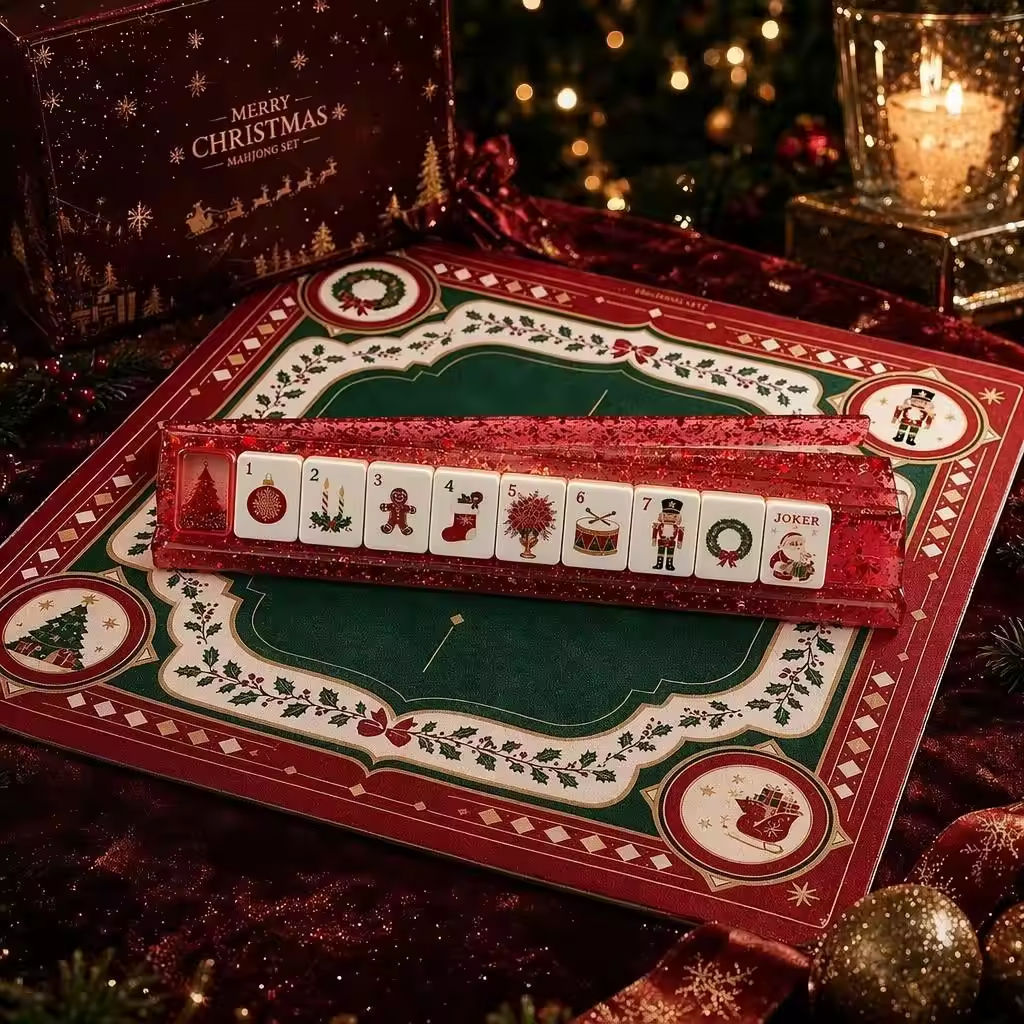
Bone tiles are slightly porous, warm to the touch, and produce a duller tap when shuffled; ivory tiles are denser, cooler, smoother, and ring with a higher pitch. Bone yellows gradually over decades and shows fine grain lines; ivory stays whiter longer and has a more uniform surface. The simplest test: bone floats or sits just below the waterline in a cup of water, while ivory sinks. Authentic bone costs less than ivory because bone is renewable; ivory raises ethical concerns. Most American mahjong players today choose bone for their game nights for its character, warmth, and ethical clarity.
Can you identify bone by touch alone?
Yes. Bone feels slightly warm and has a faint grainy texture under your fingernail when you run it across the back of a tile. Ivory feels cooler, glassier, and smoother—almost slippery. Pick up a tile from a set you know is bone, then compare: bone has a subtle "grain" like fine sandpaper, while ivory is polished marble. Bone tiles also absorb small amounts of moisture from your hands over time, which changes their color and feel subtly. This warmth is why many seasoned players prefer bone—it develops character.

What does the water float test actually tell you?
Bone has trapped air and organic material that makes it slightly less dense than water; ivory is denser and heavier, so it sinks. Fill a clear cup with room-temperature water and gently place a single tile in the center. If it bobs at the surface or sits halfway down, it's bone. If it sinks to the bottom, it's ivory. This test works because bone was historically made from animal bone (cattle, water buffalo, camel) and retains some porosity; ivory (from elephant, mammoth, or walrus) is a compacted mineral. Note: this test works only on natural tiles; acrylic tiles will sink because they're plastic and denser than water.
How does color change tell the story?
Bone tiles ivory over time—they turn creamy, amber, or honey-colored after 10 to 40 years of play, humidity, and handling. Ivory tiles stay whiter and brighter longer, though they may develop a faint yellow undertone in very old sets. If you see a mahjong set where all tiles are uniformly bright white, it's either new or possibly ivory-bleached. If tiles vary in shade—some cream, some white, some with brownish spots—that's authentic aged bone showing natural oxidation and mineral staining. Modern bone tiles are often pre-aged artificially to match this look faster. Look at the bamboo (Bam) suit especially: the 1 Bam (bird) carving will darken and stain more than flat tiles, so a set where the bird is noticeably darker than the numbered tiles is likely well-played bone.
🀄 Shop best-selling mahjong sets →

What's the sound difference when tiles shuffle?
Bone produces a flat, woody tock when tiles are shuffled or stacked; ivory produces a higher-pitched, almost musical clink. This difference comes down to density and internal structure. Bone tiles are slightly spongy—sound waves don't travel as far through them, so the noise dies faster. Ivory tiles are hard and compact, so they vibrate longer and ring. If you've played American mahjong in a home game on a quiet night, you know that sound matters—some players say the woody thud of bone helps them focus, while others love the clear ring of ivory. This acoustic difference is one reason experienced players can sometimes tell a set's composition by ear across a room.
Aspect | Bone | Ivory | Why It Matters |
Touch | Warm, slight grain | Cool, smooth, glassy | Feel & comfort during long games |
Weight | Slightly lighter | Noticeably heavier | Affects shuffling and tile movement |
Color over time | Yellows, browns, darkens | Stays whiter longer | Authenticity & age storytelling |
Water test | Floats or sits midway | Sinks | Simple field identification |
Sound | Woody, dull tock | Musical, ringing clink | Game atmosphere & mood |
Durability | Can chip if very old | Chips less, but more fragile ethically | Lifespan & replacement risk |
Cost basis | Lower (renewable) | Higher (rare, regulated) | Budget & availability |
Why does ethical sourcing matter now?
Ivory comes from endangered species or mammoth remains, so most countries have banned new ivory sales. Even "legal" mammoth ivory or antique ivory carries ethical weight—it funds poaching networks or normalizes tusks as commodities. Bone, by contrast, is a byproduct of food industries, so it's renewable and guilt-free. Many American mahjong groups have moved away from ivory entirely. If you inherit or buy a set that's ivory, keep it and treasure it—it has history. But for new purchases, bone or high-quality acrylic alternatives let you enjoy the game without the conscience friction.
When shopping, look for sets described as "bone and bamboo" (the rack and pushers are often bamboo too). Avoid any seller claiming "ivory" for new tiles—it's either illegal in most places or falsely labeled. If you're unsure about a set's composition, ask the seller directly: "Is this natural bone?" A reputable source will answer plainly.
✨ Find your Mahstead set — free US shipping →
We know that authenticity matters, but so does peace of mind. If you love the heft and history of natural tiles, bone is the gold standard today. If you prefer the consistency and safety of acrylic, our engraved American mahjong sets capture the look and feel with modern durability—no guessing, no water tests, no ethical dilemmas.
What to check before you buy
Ask these three questions:
Composition label: Does the product page or seller say "bone," "ivory," or "acrylic"? Unlabeled sets from unknown sources often hide their material.
Completeness: Does the set have all 152 playing tiles plus 8 jokers? A 160-tile set includes extras, but verify the count.
Packaging for play: If you're hosting weekly games, ask whether the set includes a mat and racks with pushers. Bone tiles alone aren't enough—you need protection and organization for long sessions.
Run the touch test on any set before committing: if it feels cold and glassy, it's likely ivory or acrylic; if it feels warm and slightly textured, it's bone. Weight also tells: bone tiles are noticeably lighter than ivory, so heft a full hand and compare to a known standard.
🎁 See our most-loved mahjong sets & accessories →

FAQ
Can you really tell bone from ivory just by looking?
Color alone isn't reliable because both can yellow. But grain lines and uneven patina strongly suggest bone. Ivory tends toward uniform brightness. Look for the 1 Bam carving: if it's noticeably darker or stained, that's aged bone showing play history.
Does the water float test work on all bone tiles?
It works best on uncoated, natural bone. Some bone tiles are sealed or varnished, which changes their density slightly. Test a few tiles from different suits—if most float midway, it's bone. If all sink, it's probably ivory or acrylic.
Why do vintage sets sometimes smell different?
Bone absorbs humidity and odors over decades—it can smell faintly earthy, musty, or like old wood. Ivory retains less odor. A musty, organic smell is a sign of authentic aged bone; no smell at all suggests newer bone, acrylic, or ivory.
Is antique ivory mahjong legal to own?
Laws vary by country and region, but most ban new ivory sales. Antique ivory sets (pre-1970s) are often legal to own in the home but not to sell across borders. Check local wildlife regulations before buying online.
What's the lifespan of bone versus ivory tiles?
Both last decades with care. Bone can chip at the edges if very old and brittle; ivory chips less frequently but is ethically problematic. Acrylic outlasts both if not exposed to extreme heat, and requires no ethical compromise.
How do I care for bone tiles to slow yellowing?
Store them in a cool, dry place away from direct sunlight. Bone oxidizes naturally, so some yellowing is inevitable—it's part of the charm. Avoid bleach or harsh cleaners; gentle soap and water are enough.


View More
View More
View More
